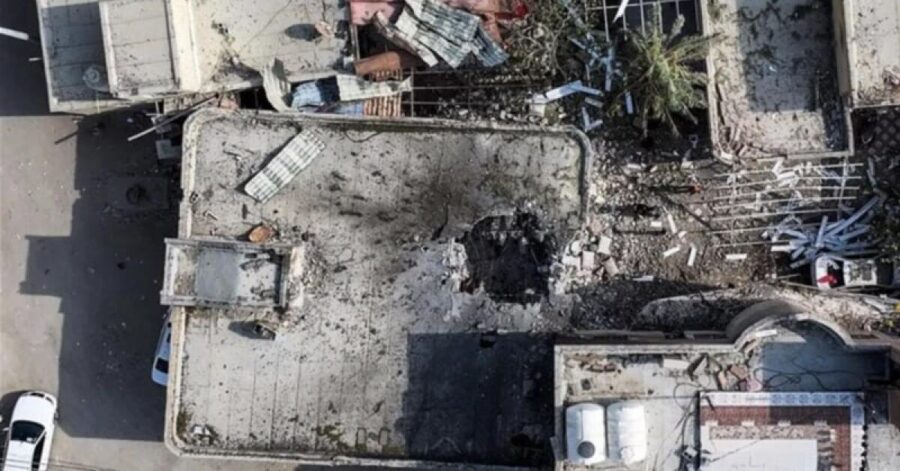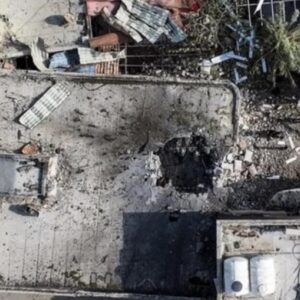
A United Nations fact-finding committee has attributed a September 1 airstrike on a house in Kuhestak, Hormozgan Province, where a wedding ceremony was being held, to the United States, citing credible information and reports. The strike killed and injured civilians, raising renewed questions about potential war crimes in US military operations and recalling similar attacks on wedding celebrations in Afghanistan’s Nangarhar Province.
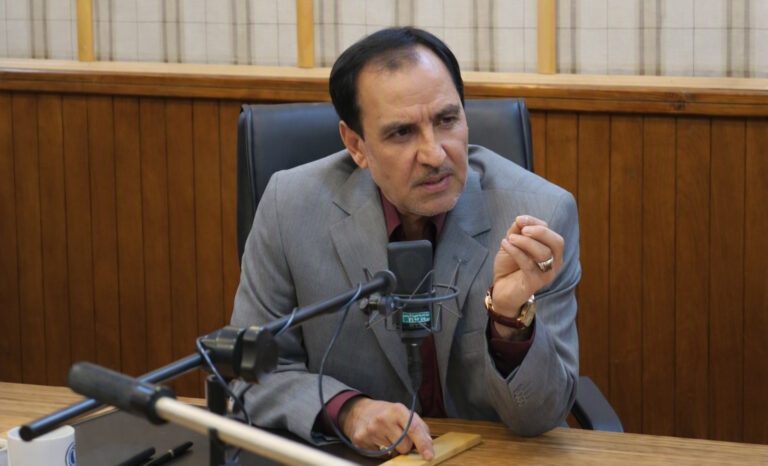
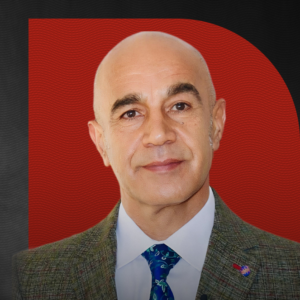
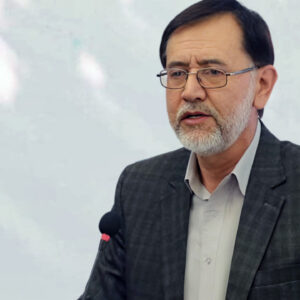
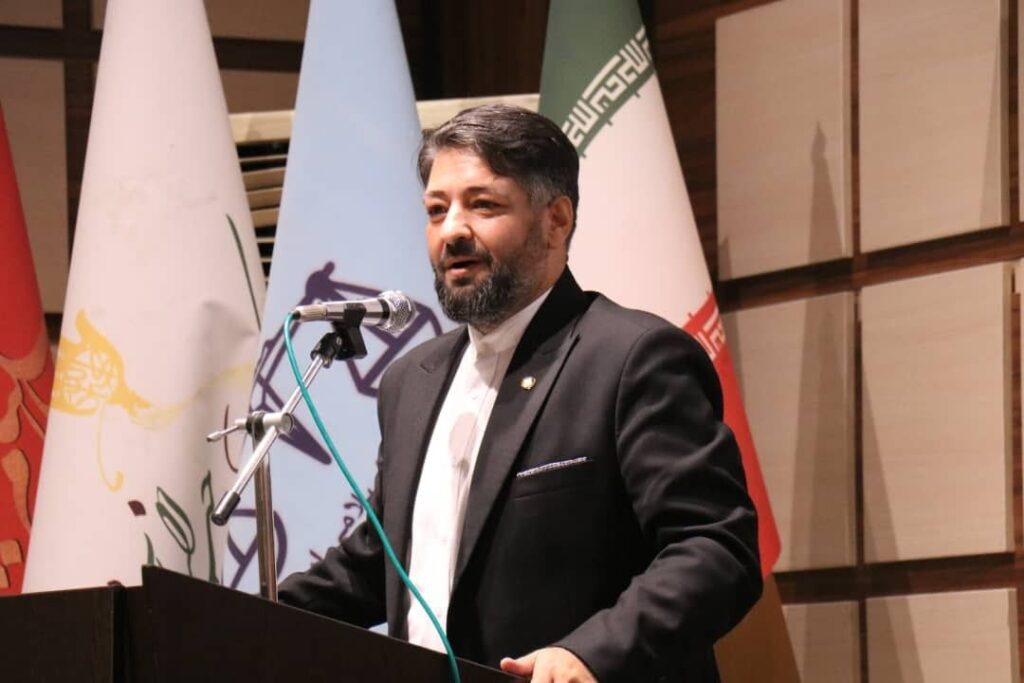
In an interview with IRAF, Dr. Morteza Abdi, head of international affairs and director of the Institute for International Law Strategic Studies at the Judiciary’s Center for Lawyers, Official Experts and Family Consultants, said that if US responsibility and the legal elements of an attack on civilians are established, the incident would go beyond political condemnation and could constitute a serious violation of international humanitarian law or, under certain circumstances, a war crime.
UN Report Goes Beyond Political Condemnation
Referring to the UN fact-finding committee’s report on the attack on the wedding ceremony in Kuhestak, Hormozgan Province, Abdi said that if the committee had established US responsibility for the strike and the resulting civilian casualties, the incident should not be viewed merely as a political statement or moral condemnation, but must be examined under international humanitarian law.
He added that international humanitarian law provides specific protections for civilians and that, if the relevant legal elements are established, the attack could constitute a serious violation of the rules governing armed conflict.
Abdi stressed that the principles of distinction between military and civilian targets, proportionality, and the taking of precautionary measures cannot be set aside for political or military considerations.
“If the target was a wedding ceremony and a gathering of civilians, and the civilian status of those present was identifiable to the attacker, the incident can no longer be easily dismissed as merely a ‘military mistake,’” he said.
The head of the institute added that, depending on whether the necessary legal elements are established, the incident could amount to a violation of international humanitarian law or even a war crime. The responsibility of those who made and carried out operational decisions must also be examined.
“No powerful state can place itself above the law, and military power does not create legal immunity,” Abdi emphasized.
From Kuhestak to Nangarhar: A Recurring Pattern of Civilian Casualties
Comparing the Kuhestak incident with the history of US airstrikes in Afghanistan, Abdi said that the fundamental issue shared by these cases is the recurrence of civilian casualties in air operations and the need to investigate how targets are selected and identified.
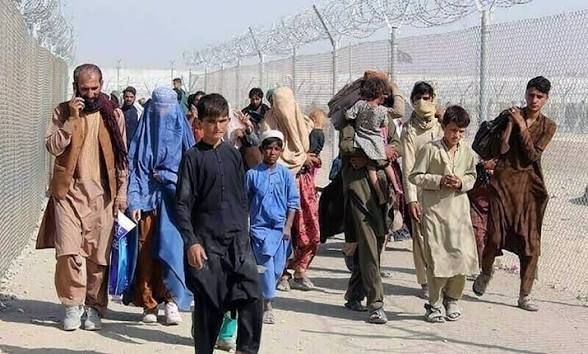
Afghanistan, he noted, has endured years of airstrikes, with civilians repeatedly becoming victims. Reports by the United Nations and the UN Assistance Mission in Afghanistan (UNAMA) have also raised concerns about civilian casualties at various points.
Abdi said Afghanistan’s history of such incidents cannot be ignored, nor can the latest attack be treated as entirely isolated from previous events.
“Each incident must be investigated independently. However, the recurrence of documented reports of civilian casualties in Nangarhar, Helmand, Herat and other areas raises serious questions about target-identification standards, precautionary measures, operational decisions and accountability mechanisms,” he said.
He stressed that this position should not be interpreted as opposition to the American people. Rather, the central issue is opposition to the immunity of military decisions from legal accountability.
“The life of an Afghan child is no different from that of an Iranian child, and international humanitarian law must not establish different standards for protecting civilians based on their nationality,” Abdi said.
Why Advanced Military Technology Has Not Prevented Civilian Casualties
Abdi, who also heads international affairs at the Judiciary’s Center for Lawyers, Official Experts and Family Consultants, described the recurrence of civilian casualties despite the US military’s access to advanced technology as one of the most serious legal issues in contemporary warfare.
“The existence of smart weapons, satellites, drones and advanced intelligence systems does not reduce responsibility. Rather, it raises the legal expectation for accurate target identification and the prevention of harm to civilians,” he explained.
Dr. Abdi said that if inaccurate intelligence or an incorrect target selection results in an attack on civilians, the fact that a weapon is “smart” does not, in itself, make the attack lawful.
“For this reason, incidents cannot be explained indefinitely as ‘mistakes,’” he added.
He said that when a pattern recurs across multiple battlefields and over several years, questions must be raised about whether the problem lies solely in the execution of a particular operation or whether decision-making structures, rules of engagement, risk assessments and target-selection mechanisms also require scrutiny.
According to Abdi, the international community must move beyond expressions of regret toward fact-finding, the determination of responsibility and compensation for victims.
One Standard for Civilian Protection: From Iran to Afghanistan
Asked whether the Kuhestak incident could be legally compared with similar attacks in Afghanistan, the international law expert said that although geographical and operational conditions differ between Iran and Afghanistan, the fundamental standards for protecting civilians remain the same.
“International humanitarian law does not establish one standard for civilians in Afghanistan and another for civilians in Iran. A human life has one standard,” he said.
Abdi explained that each case must be examined through a series of specific questions:
-
Was the target genuinely a military objective?
-
Was the attack lawful under international law?
-
Was the risk of harm to civilians foreseeable?
-
Were all feasible precautions taken to prevent or minimize civilian casualties?
-
Was the harm caused to civilians proportionate to the anticipated military advantage?
He stressed that if the answers indicate a violation of international humanitarian law, the question of legal responsibility must also be addressed.
Why Are US Domestic Investigations Not Enough?
The head of the Institute for International Law Strategic Studies identified what he described as excessive reliance on domestic investigations by states involved in armed conflicts as one of the main weaknesses of accountability systems in contemporary warfare.
“An internal investigation conducted by a state cannot always be the final stage of fact-finding, because the independence and impartiality of the investigative mechanism are fundamental in such cases,” he said.
Referring to Afghanistan, Abdi noted that the United States has acknowledged civilian casualties in some attacks or conducted investigations into them. However, he said, the central question is whether those processes have led to the identification of perpetrators and decision-makers, effective prosecution, meaningful compensation and measures to prevent similar incidents from recurring.
He stressed that compensation or financial assistance, even when provided, cannot by itself replace justice.
“Families of victims have the right to know what happened, who made the decision, why the target was selected and which individual or institution was responsible for the incident,” he said.
Should Past Afghanistan Cases Be Re-examined?
Asked whether the new UN report could be used to revisit previous US attacks in Afghanistan, Abdi said that such a possibility exists from both legal and research perspectives.
However, he cautioned that the report on Kuhestak does not automatically establish US responsibility for all previous incidents in Afghanistan.
He said the report could provide an opportunity for a systematic review of cases in Nangarhar, Helmand, Herat and other parts of Afghanistan, adding that they should not be considered closed simply because time has passed.
“If documents, testimonies, satellite images, medical and expert reports, UN records and other evidence remain available, these cases can be examined again,” he said.
Abdi added that the passage of time does not necessarily mean that the truth has been lost. In some cases, a new document or finding can reveal the legal and investigative significance of older evidence.
From Hiroshima to Iran: The Need for Legal Documentation
Addressing the possibility of examining Afghanistan cases alongside historical examples such as Hiroshima and Nagasaki, the Vietnam War, Iraq and incidents involving Iran, Abdi said that such comparisons are possible from historical and legal perspectives, provided they are conducted on a documented, case-by-case and scientific basis.
He emphasized that each case has a distinct context and legal framework and should not be placed within a single category without accounting for those differences.
Nevertheless, he said, they all form part of the contested history of the use of military force against human communities.
Referring to incidents in Iran, Abdi said that the attack on a school in Minab, strikes on medical and sports facilities, and other civilian sites should be comprehensively documented from a legal perspective.
“The task is not simply to provide a historical account of these incidents. Evidence must be developed to support the claims, and the legal channels for submitting that evidence must also be identified,” he said.
According to Abdi, this work requires cooperation among legal experts, official specialists, forensic professionals, weapons experts, satellite imagery specialists and digital evidence analysts, alongside the use of international documentation standards.
Could Kuhestak Change Afghanistan’s Perception of the Iran-US War?
Discussing the potential impact of the UN report on Afghan public opinion regarding the recent Iran-US war, Abdi said the incident could provide a basis for historical solidarity between the two nations.
He noted that Afghans have endured years of war, airstrikes and civilian casualties, while Iranians have also experienced some of these consequences through military attacks, the assassination of scientists, strikes on various sites and civilian deaths and injuries.
Abdi stressed that the suffering of the Iranian and Afghan people should not be placed in opposition to one another.
“The suffering of people in Kabul, Nangarhar, Helmand and Herat should be understandable to Iranians. Likewise, the suffering of people in Minab, Kuhestak and other parts of Iran should be understandable to Afghans,” he said.
He described the situation as an opportunity for cooperation between Iranian and Afghan legal experts and intellectuals, adding that such cooperation should not be directed against the Afghan government or people, but should emphasize the two nations’ historical ties and brotherhood.
Abdi said a shared legal position could be based on the principle that civilians are civilians, whether they are Iranian, Afghan, Palestinian or Iraqi.
From Iran to Afghanistan: Justice for All
In concluding his remarks, Abdi said the issue extends beyond the attack on the wedding ceremony in Kuhestak, arguing that the incident could become a test of the credibility of international justice and international humanitarian law.
“If the international community remains silent when civilians are killed, regardless of which country carried out the attack, the credibility of international law will be undermined,” he said.
According to Abdi, Iran’s objectives should be fact-finding, documentation, the determination of responsibility and the pursuit of compensation within the framework of international law.
Referring to the historical cases of Hiroshima and Nagasaki, Vietnam, Iraq, Afghanistan, regional incidents and recent events in Iran, he said no military power should be so powerful that it can evade accountability.
He stressed that this approach is not directed against any nation.
“Iran and Afghanistan are two neighboring and brotherly nations with a shared history, culture and civilization. They can develop a common legal discourse on civilian protection and the documentation of violations of international humanitarian law,” he said.
Abdi added that such a discourse should not politicize victims, but should instead ensure that their voices reach international legal forums.
“Justice for an Iranian victim is not opposed to justice for an Afghan victim, and justice for an Afghan victim is not opposed to justice for an Iranian victim. Justice must be the same for everyone,” he said.
He noted that his center and affiliated institute could also pursue this path by drawing on their legal, professional and international capacities.
Background
In a statement issued on September 14, the independent UN fact-finding committee on Iran said that, based on credible information and reports, the September 1 airstrike on a house in Kuhestak, Hormozgan Province, where a wedding ceremony was being held, had been carried out by the United States.
The committee also stressed the need to protect civilians, take all feasible precautionary measures and ensure that independent observers, journalists and researchers have access to information.
The statement comes against the backdrop of previous US military operations in Afghanistan that resulted in civilian casualties, with UN and UNAMA reports repeatedly warning about the humanitarian consequences of airstrikes in the country.
In this context, the Kuhestak case could renew debate not only over the recent Iran-US war, but also over the standards of international humanitarian law, state responsibility and mechanisms for ensuring accountability to civilian victims.