At least 17 Afghan migrants, including women and children, have died of severe dehydration while attempting to enter Iran through an illegal route, highlighting once again the deadly risks faced by migrants using smuggling networks between Afghanistan and Iran.
As reported by IRAF, according to published reports, at least 17 Afghan migrants died on Thursday, September 10, in the Mak-Sokhteh area near the Rutak border region of Saravan County in Iran’s Sistan and Baluchestan Province while attempting to enter the country illegally.
The victims reportedly included five women from the same family from Baghlan Province and at least six children under the age of 14. Reports indicate that the group faced severe water shortages while traveling, with several women and children dying in the desert. In similar cases, human smugglers have reportedly abandoned migrants in remote desert areas without sufficient food or water.
The victims’ bodies were transferred from the site to Khash because the morgue in Saravan did not have sufficient capacity. Iranian authorities and the Taliban government have not yet officially confirmed the reports.
One Month Earlier: 19 Migrants Died in the Deserts of Nimroz
This is not the first deadly incident involving Afghan migrants using smuggling routes to Iran. About a month earlier, the bodies of 14 Afghan migrants were found in the Gard-e Lalu area of the Nimroz desert, bringing the number of victims from a missing group to 19.
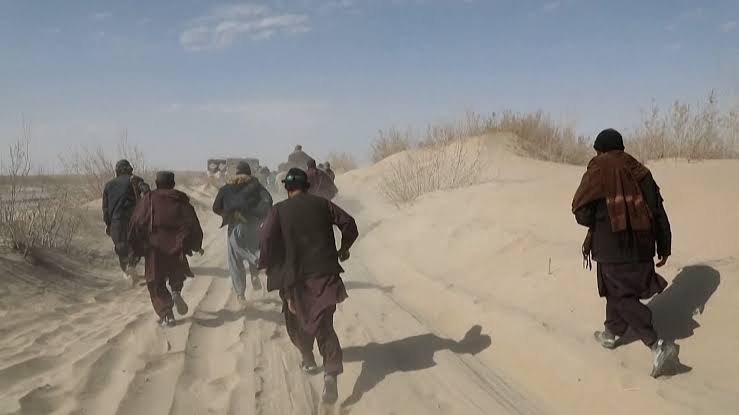
Reports said the migrants were traveling by vehicle toward Pakistan and then Iran when the vehicle broke down. The driver and one passenger reportedly left the site to fix the problem but were unable to find the group again because of dust and sandstorms. The migrants’ bodies were discovered several weeks later, and local officials said they had died from hunger, thirst and extreme heat.
Some reports identified 19 migrants as missing in the incident, with the bodies of 14 later recovered.
A video of one of the migrants was circulated on social media, showing him suffering from extreme thirst in the final moments of his life. The man, whose lifeless body was later found, told his friends and family to forgive him and not forget him.
The recurrence of such incidents within a short period suggests that deaths along illegal routes into Iran are not isolated incidents. Instead, migrants face a combination of natural, human and security-related dangers throughout these routes.
Why Do Migrants Choose Illegal Routes?
Illegal migration from Afghanistan to Iran cannot be explained solely as an individual choice. Poverty, unemployment, limited economic opportunities, difficulties in covering living expenses, and the search for work and better living conditions are among the factors frequently cited in reports on Afghan migration to Iran. Deutsche Welle also identified unemployment and Afghanistan’s economic crisis as factors driving migrants toward Iran in a recent report.
At the same time, restrictions on legal entry, the costs of travel and residence, and the uncertain circumstances faced by migrants push some people toward human-smuggling networks. Under such conditions, smugglers promise to take migrants to Iran through routes that generally bypass official crossings and pass through remote desert areas with limited resources.
In many cases, smugglers reportedly fail to fulfill their promises and abandon migrants in life-threatening conditions. There have also been reports that smugglers take migrants’ belongings after reaching remote desert areas and then leave them behind.
Previous reports have also quoted Afghan officials warning migrants about deception by human smugglers, saying smugglers lure young people with promises of a better life.
Smuggling Routes: From Thirst and Extreme Heat to Gunfire and Accidents
Smuggling routes from Afghanistan to Iran largely pass through remote border and desert areas where access to water, emergency services and communications is limited.
Thirst and heat exhaustion are among the most serious dangers. Extremely high temperatures, the lack of trees and shade, limited water sources and prolonged walking can quickly lead to severe dehydration and death. Sandstorms also increase the risk of people becoming lost, as occurred in the Nimroz incident, when a group of migrants became stranded in the desert after their vehicle stopped and their bodies were found weeks later.
Being abandoned in the middle of the journey is another reported danger. In some cases, vehicles carrying migrants stop because of mechanical failures or attempts to evade border forces, leaving people stranded in remote areas. Human smugglers often prioritize receiving payment and avoiding security forces rather than the safety of the people they transport.
Smugglers also sometimes use vehicles traveling at high speeds on secondary and unpaved roads. Iranian law enforcement authorities have warned about the use of vehicles known as “Shoti” for the illegal transportation of people and goods. Such vehicles are often modified and driven dangerously, increasing the risk of crashes and rollovers. In several crashes and fires on roads leading into Iran, dozens of undocumented migrants concealed inside Shoti vehicles have reportedly died.
Arrests, shootings, theft, extortion and abuse by smugglers are among the other dangers migrants face along these routes. Reports on smuggling routes into Iran have documented long walks, the risk of gunfire and detention, and the high sums migrants are required to pay smugglers.
Repeated Warnings: “Do Not Use Smuggling Routes”
In recent years, officials in both Iran and Afghanistan have repeatedly warned against illegal entry and placing trust in human smugglers. Afghan officials have also stressed the need to prevent citizens from crossing borders illegally and warned about the humanitarian consequences of such routes.
In Iran, law enforcement authorities have emphasized efforts to combat human-smuggling networks and identified the use of unsafe vehicles to transport migrants as one factor behind deadly incidents.
However, the recurrence of migrant deaths within just a few weeks indicates that warnings alone have failed to stop the use of these routes. As long as poverty and unemployment, the need for work and income, restrictions on legal migration and human-smuggling networks persist simultaneously, the risk of similar tragedies will remain.
What Can Be Done?
Reducing deaths along migrant-smuggling routes requires simultaneous measures in both Afghanistan and Iran. One of the most important steps is transparent public information about the dangers of these routes, alongside the creation of accessible legal pathways for entry and residence. This could reduce the number of families and people seeking employment or security who are forced to entrust their lives to smugglers.
At the same time, identifying and effectively prosecuting human-smuggling networks and preventing the transportation of migrants under dangerous conditions should be prioritized. Establishing emergency-response and monitoring mechanisms in border areas, particularly during periods of extreme heat, could also help prevent incidents involving people becoming lost, dehydrated or suffering heat exhaustion from turning into mass fatalities.
Cooperation among Afghan and Iranian border authorities and international organizations is also necessary to document incidents, identify victims and inform their families. Providing safe return options and access to medical and emergency services for migrants who have been injured or stranded could further reduce the humanitarian consequences of these routes.
However, relying solely on security measures to address illegal migration, without addressing the factors that drive people toward smuggling routes, is unlikely to prevent such incidents from recurring. Reducing reliance on smuggling networks requires, above all, access to legal alternatives, reliable information and efforts to address the economic and social conditions that contribute to high-risk migration.