The latest escalation between Ansarullah and Saudi-backed forces has raised questions over what has changed in Yemen’s long-running conflict, whether the fighting is part of a broader confrontation centered on Iran, and how far Ansarullah’s gains along the Red Sea coast could alter the regional balance.
As fighting between Ansarullah and Saudi-backed forces has intensified, attention has increasingly focused on the group’s rapid advances along Yemen’s western coast and toward the Bab al-Mandab Strait.
Reuters reported that Saudi Arabia turned to China for help in containing Ansarullah after the group’s advances along the Red Sea coast. Beijing, in turn, privately asked Tehran to use its influence over the group to help prevent further escalation.
The developments have highlighted the importance of the relationship between Iran and Ansarullah in the calculations of regional powers. But they also raise a broader question: are the latest attacks primarily part of the long-running conflict between Ansarullah and Saudi Arabia, or should they be viewed as another front in the wider regional confrontation involving Iran?
The answer lies in examining several factors together: the history of the Yemen war, the fragile calm between Riyadh and Sanaa over the past three years, Ansarullah’s domestic objectives, the strategic importance of the Bab al-Mandab Strait and the group’s relationship with Iran.
A New Escalation Rooted in an Old Conflict
The latest fighting cannot be understood solely through the attacks reported in September 2026 or in the context of the broader Iran-US war.
Ansarullah seized control of Sanaa in 2014. A year later, a Saudi-led coalition intervened in Yemen in support of the internationally recognized government, turning the conflict into one of the region’s main arenas of confrontation.
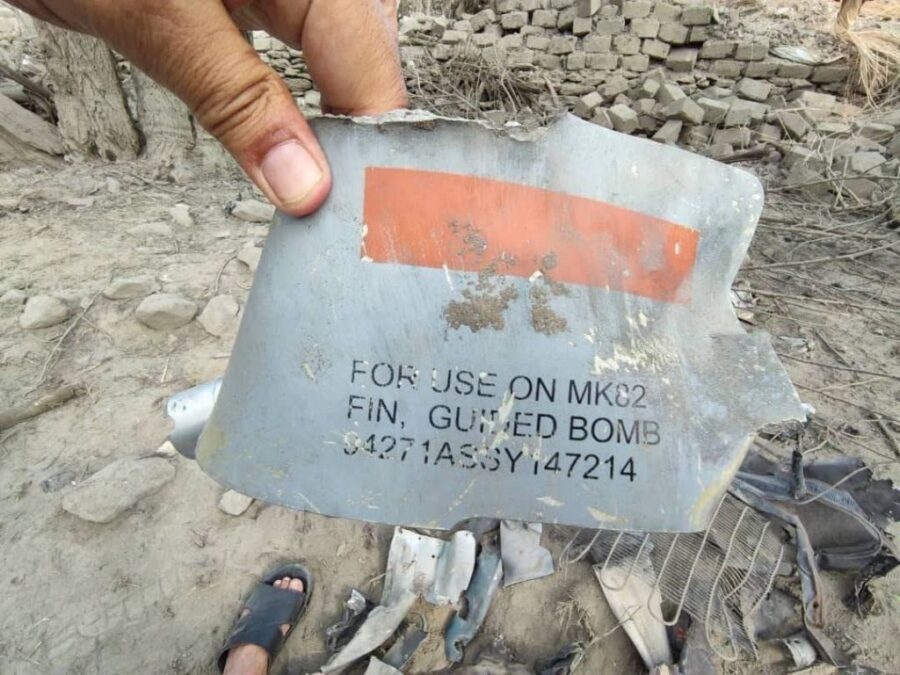
Over the following years, Ansarullah developed its missile and drone capabilities and carried out attacks against targets inside Saudi Arabia, while Saudi-led forces conducted airstrikes and supported forces opposed to the group.
A UN-backed truce in April 2022 sharply reduced the level of large-scale fighting. Although the truce formally expired in October of that year, the overall level of violence remained significantly below the levels seen during the preceding years, while direct and indirect contacts between Riyadh and Sanaa continued.
The reduction in fighting, however, did not resolve the underlying disputes.
The political future of Yemen, the payment of public-sector salaries, the reopening of Sanaa airport and ports controlled by Ansarullah, the withdrawal of foreign forces and arrangements for sharing political power remained among the main points of contention.
Three Years of Fragile Calm
In 2023, Saudi-Ansarullah talks, mediated by Oman, entered a new phase.
In April, Saudi and Omani delegations traveled to Sanaa to discuss ending the war and easing restrictions on Yemen’s ports and Sanaa airport. The talks reportedly focused on reopening ports and the airport, paying public-sector salaries, reconstruction and establishing a timetable for the withdrawal of foreign forces.
In September 2023, an Ansarullah delegation traveled to Saudi Arabia for the first time since the war began and held several days of talks with Saudi officials. The discussions again focused on the reopening of ports and Sanaa airport, salary payments, reconstruction and the withdrawal of foreign forces.
By December, the negotiations had resulted in commitments by the Yemeni sides to move toward a nationwide ceasefire, improve economic conditions and resume an inclusive political process. The proposed measures included the resumption of oil exports, payment of salaries, reopening roads and easing restrictions on Sanaa airport and the port of Hodeidah.
But the process ultimately failed to produce a final and durable political agreement.
Even in 2026, however, channels of negotiation had not completely disappeared. In May, the Yemeni government and Ansarullah agreed to release more than 1,600 prisoners following 14 weeks of talks in Amman.
The agreement suggested that despite deep political and military differences, negotiations between the two sides remained possible.
September 2026: From Military Escalation to the Bab al-Mandab
The latest escalation began before September.
Reuters reported that on July 4, Ansarullah launched missiles toward southern Saudi Arabia after an attack on Sanaa airport and claims by the Yemeni government that an attempt had been made to prevent an Iranian aircraft from landing. The attack was reported as the group’s first alleged strike on Saudi Arabia since the 2022 truce, marking an important break in the years-long period of relative calm.
By August 24, Ansarullah said it had targeted military equipment belonging to a convoy that had entered Yemen through the Al-Wadiah border crossing. Reports also pointed to increased Saudi military activity and the deployment of forces supporting Riyadh.
On August 29, fighting was reported in western Taiz and Hays, alongside attempts to cut supply lines to Saudi-backed forces. A Yemeni official described the operations as an effort to prevent Saudi Arabia from benefiting from oil exports and to pressure Riyadh to address Yemen’s demands.
The fighting intensified in early September, particularly around the Mokha and Bab al-Mandab axis.
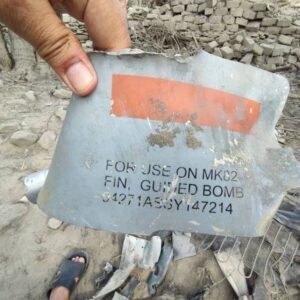
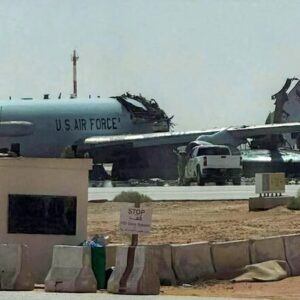
On September 9, Ansarullah carried out what were described as some of its most extensive attacks of the new escalation against Saudi Arabia, with air bases and Aramco facilities reportedly targeted. Yemeni sources also reported extensive Saudi airstrikes in Yemen.
On September 10, reports emerged that Ansarullah had taken control of the strategically important Mokha area, forcing Saudi-backed forces toward Dhubab. Subsequent reports also pointed to Ansarullah’s control of the strategic Al-Omari military base near Bab al-Mandab and to reports of the group’s entry into Perim Island.
Reuters later reported that Ansarullah had reached Perim, the strategic island in the Bab al-Mandab Strait, as the group expanded its control along Yemen’s Red Sea coast.
By September 11, Yemeni sources were also reporting Ansarullah’s control of Dhubab and Perim. The developments brought the group significantly closer to one of the world’s key maritime chokepoints.
The escalation then reached Saudi territory.
On September 19, Ansarullah said it had attacked “sensitive” targets in Riyadh with missiles and drones. Reuters reported that Saudi authorities issued an alert in the capital after explosions were heard and a large plume of smoke was seen near Riyadh’s main airport.
The Saudi-led coalition said it had intercepted a ballistic missile launched toward Riyadh. Ansarullah, meanwhile, said it had targeted sensitive sites in the capital and an Aramco facility in Yanbu.
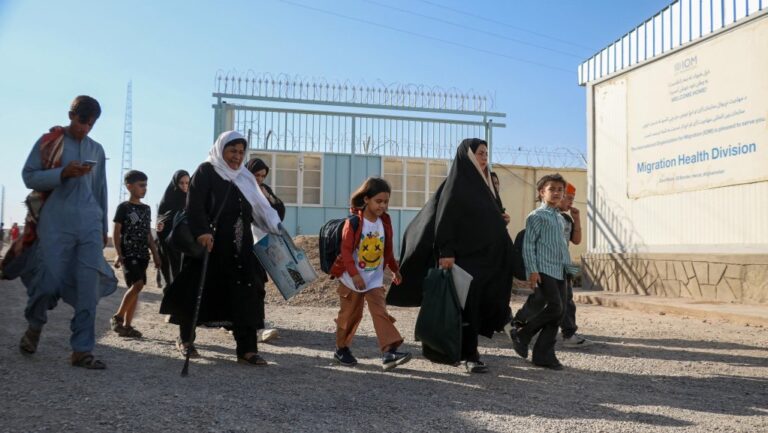
The fighting has also had wider humanitarian consequences. The UN’s migration agency said the renewed conflict had displaced at least 112,000 people inside Yemen, while nearly 3,000 others had fled by sea to Djibouti.
“City for City, Siege for Siege”
Military calculations alone do not fully explain Ansarullah’s conduct.
Yemen has experienced more than a decade of conflict, including airstrikes, blockades, displacement and a prolonged humanitarian crisis. Within Ansarullah’s political and military narrative, defending Yemenis and responding to foreign attacks have become central elements of its justification for military action.
The group has repeatedly used formulas such as “city for city” and “attack for attack” to describe its deterrence strategy. Other expressions, including “siege for siege,” “airport for airport” and “port for port,” have also been used to describe the principle that attacks or restrictions imposed on areas under Ansarullah control will be met with corresponding action against the other side.
Ansarullah has used this logic to explain its recent attacks on Saudi Arabia, describing them as responses to Saudi military operations and pressure against Yemen.
This is the group’s stated justification and does not, by itself, explain all the political and military calculations behind its decisions.
Ansarullah also has direct interests inside Yemen, including maintaining control over territory, confronting Saudi-backed forces and strengthening its bargaining position in any future negotiations.
The latest escalation can therefore be viewed as the intersection of several factors: the legacy of the war, Ansarullah’s domestic objectives, its military confrontation with Saudi Arabia and Saudi-backed forces, and Yemen’s growing role in the wider regional confrontation.
Why Bab al-Mandab Matters
The Bab al-Mandab Strait connects the Red Sea with the Gulf of Aden and is one of the world’s important maritime routes for trade and energy.
Ansarullah’s advance along Yemen’s western coast and toward the strait therefore has implications beyond the battlefield inside Yemen.
The group’s reported control of areas around Mokha, Dhubab and Perim has brought its forces closer to a maritime chokepoint through which international commercial traffic passes.
Reuters reported that the group’s advances along the Red Sea coast and near Bab al-Mandab had increased concerns over Saudi oil exports and regional shipping.
The strategic importance of the area means that any change in control along the western Yemeni coast can affect the security calculations of Saudi Arabia and other regional powers, as well as concerns over international shipping.
Recent Reuters reporting also noted that traffic through Bab al-Mandab had fallen below its recent average amid the renewed regional tensions.
For Ansarullah, gaining positions closer to the strait can increase its military and political leverage. For Saudi Arabia and other countries dependent on the security of the maritime route, the same development represents a significant strategic concern.
What Role Does Iran Play?
Iran’s relationship with Ansarullah is one of the most important elements of the current equation.
Reuters describes Ansarullah as an Iran-backed movement, while reporting on the group’s military capabilities and its relationship with Tehran. The relationship has become particularly significant as Ansarullah has expanded its operations along the Red Sea coast and toward Bab al-Mandab.
At the same time, there is a distinction between strategic alignment and direct operational control.
No direct evidence presented in the reports examined for this article establishes that Tehran directly ordered Ansarullah to carry out the recent attacks against Saudi Arabia.
Iranian officials have repeatedly emphasized that Ansarullah is an independent actor and that its decisions are made by the group itself based on conditions in Yemen.
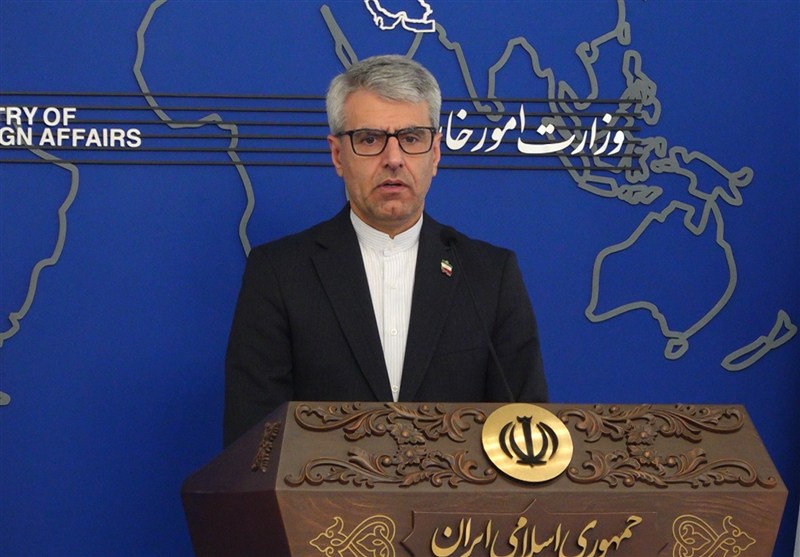
Iranian Foreign Ministry spokesman Esmail Baghaei said on September 10 that Ansarullah is an independent actor and does not take orders from others. He reiterated on September 14 that the Yemeni people and Ansarullah make decisions regarding their own affairs and that the roots of Yemen’s problems should be sought in developments inside the country.
At the same time, Reuters reported on September 17 that Saudi Arabia had asked China to help contain Ansarullah and that Beijing had privately urged Tehran to use its influence over the group to help prevent further escalation.
The report, citing three Iranian sources familiar with the matter, illustrates how the relationship between Tehran and Ansarullah figures in the calculations of Saudi Arabia and China.
But the existence of such a channel does not, by itself, establish that Iran directly controls or orders Ansarullah’s military operations.
Are Ansarullah’s Gains Also Benefiting Iran?
The distinction between the motivation for an action and its consequences is important.
Ansarullah’s advance along Yemen’s western coast and its increased pressure on Saudi Arabia can produce strategic consequences that are also favorable to Iran, including greater pressure on one of Tehran’s regional rivals and a stronger role for Iran-aligned forces in regional security calculations.
The strategic importance of Bab al-Mandab and the Red Sea also means that developments there have implications for wider energy security and maritime trade.
That overlap of interests, however, does not necessarily mean that Ansarullah’s primary motivation is to advance Iranian interests.
An action can serve the interests of Iran and Ansarullah simultaneously without having been directly ordered by Tehran.
This distinction is particularly important in understanding the latest escalation. Ansarullah has its own political, territorial and military objectives in Yemen, while Iran has broader regional interests that may overlap with those objectives.
Yemen Between Domestic Interests and Regional Rivalries
The relationship between Ansarullah and Saudi Arabia has developed within a complex political and military environment.
From the 2015 Saudi-led intervention to the 2022 truce, the 2023 negotiations and the 2026 prisoner-exchange agreement, Yemen’s internal political and economic disputes have remained at the center of the conflict.
The latest escalation has once again brought those disputes into a wider regional context.
Since July, the fragile calm between Saudi Arabia and Ansarullah has progressively deteriorated. By September, the fighting had spread across parts of Yemen’s western coast and toward Bab al-Mandab, while Ansarullah had also expanded its attacks against Saudi territory.
The reported strike toward Riyadh marked a further escalation and demonstrated how quickly the conflict could move beyond Yemen’s borders.
At the same time, the involvement of China and the role attributed to Iran have given the latest confrontation an increasingly regional dimension. Reuters reported that Beijing’s private outreach to Tehran came after Saudi Arabia sought Chinese help to contain Ansarullah’s advances.
The developments therefore cannot be explained solely as an Iranian proxy confrontation, just as Ansarullah’s relationship with Iran cannot be ignored when examining the broader regional equation.
The available evidence points to an overlap of interests rather than a single chain of command: Ansarullah has its own objectives in Yemen, while its strategic alignment with Iran places its actions within a wider regional framework.
The Yemen conflict has thus entered another phase in which domestic power struggles, Saudi security concerns, Iran’s regional position and the strategic importance of Bab al-Mandab are increasingly interconnected.
What began as a prolonged Yemeni conflict has once again become a broader regional security issue, with consequences extending beyond the battlefield to Saudi energy infrastructure, Red Sea shipping and the calculations of powers such as Iran and China.