Afghan activists and former officials have warned that a decline in armed violence in Afghanistan should not be equated with peace, saying lasting peace requires access to education, political participation, justice and the meaningful inclusion of women in public decision-making.
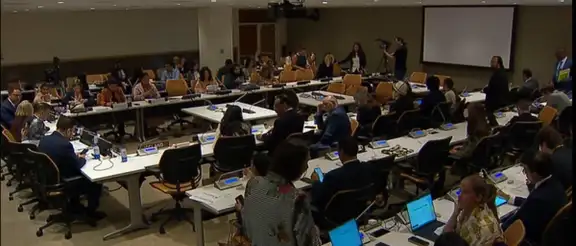
At a side event titled “Women, Peace, Justice and National Reconciliation in Afghanistan” held on the margins of the 81st session of the United Nations General Assembly, participants discussed the country’s current situation and stressed that a calmer security environment alone does not constitute peace.
Adela Raz, Afghanistan’s former ambassador to the United States, said that although the intensity of fighting has declined five years after the Taliban returned to power, “a reduction in violence does not mean peace.”
“Peace means being able to go to school, having a future, and having a voice and a role in decisions that are made about your life and your country,” she said.
Fereshteh Sakhi, a women’s rights activist, described the current situation in Afghanistan as “negative peace” — a condition in which large-scale fighting has ended but justice, political participation and social inclusion remain absent.
She warned that the exclusion of women could have long-term consequences, including contributing to the normalization of violence in society and within families.
Mitra Mehran, another women’s rights activist, called for the recognition of “gender apartheid” under international law, saying Afghan women had demanded such recognition since the Taliban’s first period in power.
She said the international community must also be held accountable for its moral and legal obligations toward Afghan women, arguing that Afghanistan had become a test of the world’s commitment to women’s rights.
Mitra Alkouzi, also a women’s rights activist, said the exclusion of women from politics and public life was not merely a legal issue but a political matter that would shape Afghanistan’s future.
“Afghan women must be present as a political party in discussions concerning the future of Afghanistan,” she said.
Mushtaq Rahim, an Afghan activist, criticized what he described as the international community’s excessive focus on the Taliban, saying the approach had resulted in Afghan society receiving less attention.
He said Afghanistan’s younger generation continued to change while facing widespread restrictions on education, employment and social participation.
According to Rahim, a “regime-centered” approach overlooks a society that is simultaneously facing an economic crisis and one of the world’s largest humanitarian crises.
Melanne Verveer, former U.S. ambassador-at-large for global women’s issues, said that “engagement with the Taliban should not be interpreted as support for the people of Afghanistan.”
She warned that any engagement with the Taliban should be conducted in a way that does not lead to the normalization of restrictions or the exclusion of half of Afghanistan’s population.
Verveer also criticized recent meetings between some European countries and the Taliban, saying Afghan society, particularly women, was absent from those discussions.
Katrín Jakobsdóttir, Iceland’s former prime minister, described the situation of women and girls in Afghanistan as “one of the most severe gender crises in the world” and said the international community should not remain silent.
She warned that the normalization of the situation in Afghanistan could have consequences beyond the country and could become part of a broader global rollback of women’s rights.
Helen McEntee, Ireland’s minister for foreign affairs and trade, said that “being horrified and angry at the Taliban’s edicts is not enough,” and that the international community must respond with practical measures.
She stressed that the Taliban government should not be recognized or normalized in any form, and expressed hope that ongoing meetings in New York would move beyond identifying the problem and lead to concrete action.
Participants concluded that peace in Afghanistan cannot be measured solely by a reduction in fighting, arguing that sustainable peace requires education, political participation, justice and the presence of women in decision-making.
The remarks came as the United Nations Assistance Mission in Afghanistan (UNAMA) said in a message marking the International Day of Peace on Monday that lasting stability and peace depend on investment in people, education, livelihood opportunities and human dignity, alongside meaningful participation by women and girls.