A UN Security Council meeting in New York, held following the release of a new UNAMA report on Afghanistan’s security, political, human rights and economic situation, highlighted broad concerns over terrorism, tensions between the Taliban and Pakistan, the humanitarian crisis and restrictions on women. However, deep divisions remained among major powers over how the international community should engage with the Taliban.
According to IRAF, the meeting was held on Wednesday evening, September 16, with nearly all Security Council members describing terrorist activity in Afghanistan as a threat extending beyond the country’s borders and warning that the security situation has once again become a regional and international concern.
Iran’s representative called on the Taliban to prevent Afghan territory from being used to plan or carry out attacks against neighboring countries and described ISKP as a serious threat.
China also urged the Taliban to take stronger and more decisive action against ISKP, al-Qaeda, the East Turkestan Islamic Movement and the Tehrik-e-Taliban Pakistan (TTP).
Russia warned about ISKP’s ability to recruit fighters and transfer militants from Syria, stressing that the Taliban has still failed to fully counter the activities of such groups.
The United States accused the Taliban of providing safe haven to terrorist groups, saying that the consequences of developments in Afghanistan do not remain confined to the country’s borders. Washington called on the Security Council to demand “action, not words” from the Taliban.
The United Kingdom, France, Denmark and Pakistan also raised similar concerns.
According to the UN Secretary-General’s report, the number of security incidents in Afghanistan increased by 11 percent compared with the same period last year. During the reporting period, anti-Taliban armed groups carried out 88 attacks across 21 provinces.
Taliban-Pakistan Tensions: Unstable Borders and Deadly Clashes
Pakistan’s representative claimed that the Tehrik-e-Taliban Pakistan and armed Baloch groups operate from Afghan territory with impunity. He said Pakistan had suffered more than 4,700 casualties over the past three years in attacks that Islamabad says were organized from Afghanistan.
He also warned about these groups’ access to advanced weapons and equipment left behind by international forces.
Russia and the United Kingdom called for a reduction in tensions and urged both sides to return to dialogue.
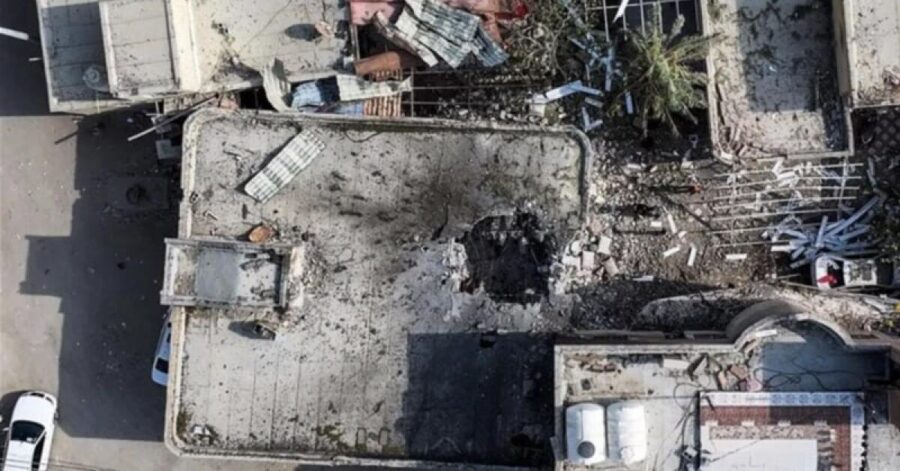
The UN Secretary-General’s report described the Afghanistan-Pakistan border situation as “volatile” and reported airstrikes, drone surveillance flights and cross-border shelling in Ghazni, Kunar, Khost, Paktika, Paktia, Kandahar and Nangarhar provinces.
At least 57 civilians were killed and 342 others wounded in the clashes between April 1 and June 30.
Meanwhile, Turkey and Qatar have once again stepped in to mediate, but there are still no clear signs of a lasting improvement in relations between Kabul and Islamabad.
Restrictions on Women and a Widening Humanitarian Crisis
The Taliban’s restrictions on women and girls were among the central issues raised at the meeting.
The British representative said no country can make progress while half of its population is excluded from public life. She also pointed to the year-long ban preventing Afghan female staff from entering UN offices, saying the restriction has disrupted humanitarian operations.
France described the ban as unacceptable, saying the international community had listened to the Taliban’s demands and that the Taliban must now respond to the international community’s demands with concrete action.
The US representative, referring to the five-year exclusion of Afghan women and girls from education, described the situation as tragic.
According to the UN Secretary-General’s report, roughly one-third of Afghanistan’s population is facing acute food insecurity, while 13.8 million people are expected to remain in crisis or emergency food-security conditions this year.
An estimated 3.7 million children under the age of five and 1.2 million pregnant and breastfeeding women are also expected to suffer from acute malnutrition.
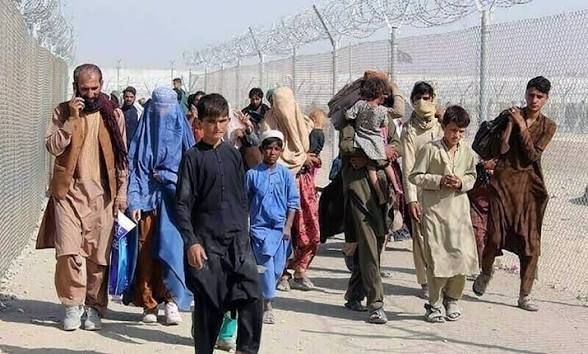
Between January 1 and August 22, nearly 1.15 million Afghans returned from neighboring countries, placing additional pressure on the labor market and public services.
Georgette Gagnon said peace is not simply the absence of war, but also requires people to have dignity, opportunities for progress and hope for the future.
She added that despite five years of relative calm, Afghans feel that Taliban policies have marginalized them, while the country’s economy remains fragile.
Dispute Over Engagement with the Taliban: A Growing East-West Divide
Security Council members agreed on the need to maintain engagement with Afghanistan, but significant differences emerged over the form and conditions of that engagement.
The United States, Britain and France stressed that engagement must be accompanied by Taliban accountability. They called for concrete action against terrorist groups, respect for women’s rights, the establishment of an inclusive government and the release of foreign nationals to remain on the agenda.
China, Russia and Iran, meanwhile, called for continued dialogue, expanded economic cooperation and avoiding the isolation of Afghanistan.
China argued that isolating Afghanistan under Taliban control would not resolve the country’s problems, while Russia stressed that Afghanistan should not be subjected to pressure or intimidation.
Iran also described political engagement and regional cooperation as the most effective means of addressing Afghanistan’s challenges.
India’s representative criticized the mass deportation of Afghan migrants and the closure of trade routes between Afghanistan and Pakistan, describing the measures as “commercial and transit terrorism.”
He said human rights cannot be improved separately from security, development and economic opportunities.
Nasir Ahmad Faiq, Afghanistan’s representative to the United Nations, said no lasting solution can emerge from dialogue between the Taliban and foreign governments without the participation of the Afghan people. He stressed that Afghanistan is more than the Taliban and that Afghans must participate in decisions about their country’s future rather than remain spectators.
He added that five years of experience had shown that neither isolating the Taliban on its own nor engagement without a clear political objective had produced results. The international community, he said, should therefore pursue principled and results-oriented engagement aimed at establishing a legitimate, representative and accountable government.
Common Concerns, Different Approaches
Overall, the Security Council meeting demonstrated that Afghanistan has once again become a major security concern for the region and the wider international community.
Countries agreed on the need for stability in Afghanistan and on preventing its territory from becoming a safe haven for terrorist groups. However, they remain divided over how these objectives should be achieved.
Alongside security threats, tensions between the Taliban and Pakistan, the humanitarian crisis and restrictions on women remain among the key factors shaping international policy toward Afghanistan. For now, there is little indication of a global consensus on how the international community should engage with the Taliban.