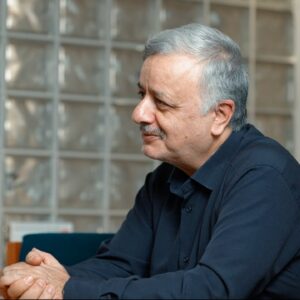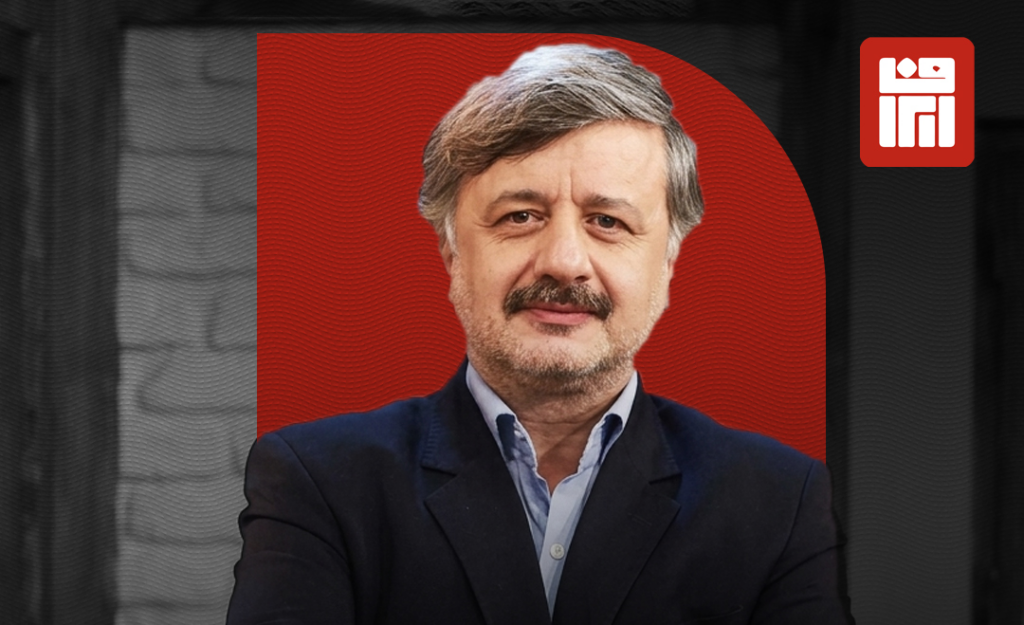
Mohammad Kazem Kazemi, an Afghan poet, writer and literary researcher, writes in an exclusive article for IRAF:
In this article, I do not intend to discuss generalities or elaborate on the place of Persian poetry and literature in our societies. Instead, I want to examine concretely what poetry actually does for us as human beings, and what we, in turn, should do for poetry.
A Shared Day for Persian-Speaking Communities
We are marking National Persian Poetry and Literature Day. In Iran’s official calendar, the day commemorates the death of the renowned poet Mohammad Hossein Shahriar.
Every year, as this occasion approaches, I find myself wishing that it were celebrated jointly across all Persian-speaking countries, included in their official calendars and recognized as an international occasion for the Persian-speaking world.
But should we wait for official recognition? Can we, as Persian speakers, not collectively and independently of governments commemorate this day throughout the expanse of our Persian-speaking homeland?
Of course, we can.
This language and its literature belong to everyone across this cultural and linguistic region. Mohammad Hossein Shahriar is also widely known throughout these lands. Many of his poems have been performed by Afghan singers, and his name is familiar to our people.
In this article, I do not intend to discuss generalities or elaborate on the place of Persian poetry and literature in our societies. Instead, I want to examine concretely what poetry actually does for us as human beings, and what we, in turn, should do for poetry.
I will outline these contributions in seven points, in a relatively concise and list-like manner.
1. Satisfying the Human Appreciation of Beauty
One of poetry’s principal functions is to beautify language.
Alongside our material needs, human beings also have a need for beauty. Even when we set a table to meet the body’s basic need for food, we try to make it beautiful. We choose matching and harmonious dishes, arrange them attractively and present the food in an appealing way, even though the meal may be finished within minutes and little of that beauty will remain.
Even if only for a brief moment, we want to enjoy beauty.
The same applies to language. Language on its own offers limited aesthetic pleasure, but through poetry, we embellish it and make the message it carries more appealing and accessible to its audience.
Words can be made beautiful in several ways: through the art of calligraphy, through music and through poetry.
What is particularly interesting about poetry is that it also contributes to both of these other art forms, a point I will discuss later.
2. The Emotional Impact of Language
Human beings are emotional creatures, endowed with feelings and sentiments. They make decisions not only through reason and intellect, but also through their emotions.
For this reason, in addition to messages conveying scientific and rational information, we also need messages that carry emotional weight.
If we want to report on the products of a factory, we can use statistical data and figures. The same applies when describing the distance between two cities or reporting market prices.
But what if we want to express the depths of our homesickness, longing and loneliness?
This is where factual, scientific and informational statements are no longer sufficient.
A relative of ours, who was not particularly interested in poetry, once travelled to a distant place alone. When we asked about his condition, he sent us a couplet by Bidel.
Indeed, how could the loneliness and estrangement contained in these verses be described through scientific, logical or factual statements?
They asked, “In this utter solitude, what are you, after all?”
I said, “I am a flower, cast away by my spring.”
3. Conveying Knowledge and Teachings
We acknowledge that moral, social and political knowledge and teachings do not necessarily depend on poetry. Moral principles can also be communicated through prose, as we see in the sermons and speeches of religious scholars.
This is aside from the fact that poetry is frequently used in these very sermons to make words more effective.
Yet conveying such concepts through poetry offers both wider reach and greater permanence.
Fakhr al-Din al-Razi was one of the most renowned preachers and orators in the Islamic world of his time. His sermons and lectures attracted audiences of several thousand people.
The same was true of Sheikh Abu Saeed Abu al-Khayr, Khwaja Abdullah Ansari and other Islamic scholars and mystics.
Today, however, we engage more extensively with works that have preserved this intellectual heritage in poetic form, such as Saadi’s Bustan and Rumi’s Masnavi-ye Ma’navi.
Jalal al-Din Rumi himself was a prominent preacher before becoming a poet. Had he never turned to poetry, he might have remained a figure like Fakhr al-Din al-Razi: an important historical personality whose teachings and sermons are no longer as accessible or useful to us today.
Even Sheikh Abu Saeed Abu al-Khayr is now widely known through poems attributed to him.
Interestingly, Sheikh Abu Saeed was not himself a poet and did not compose poetry. Nevertheless, a collection of poems bearing his name exists.
The reason is that his disciples and admirers appear to have felt that poetry was a more effective means of conveying the teachings of this renowned mystic and ascetic.
The same applies to Omar Khayyam, whom we know today primarily through his quatrains rather than his scientific works.
4. Preserving the Persian Language
In another article about the Persian language, published some time ago on this same platform, I discussed how strengthening literature is one of the most important and fundamental ways to preserve a language.
Literature, and poetry in particular, passes through different communities and across days and months like the thread of a rosary, connecting them to one another.
Poetry is effective both in educational settings and in teaching Persian. It also acts like an anchor, preventing the language from being swept away by disorder, fluctuation and excessive change.
Literature can be described as the backbone of a language, providing the strength and continuity it needs to endure.
5. Fostering Solidarity Among Speakers of the Same Language
Beyond its aesthetic and intellectual functions, poetry can serve as a means of communication between individuals within a society and among different societies that share a language.
We can see a concrete example of this among migrant communities in Iran, where the poetry of our poets has played a significant role in fostering solidarity and connections between the people of the two countries.
We have also repeatedly witnessed how social interactions have given rise to strong bonds of friendship and familiarity between poets, and even poetry enthusiasts, from the two countries, built solely on poetry and literary exchanges.
Such solidarity has also emerged at the national level.
Many Afghan poets from different regions, representing diverse ethnic and even linguistic backgrounds, have been brought together through poetry — something that is far less evident in the political sphere.
6. Enriching and Sustaining Other Art Forms
There has always been an exchange between different art forms.
Calligraphy and graphic design influence one another. The same is true of cinema and theatre, theatre and fiction, and music and film.
Among these art forms, poetry maintains strong connections with several others and contributes to their development.
Many calligraphic works are, in fact, poems brought to life through the visual art of calligraphy.
Poetry is also a fundamental element of vocal music. It may take the form of classical verse, a musical composition or a song lyric. In any case, vocal music has rarely taken practical shape without poetry.
Even the titles of some films bear traces of poetry. “Where Is the Friend’s House?” and “The Scent of Joseph’s Shirt” are lines taken from poems by poets.
7. The Ability to Be Presented in Different Forms
Some art forms can only be experienced in one particular way.
A painting, for instance, must be seen; it cannot simply be expressed verbally. A musical composition must be heard; it cannot be read from a book. A film loses its distinctive quality when presented merely as a screenplay.
Poetry, however, can be experienced in several forms.
It can be read in books, magazines and on internet pages. It can be heard as a recitation. It can be transformed into music or presented in audiovisual productions combining music, imagery and the written text of the poem.
These different forms of presentation further expand the possibilities for poetry to be experienced and used throughout society.
Conclusion
Many more points could be added to these seven.
In my view, however, these are among the most important roles and contributions poetry makes to our lives. This is also why human society, even in the modern age, has never been entirely free of the need for poetry.
That need is, of course, even greater in Eastern societies because of their cultural characteristics.
It is therefore incumbent upon us to value poetry not only on National Persian Poetry and Literature Day, but throughout the year and for all time.