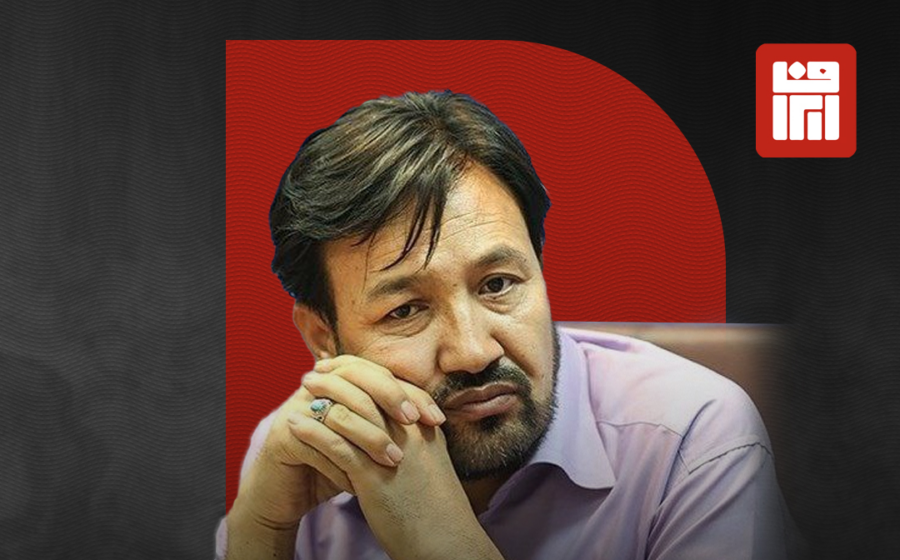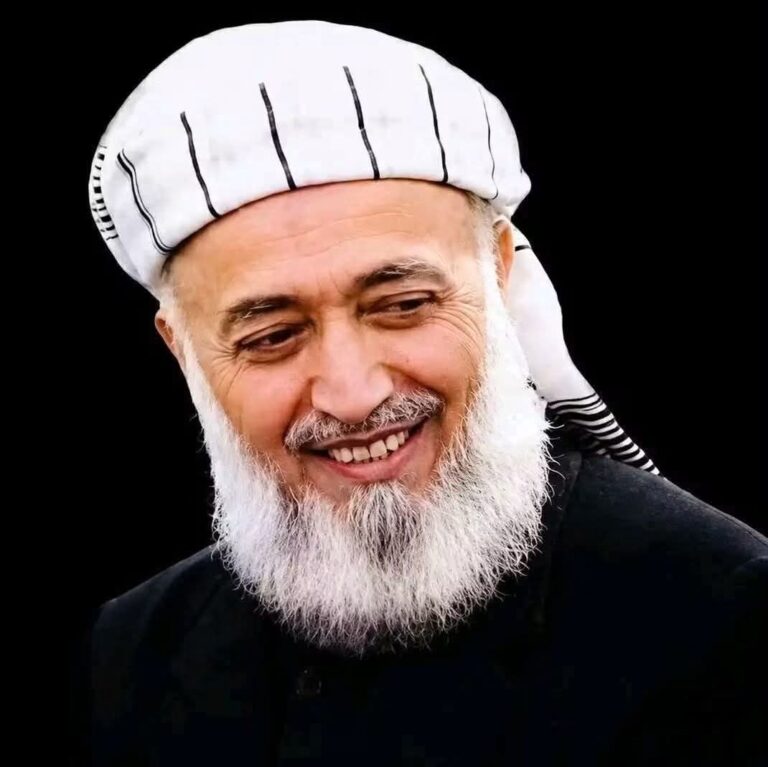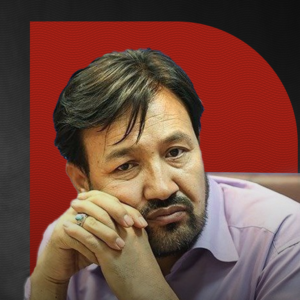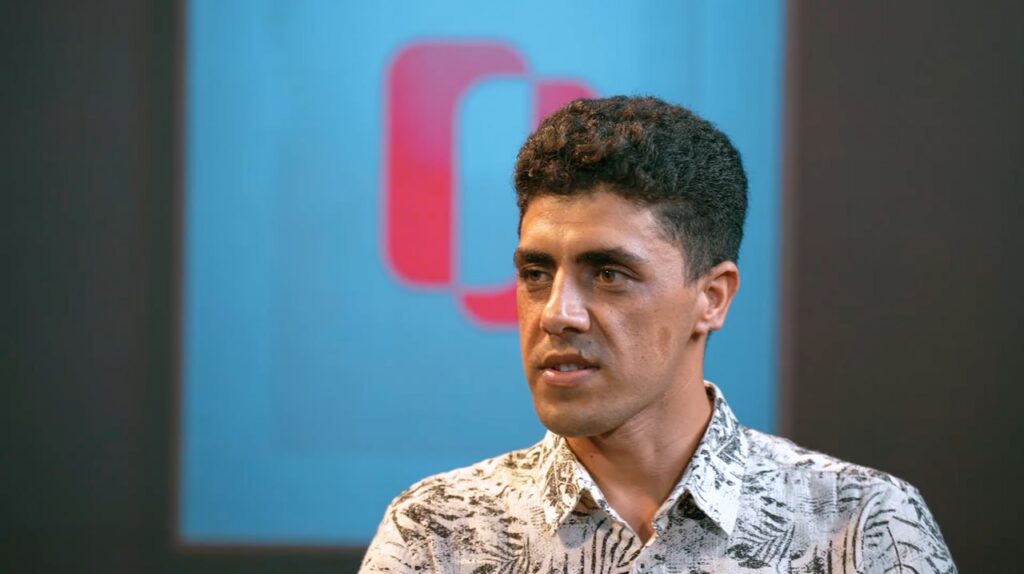
Mehran Popal, a young Afghan poet of Pashtun descent, has voiced concerns about the future of the Persian language in Afghanistan, warning that growing anti-Persian sentiment could undermine its standing. In an interview with IRAF TV’s “Yaran-e Khorasani” program, he discussed his experience writing Persian poetry, the state of contemporary Afghan poetry, the language’s place among Pashtuns, and his memories of attending the final meeting of poets with the martyred Leader of the Islamic Revolution.
Mehran Popal, a young Afghan poet, has stressed that Persian is not confined to any single ethnic group in Afghanistan, noting that a considerable number of Pashtuns in areas such as Herat speak the language.
At the same time, he warned of what he described as a “wave of anti-Persian sentiment” in Afghanistan, saying that without efforts to preserve and strengthen the language, Persian could lose its current standing in the country.
A Language Beyond Ethnic Boundaries
Discussing how a poet of Pashtun descent came to write in Persian, Popal explained that many Pashtuns in Herat speak Persian, while some do not know Pashto at all.
Although he said it was difficult to provide an exact percentage, Popal noted that a significant portion of Herat’s Pashtun population is Persian-speaking, adding that his own background reflects this reality.
The young poet said that, according to accounts passed down by his elders and ancestors, some Pashtun families had migrated from Kandahar to Persian-speaking regions several centuries ago. After settling there, they gradually shifted to Persian.
Referring to his own family history, Popal said that at least three or four generations before him had spoken predominantly Persian, while Pashto had played only a limited role in their daily lives.
He described this as an example of the historical interweaving of languages and cultures in Afghanistan, where ethnic and linguistic boundaries do not necessarily coincide.
Social and Protest Poetry
Discussing public taste in poetry in Afghanistan, Popal said that audiences’ preferences largely depend on the tastes and social and political circumstances of each period.
Drawing on his experience of poetry associations and recitation gatherings in Afghanistan, he explained that poets generally select their works in keeping with the prevailing mood of society and current developments.
Popal added that social, critical and protest poetry tends to attract greater attention among Afghan audiences. He said his own works had received stronger responses when they addressed social issues, criticism or protest.
Asked about the popularity of modern and classical poetry, Popal said that classical poetry continues to enjoy a wider following in Afghanistan.
According to him, relatively few Afghan poets write in free verse or modern poetic styles, while classical poetry retains a more prominent place in the country’s literary scene.
Popal said he has also experimented with modern poetry alongside metered verse, although he noted that he does not feel particularly connected to free verse.
Warning Over the Future of Persian in Afghanistan
In another part of the interview, Popal raised concerns about the state of the Persian language in Afghanistan, saying it had faced extensive pressure and attacks over several decades.
“Unfortunately, a very extensive campaign has been waged against the sweet Persian language, and it has come under attack. Sadly, it must be said that this has also had a considerable impact.”
Referring to a line by Mohammad Kazem Kazemi, Popal said Persian had managed to survive the Mongol invasion but had proved more vulnerable to certain attacks and pressures in the contemporary era.
He stressed that serious measures were needed to counter what he called the wave of anti-Persian sentiment, warning that the language’s future could be at risk if no efforts were made to preserve and strengthen it in Afghanistan.
Popal cautioned that, if the situation continued, Persian could eventually be regarded merely as one of Afghanistan’s local languages. He said this concern reflected the scale of the challenges facing Persian speakers in the country.
Meeting the Martyred Leader: A Mixture of Joy and Regret
Popal also recalled attending the final meeting of poets with the martyred Leader of the Islamic Revolution, saying he had been invited to the gathering but had not had the opportunity to recite his poetry.
Describing the atmosphere, he said that attending such a meeting and reciting poetry in the presence of the Leader had been an aspiration for many poets. For him, the gathering was also a distinctive and deeply moving experience.
The Afghan poet said that, after years of living in Afghanistan and experiencing its restrictive environment, witnessing a political leader’s attention to poetry, poets and Persian literature had been particularly gratifying.
At the same time, he said the experience had also left him with a sense of regret.
Popal recalled that during the meeting, which lasted approximately three to four hours, he struggled several times to hold back his tears. One such moment came when the martyred Leader entered the venue.
He explained that his deep attachment to Afghanistan and his patriotism had left him experiencing conflicting emotions: on the one hand, he was delighted to see such a figure in person; on the other, he wondered why Afghanistan lacked similar circumstances in which poetry and literature could receive such attention.
The Martyred Leader’s Remarkable Command of Persian Poetry and Literature
Popal said it was not only the overall atmosphere of the gathering that had impressed him, but also the martyred Leader’s precision and attention to detail in poetry.
He recalled that, at several points during the meeting, the Leader’s command of and close attention to Persian poetry and literature once again moved him emotionally, making it difficult for him to hold back his tears.
The Afghan poet described the martyred Leader’s mastery of Persian poetry and literature as “astonishing.”
Popal also referred to various speeches by the martyred Leader, saying he had consistently paid attention to some of his views on the Persian language and that the importance he attached to the subject was evident in his remarks.
According to Popal, one of the Leader’s key points was that plans should be made so that, 50 years from now, anyone seeking to hear a new scientific idea would have to learn Persian.
Popal said the statement clearly demonstrated the importance the martyred Leader attached to the Persian language and literature.
Seyyed Ismail Balkhi: Poetry in the Service of Resistance
In another part of the interview, Popal discussed the life and standing of Seyyed Ismail Balkhi, the Afghan poet and activist, describing him as one of the most influential figures in contemporary Afghan poetry.
He said Balkhi had been among the influential and revolutionary figures in Afghanistan’s intellectual and literary circles, particularly over the past two centuries.
According to Popal, numerous Afghan poets and literary movements had been influenced by the poetry and ideas of the martyred Ismail Balkhi, drawing on his concepts and intellectual outlook.
In closing, Popal reiterated the need to support the Persian language in Afghanistan, saying the Islamic Republic of Iran and other Persian-speaking countries could play an important role in preserving and strengthening it.
He expressed appreciation for the attention Iranian officials had paid to the Persian language, while calling for greater efforts to support Persian beyond Iran’s borders, particularly in Afghanistan.
Popal also expressed hope that the language would once again regain its historical standing and vitality.
Persian’s Historical and Cultural Place in Afghanistan
Persian is one of Afghanistan’s principal languages and, alongside Pashto, is among the most widely used languages in the country. The Afghan variety of Persian, commonly known as Dari, is spoken across Afghanistan and has played a central role in shaping the country’s literary heritage.
Throughout history, Afghanistan has been an important center of Persian culture and literature. Cities such as Balkh, Herat and Ghazni have played significant roles in the development and expansion of this literary tradition.
Many prominent poets and writers have emerged from this region, while literary ties among Afghanistan, Iran and Tajikistan remain an important element of the cultural identity shared by Persian-speaking communities.
In recent decades, the status of Persian in Afghanistan has become intertwined with ethnic, political and identity-related issues. At the same time, the country’s literary movements have continued their activities, with social, critical and protest poetry maintaining a particular place among sections of the literary community.
Against this backdrop, discussions about the future of Persian in Afghanistan extend beyond literature, touching on cultural heritage, historical identity and the connections among Persian-speaking communities across the region.