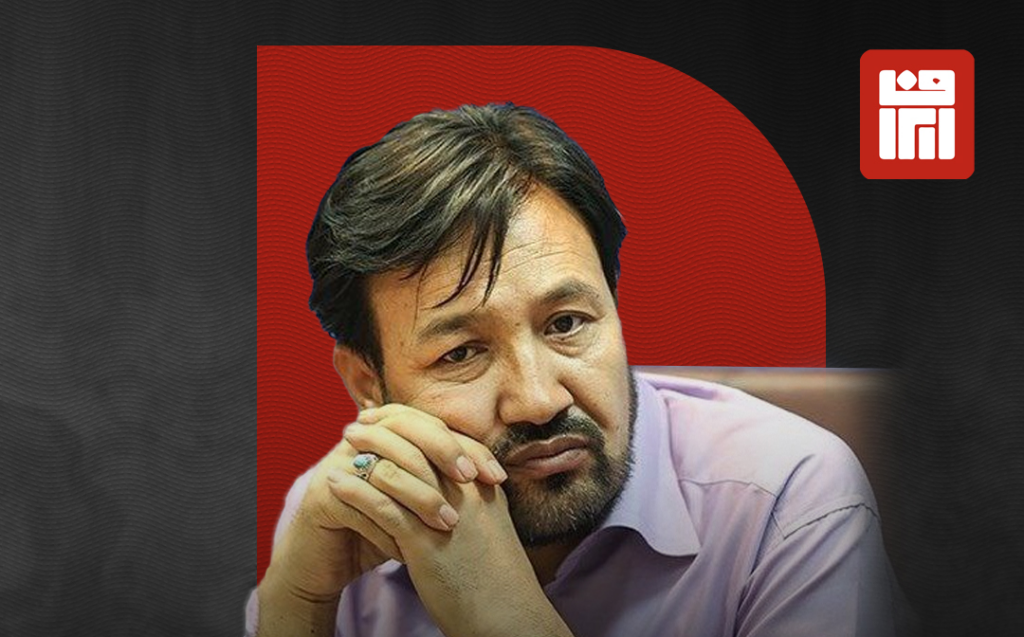
Afghan poet and literary researcher Seyed Abutaleb Mozaffari argues in an exclusive article for IRAF that the selection of Mohammad Hossein Shahriar as the namesake of Persian Poetry and Literature Day could have been more inclusive, reflecting the shared cultural heritage of Iran, Afghanistan and Tajikistan.
The cycle of day and night, although a natural phenomenon, has played a vital role in sustaining and improving the material and spiritual lives of human beings and other living creatures. The creation of calendars, the division of time into years, months and days, and the naming of each have all reflected the significance of this phenomenon across different cultures and nations.
In the religious and national traditions of every people and nation, certain days have been designated as special occasions. On these days and nights, people observe particular rituals and practices. This valuable legacy of previous generations has continued into the modern era in different forms, alongside newly established occasions and commemorative days.
The naming of commemorative days in any country naturally reflects the government’s attention to particular national and civilizational issues. There is little room for dispute on this point. However, such designations can also reveal the inclinations and preferences of a country’s leaders: what they think about and how they think, what their cultural priorities are, and how much importance they attach to different aspects of culture.
Some countries, where cultural affairs have fallen into stagnation or which face fundamental political and social crises, tend to remain particularly static in this regard.
The Islamic Republic of Iran, meanwhile, has been more active in the cultural sphere and has made sustained efforts in this area. Numerous days have been named after poets and other scientific, intellectual and mystical figures.
One such designation is September 18 (27 Shahrivar), which commemorates the renowned contemporary poet Mohammad Hossein Shahriar and is observed annually as Persian Poetry and Literature Day at cultural gatherings.
These efforts deserve appreciation. Nevertheless, several points can still be raised.
The ancient tree of the Persian language, and particularly the eternal and unparalleled fruit of Persian poetry, cannot be overlooked. Today, countries and nations are known above all through their poets and writers. Poetry and fiction can readily cross the borders of a particular language and reach audiences around the world.
We all know that Russia is widely associated with Tolstoy, Chekhov and Dostoevsky, while the literary legacy of Latin American writers has rapidly crossed cultural borders. Clearly, the rich and brilliant literary heritage of the Persian language is in no way inferior to that of other languages and cultures in this regard.
It is therefore fitting that not just one day, but many days, should be dedicated to this important legacy.
However, as to how and for what considerations Shahriar was selected from among the many outstanding figures of Persian poetry and literature in Iran, I will refrain from commenting, as I am not privy to the behind-the-scenes deliberations.
Although I regard Shahriar as a great poet who wrote in two languages, for reasons I will explain, the selection could have been more carefully considered in certain respects.
Given that the Persian language and poetry constitute a great and enduring global heritage, and that Iran, Afghanistan and Tajikistan are today three independent countries that each claim ownership of and a connection to this language, it would have been more appropriate for cultural policymakers in the three countries to engage in cultural cooperation and choose a name for the occasion to which the other two countries, and potentially others as well, could feel a sense of belonging.
If no such cooperation exists among the three countries, at the very least, the Islamic Republic of Iran, which has demonstrated an interest in such cultural initiatives, could have selected a name that met these considerations.
For example, naming the day after the great sage Ferdowsi or the revered Mawlana Jalal al-Din Rumi would undoubtedly have fostered broader agreement.
Across the vast geographical and cultural sphere of Persian civilization, there are also other important days and occasions to which all three countries have long felt a sense of belonging, including Nowruz and Yalda Night.
It would have been highly beneficial if Persian Poetry and Literature Day, as a celebration of a shared civilization, had also provided an opportunity for cultural exchanges, joint gatherings and poetry nights among poets from the three countries.
Alternatively, annual awards for Persian poetry and literature, or recognition of an outstanding poet from one of the three countries, could have been announced on this occasion.
In major cultural planning initiatives, particularly those concerning language, broader interests must always serve as the foundation. The formalization of constructed boundaries should remain confined to matters such as passport regulations, citizenship and limited economic interests.
Spiritual matters, including history, language and culture, which cannot be divided or apportioned, must instead be considered in their proper context. Their benefits and potential harms should also be assessed beyond the framework of contemporary nationalism.
For example, if a cultural heritage item is to be officially recognized and registered one day by UNESCO, the United Nations or any other international institution, it would be appropriate for the proposal to be put forward and approved with the views and participation of all three countries.
Similarly, if a historical monument or a musical instrument such as the rubab or the setar is to be registered somewhere, the familiar disputes should not arise, with each country attempting to claim it exclusively for itself and place its own stamp of ownership on it.
This principle could, and should, also bring an end to the unsuccessful and unnecessary disputes over the appropriation of literary and cultural figures.
More important and vital still is the following point: If, at some point, internal or external threats endanger the Persian language and Iranian culture and civilization in these three countries or elsewhere, and it becomes clear that a shared heritage is being destroyed, all three countries should be able to respond.
If negligence or poor judgment in government policies and thinking threatens the foundations of this ancient linguistic culture, the three countries should be able to raise objections without being constrained by cumbersome diplomatic rules or the temporary considerations of political circumstances.
They should be able to intervene without reservation in response to internal or external measures, defending and protecting the spiritual rights of all the inhabitants of these three countries — rights that, in reality, constitute the intangible heritage of all humanity.