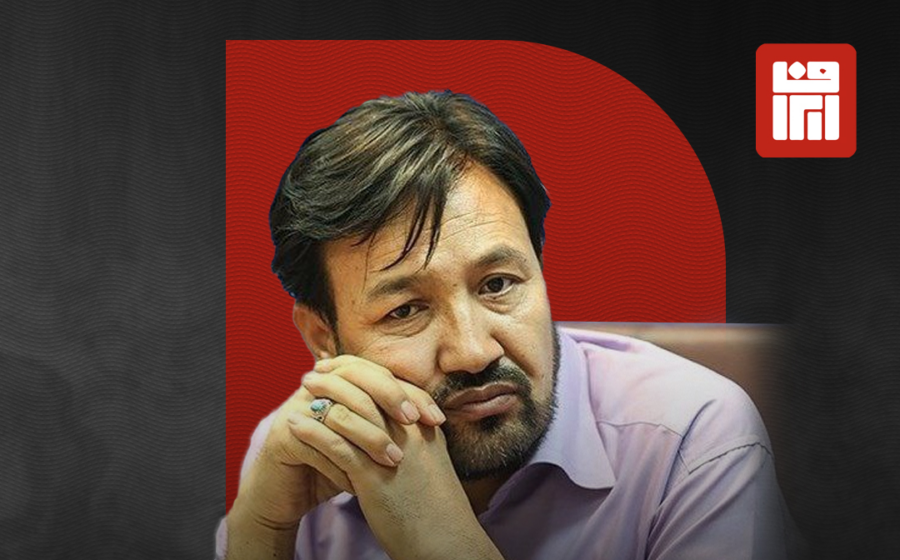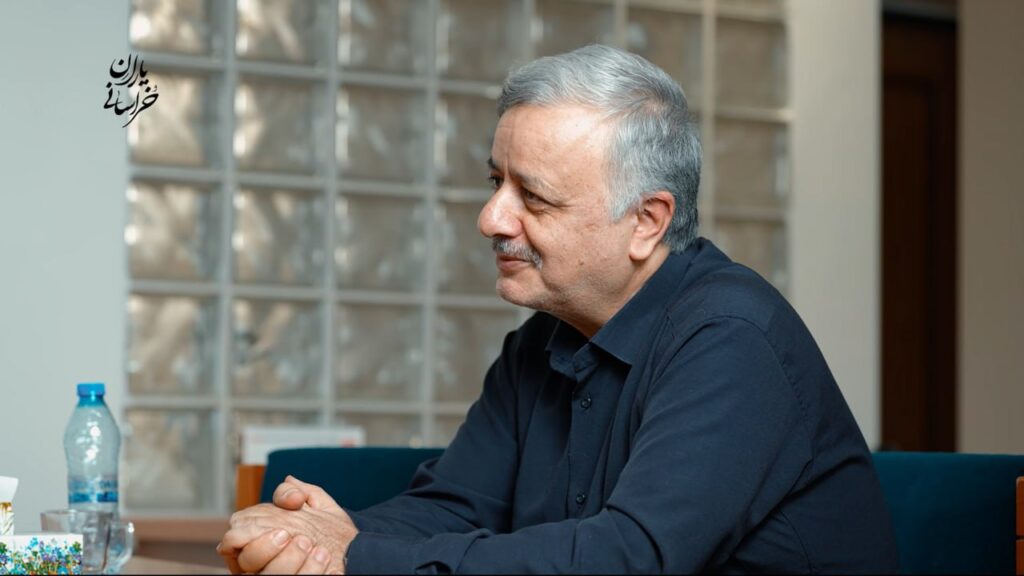
Mohammad Kazem Kazemi, an Afghan poet and literary researcher, has recalled his participation in numerous meetings between poets and Iran’s martyred leader, highlighting his attention to Afghan poetry, the challenges facing Afghan migrants, the Persian language, and cultural ties between the two nations.
Over the years, meetings between Iran’s martyred leader and poets provided one of the few forums where Afghan poets could join their Iranian counterparts. Kazemi, who has participated in these gatherings since their early years, has recounted his experiences, from his first meeting in 1988 to his final encounters, discussing poetry, migration, the Persian language, protest poetry, and cultural relations between Iran and Afghanistan.
Speaking to IRAF TV’s “Yaran-e Khorasani” program, Kazemi recalled his numerous meetings with the martyred leader and his attention to Persian poetry, literature, and issues concerning Afghanistan. He stressed: “What ultimately has an effective impact on migration issues and relations between the two nations is the poetry we present, especially poetry that inspires empathy.”
From His First Meeting in 1988 to Numerous Poetry Readings
Kazemi said his first meeting with the martyred leader took place in 1988, when he was serving as Iran’s president.
He explained that during Ayatollah Seyyed Ali Khamenei’s Nowruz visit to Mashhad that year, a group of Iranian and Afghan poets met with him at the shrine of Imam Reza. The gathering was arranged in coordination with Seyyed Abdullah Hosseini, who was responsible for poetry sessions at the Mashhad branch of the Artistic Center.
According to Kazemi, the late Saadat-Moluk Tabesh was among the Afghan poets attending the meeting, alongside several Iranian poets.
The Afghan poet said he subsequently attended the gatherings occasionally. After the meetings became an established tradition during the middle of the holy month of Ramadan, he began participating in some of them more regularly.
Kazemi estimated that he had attended these meetings around 10 to 15 times, or possibly more, and had been given the opportunity to recite poetry on approximately seven or eight occasions. He also attended several private meetings with artists and cultural figures as a representative of Afghan poets.
When the Leader Remembered Kazemi and His Poetry
Kazemi described one of his most memorable experiences as a meeting in 2008, following a gap of around 10 to 15 years since his first appearance.
He said his participation had become less frequent during those years because of various commitments. When he returned after such a long interval, he did not expect the martyred leader to remember him.
Kazemi recalled introducing himself after prayers, as attendees were heading toward the dinner venue, saying: “I am Mohammad Kazem Kazemi.”
According to the poet, the martyred leader immediately recognized him, welcomed him, and asked how he was doing.
Kazemi added that during the conversation, he realized the leader had read his recently published book, Selected Ghazals of Bidel.
He said they also discussed the book and the poetry of Bidel during the meeting. Some friends jokingly remarked that by publishing the collection, he had “reconciled” the martyred leader with Bidel. Kazemi, however, noted that the leader had been familiar with Bidel’s poetry and the Indian style of Persian poetry for many years.
“You Are Young Too”: The Story Behind His Poem “My City”
Kazemi also recalled another episode from the same meeting, when he preferred to give younger poets an opportunity to recite their work.
He said he had sent a note to Saed Bagheri, the program’s presenter at the time, asking him not to invite him to read poetry and instead to give younger poets the opportunity.
After being invited to recite, Kazemi raised the matter with the martyred leader, explaining that he would prefer his younger fellow poets to read.
However, the leader responded: “No, you are young too.”
He also remarked that he had not heard anything from Afghan poetry for years and asked Kazemi to recite a poem.
Kazemi then read “My City,” a poem about the situation in Afghanistan and the city of Kabul. He said he became overwhelmed with emotion and began to cry toward the end of the poem.
The poet described the martyred leader’s reaction as particularly memorable, saying that after listening, he commented on the poem’s imagery and emotional impact.
Why Kazemi Did Not Raise Migrants’ Problems During Poetry Meetings
Addressing criticism from some Afghan migrants who believe Afghan poets should also raise migrants’ difficulties during such meetings, Kazemi explained that the gatherings were primarily organized for poetry readings.
He said it was natural for poets invited to recite their work to focus on their poetry, while raising grievances and unrelated issues before reading was generally not considered appropriate.
For this reason, Kazemi said, he usually recited poetry at the main gatherings without directly raising migrants’ problems.
He added, however, that there had been occasions when he thanked the martyred leader for enabling Afghan migrant children to attend school despite lacking complete documentation. He also recited a poem about Afghan teenagers.
Kazemi stressed that this did not mean migrants’ issues were never discussed during other encounters. Opportunities to address these concerns arose before the meetings, during dinner, and in private conversations.
Kazemi’s Private Conversation About Afghan Migrants
Kazemi said he had discussed the situation of Afghan migrants in detail with the martyred leader during one private meeting attended by artists and figures from the cultural and literary community.
According to Kazemi, he explained that although the leader had a positive view of migration and migrants, some officials and those responsible for migrant affairs imposed restrictions that made their lives difficult.
Kazemi said the leader’s response, in essence, was: “We love the people of Afghanistan, and Afghanistan is important to us.”
However, he added, the leader also noted that migrants did not all have the same circumstances and that individual situations needed to be taken into account when making decisions.
Kazemi also referred to the period when the martyred leader lived in Mashhad, recalling that many of his seminary students were Afghans and that some seminary instructors had also come from Afghanistan.
He said this reflected the long-standing ties between the two nations.
Kazemi further recalled discussing migrants’ conditions during a private meeting in the 1990s, when Afghan migrants in Mashhad were facing significant restrictions.
Poetry as a Way to Bring the Two Nations Closer
Kazemi believes that although migrants’ problems should be addressed, poetry can have a more lasting and profound impact on relations between the two nations.
He said: “What ultimately has an effective impact on migration issues and relations between the two nations is the poetry we present; especially poetry that inspires empathy.”
The Afghan poet stressed that even when poetry expresses grievances, it should be presented in a way that encourages empathy rather than leaving the audience resentful or defensive.
Kazemi added that if a poet expresses complaints about migration in particularly harsh language, Iranian audiences might respond by presenting their own list of grievances, turning a conversation intended to foster understanding into an exchange of mutual complaints.
He emphasized that the broader objective should be to strengthen a “long-term social coexistence” between the two nations.
Any initiative that promotes empathy and closer connections between the people of Iran and Afghanistan, he said, should be encouraged.
“The Sword and Geography”: From Protest to Empathy
Kazemi also discussed a poem titled “The Sword and Geography,” which explores the distances and differences that have emerged between the two nations.
He said he had sought to find a way for the two peoples to come together again. The poem concludes with the idea that “although there is no hope in the world, perhaps a bridge can be built to reach one another.”
Kazemi said the martyred leader took note of this approach after the recitation and described it as a good discourse.
The poet believes this response can be understood in the context of advice he had received years earlier about not publishing a critical poem, a recommendation he later came to regard as correct.
The Unpublished Poem Criticizing Migration Policies
Kazemi also spoke for the first time about a poem he had written in the 1990s concerning the difficult circumstances of Afghan migrants in Mashhad. He recited it for the martyred leader but never published it.
He explained that around 1993 or 1994, amid increasingly strict measures against migrants, he wrote an extensive poem about their circumstances and the policies affecting them.
These measures included the deportation of entire families and other incidents that he described as deeply painful and difficult.
Kazemi said the approximately 50-verse ode was inspired by Anvari’s Letter of the People of Khorasan and criticized migration policies and conditions in Khorasan.
He said he recited the poem during one of the meetings. Afterward, the leader praised the poem but suggested that it should not be published, warning that doing so might damage the atmosphere of empathy between the two nations.
Kazemi added that the discussion also referred to a critical poem by Khalilullah Khalili and the view that literary discourse should move toward greater empathy to improve relations between Iran and Afghanistan.
He said he subsequently decided not to publish his poem.
Concerns Over a Repeat of Persian’s Experience in Pakistan and India
In another part of the interview, Kazemi described his outlook on the future of the Persian language in Afghanistan as a mixture of “fear and hope.”
Referring to the language’s historical background, he said Persian had survived successive periods of migration and the dominance of other peoples and languages. In some cases, he noted, those who initially arrived as conquerors eventually became promoters of Persian.
Kazemi cited Ferdowsi and other major literary figures as instrumental in preserving and strengthening the language. Throughout history, he said, Persian literature had been supported by influential writers, scholars, and intellectuals who helped protect its legacy.
However, he warned against assuming that because Persian had survived previous threats, it would necessarily remain secure in the future without deliberate efforts to preserve it.
He compared the language to a person who has survived illness or accidents several times but cannot therefore assume permanent immunity. Without adequate protection and resilience, he said, the next threat could cause more serious harm.
Language Decline Could Unfold Like a Domino Effect
Kazemi stressed that Persian-speaking communities in Afghanistan must assess whether they have the capacity and “immunity” necessary to preserve their language.
He said Persian literature possesses this capacity, but it must be maintained and strengthened through strong literary works, linguistic research, the education of an intellectually engaged generation, and Persian-language media activities.
The Afghan poet called for “an informed and literary resistance” to anti-Persian sentiment.
He warned that if Persian-speaking communities become passive, the language’s decline could unfold like a domino effect, gradually pushing Persian to the margins.
Referring to the historical experience of Pakistan and India, Kazemi said Persian had once enjoyed an extensive presence and official standing in those regions before subsequently losing that position.
He argued that the shrinking of a language’s sphere of influence is not an irreversible historical process and could happen again.
“Afghan,” “Afghani,” or “Afghanistanian”: More Than a Matter of Terminology
Kazemi also addressed sensitivities in Afghanistan surrounding the use of the terms “Afghan,” “Afghani,” and “Afghanistanian.”
He said that, linguistically and officially, “Afghani” refers to Afghanistan’s currency and is therefore not an accurate term for identifying people by nationality.
He compared this with the fact that people from Tajikistan are not generally called “Tajikis,” nor are people from Pakistan referred to as “Pakis” in the same manner.
According to Kazemi, “Afghanistanian” is a more precise term when referring to people based on their country of origin. However, he noted that “Afghan” also carries particular historical and ethnic connotations.
He explained that in its ethnic usage, “Afghan” refers to the Pashtun people. Since not all citizens of Afghanistan are Pashtun, applying the term to the entire population can create sensitivities among some communities.
Kazemi emphasized that he considers the Pashtun people respected brothers and compatriots but believes an ethnic designation should not be extended to encompass an entire country’s population.
At the same time, he said he was not excessively sensitive to the everyday use of “Afghani.” If the term is used in casual conversation without an intention to insult or demean, he does not necessarily consider it offensive.
He noted that Afghans themselves sometimes use the expression “we Afghani people” in everyday speech.
“Is a Passport Required to Travel Within the Country?”
Kazemi recalled another incident involving the difficulties Afghan migrants faced when traveling within Iran.
He said that in one year, he was unable to attend a poetry gathering because his passport had been submitted to the passport office for renewal.
His friends reportedly explained his absence during the meeting, saying that he had been unable to attend because of a passport-related problem.
According to Kazemi, the martyred leader responded by asking: “Is a passport required to travel within the country?”
Kazemi said the response was noteworthy, as it suggested that the administrative difficulties preventing an Afghan poet from traveling within Iran had appeared unusual to the country’s leader.
He also referred to the challenges some Afghan poets faced when traveling between Iranian cities.
In certain cases, he said, an Afghan poet who had traveled to Tehran for a literary event and performed successfully could face reprimands upon returning because of issues involving travel authorization letters and administrative stamps.
Kazemi argued that such individuals should receive support rather than face administrative punishment, since the participation of Afghan poets in Iranian cultural programs could help strengthen ties between the two nations.
When News of Iran’s Leader’s Martyrdom Emerged
Toward the end of the interview, Kazemi discussed his reaction to the news of the martyred leader’s death, saying it was painful for him and many people in Afghanistan.
He described the event as the result of a war and aggression that had also drawn the Iranian people into conflict.
For people like him, who had lived in Iran for years and had personal memories of meeting the martyred leader, Kazemi said, the news was accompanied by a flood of recollections.
He recalled how memories of the meetings, conversations, and poetry readings came back to him, deepening his sadness.
Kazemi added that some of these emotions later found their way into his poetry. He said he had written two poems about Iran in recent months, including one about the bombing and wartime events that had taken place in the country.
He explained that the poems primarily reflected his empathy and solidarity with the Iranian people.
Kazemi said he had not yet written a poem specifically about the martyred leader himself.
The Secret Behind Kazemi’s Recognition Among the Public
Asked what had made his poetry so widely known among Afghans and why it had attracted attention in public and online spaces, Kazemi attributed his recognition primarily to the poetry itself.
He said he had sought to reflect both artistic quality and human concerns in his literary work, including migration issues and the challenges facing the Afghan people.
The poet emphasized that much of his work had not focused on personal concerns, romantic themes, or inner struggles. Instead, it had largely addressed the people, the country’s circumstances, and broader social issues in Afghanistan.
Kazemi said people connect with a poet when they feel that the poet is expressing thoughts and concerns they themselves are unable or lack the opportunity to articulate.
He compared this with politics, saying a politician becomes popular when people feel that the politician is expressing what is in their hearts.
He also stressed the importance of artistic quality, arguing that social content and artistic expression had worked together to make his poetry more widely read and heard.
Kazemi concluded that throughout approximately 30 years of literary activity, he had sought to use different opportunities to express empathy and articulate the pain and concerns of the Afghan people, dedicating a significant part of his professional life to that purpose.
Background
Mohammad Kazem Kazemi is a prominent Afghan poet and literary researcher who has pursued much of his literary work in Iran and in connection with the Afghan migrant community. He is regarded as a notable figure in contemporary Persian poetry, with published works in poetry, literary criticism, and research.
The participation of Afghan poets in literary gatherings in Iran, particularly meetings between poets and the martyred leader of the Islamic Revolution, has been one of the channels through which cultural ties between the two Persian-speaking societies have continued. Kazemi has attended these gatherings since their early years and has recited poetry on several occasions.
Persian, also known as Dari in Afghanistan, is one of the country’s principal languages and forms a major part of its literary and cultural heritage. Its position in Afghanistan has undergone changes amid political, ethnic, and cultural developments over the decades, and its future remains an important subject of discussion among Afghan poets and researchers.