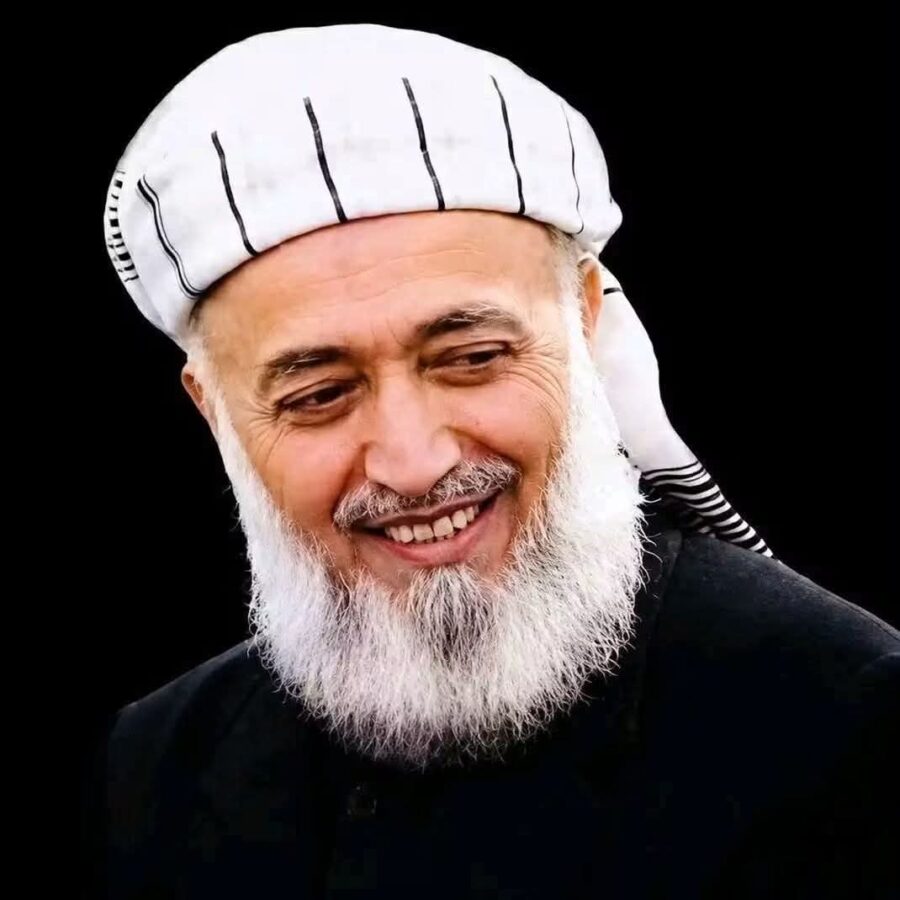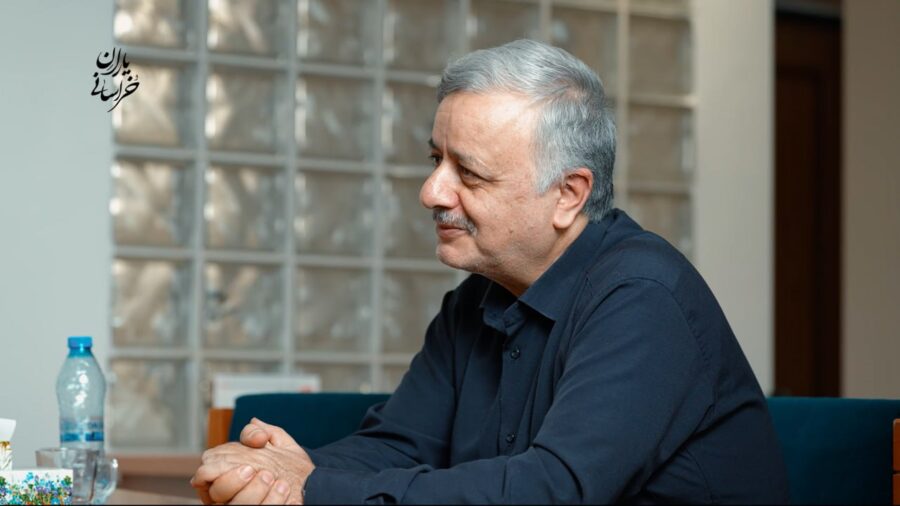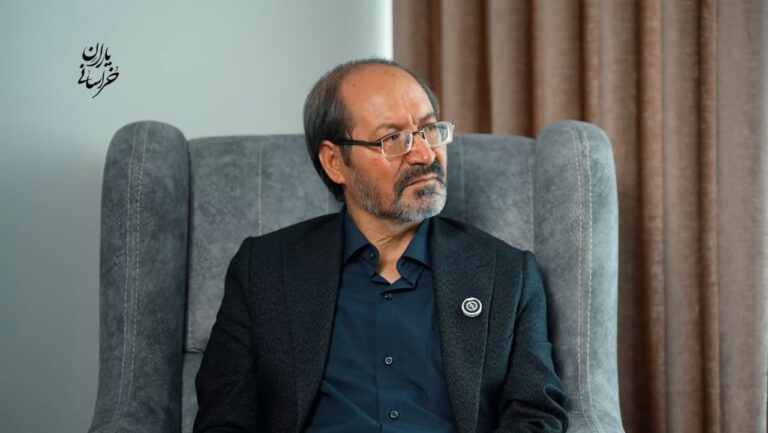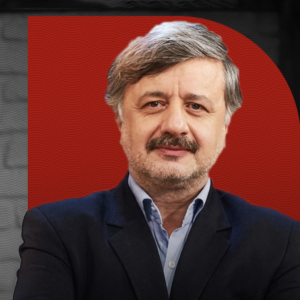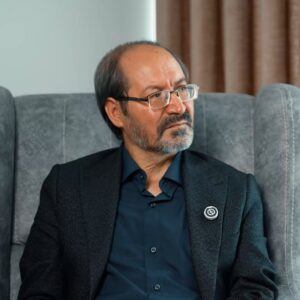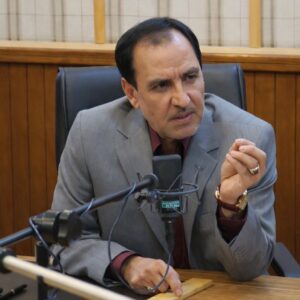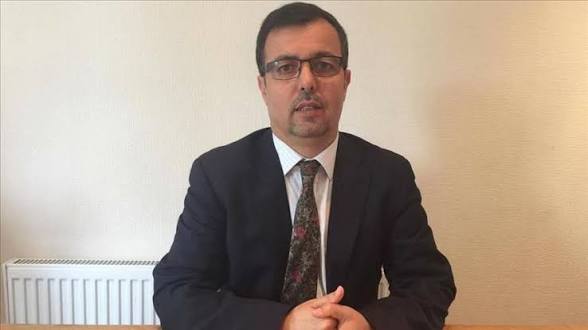
The absence of war is a necessary condition for peace, but sustainable peace can only be achieved when justice, trust, participation, development, civil rights and social reconciliation accompany security, says Aziz Barez, head of the Oxford-based Centre for Strategic Studies on Afghanistan and Central Asia.
Dr. Aziz Barez, head of the Centre for Strategic Studies on Afghanistan and Central Asia in Oxford, UK, and an international relations researcher, spoke to IRAF in an exclusive interview on the occasion of the International Day of Peace.
He discussed the concept of sustainable peace, Afghanistan’s current situation, the prerequisites for peace, the role of the public, women and young people, national and ethnic identity, and the role of neighbouring countries and regional powers in Afghanistan’s stability.
Barez said that when discussing peace, particularly in the context of Afghanistan, it is essential to distinguish between the “absence of war” and the “existence of peace,” as sustainable peace goes far beyond silencing weapons and ending armed conflict.
He added that the absence of war can be considered a form of “negative peace,” referring to a society in which armed violence and widespread warfare are no longer taking place.
While this stage is crucial, as no society can develop without security and people cannot lead normal lives without it, the absence of war alone is insufficient to create a peaceful society.
Barez said sustainable peace emerges when the underlying factors and conditions that generate violence are also reduced.
He said society must be able to resolve its differences through peaceful means. In such a society, people should feel secure, treated justly, respected and included, while believing they have a stake in their country’s future.
According to Barez, sustainable peace has at least several fundamental characteristics: security for all citizens rather than a particular group or section of society; justice and equal access to the law; political and social participation; respect for human rights and dignity; the ability to resolve disputes through dialogue and civil institutions; trust between the public and the government; economic opportunities and employment; access to education and opportunities for young people; recognition of ethnic, linguistic, religious and cultural diversity; the participation of women and young people in shaping the country’s future; and peaceful relations with neighbouring countries based on mutual respect.
He stressed that sustainable peace can therefore be achieved when people no longer fear war and violence, but instead feel that they have rights, dignity, security, opportunities and a future in their own country.
Is Afghanistan at Peace Today?
Asked whether Afghanistan is currently a country at peace, the head of the Centre for Strategic Studies on Afghanistan and Central Asia said the answer largely depends on how peace is defined.
He said that if peace is understood simply as a reduction in widespread warfare and an end to military confrontations among multiple parties, Afghanistan’s situation today is different from that of previous years.
Following years of widespread conflict, military confrontations across the country have declined significantly, and the United Nations has also reported improvements in Afghanistan’s security situation.
However, Barez said that if peace is understood as sustainable, comprehensive and positive peace, the answer becomes more complicated.
Afghanistan continues to face a range of political, social, economic, human rights and security challenges.
He said that extensive restrictions on women and girls, economic and humanitarian difficulties, human rights concerns, the presence of terrorist groups, the absence of an inclusive political structure and the limited participation of certain sections of society in political decision-making remain among Afghanistan’s major challenges.
Barez added that millions of people in Afghanistan still require humanitarian assistance, while a large part of the population continues to struggle with poverty, unemployment and economic insecurity.
“Therefore, the reduction in warfare is an important development, but it should not be regarded as the end of the peace process.”
He emphasised that Afghanistan may have moved away from the stage of widespread war, but it remains in the process of building sustainable peace.
“These are not the same thing.”
Barez said lasting peace would only be achieved when the existing security situation is accompanied by justice, political participation, economic development, civil rights, social trust and stable regional relations.
What Does Afghanistan Need to Achieve Peace?
Asked about Afghanistan’s most important requirements for peace, Barez said the country needs a set of interconnected conditions, and resolving a single issue cannot be expected to settle the broader question of peace.
He said Afghanistan first needs an inclusive social and political agreement.
Afghan society is diverse, comprising different ethnic, linguistic, religious, cultural and regional groups. Sustainable peace can only emerge when all these groups feel they have a stake in the country’s future and that their rights are respected.
Barez said Afghanistan needs a form of social agreement that addresses fundamental questions, including the relationship between the government and the people, citizens’ rights, the peaceful resolution of political differences, the place of different groups within the political structure, the prevention of discrimination and the mechanisms through which people can participate in political and social decision-making.
He identified justice as the second major requirement.
Afghanistan has endured several decades of war, during which millions of people were killed, injured, displaced or otherwise affected. Many families continue to live with the direct and indirect consequences of conflict.
Barez said sustainable peace cannot mean forgetting the past.
“Peace cannot mean forgetting the past. Society must find a way to recognise the suffering of victims and create conditions for justice, accountability, reparations and reconciliation, while preventing the recurrence of violence and revenge.”
He noted that the issue of justice in Afghanistan is highly complex.
“Justice, if implemented without taking social and political conditions into account, may create the conditions for renewed tensions. However, a peace in which victims feel that their suffering has been ignored may also be fragile.”
Barez identified confidence-building as Afghanistan’s third major requirement, saying a society cannot achieve sustainable peace without trust.
People must have confidence in one another and, as far as possible, in public institutions.
Such trust develops when laws are predictable, citizens’ rights are respected and people feel they are treated fairly.
He described economic development and opportunities for young people as the fourth major requirement.
Barez said poverty, unemployment and deprivation can increase social dissatisfaction, migration and young people’s vulnerability.
A society in which a large proportion of young people lack a clear outlook for the future is more vulnerable to instability.
He stressed that education, employment, economic development, healthcare and equal opportunities must therefore be integral parts of the peacebuilding process.
The Chain of Peace in Afghanistan
Asked how the prerequisites for peace in Afghanistan could be explained, Barez said they could be understood as an interconnected chain: security, trust, justice, participation, development, reconciliation and sustainable peace.
He said security is essential for normal life. Without it, development, education and the economy suffer. However, security alone is insufficient.
Trust becomes important once security is established. People must believe that the prevailing situation is predictable and that differences will be resolved through dialogue.
Justice then becomes essential. If people feel their rights are not respected or that a section of society is being deprived of its rights, trust will erode.
Barez stressed the importance of political participation, saying a society in which different groups feel excluded from decisions about their future cannot remain free of political tensions for long.
Economic development is another link in this chain, he said, adding that poverty and unemployment can contribute to social instability.
Society also needs reconciliation, which means developing the ability to live together after decades of war without allowing past differences to continually turn into renewed violence.
Barez emphasised that peace in Afghanistan cannot be built solely through military or security measures.
“Peace is a political, social, economic, cultural and human project.”
The People: Victims of War and Builders of Peace
Discussing the role of the public in peacebuilding, Barez said peace is sometimes viewed as the responsibility of governments, political leaders or international organisations.
However, he stressed that no peace can remain sustainable without public participation.
He said people can first help strengthen a culture of dialogue.
Differences of opinion are a natural part of social life. The important issue is ensuring that disagreements do not turn into hostility, hatred or violence.
Barez highlighted the importance of resisting ethnic, religious and linguistic hatred.
In a society as diverse as Afghanistan, he said, turning political differences into ethnic hostility can be particularly dangerous.
He added that people also have a responsibility not to spread false or inflammatory information without verification.
In the age of social media, rumours and misinformation can quickly become tools for social incitement.
Barez said people can also defend the rights of others.
“Peace is not only about defending the rights of one’s own group. Peace becomes meaningful when a person is also willing to respect the rights and dignity of others.”
He pointed to the importance of resolving disputes at the grassroots level, saying conflict resolution begins within families and neighbourhoods.
If society cannot resolve minor disagreements without violence, it cannot reasonably expect to settle major political disputes easily.
Barez emphasised that people are not only victims of war and peace, but also builders of peace.
The Absence of War Does Not Mean Peace
Asked whether the absence of war alone can be considered peace, the head of the Centre for Strategic Studies on Afghanistan and Central Asia said:
“No; the absence of war is a necessary condition for peace, but it is not a sufficient condition.”
He explained that a society may no longer experience widespread warfare while its people continue to feel insecure, discriminated against, deprived or treated unjustly.
The sound of gunfire may have fallen silent, but social and political differences may remain unresolved.
Barez said that if a group feels excluded from political participation, women lack fundamental social and economic opportunities, people cannot access justice, poverty and unemployment remain widespread, or peaceful expression of differences is restricted, such a society cannot be considered fully at peace.
He stressed the need to distinguish between the “absence of war” and the “existence of peace.”
“Sustainable peace means transforming a situation of ‘absence of violence’ into one characterised by ‘justice, trust, participation and hope for the future’.”
Shared National Identity and Afghanistan’s Diversity
Discussing the relationship between sustainable peace and a shared national identity in Afghanistan, Barez said the issue is highly significant for the country’s future.
Afghanistan is a pluralistic society with diverse ethnic, linguistic, religious and cultural identities.
He said this diversity is not, in itself, a threat to peace.
“On the contrary, one can say that a society can achieve sustainable peace when it is able to accept its diversity and establish a common framework for it.”
Barez said a shared national identity must be able to accommodate different identities.
A person can simultaneously identify as Pashtun, Tajik, Hazara, Uzbek, Turkmen, Baloch, Nuristani or a member of another group, while also considering themselves a citizen of Afghanistan.
He said problems arise when ethnic identity becomes a criterion for access to political and social rights, or when one group considers itself the exclusive owner of the country.
An inclusive national identity should not mean eliminating differences.
Instead, it should be based on the principle that all citizens enjoy shared rights and responsibilities despite their ethnic, linguistic and cultural differences.
Asked whether ethnic identities stand in the way of sustainable peace, Barez said they do not inherently do so.
“Ethnic identity is part of Afghanistan’s social reality, and it cannot be eliminated or ignored.”
He said the problem emerges when ethnic identity becomes politicised, meaning that one group claims greater rights to power, resources or citizenship on the basis of ethnicity and regards other groups as foreign or less valuable.
Barez continued:
“The main problem in Afghanistan is not the ‘existence of ethnicity’; the problem is the political and violent use of ethnicity. The solution is not to eliminate ethnic identities. The solution is to build an inclusive national identity in which no ethnic group feels that it must abandon its identity to be Afghan.”
He stressed that Afghanistan needs coexistence rather than homogenisation.
“A genuine national identity is not one that denies differences; it is one that says that despite our differences, we all belong to one country, one political community and one shared future.”
Women and Sustainable Peace in Afghanistan
Discussing women’s role and participation in peacebuilding, Barez said women’s issues cannot be separated from the question of peace.
Women make up half of Afghanistan’s population and, throughout decades of war, have suffered alongside men from violence, poverty, migration and social breakdown.
He said women are not only victims; they can also play a role in education, families, civil society, the economy, social mediation and the development of a culture of peace.
Barez noted that excluding a section of society from social participation affects the country’s overall capacity.
“If a large part of society is deprived of education, employment, social and political participation, the society’s capacity for development and peace will decline.”
He emphasised that women’s participation is not a secondary issue, but an integral part of sustainable peace.
A society seeking lasting peace must take seriously the opportunities for women to participate and play a role in shaping the country’s future.
The Role of Afghanistan’s Neighbours in Peace
Asked about the role of Afghanistan’s neighbours in the country’s stability and peace, the head of the Centre for Strategic Studies on Afghanistan and Central Asia said Afghanistan’s peace cannot be resolved entirely within its own borders.
Afghanistan shares borders with Pakistan, Iran, Turkmenistan, Uzbekistan, Tajikistan and China, and maintains extensive economic, political and security relations with countries across the region.
Barez said developments in Afghanistan affect its neighbours, while their policies also influence Afghanistan.
Insecurity in Afghanistan can contribute to migration, smuggling, terrorism and border insecurity in neighbouring countries.
Conversely, regional countries’ policies can affect Afghanistan’s economy, security and political environment.
“For this reason, peace in Afghanistan must be part of a regional framework.”
Barez said neighbouring countries can play a constructive role in several areas, including security cooperation, counterterrorism and anti-smuggling efforts, border management, trade and transit development, economic cooperation, energy, water and the establishment of connectivity routes.
However, he stressed that regional relations must move away from competition and the use of Afghanistan as an arena for influence and rivalry, towards cooperation and shared security.
Pakistan: Part of the Problem and Part of the Solution
Asked about the role of Afghanistan’s neighbours, particularly Pakistan, in the country’s conflict and peace, Barez said Pakistan occupies a distinctive position among Afghanistan’s neighbours.
Relations between the two countries extend beyond formal government-to-government ties, as border, ethnic, migration, economic, security and historical issues have deeply interconnected them.
He said Pakistan’s policies have influenced Afghanistan’s political and military developments over several decades.
At the same time, Pakistan has also suffered from insecurity and the activities of armed groups in its border regions.
Barez identified the activities of Tehreek-e-Taliban Pakistan (TTP) as one of the most significant security issues between the two countries today.
He said Pakistan has serious concerns about the group’s activities from Afghan territory, making the issue one of the main sources of disagreement between Kabul and Islamabad.
In contrast, Taliban officials have rejected Pakistan’s allegations and assessments in various instances.
Barez stressed that these different accounts must be distinguished when examining the issue.
“Overall, Pakistan’s historical role in Afghanistan’s developments cannot be ignored, but at the same time, all of Afghanistan’s problems cannot be attributed to Pakistan. The Afghan issue is far more complex than can be explained solely through the policies of one country.”
He added that Pakistan can be part of the problem, but it can also be part of the solution.
Given their shared border, economic relations, social ties and security interdependence, Pakistan is one of the principal actors in the equation of peace in Afghanistan.
Dialogue and Cooperation: A Way to Reduce Tensions Between Kabul and Islamabad
Discussing measures that could help reduce tensions between Afghanistan and Pakistan, Barez said one of the fundamental requirements is a permanent dialogue mechanism between the two countries.
Such a mechanism should not become active only during crises, but should facilitate regular discussions on security, border, economic and migration issues.
He said security cooperation is also highly important.
The two countries must be able to hold direct discussions on armed groups, terrorist threats and border security.
Barez added that border issues should be managed through political and technical mechanisms.
“Border disputes become dangerous when they turn into military tensions.”
Trade also plays an important role, he said.
The closure of border crossings affects not only governments but also ordinary people, traders, drivers, families and even the delivery of humanitarian assistance.
“Therefore, maintaining trade and humanitarian routes and preventing trade and migration from becoming instruments of political pressure can help reduce tensions.”
Barez added that regional countries could also act as mediators and facilitate dialogue during crises.
The Role of Iran, Central Asia and China in Afghanistan’s Peace
Discussing the role of Iran, Central Asian countries and China in Afghanistan’s peace, Barez said each regional country has its own interests and concerns.
He said Iran shares several interests and issues with Afghanistan, including migration, trade, border security, water, drugs and economic relations.
Uzbekistan, Tajikistan and Turkmenistan also attach importance to security, border control, preventing extremism and developing trade and transit because they share borders with Afghanistan.
Regarding China, Barez said that, in addition to security issues, Beijing is interested in regional stability and the development of economic and trade connectivity.
He added that China has made efforts in recent years to mediate and reduce tensions between Afghanistan and Pakistan.
Barez said Afghanistan’s peace should therefore be viewed within the framework of broader regional cooperation.
He added that although regional countries may disagree on various issues, they also share a common interest.
“A stable, peaceful Afghanistan with a viable economy is more conducive to regional stability and economic development for all parties.”
Afghanistan Needs Several Forms of Peace at the Same Time
Summarising the discussion, Barez said Afghanistan needs several forms of peace simultaneously.
First, peace between the people and the government, based on trust, justice, accountability and respect for citizens’ rights.
Second, peace among different social groups, based on accepting ethnic, linguistic, religious and cultural diversity and preventing discrimination.
Third, peace with the past, which means addressing the victims of war, acknowledging past suffering and finding a path towards justice and reconciliation without returning society to a cycle of revenge.
Fourth, peace with neighbouring countries, through relations based on mutual respect, refraining from using one another’s territory against each other, security cooperation and shared economic interests.
Fifth, peace with the future, through opportunities for young people, education, employment, economic development, women’s participation and the creation of hope for the future.
How Can Sustainable Peace Be Built?
Asked how sustainable peace could be established in Afghanistan, the head of the Centre for Strategic Studies on Afghanistan and Central Asia said it could not be achieved through a single agreement or meeting.
“Peace is a long-term, multilayered process.”
He said the process begins with security, but does not end there.
It requires justice, but justice alone is insufficient without reconciliation.
It requires political participation, but participation cannot remain sustainable without economic development.
It also requires development, which cannot be achieved without security and stability.
Barez stressed that all these elements are interconnected.
Afghanistan needs a comprehensive approach to sustainable peace, one that does not separate security, politics, the economy, society, rights, culture and regional relations.
He said that, within such an approach, people are not merely victims of war; they are the owners of peace.
Women are not only victims of violence; they are builders of peace.
Young people are not merely the generation of the future; they are part of the society’s workforce and potential today.
Different ethnic groups are not obstacles to peace, but constituent parts of Afghan society that must live together within an inclusive national framework.
Neighbours, meanwhile, are not merely potential threats, but influential actors in building or undermining regional stability.
Barez emphasised that Afghanistan today needs not only an “end to war,” but also the transformation of that end into sustainable peace.
“The end of war is not the end point; it is the starting point.”
He concluded that sustainable peace can emerge when the people of Afghanistan are not only protected from gunfire, but also feel that they have security, justice, dignity, rights, opportunities and a shared future in their own country.
He added that, from this perspective, the answer to the question “Is the absence of war peace?” is clear.
The absence of war is a necessary condition for peace, but sustainable peace can only be achieved when justice, trust, participation, development, civil rights and social reconciliation also exist alongside security.
The head of the Centre for Strategic Studies on Afghanistan and Central Asia said the most important message of the International Day of Peace for Afghanistan may be precisely this:
“Peace is not merely the silencing of weapons; peace is building a society in which differences are resolved without violence, diversity is recognised, justice replaces revenge, no group considers itself the exclusive owner of the country, and all citizens can see themselves as participants in Afghanistan’s future.”
Barez added that such peace cannot be imposed from outside, nor can it emerge solely through an agreement among a handful of political actors.
“Sustainable peace must be built within Afghan society, through public participation, government accountability, social dialogue, regional cooperation and the support of the international community.”
He said that only under such circumstances can the “absence of war” be transformed into the “existence of peace,” turning the International Day of Peace from a date on the calendar into an opportunity to reflect on a future in which the people of Afghanistan can live alongside one another, despite their differences, with a sense of belonging to one land and one shared future.