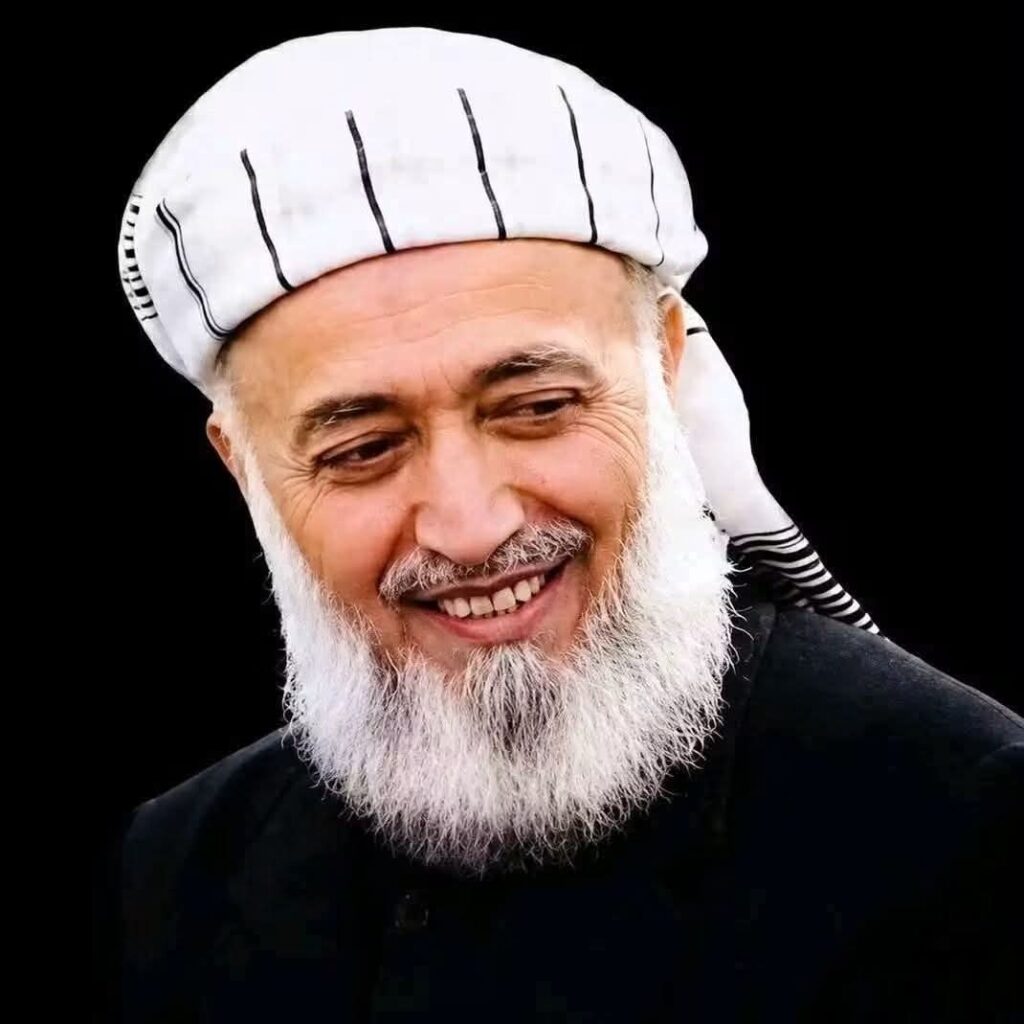
Political, cultural and media figures in Afghanistan have commemorated the 15th anniversary of the assassination of former Afghan President Burhanuddin Rabbani, highlighting his legacy of political resistance, religious moderation, national unity and efforts to achieve peace.
As reported by IRAF, Rabbani, the former president and leader of Jamiat-e Islami Afghanistan, was killed in a suicide bombing at his home in Kabul on September 20, 2011, when he was meeting a man who had presented himself as a messenger of peace.
Abdullah Abdullah, Afghanistan’s former chief executive, described Rabbani as a pioneer of Islamic awakening and an intellectual figure in the struggle against tyranny and occupation.
Abdullah said Rabbani believed in reconciling Islamic heritage with contemporary intellectual and social needs. He added that Rabbani supported equal rights for Afghanistan’s ethnic groups, religious communities and diverse identities, and campaigned for freedom, justice, equality and Islamic and human values.
He also described Rabbani as a moderate politician, a tolerant Islamic scholar and a leader committed to peace.
Former Afghan President Hamid Karzai also paid tribute to Rabbani, whom he referred to as the “martyr of peace.”
“Professor Rabbani was a prominent religious scholar, a jihad leader, a national figure and a peace-loving man who worked to strengthen unity and establish peace in the country,” Karzai wrote.
Political and Intellectual Legacy
Salahuddin Rabbani, leader of Jamiat-e Islami Afghanistan and the late president’s son, called for a closer examination of his father’s political and intellectual legacy.
He said Rabbani’s political thought was based on human resource development, strengthening women’s role, the rule of law, reforming power structures, the people’s right to determine their political future, justice and political participation.
According to Salahuddin Rabbani, his father regarded monopolization of power, supremacism and discrimination as factors behind the failure of Afghanistan’s political experiences. He said Rabbani emphasized collective reasoning, consultative traditions and moderation.
Salahuddin Rabbani also stressed the importance of revisiting his father’s political and intellectual legacy in light of Afghanistan’s current circumstances, echoing previous statements by Jamiat-e Islami on the subject.
Mawlawi Habib Hesam, head of the Scholars Council of Afghanistan’s National Resistance Front, recounted his meetings and travels with Rabbani, highlighting the former president’s religious moderation, tolerance, cross-sectarian outlook and opposition to ethnic prejudice.
Hesam said Rabbani had emphasized confronting religious extremism and takfirism, strengthening Islamic solidarity and establishing joint mechanisms to support Islamic awakening movements during an international conference on Islamic awakening in Tehran.
He also recounted what he described as security warnings issued before Rabbani’s assassination, presenting those accounts as personal recollections.
Tributes to Rabbani’s Leadership
Seyed Baqer Mohseni, a university professor and political analyst, said Rabbani stood out among many of Afghanistan’s contemporary political leaders for his patience, composure, manners and knowledge.
Mohseni said Rabbani avoided emotional reactions and superficial rhetoric during difficult political circumstances, adding that his academic background and intellectual character enabled him to approach political challenges with composure and confidence.
Asar Hakimi, a cultural activist, highlighted Rabbani’s understanding of political legitimacy, arguing that he did not consider the legitimacy of governance to depend on the physical location of a political leader, but rather on the objectives, ideals and legitimacy of the struggle.
“Wherever Rabbani was, the Arg was there,” Hakimi said, referring to Afghanistan’s presidential palace.
Aziz Barez, an international relations researcher, assessed Rabbani’s presidency against the backdrop of the collapse of state institutions, a security vacuum, civil war and regional interventions.
Barez said Rabbani’s government faced multiple crises involving legitimacy, security and stability. He added that Rabbani emphasized dialogue and political solutions in dealing with opponents, while his assassination during peace efforts dealt a serious blow to Afghanistan’s political negotiations.
Noor-ul-Haq Noor, a close associate and former student of Rabbani, also described him as a knowledgeable, patient and peace-loving leader.
Noor said Rabbani was not a warmonger and preferred an honorable and just peace to war. He added that Rabbani had spent decades campaigning for awareness, freedom and justice and had opposed occupation and oppressive systems.
Final Meetings and Political Reflections
Mujib Rahman Rahimi, a former Afghan diplomat, recalled his meetings with Rabbani in London and Kabul, saying the former president had expressed dissatisfaction with Afghanistan’s political situation and the conduct of some Jamiat-e Islami members in government.
Rahimi said Rabbani had called for rebuilding the party’s organizational structure and mobilizing its supporters.
He added that Rabbani welcomed the emergence of a new generation of specialists among the former jihad and resistance forces, while regarding the shortage of qualified personnel as one of the factors behind the failure of the Islamic State of Afghanistan.
Rahimi said he had conducted an extensive interview with Rabbani during their final meeting, several weeks before the assassination, during which the late president had expressed his views on various issues with unusual frankness.
Reflecting on Afghanistan’s current situation, Rahimi described Rabbani as a wise and moderate leader and paid tribute to his memory and ideals.
Qadam Shah Shahim, a former chief of staff of the Afghan army, described Rabbani as a patient scholar and fighter.
Shahim said Rabbani sought to play a role in Afghanistan’s new political process after 2001 and accepted responsibility for leading the High Peace Council in an effort to establish lasting peace.
He said Rabbani lost his life in that process, adding that his legacy was associated with freedom, justice, political participation and peace.
National Unity and Political Participation
Azizullah Aryanfar, a writer and researcher, described Rabbani as a symbol of religious moderation, coexistence and tolerance.
Aryanfar said Rabbani’s opponents had used the peace process as a means of approaching him. He added that Afghanistan lost a historic opportunity for national state-building, solidarity and reconstruction with Rabbani’s assassination.
Naqib Arwin, a journalist, described Rabbani as a moderate and peace-oriented figure compared with many Islamist leaders.
Arwin said Rabbani had established his position as Afghanistan’s head of state after years of political and military struggle. He added that the presence of a leader from a different ethnic group at the head of the Afghan government could be viewed as part of the country’s contemporary experience of political and ethnic justice.
Abdul Basir Salangi, a former governor of Parwan province, highlighted Rabbani’s academic background, describing him as one of the few Afghan leaders who combined religious scholarship with knowledge of contemporary sciences and developments.
Salangi said Rabbani assumed leadership during one of the most difficult periods in Afghanistan’s history and described him as a multifaceted figure in religion, scholarship, politics and culture.
Journalist Wais Naseri also described Rabbani as one of the most knowledgeable leaders of the jihadist movement and presidents of Afghanistan, highlighting his patience, humility and moderation.
Naseri said Rabbani had worked to end the war and secure a political agreement, losing his life in the course of those efforts.
Drawing on his own cooperation with Rabbani, Naseri added that the former president had helped nurture a new generation of military commanders, politicians and cultural figures. He said Rabbani did not emphasize ethnic, linguistic or religious differences in his political dealings.
Abdul Naser Rahimi, a cultural activist, called Rabbani “the most honorable and wisest president of the country,” saying his intellectual legacy was based on reason, foresight, pragmatism, mutual acceptance and justice.
Rahimi said Rabbani’s followers should rely on those principles to continue his path.
Noor Rahman Akhlaqi, a former minister of refugees, said Rabbani had worked to strengthen democracy, political participation and the peaceful resolution of Afghanistan’s conflicts.
Akhlaqi said Rabbani had played an active role in parliamentary and presidential elections and regarded democracy as a solution to Afghanistan’s longstanding disputes. He added that Rabbani’s efforts to achieve peace ultimately cost him his life.
A Legacy of Peace
Afghanistan’s former government bestowed the title “Martyr of Peace” on Rabbani. Commemorative ceremonies were held annually across the country’s provinces on the anniversary of his assassination.