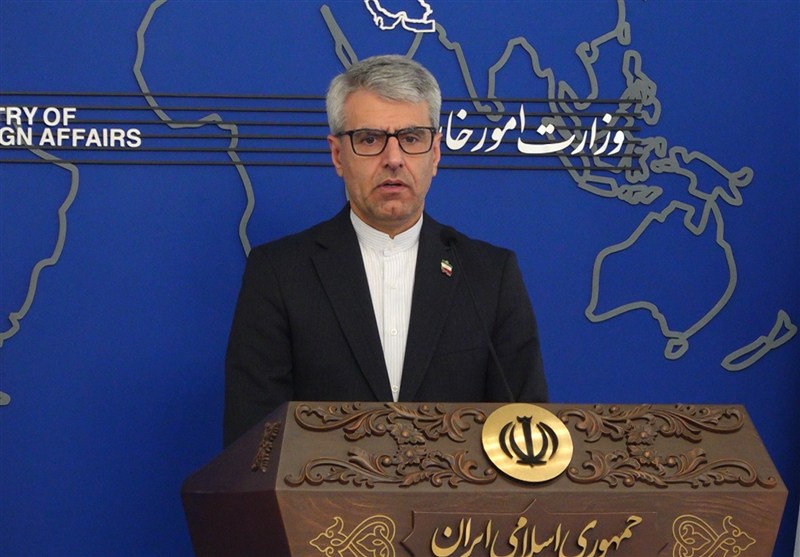
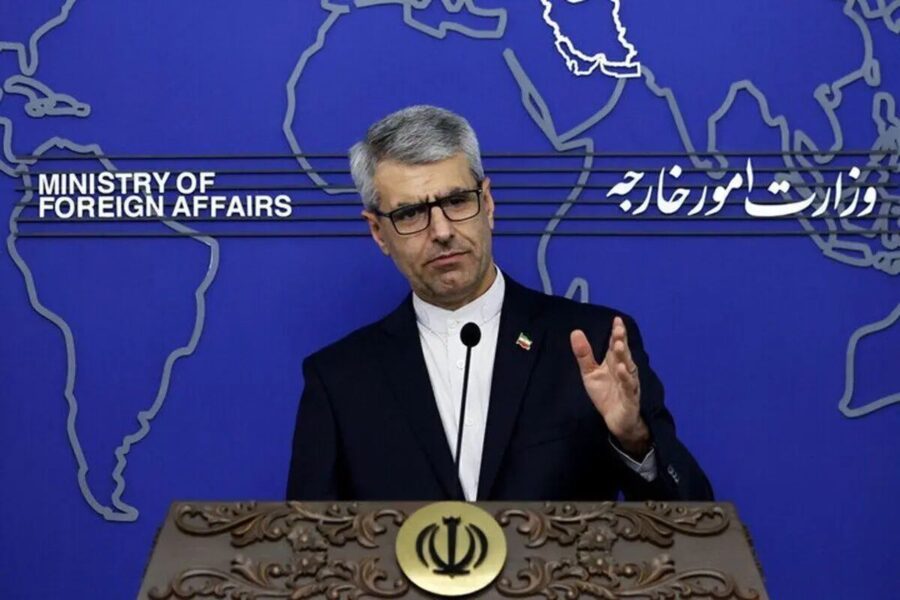
Iranian Foreign Ministry spokesperson Esmaeil Baghaei has rejected U.S. claims about the reasons for its unilateral withdrawal from recent agreements, describing the alleged attack on three vessels as a fabricated scenario designed to evade Washington’s commitments under the Islamabad Memorandum.
As reported by IRAF, Baghaei said in a televised interview that the U.S. allegation of an attack on three vessels along the southern route had not been supported by verified evidence. He added that even if the allegation were true, Washington’s decision to terminate the understanding, reinstate the naval blockade and abandon its commitments would constitute a highly disproportionate response, indicating that the United States had planned in advance to withdraw from the agreement.
Baghaei criticized what he described as the enemy’s media campaign and cognitive warfare, arguing that the vessels’ passage through an unsafe route, despite Iran’s provision of a secure alternative and the provisions of Clause 5 of the memorandum, could only have taken place with the coordination of the U.S. Central Command (CENTCOM).
He also said that Iran had been subjected to military attacks twice over the past nine months, both times while diplomatic negotiations were underway. Baghaei added that the other side’s record of breaching commitments, including the U.S. withdrawal from the nuclear deal (JCPOA), had been established before the international community.
The Iranian Foreign Ministry spokesperson also emphasized the strategic role of Tehran and Muscat in ensuring security in the Strait of Hormuz. He said the cancellation of the Salalah meeting would not undermine the achievements made by Iran and Oman in establishing a secure maritime route.
Baghaei noted that the technical negotiations between the two coastal states had already determined the coordinates of the safe shipping route. He stressed that any credible future mechanism or arrangement would depend exclusively on measures and agreements reached between Iran and Oman as the littoral states.
Islamabad Memorandum and New Dimensions of Regional Maritime Tensions
The latest statement by Iran’s Foreign Ministry comes amid recent political and military developments in the region.
Regional Mediation and the Islamabad Memorandum
The Islamabad Memorandum was reached in Pakistan’s capital following several rounds of intensive diplomatic consultations and regional mediation. It aimed to reduce maritime tensions, lift transit restrictions and establish a mechanism to ensure the safe passage of commercial shipping.
NPT Dispute and Missile-Maritime Tensions
The developments come amid tensions stemming from what Tehran describes as Western positions concerning the Treaty on the Non-Proliferation of Nuclear Weapons (NPT), as well as allegations regarding Iran’s defense capabilities along key maritime routes in the Persian Gulf and the Sea of Oman.
Tehran views this approach as an attempt to create pretexts for avoiding diplomacy.
CENTCOM’s Expanded Presence and Alleged Maritime Provocations
The developments have coincided with an increased U.S. military presence in the region. Experts had previously warned of what they described as suspicious CENTCOM activities that could lead to a staged incident and disrupt agreements intended to stabilize maritime transit security.