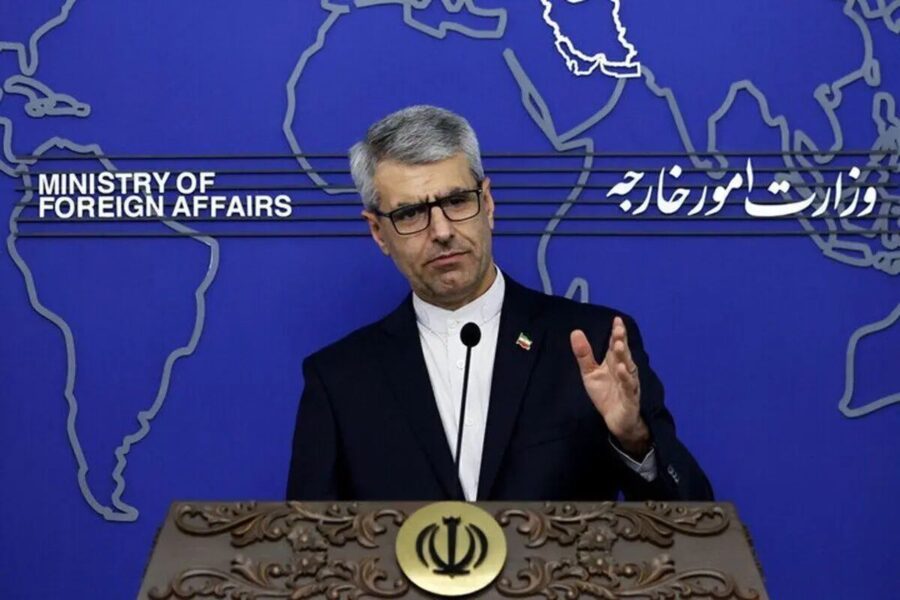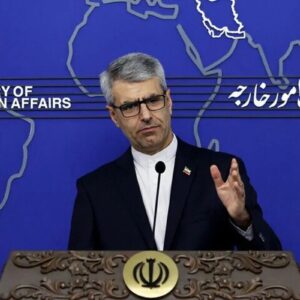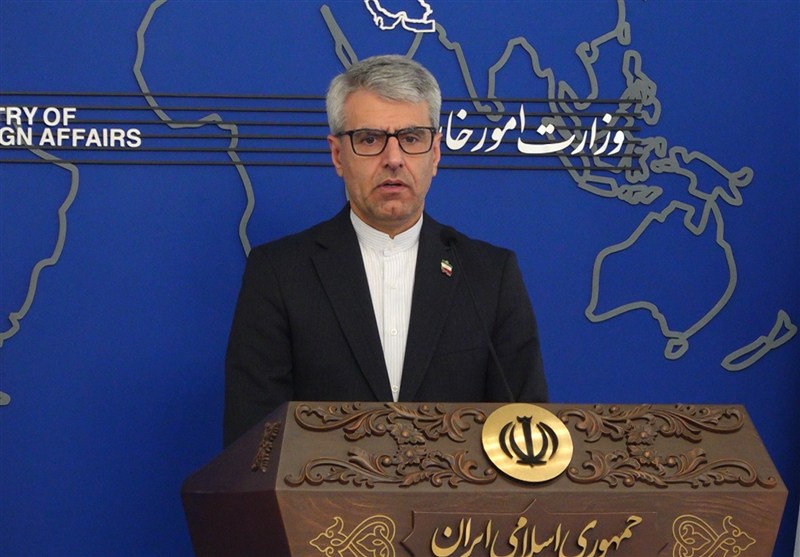
Iranian Foreign Ministry spokesman Esmail Baghaei said a planned meeting between Iran and the Gulf states in Oman was postponed at Saudi Arabia’s request, while urging regional countries to use dialogue to work toward a secure region free from outside interference.
As reported by IRAF, Baghaei said at his weekly press conference on September 14, 2026, that foreign policy and national security decisions could not be based solely on fluctuations in a single political or economic issue.
Responding to questions about the postponement of the meeting between Iran and the foreign ministers of the Gulf states, Baghaei said: “We should not call into question our own logical and forward-looking actions because of the ill-considered actions or breaches of commitments by others.”
He said Iran and Oman, as two coastal states, had reached an understanding after weeks of negotiations on an issue concerning the two countries and had planned to present the understanding at a meeting involving regional states.
Baghaei described the planned meeting as an opportunity for Gulf countries to discuss the creation of a secure region free from intervention by outside powers.
“If regional countries truly believe that permanent neighbors in the region should, despite all existing differences and grievances, engage in dialogue on creating a secure region, this meeting was a suitable opportunity for such a dialogue,” he said.
Saudi Arabia Asked for the Meeting to Be Postponed
Asked about reports that Saudi Arabia had opposed the meeting, Baghaei said: “The report that has been raised is correct; Saudi Arabia requested that this meeting not be held for the time being.”
He rejected suggestions that the decision was linked to developments between Saudi Arabia and Yemen, calling such claims “a wrong address” and saying the problems in Yemen had deep and longstanding roots.
Baghaei said Iran had repeatedly stated that it was ready to help resolve regional disputes, adding that continued war among Muslim countries in the region only benefits Israel, which he said seeks to perpetuate tensions and insecurity among Muslim states.
Iran, Oman Reach Understanding on Maritime Security
Baghaei said the understanding between Tehran and Muscat on securing maritime routes had been reached after weeks of negotiations.
The issue was due to be discussed at the regional meeting, he said, adding that Iran and Oman had sought to create an opportunity for Gulf states to discuss regional security and reducing external intervention.
“The understanding between Iran and Oman, as two coastal states, has been finalized. In consultation with Oman, we will decide on the next step, including how to announce or register this understanding, and information will be provided,” Baghaei said.
The postponement comes as maritime security, the Strait of Hormuz and developments in Yemen remain among the region’s key security issues. Iran and Oman have reached an understanding after weeks of talks on arrangements related to maritime routes and the sovereignty of coastal states, with Tehran saying it would consult Muscat on how the understanding should be announced or registered.
Tehran Says It Does Not Interfere in Yemen’s Decisions
Baghaei also stressed that Tehran does not interfere in decisions made by Yemenis and described Ansarullah as an independent Yemeni party that makes decisions based on its own interests.
Asked about recent developments along the Red Sea and Bab al-Mandab and claims by some countries that they were an extension of the war in Iran, Baghaei said there was no Iranian intervention in matters related to Yemen.
He said Iran remained sensitive to developments in the region because of their significance, while accusing some parties of using the current situation to deepen divisions and create discord among Muslim countries.
Ansarullah Is an Independent Yemeni Party
Baghaei said Iran’s statements on developments in Yemen should not be interpreted as interference in Yemeni decision-making.
“Yemenis make their own decisions for themselves,” he said.
He added that Ansarullah was an independent Yemeni party that made decisions it deemed necessary based on its own interests.
Baghaei said current developments in Yemen could not be assessed without taking into account the country’s history. Yemen, he said, had faced attacks over the past 10 to 12 years and had been subjected to what he described as an unjust blockade.
During that period, Yemenis had sought through various means to secure their rights, but those efforts had not produced results, he said, adding that they had ultimately taken decisions they considered necessary to defend their rights.
Iran Criticizes U.S. and Israeli Strikes on Yemen
Baghaei also referred to U.S. and Israeli attacks on Yemen in recent years, saying Yemenis had been targeted several times by the United States and Israel over the past three years.
He said Yemen’s position on Palestine, the occupation and what he described as genocide in Gaza, as well as Israeli actions in Lebanon, Syria and other parts of the region, should also be taken into account when assessing developments in Yemen.
According to Baghaei, Yemenis had demonstrated that issues concerning the Muslim world and humanitarian matters were important to them, and this should be considered when assessing their positions and actions.
Maritime Security Should Be Guaranteed for All Countries
Baghaei also called for maritime security and freedom of maritime trade to be guaranteed for all countries.
He said it was not possible to attack or impose a naval blockade on one or several countries while expecting those same countries to assume unilateral responsibility for maritime security.
He urged regional countries to take existing realities into account and refrain from deflecting blame or making unfounded accusations against others, particularly if they genuinely intended to resolve regional problems.
Baghaei warned that repeatedly making certain claims and accusations could eventually lead even those making them to believe in them, resulting in what he described as a “miscalculation” that could hinder efforts to find solutions to regional problems.
He reiterated that decisions concerning Yemen and related issues should take into account developments on the ground, the history of the conflict and the interests of the parties involved, while stressing that Iran does not interfere in the independent decisions of Yemeni parties.