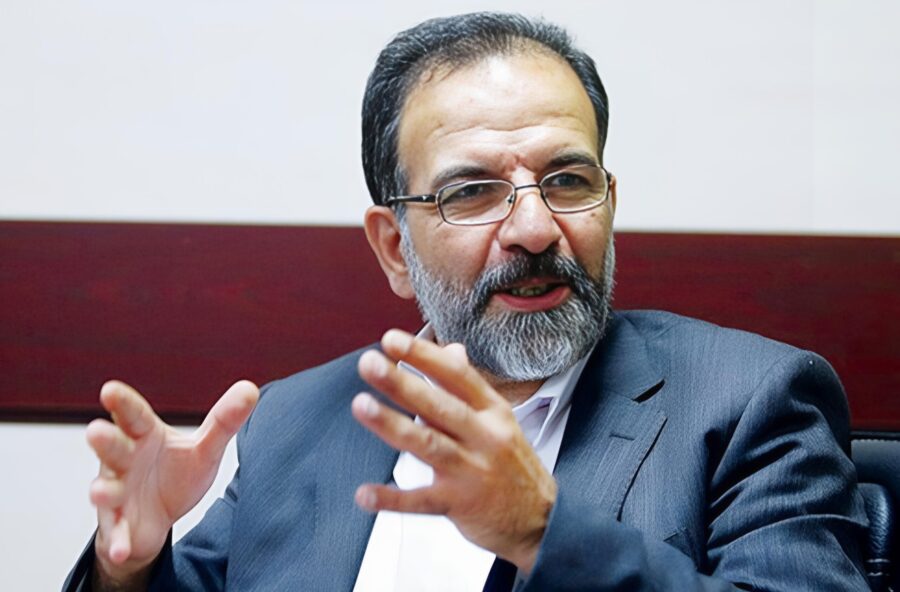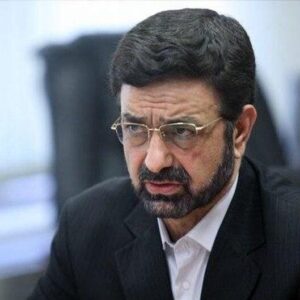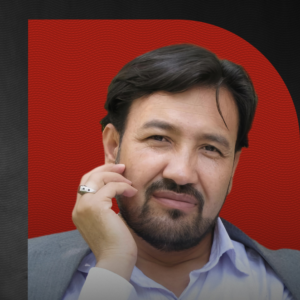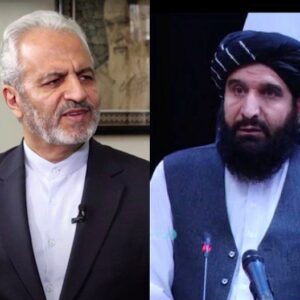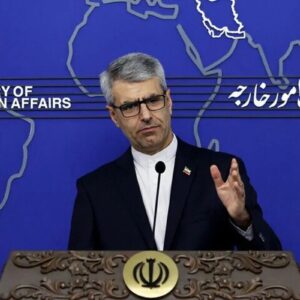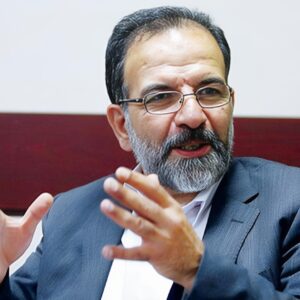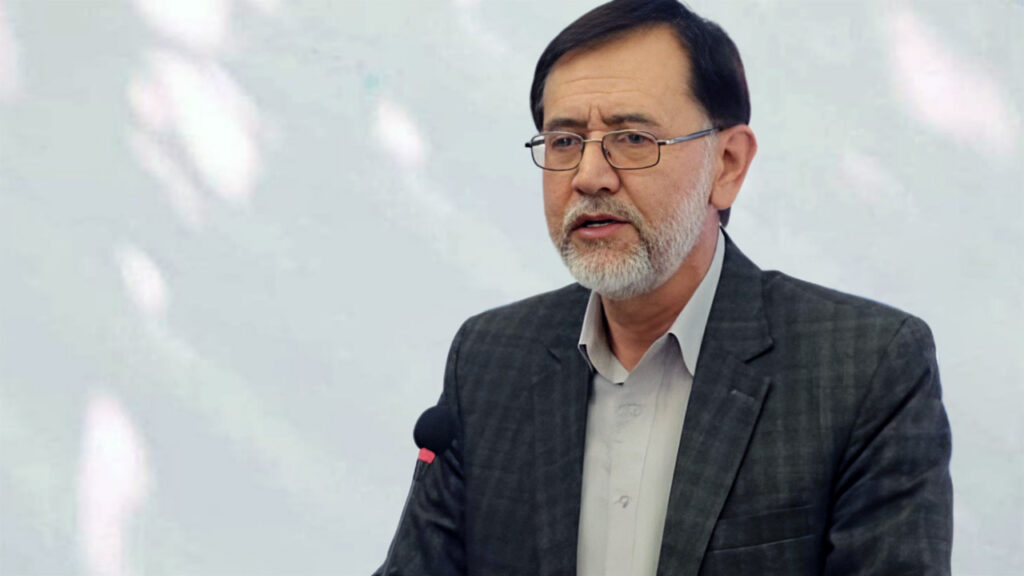
Recent developments in Yemen and the striking advances made by Ansarullah have become a subject of public discussion in Afghanistan, attracting attention across the country’s media, political circles, and social conversations. Akram Arefi, a political analyst in Afghanistan, says Afghan media have largely covered developments in Yemen and Ansarullah’s advances as military and political news, while public perceptions of these developments vary depending on political, religious, and regional affiliations.
Speaking to IRAF, Arefi explained how recent developments in Yemen have been reflected in Afghanistan, saying that Afghan media, particularly private television networks, have followed the country’s military developments and covered the advances of Ansarullah and the Houthis in news reports.
He said Afghanistan’s national television has also reported on the developments at the news level, focusing on clashes and developments on the ground. Overall, however, Afghan media have made less effort to analyze these events as part of a broader regional alignment.
Afghan Media: A News-Based Account of Ansarullah’s Advances
Arefi stressed that a distinction should be made between “news coverage” and “political positioning.” Media outlets may publish reports on Ansarullah’s advances, clashes, and developments on the ground, but this does not necessarily mean that they are supporting either side in the conflict.
He added that in Afghanistan’s media environment, developments in Yemen are generally portrayed as events concerning Yemen itself and the regional conflicts connected to the country. There is less tendency to place these developments directly within a single regional project or network.
How Has Afghan Public Opinion Responded?
The political analyst said it should not be expected that regional developments such as those in Yemen would generate the same level of public and media reaction in Afghan society as the country’s domestic issues.
He explained that Afghanistan is facing a range of political, economic, social, and security challenges, which has led a significant portion of public attention to focus on everyday and domestic issues.
Nevertheless, Arefi stressed that Afghans are not indifferent to regional developments. According to him, various analyses of the situation in Yemen exist in private circles, among political and social activists, and in informal discussions.
He added that people’s reactions are not uniform and depend on their political and religious orientations, as well as their views of regional actors. Therefore, a single position cannot be attributed to Afghan society as a whole.
According to Arefi, one segment of society may assess Ansarullah’s developments from the perspective of confronting the United States and Israel, while another may be more concerned about the consequences of conflict among Muslim countries and its implications for the Muslim world and regional stability.
The “Resistance Axis” and Afghan Public Perceptions
One of the important points raised by the political analyst is the difference between the political and media terminology used in Iran and Afghanistan when discussing regional developments.
He said terms such as the “Resistance Axis” and “Resistance Front,” which are widely used in Iran’s political and media discourse, are not used in Afghanistan in the same way or with the same degree of explicitness.
According to him, Afghan media generally examine developments in Lebanon, Yemen, Iraq, and Syria as developments concerning separate countries and are less likely to place them under a single heading such as the “Resistance Front.”
Arefi stressed that this does not necessarily mean that Afghan society is unaware of the relationships among regional groups. Rather, it reflects differences in the political and media discourse of the two countries, as well as Afghanistan’s particular political environment.
He added that Afghans may have specific analyses of the links between Iran, Ansarullah, and other regional groups, but these analyses are not necessarily expressed using the same terminology or framework common in Iran’s political environment.
Iran and Ansarullah: How Does Part of Afghan Society View the Relationship?
Arefi also discussed Afghan public perceptions of the relationship between Ansarullah and Iran, saying that part of Afghan public opinion views Ansarullah as a group close to Iran and sees a connection between the group’s actions and Iran’s regional policy.
According to him, some Afghans believe developments in Yemen cannot be fully separated from Iran’s role and influence in the region. This has led some Afghan audiences to view Ansarullah’s advances as a sign of the growing power and influence of forces close to Iran in the region.
He nevertheless stressed that such a perception does not necessarily mean acceptance of the concept of the “Resistance Axis.” In other words, an individual may regard Ansarullah as close to Iran and see the group’s actions as being aligned with shared interests with Iran without using the term “Resistance Axis.”
Arefi added that Ansarullah’s advances could reinforce among some segments of Afghan public opinion the perception that forces opposed to the United States and Israel continue to possess significant military and political capabilities.
At the same time, he stressed that this perception is not shared equally across Afghan society and that people’s views of these developments depend on their political and religious backgrounds and ideological affiliations.
Response to Confronting Israel Differs from Response to Conflict Among Muslims
Arefi identified the nature of the conflict as one of the most important factors shaping Afghan reactions.
He said Afghanistan is a society with strong Islamic sentiments and beliefs, and that issues such as Palestine and confrontation with Israel may generate greater sympathy toward forces that oppose Israel.
According to him, in such circumstances, some Afghans may view the actions of groups such as Ansarullah from the perspective of confronting Israel or the United States and may have a positive view of them.
The situation, however, is different when conflict occurs among Muslim countries or Muslim groups. Arefi said that in such circumstances, Afghan society becomes more sensitive to the consequences of divisions among Muslims.
Different Political and Religious Tendencies Exist, but Are Less Visible in the Media
The political analyst pointed to differences in political and religious orientations within Afghan society, saying that the country cannot be considered uniform in its views of developments in Yemen.
According to him, some people may have a closer view toward Saudi Arabia, while others may hold more favorable views of Ansarullah or Iran. However, these differences do not necessarily appear openly in the public sphere, official media, roundtable discussions, and television programs.
Arefi said some of these positions remain within private circles and informal conversations and are less likely to develop into an openly visible media alignment.
He stressed that, overall, it is not possible to speak of a broad anti-Saudi or anti-Ansarullah wave in Afghan media. Nor can it be said that Afghan media are systematically operating in support of Ansarullah.
Afghanistan’s Official Policy: Neither Support nor Condemnation
Arefi said Afghanistan’s policy in many regional conflicts has been to avoid direct involvement in disputes and refrain from taking sides with one of the parties.
He explained that Afghanistan generally seeks to avoid adopting a position that would amount to officially supporting one side and condemning the other in such conflicts.
According to Arefi, regarding developments in Yemen as well, Afghanistan’s official approach has largely remained at the level of reporting news and developments, with no clear position observed in support of Ansarullah or against the group.
He added that this policy can be viewed within the framework of Afghanistan’s efforts to avoid becoming involved in regional disputes and to maintain a degree of distance from competition among regional powers and countries.
Why Is Palestine an Exception?
The Afghan political analyst said that the situation is somewhat different when it comes to Palestine and Gaza.
According to him, Afghanistan has taken positions on the Palestinian issue and Israeli attacks in some instances because the issue is highly sensitive across Muslim countries. Confrontation with Israel, unlike conflict between two Muslim sides, can generate different reactions within Afghan society.
Arefi stressed that this difference means Afghanistan’s position on Palestine cannot be directly applied to its policy toward the war in Yemen or the dispute between Saudi Arabia and Ansarullah.
In the case of Yemen, Afghanistan has largely sought to avoid entering the alignment between the parties to the conflict, while the issue of occupation and conflict with Israel provides a different basis for taking a position regarding Palestine.
A Cautious Media Approach to Yemen
In conclusion, Arefi said Afghan media have largely followed the same approach, covering developments in Yemen primarily as a political and security event in the region.
According to him, media outlets generally avoid entering into the debate over whether developments in Yemen are part of a broader regional network or front, and in many cases report the events independently and separately from developments in other countries in the region.
He added that there is neither an overt and powerful anti-Ansarullah current in Afghan media nor a broad and official media movement in support of the group.
Nevertheless, different analyses exist in informal circles and among political and religious groups. Some people view developments in Yemen through the lens of competition between Iran and Saudi Arabia, confrontation with the United States and Israel, or broader regional developments.
Arefi ultimately stressed that understanding Afghan society’s response to developments in Yemen requires distinguishing among three levels: public opinion and informal discussions, the media, and Afghanistan’s official policy. At the societal level, views are diverse; the media generally adopt a cautious, news-based approach; and official policy seeks to avoid direct involvement in regional disputes and taking sides with either party.
Developments in Yemen have in recent years become one of the major fronts of competition and conflict in the Middle East, involving not only Yemen’s domestic dynamics but also regional rivalries and confrontation among various actors. Afghanistan, due to its geopolitical position and historical, cultural, and religious ties with the Muslim world, is also affected by regional developments.
However, Afghanistan’s political and social conditions and the public’s focus on domestic issues have meant that reactions to developments in Yemen have largely remained at the media, political, and informal discussion levels. At the same time, existing restrictions on Afghanistan’s media environment have also affected how regional developments are covered and the extent to which public discussions on such issues can emerge openly.