Recent advances by Yemen’s Ansarullah forces in areas overlooking the Bab al-Mandab Strait, along with reports that the group has taken control of Mayyun Island and parts of the Red Sea coast, have drawn reactions from Afghan political figures and analysts. They described the developments as a sign of a shifting battlefield balance in Yemen and offered differing assessments of the regional consequences, Saudi Arabia’s role and the future course of the conflict.
According to IRAF, Ansarullah forces have advanced in parts of Yemen’s Red Sea coastline in recent days and have also taken control of Mayyun Island. The development could strengthen the group’s position near one of the world’s most important international waterways, while highlighting what several Afghan analysts described as another setback for Saudi Arabia, the United States and their allies in the Yemen war.
Shifting Balance in Yemen and Growing Pressure on Saudi Arabia
Seyed Bagher Mohseni, a university professor and political affairs analyst, said Yemen’s internal divisions, following Saudi Arabia’s intervention and military campaign, had evolved beyond a domestic conflict and acquired regional and international dimensions.
He said the Yemen war and Saudi Arabia’s policies could become an existential issue for the kingdom, adding that the experience also held lessons for other countries because governments should avoid prolonged confrontation and war with their neighbors, even when those neighbors are economically or militarily weaker.
Mohseni also referred to reports of clashes between forces backed by the United Arab Emirates and Saudi Arabia. He said unconfirmed reports had also emerged suggesting that the UAE could withdraw entirely from the Saudi-led coalition against Yemen and might even change its position toward the Ansarullah government.
If officially confirmed, he said, such developments would likely indicate that Abu Dhabi and Washington had reassessed the battlefield situation in Yemen. He added that Ansarullah could be in a position to expand its control over additional parts of the country.
The analyst also referred to reports that the United States had rejected a Saudi request for greater military intervention. If Saudi Arabia continued its attacks on Yemen, he said, reaching a political agreement with the Ansarullah government would become more difficult.
Bab al-Mandab as a Strategic Objective
Mohammad Moradi, a political analyst, described Ansarullah’s reported control of the Bab al-Mandab area as a strategic move, saying that breaking through the defensive lines around the strait had been operationally far more difficult than crossing into Saudi territory.
He said that if Ansarullah’s priority had been advancing toward Saudi cities and Riyadh rather than Bab al-Mandab, the group, given the pace of its recent advances, could have moved into Saudi territory within a relatively short period and put Riyadh under threat.
Moradi said Saudi Arabia and several countries in the region, including Pakistan, had become concerned in recent days amid the simultaneous advance by Ansarullah toward Bab al-Mandab and the possibility of further movement toward Saudi territory.
He claimed that, within this context, Iran had sent a message to Saudi Arabia through Pakistan that Ansarullah had no plan to advance toward Riyadh and that its main objective was to consolidate control over Yemen, particularly the strategic Bab al-Mandab Strait.
Achieving that objective, Moradi said, could become a turning point in the Yemen war and the region’s security landscape if Ansarullah succeeds in consolidating its control over Bab al-Mandab.
National Pride as an Overlooked Factor in Yemen’s Resistance
Daoud Ahadi, a political activist, offered a social and historical interpretation of the conflict, saying that understanding Ansarullah’s prolonged resistance required attention not only to politics, religion, foreign intervention and proxy warfare, but also to a historical sense of humiliation among parts of the Yemeni population.
Yemen, he said, is one of the poorer countries in the region compared with the wealthy states of the Arabian Peninsula, and Yemenis had for years faced what he described as a condescending attitude from their richer neighbors.
Ahadi referred to his own experience traveling to Saudi Arabia, saying he had encountered several Yemeni vendors who expressed concern about being confronted and pursued by Saudi authorities.
One of them, he said, told him: “All Arabs humiliate us.”
The analyst also referred to a meeting with a Yemeni worker at Jeddah airport, saying the man had complained about the way other Arabs treated Yemenis and attributed such behavior partly to poverty.
Ahadi said these experiences suggested that understanding some aspects of Yemen’s current conflict required consideration of the sense of deprivation and historical humiliation felt by parts of Yemeni society, alongside political and military factors.
He said Yemen’s Houthis, who present themselves as the Ansarullah movement, had evolved in recent years from a local force into an influential regional actor. That military strength, he added, could represent more than a political victory for some Yemenis.
For a poor Yemeni, Ahadi said, the victory of a Yemeni force against a wealthy foreign power could carry greater emotional and symbolic value than money and resources provided by that same foreign power.
He stressed that “money cannot always buy the wounded pride of a nation,” adding that part of the secret behind Ansarullah’s prolonged resistance could lie in its ability to transform feelings of deprivation, humiliation and wounded pride into political and military motivation.
Abdul-Malik al-Houthi and Yemen’s Emergence as a Regional Power
Abdul Latif Forouzesh, a political affairs analyst, highlighted the role of Abdul-Malik Badr al-Din al-Houthi, the leader of Ansarullah, in Yemen’s developments over recent years.
He said that under his leadership, Yemen had evolved from a nation under pressure into an actor capable of challenging regional power equations.
Years of war, blockade, poverty and air strikes had failed to force the Yemeni population into submission, Forouzesh said. In such circumstances, he added, the role of a leader capable of maintaining hope within society and providing supporters with a clear direction for resistance was significant.
Forouzesh said Abdul-Malik al-Houthi had sought during years of military and economic pressure to strengthen among his supporters a sense of resistance, independence and reliance on domestic capabilities.
For his supporters, he said, Abdul-Malik al-Houthi was not merely a military commander but also a symbol of resistance to foreign pressure and the voice of a movement that believes Yemen’s future should not be determined outside the country.
The analyst said Yemen’s role in regional developments, particularly in relation to the Palestinian issue, had grown beyond what might be expected from its economic and military capabilities.
There may be differing views about Abdul-Malik al-Houthi’s methods and policies, Forouzesh said, but his impact on Yemen and wider regional dynamics could not be ignored.
Ansarullah Seeks to Consolidate Battlefield Advantage
Hassan-Ali Edalat, a political activist, said Ansarullah forces had continued advancing on several fronts, while forces affiliated with the Saudi-backed government had surrendered in some areas.
Despite Saudi air strikes, he said, Ansarullah had succeeded in taking control of important areas along the Red Sea coast and around Bab al-Mandab.
Edalat also pointed to the geographical and demographic differences between areas controlled by the rival sides. Ansarullah, he said, controls mountainous and densely populated parts of Yemen where a significant share of the country’s population lives.
Rival forces, by contrast, control large areas of territory as well as oil-producing regions, but have a different demographic and urban profile from areas held by Ansarullah.
Edalat described the group’s high level of motivation as one of the key factors behind its resistance, saying its commanders and leaders had remained alongside their forces on the battlefield and that their lifestyle was acceptable to parts of Yemeni society.
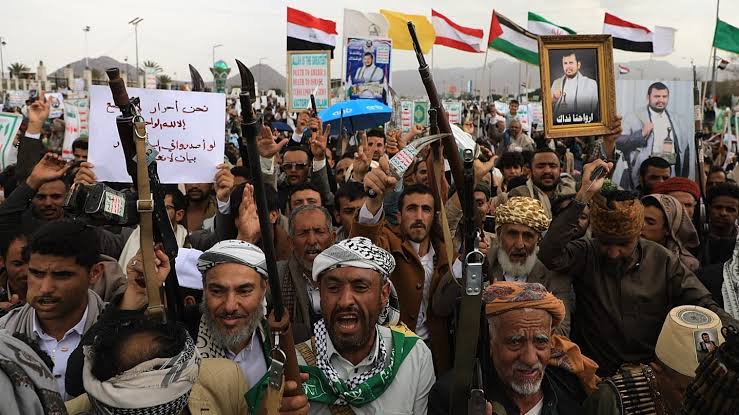
He also referred to large gatherings of Ansarullah supporters in Sanaa, saying the group’s supporters had celebrated the recent developments as a significant victory.
Yemen War Compared With Afghanistan
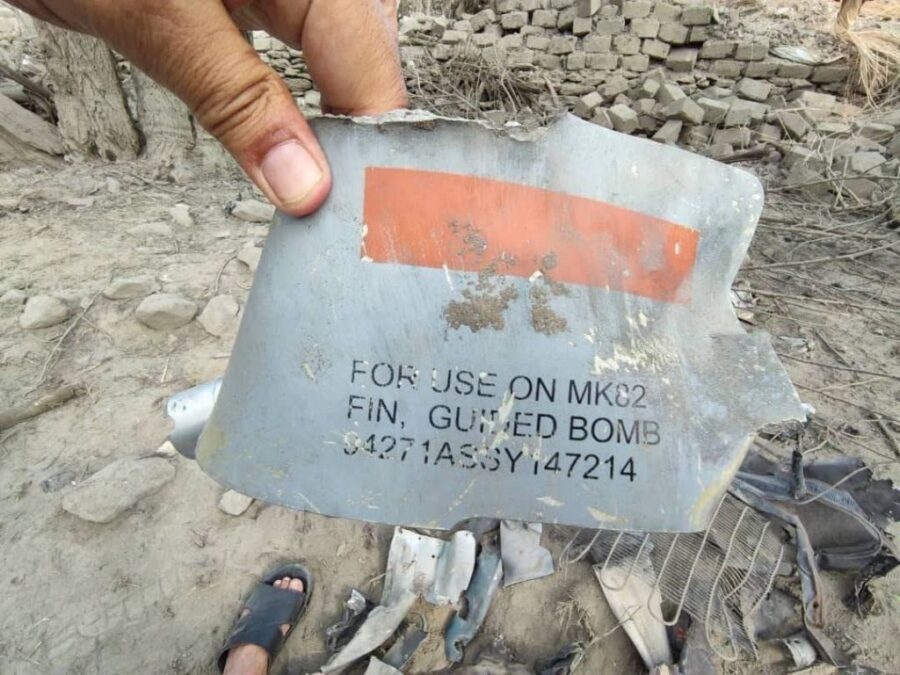
Sami Yousafzai, a journalist and analyst, said Ansarullah forces had now gained access to some of the weapons and military equipment used by Saudi-backed forces, including U.S.-made equipment.
Yousafzai said Yemen could gradually become similar to Afghanistan in some respects, although important differences existed between Ansarullah and the Taliban. Unlike the Taliban, he said, Ansarullah does not impose similarly broad restrictions on women’s education and employment, while educated people are also present among the group’s forces.
One similarity between the two movements, he added, was their deep commitment to their objectives and their willingness to bear heavy costs in pursuit of them.
Yousafzai also pointed to growing pressure on Saudi Arabia and Iran’s role in regional developments, saying that a continuation of the current situation could turn Yemen into the scene of a prolonged regional war.
The consequences of such a conflict, he said, would not remain confined to Yemen’s borders and could affect the region’s wider political and security dynamics.
Recent Ansarullah victories have drawn reactions from Afghan analysts and political figures, while also triggering a wave of emotion and celebration among Afghan social media users.