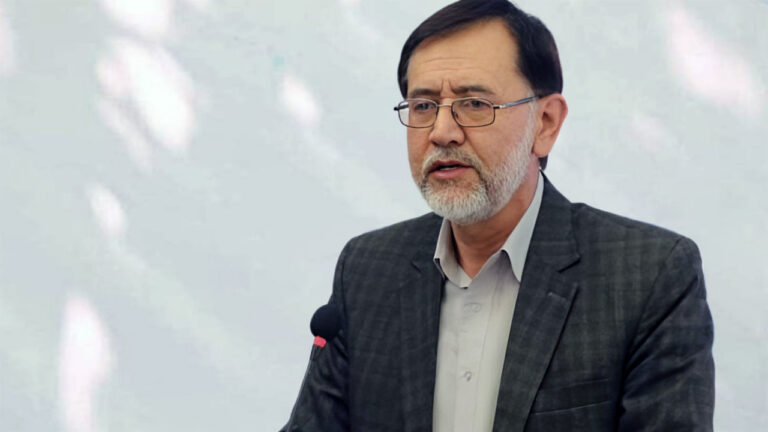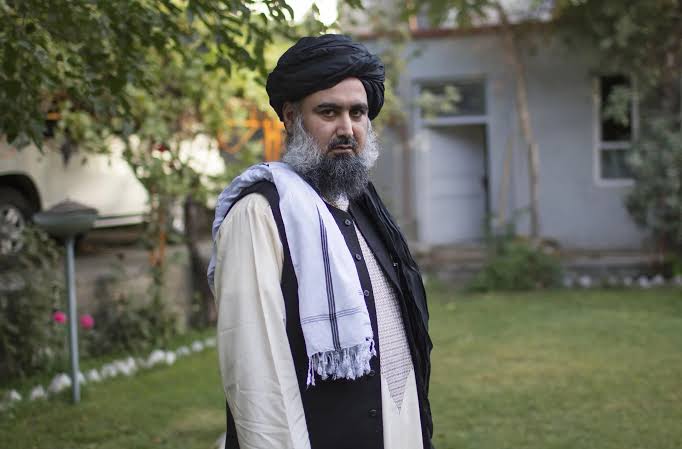
Motasim Agha Jan, a former Taliban finance minister and a figure close to the group’s founder, Mullah Mohammad Omar, was released a day after local sources reported that he had been detained in Kandahar.
The Taliban police command in Kandahar denied that Agha Jan had been arrested, saying its forces had established a checkpoint near his residence solely to provide security for a meeting of the Ulema Council. However, informed sources said Agha Jan was taken to a security district office on Sunday evening and released on Monday.
As reported by IRAF, Taliban intelligence forces surrounded a religious school belonging to Agha Jan in the Ainomina area of Kandahar on Sunday afternoon, September 13, and searched a number of guests present at the school. Local sources said Agha Jan was also detained during the operation and taken to a security facility.
This was not the first time Agha Jan had been detained and questioned by Taliban intelligence. On April 17, 2026, informed sources reported his detention in Kandahar. According to those sources, the reason was his attempt to establish a structure involving religious scholars from Afghanistan and Pakistan to reduce tensions and create a channel for dialogue between the Taliban and the Pakistani government.
Former Taliban Finance Minister and Close Associate of Mullah Omar
Motasim Agha Jan, whose full name is Abdul Wasi Motasim Agha, is a veteran Taliban member who was close to Mullah Mohammad Omar, the group’s founder. The United Nations Security Council has also listed him under the title of “Minister of Finance of the Taliban regime” on its sanctions list.
He served as finance minister during the final years of the Taliban’s first government and remained involved in the group’s political structure after its fall. Accounts of his background indicate that he later played a role in the so-called Quetta Shura and the Taliban’s political committee.
His relationship with the Taliban leadership, however, gradually became strained in the years following the fall of the first Taliban government, particularly after Agha Jan began advocating political negotiations and Taliban participation in Afghanistan’s political process.
From the Quetta Shura to Attempts to Negotiate with Kabul
After the fall of the Taliban government, Agha Jan at times sought to create an avenue for dialogue between the group and the Afghan government.
In late 2013, he organized a meeting in Dubai attended by a number of moderate Taliban figures, where participants voiced support for negotiations with the Afghan government. Following the meeting, a spokesman for the Taliban’s central council in Quetta said those who attended were not official representatives of the Taliban and that their decisions were not endorsed by the group.
The statement underscored the growing distance between Agha Jan and parts of the Taliban leadership. At the time, he sought to use his standing as a veteran Taliban figure to open a path for talks with the Afghan government. The Taliban leadership, however, repeatedly stressed that he did not represent the group officially.
Agha Jan’s activities in the peace process also led the Afghan government to regard him as a potentially useful figure in efforts to advance peace talks. In 2014, after he went missing in the United Arab Emirates, Afghanistan’s Foreign Ministry said it was working to determine his whereabouts because of his role in the peace process. Days later, reports said he had been released by UAE police and that restrictions imposed on him had been lifted.
An Assassination Attempt in Pakistan and a Growing Rift with the Taliban
Agha Jan’s differences with parts of the Taliban leadership went beyond political statements. In August 2010, he was the target of an armed assassination attempt in Karachi, Pakistan, and was seriously wounded.
Agha Jan later said he supported the formation of an inclusive government and the participation of political groups in Afghanistan’s political system. He also said he suspected that opponents of his views could have been behind the attack. Subsequent reports linked the assassination attempt to his differences with the Taliban leadership.
After the attack, Agha Jan left Pakistan, first traveling to Turkey and later to the United Arab Emirates. He lived outside Afghanistan for years while continuing to comment on the peace process and Afghanistan’s political future.
In the years following the fall of the first Taliban government, Agha Jan consequently emerged as a different kind of former Taliban leader: a figure with a record of serving at the highest levels of the movement who nevertheless advocated negotiations, political participation and a political solution to the war.
Return to Afghanistan with Mullah Mohammad Yaqoob
After the Taliban returned to power in 2021, Agha Jan remained in the UAE for some time. On December 8, 2022, however, he returned to Kabul from the UAE alongside Mullah Mohammad Yaqoob Mujahid, the Taliban’s defense minister and son of Mullah Mohammad Omar.
Days after his return, reports said Agha Jan met Sirajuddin Haqqani, the Taliban’s interior minister. The Taliban did not provide details about the meeting.
His return raised questions over whether the new Taliban leadership had put aside its past differences with a figure who had been close to Mullah Omar and whether it was prepared to allow him to resume his activities.
Religious School and Previous Detention in Kandahar
In recent years, Agha Jan has had little visible official activity and has focused more on religious and economic affairs. He established a religious school in Kandahar, and his name has in recent years been associated with religious activities and meetings with scholars.
On April 17, 2026, informed sources said Taliban intelligence had detained Agha Jan in Kandahar. According to those sources, he had been attempting to establish a structure involving religious scholars from Afghanistan and Pakistan to help reduce tensions and create conditions for dialogue between the Taliban and the Pakistani government.
The issue was significant because such an initiative could have created an independent channel of communication between religious scholars in the two countries outside the Taliban’s formal structures. Given tensions between the Taliban and Pakistan, such an initiative could have raised concerns within the Taliban leadership.
Agha Jan Detained Again
Now, several months after the first reported detention, the surrounding of Agha Jan’s school in Kandahar and his brief transfer to a security district office have once again drawn attention to his relationship with the Taliban’s security apparatus.
Kandahar is the main base of Mullah Hibatullah Akhundzada, the Taliban leader. As a result, independent political, religious or social activity in the province can attract greater sensitivity from the Taliban leadership.
Agha Jan is also more than a former Taliban official. His record includes serving as finance minister, participating in the Taliban’s political structures, maintaining close ties with Mullah Mohammad Omar and attempting to open talks with Afghanistan’s former government. In recent years, his name has also emerged in efforts to establish links between religious scholars in Afghanistan and Pakistan.
These factors may help explain why his activities remain sensitive to the Taliban’s security apparatus, even if his latest detention was brief. No official explanation has so far been given for his transfer to the security district office.
Detention, Taliban Denial and Release
Local sources said Taliban intelligence forces surrounded Agha Jan’s religious school and residence in Kandahar’s Ainomina area on Sunday evening, September 13, after several unidentified guests arrived at the site.
According to the sources, Taliban forces searched the premises, detained Agha Jan and initially took him to a security district office before transferring him to one of the intelligence facilities.
The Taliban police command in Kandahar, however, denied on Monday that Agha Jan had been arrested, saying no operation had been carried out to detain him.
Despite the denial, informed sources in Kandahar said Agha Jan was detained on Sunday evening, taken to the security district office and released on Monday.
His release a day after being transferred to the security district office comes against the backdrop of his previous detention by Taliban intelligence. The episode suggests that, despite his return to Afghanistan and renewed contacts with some senior Taliban figures, his past differences with the group and his independent activities may still be viewed with suspicion by the Taliban’s security apparatus.
Agha Jan therefore represents an unusual case among former Taliban leaders: a figure who once stood at the top of the group’s financial and political structures and was close to Mullah Mohammad Omar, but who later advocated negotiations and political participation, spent years outside the Taliban’s main structure, and ultimately found himself under the scrutiny of the intelligence and security apparatus after returning to Taliban-ruled Afghanistan.