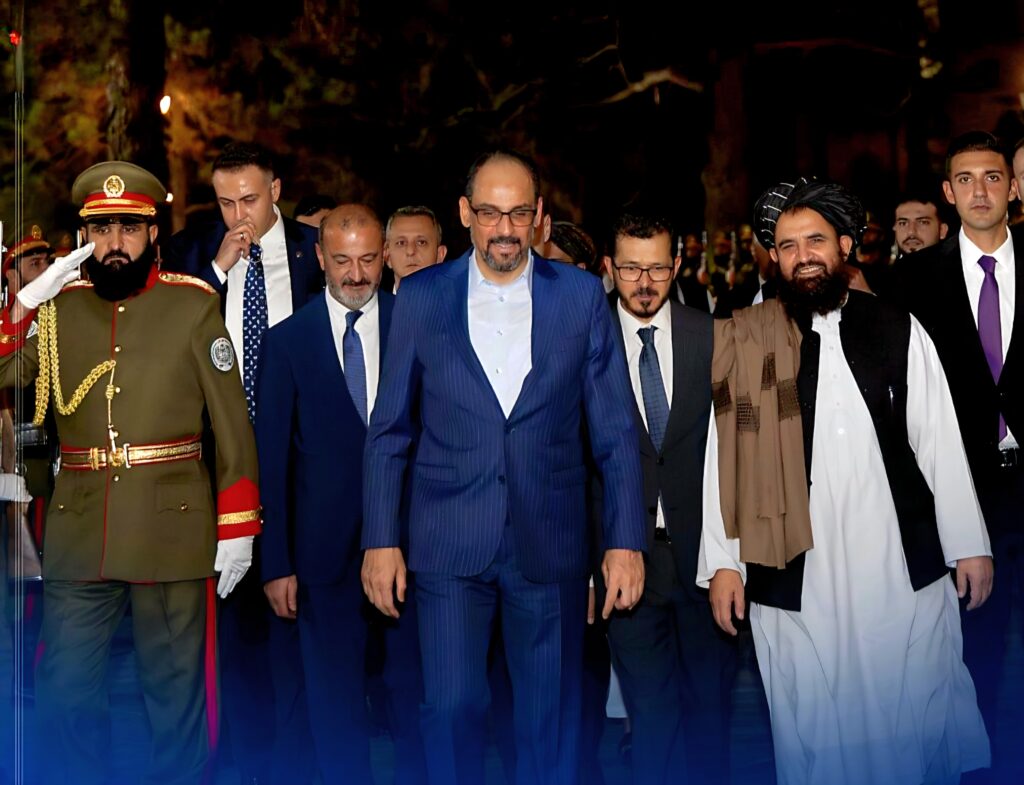
Unannounced Kabul visit by senior Turkish and Qatari officials, coupled with mounting US financial and aviation restrictions, raises questions about regional transit routes and Iran’s economic ties with its eastern neighbours.
Following talks with Taliban officials, the two reportedly travelled to Kandahar for a planned meeting with Taliban supreme leader Hibatullah Akhundzada.
The security-focused visit comes amid a series of economic and aviation-related developments that, according to the analysis, could affect transit routes linking Iran with the East and West.
New US Sanctions and Aviation Restrictions
The timing of the Turkish and Qatari officials’ visit to Afghanistan, alongside recent measures by Washington, has prompted questions about the broader implications of these developments.
Restrictions on airlines: Recent measures by the US Treasury’s Office of Foreign Assets Control (OFAC), targeting services connected to Iran’s aviation fleet and intermediary companies, have reportedly been accompanied by new restrictions on the acceptance of Iranian flights, including those operated by Mahan Air, at Turkish airports.
Pressure on financial channels: US Treasury sanctions targeting intermediary financial institutions in Turkey, including Golden Global Bank, are cited in the analysis as part of Washington’s efforts to restrict financial channels linking Iran, Turkey and its eastern neighbours.
Kabul-Ankara Relations and Competition Over Iran’s Transit Routes
Analysts cited in the report argue that the Taliban administration’s recent engagement with Turkey and Qatar, alongside Ankara’s role in managing transit infrastructure, carries two potential implications.
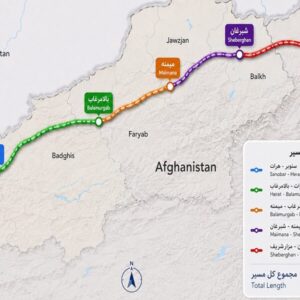
The first is an effort by the Taliban administration to reduce Afghanistan’s economic dependence on transit routes through Iran and the port of Chabahar by expanding the use of the Lapis Lazuli Corridor and routes connected to Turkey.
The second, according to the analysis, is a possible alignment with US efforts to establish a buffer between Iran and Afghanistan and reduce Tehran’s share of eastern trade.
Turkey, meanwhile, is described as pursuing a dual-track approach, with its policies increasingly aligning with Washington’s sanctions framework.
The report argues that any decline in direct aviation and trade links resulting from secondary sanctions could further affect Iran’s key transit routes, including Dogharoun and Chabahar.
It presents these developments as part of a broader regional economic contest over trade and transit networks, with potential consequences for Iran’s commercial connections with Afghanistan and neighbouring countries.