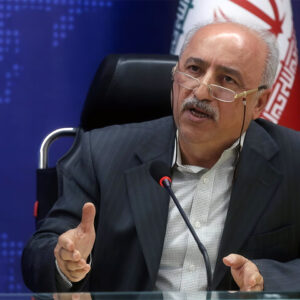
Chinese President Xi Jinping’s proposal for a new security architecture in the Middle East has drawn renewed attention to Beijing’s potential role in shaping the region’s future order and the broader competition among major powers. China, whose rise has been driven largely by economic development and expanding trade, depends on stability in the Middle East and the security of energy and trade routes to sustain this trajectory. International relations analyst Hossein Haji says China has demonstrated over the past decades that it favors an economic development-oriented approach rather than a primarily military expansionist one.
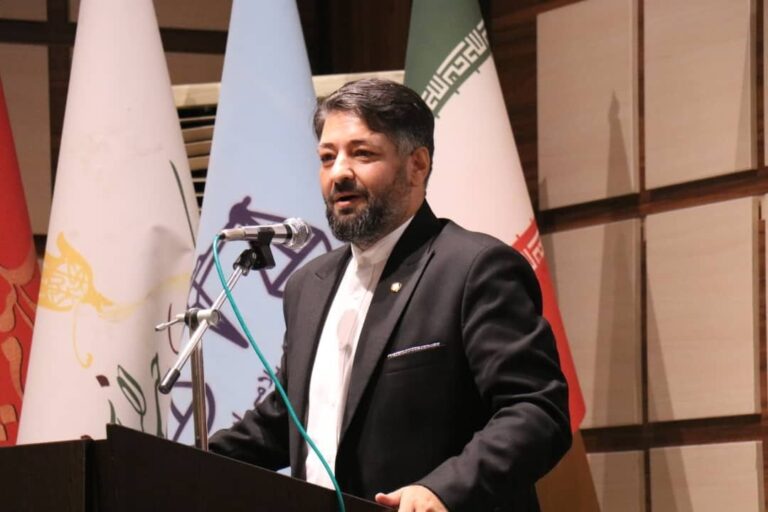
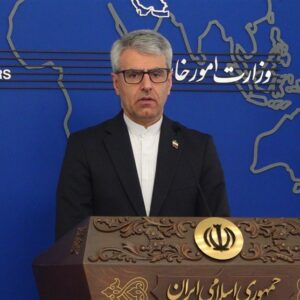
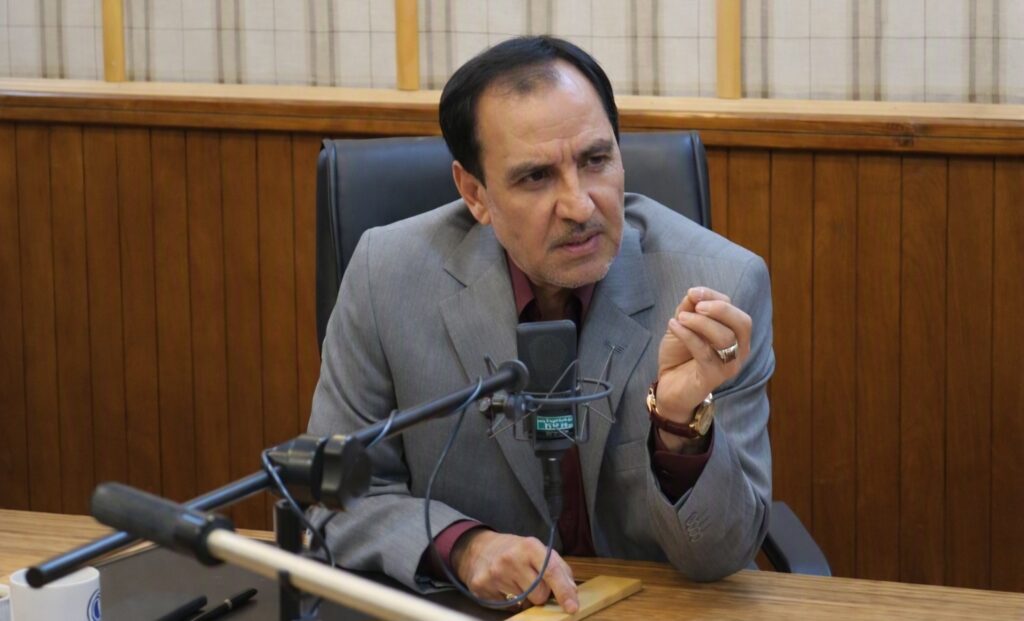
Dr. Hossein Haji, a prominent international relations analyst, told IRAF in an exclusive interview that China’s proposal for a new regional security structure is based on economic development, interdependence and stronger regional cooperation, an approach he said stands in contrast to what he described as the hegemonic and militaristic policies of the United States.
China and the Idea of Interdependence: Economics over Militarism
Haji, referring to the theory of interdependence in international relations, said: “The theory of symmetrical interdependence is one of the accepted theories in international relations, and its basis lies in the formation of reciprocal relations among countries, particularly in the economic sphere.”
He added: “China has demonstrated over the past decades that the country’s development path has been based more on economic development than on military development and hard power. Therefore, Beijing is seeking to deepen and expand economic relations with different countries in order to continue its growth trajectory.”
The international relations analyst continued: “One of China’s most important challenges on the global stage is its competition with the United States and U.S. policies toward China’s rise. Therefore, Beijing seeks to expand economic and trade relations and create mutual interdependencies in order to increase its capabilities in the face of potential pressures and restrictions.”
Haji said: “Regional alliances and arrangements that guarantee the security of energy and trade routes are highly important to China, because trade and economic interdependence cannot continue without lasting security.”
He added: “This path of comprehensive development for countries stands in contrast to the Western model and the power-centered and militaristic policies of the United States.”
Middle East Instability: A Shared Concern for China and the World
Haji, referring to developments in the Middle East, said: “The issue of Palestine and the ongoing conflicts in the region have today become a focus of attention and concern not only for China, but also for many countries around the world.”
He added: “As long as the conflict between the Israeli regime and the Palestinians continues in the Gaza Strip and the West Bank, and these areas remain subject to provocative and interventionist actions, the Middle East will continue to be a region of tension and a potential source of further developments.”
The international affairs analyst said: “China is concerned about the unilateral policies of the United States, and one of Beijing’s concerns is that the Israeli regime could move from the position of an ‘infantry’ or contractor for the United States toward assuming the role of a regional employer and leader.”
Haji continued: “If U.S. and Israeli policies in the region are not contained, the actions and aggressions of the Israeli regime against the interests and national security of regional countries and their territorial integrity could become a common practice in the region and even at the international level.”
He stressed: “This issue is particularly important to China because Beijing is moving in the coming years toward becoming one of the world’s major economic powers, and to preserve and accelerate this process, it needs stability in its surrounding environment, particularly in the Middle East.”
Why Middle East Security Is Vital to China’s Economy
Haji said China needs regional security to maintain its economic development, adding: “China cannot continue its economic development without paying attention to security developments in the Middle East, because a significant share of its energy and trade passes through the region’s maritime routes and waterways.”
He added: “For this reason, alongside developing its economic power, China is seeking to ensure and deepen regional security in the Middle East and the Persian Gulf so that it can create the stability necessary to continue its economic development.”
The international affairs analyst said: “From this perspective, China’s more active involvement in regional security issues should not be viewed merely as a political measure; rather, it is directly linked to Beijing’s economic and strategic interests.”
Saudi Arabia and the UAE: The Region’s Economic Outlook toward China
Discussing the positive response of some regional countries to China’s economic role, Haji said: “The fact that countries in the region are receptive to China’s new economic architecture is largely related to their economic needs and China’s capabilities in production, distribution and trade.”
He added: “China’s economic and commercial capabilities have led Central Asian and Middle Eastern countries to pay greater attention to Beijing. Among them, Saudi Arabia and the United Arab Emirates are among the countries that view China as a reliable and uncomplicated buyer.”
Haji continued: “This characteristic can contribute to greater convergence and improve security and sustainable development indicators in the region, while helping address some of the challenges, shortcomings and tensions at the regional and global levels.”
At the same time, he said: “The adventures of the Israeli regime are among the factors that have made the nature of the existing challenges more complicated, and their consequences do not affect only regional countries, but also China and other global powers.”
The international relations analyst added: “If China can use its capabilities to control and moderate the competition and confrontation between the United States and the Israeli regime, the possibility of expanding an Eastern architecture centered on China among regional countries will increase.”
Hormuz and Bab al-Mandab: Vital Arteries of China’s Trade
Haji, referring to the importance of maritime routes to global trade, said: “Today, a major share of global trade is carried out through shipping routes. The low cost of transporting goods, as well as the security of maritime routes, are among the factors that have established the dominance of trade transit through seas and waterways.”
He said: “For a country such as China, which conducts a major share of its exports and imports through waterways and maritime straits, the security of these routes is vital.”
The international relations analyst added: “The Strait of Hormuz, the Red Sea, the Bab al-Mandab Strait, the Suez Canal and the Persian Gulf are among China’s top economic, security and political priorities.”
Haji continued: “China has an anti-hegemonic approach to the components of power and pays particular attention to the concept of ‘relational power.’ This concept is highly important in political economy and can provide a path toward economic and security development at lower cost and with greater efficiency.”
Iran: A Major Power in the Emerging Regional Order
Haji said: “If China’s new security architecture is realized, it will not be only Iran that can participate in the new regional order. All regional countries can play a role in this order according to their capacities and power.”
He added: “Power here refers to the comprehensive capabilities of countries, and Iran is considered one of the emerging powers in terms of regional capacity.”
Referring to recent developments and the confrontation between Iran and the United States, the international relations analyst said: “Iran’s power, as well as the United States’ halt at a time when it has found itself in a state of suspension and at a crossroads, has made Iran’s capabilities more evident to the world than before.”
Haji stressed: “Iran’s power is not something that can be ignored, but Tehran is seeking to create a better and more stable region, and even China is not necessarily seeking to eliminate or sideline Iran’s role in regional equations.”
He said: “The confrontation and balance of powers can provide a foundation for peaceful coexistence in the region, while Iran’s geopolitical position is also of particular importance in this regard.”
China Is Not Seeking Regional Leadership
Regarding China’s objectives in the region, Haji said: “China is not currently seeking to take over regional leadership. Rather, it is seeking to expand its power and move toward the position of a global power.”
He added: “This power will become particularly tangible when it has strong economic and strategic backing and when China can also benefit from the capabilities of countries such as Iran within the framework of strategic and economic relations.”
The international relations analyst continued: “Therefore, China’s presence and role in the region should not automatically be interpreted as an attempt to establish a new hegemony. Rather, it should be analyzed within the framework of power competition and Beijing’s efforts to consolidate its position in the international system.”
The End of a Unipolar World and the Move toward a Multipolar Order
Discussing China’s main message behind its proposal for a new security structure in Asia and the Middle East, Haji said: “A significant part of this plan is aimed at ensuring indigenous and regional peace and stability, and China is not seeking to reproduce historical empires in the region.”
Referring to the region’s historical experience, he said: “At different times, powers such as the Ottoman Empire, Portugal and Spain were present and influential in the region. Following World War II, Britain and France also placed parts of the Middle East and North Africa under their influence and domination within the framework of the Sykes-Picot Agreement.”
Dr. Haji added: “But China today is not seeking to produce and rebuild past empires or establish a new regional hegemonic system. Even Arab countries in the region are not seeking to complete or reproduce empires modeled on the United States, Russia, Europe or even China.”
The international relations analyst stressed: “The era of a unipolar world is in decline, and the international system is moving toward a new order. Under these circumstances, China’s proposal can be viewed as an effort to counter unilateralism, excessive demands and the ‘bullying’ of major powers.”
China’s Smart Power
Concluding his remarks, Haji referred to the concept of power in international relations and said: “International relations are defined on the basis of two concepts: power and interests. It is natural for major powers to seek to increase and consolidate their power; therefore, China is no exception to this rule.”
He added: “However, the nature of power and the tools that major powers use to increase their influence differ from one another.”
The international relations analyst said: “China is more inclined to become the world’s leading economic power than the leading military power. Beijing seeks to develop its power across different fields and move toward what can be described as ‘smart power,’ but military power is not China’s first priority.”
Haji stressed: “Military power for China is more of a tool for controlling and containing powers such as the United States. For this reason, China’s policies often come into conflict with those of the United States, but the culture and orientation of the Chinese people and leaders show that the country is not seeking military adventurism and expansion.”
Conclusion
China’s proposal for a new security architecture in Asia and the Middle East comes as competition between the United States and China intensifies globally, while the Middle East remains shaped by the Gaza war, regional tensions and rivalry among major powers. For Beijing, security in the Persian Gulf, the Strait of Hormuz, the Red Sea and the Bab al-Mandab Strait has direct importance because of the role these routes play in global energy flows and trade. Against this backdrop, China is seeking to expand its economic and commercial influence in the region while preventing instability that could disrupt its economic development.