As the world marked International Day of Democracy on September 15, Afghanistan’s experience with democracy over nearly seven decades remained a story of repeated attempts and interrupted transitions.
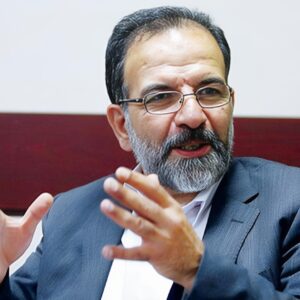
In an exclusive commentary for IRAF, journalist Seyed Jamaluddin Sajjadi writes that Afghanistan has made several attempts to establish a political system based on the rule of law, elections and public participation. Each effort, however, was derailed by coups, civil war, foreign intervention, weak state institutions and competition among armed groups.
From the so-called “Decade of Democracy” under Mohammad Zahir Shah to the U.S.-backed republic, democracy in Afghanistan has never had sufficient time to develop into an enduring and institutionalized political tradition.
The Zahir Shah Era: An Unfinished Democratic Experiment
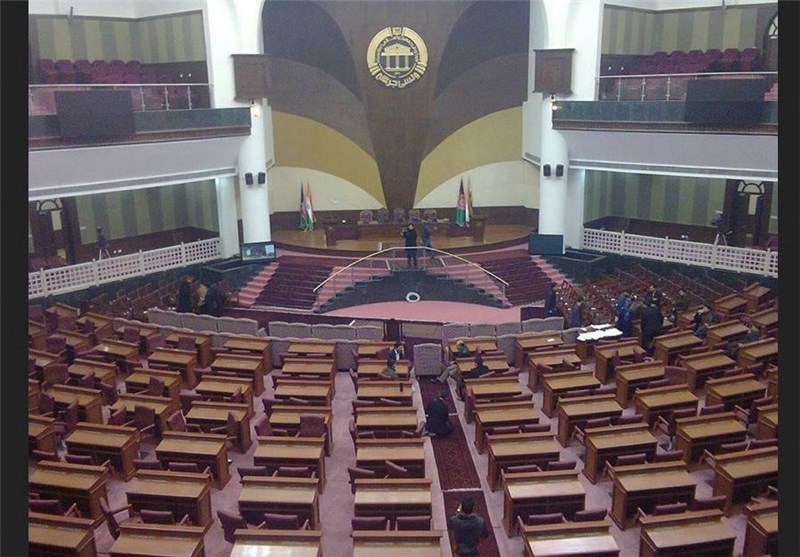
Afghanistan’s first serious experiment with democracy began with the adoption of the 1964 Constitution under the reign of Mohammad Zahir Shah, a period widely known in the country’s history as the “Decade of Democracy.”
Although the constitution retained the monarchy, it limited the king’s powers and recognized parliament, elections and certain freedoms commonly associated with democratic systems. Elections were held during this period, giving political movements and groups opportunities to emerge and engage in political activity.
However, a lack of experience, incomplete institutional structures and the inability of newly established institutions to function effectively posed significant challenges to the consolidation of democracy.
A weak central government, political instability, economic difficulties, political divisions and the failure to transform the constitution into an enduring political culture all contributed to the process’s shortcomings.
The period ultimately came to an end with the coup led by Mohammad Daoud Khan, a member of the royal family. The coup overthrew the semi-monarchical system and brought Afghanistan’s first democratic experiment to a halt before it could become firmly established.
The Communist Government: The Beginning of an Era of Repression
On July 17, 1973, Daoud Khan overthrew the monarchy in a coup and declared a republic. He remained in power until 1978, but his relations with the People’s Democratic Party of Afghanistan gradually deteriorated, eventually leading to uprisings that resulted in his overthrow and death.
The April 1978 coup, known as the Saur Revolution, and the rise of the People’s Democratic Party of Afghanistan fundamentally changed the country’s political trajectory. The new government came to power through a military coup, with no role for popular voting in the transfer of power.
After Nur Mohammad Taraki assumed power, his government severely repressed political and social opponents. Mass arrests, torture, executions and the disappearance of dissidents became part of Afghanistan’s political reality.
The communist government’s social and economic reforms were implemented without broad political or social consensus and, in many cases, through coercive methods. These measures eventually triggered protests and uprisings across various regions, prompting the government to resort to further repression in an effort to retain power.
Following the Soviet Union’s military intervention in 1979, fighting between the government and armed opposition groups intensified, plunging Afghanistan into one of the bloodiest periods in its modern history.
The Mujahideen: Hopes Undermined by Civil War
With the withdrawal of Soviet forces and the fall of Dr. Najibullah’s government in 1992, another opportunity emerged to establish an inclusive political system. However, instead of focusing on forming a government, the mujahideen leaders turned against one another in a struggle over power-sharing.
Those who had fought side by side against the Soviet Union were now standing on opposing fronts.
Under these circumstances, Kabul became a battleground, and the mujahideen’s fragile government proved unable to establish the authority and security necessary to uphold the rule of law.
During this period, power was determined less by citizens’ votes than by agreements among armed group leaders and the prevailing military balance.
Amid the civil war, the Taliban emerged and rapidly expanded their influence. In 1996, they captured Kabul and established the “Islamic Emirate,” a system that not only rejected democracy but also regarded it as a Western product.
The Republic: Electoral Democracy or an Imported System?
Following the September 11 attacks, the United States and its allies invaded Afghanistan under the banner of combating terrorism and sought to implement their own version of democracy in the country.
The 2004 Constitution, presidential and parliamentary elections, political party activities, free media and the broader participation of women in public life were among the most significant achievements of this period.
Millions of Afghans participated in the 2005 elections, and, for the first time in the country’s modern history, power was transferred and distributed peacefully, with Hamid Karzai assuming the presidency.
Although the republic appeared to have certain characteristics of a democratic system, in practice it faced widespread corruption, direct foreign interference and instability.
Electoral fraud, corruption, the influence of powerful individuals, weak rule of law, the concentration of power and the political use of state resources severely undermined the government’s legitimacy. Many citizens did not feel that they had a meaningful share in power.
The 2014 presidential election and the ensuing political crisis, as well as the 2019 election, were examples of foreign embassy interference, particularly by the United States, in electoral outcomes.
Millions of dollars were spent on elections whose outcomes, the author argues, had already been determined in Washington.
Thus, although the republic offered a much broader space for political participation than previous political systems, democracy during this period remained more of a slogan than an institutionalized practice. Consequently, with the withdrawal of U.S. forces from Afghanistan, the author argues, the corrupt system also collapsed.
Why Did Democracy Fail to Take Root in Afghanistan?
The failure of democracy in Afghanistan cannot be attributed to a single factor. A combination of circumstances contributed to the failure to establish and consolidate democratic principles.
Civil war, foreign intervention, weak state institutions, economic dependence, corruption, a lack of experience and the persistent presence of armed groups deprived Afghanistan of the opportunity to develop a stable political order.
Perhaps the most significant reason for democracy’s failure in Afghanistan is that none of the country’s political experiments had sufficient time to develop and become institutionalized.
The 1964 constitutional experiment was still taking shape when the 1973 coup brought it to an end. Daoud Khan’s republic, in turn, was overthrown in the April 1978 coup before it could establish a stable political system.
Subsequent coups, wars and foreign interventions further undermined opportunities to develop political institutions and establish the peaceful transfer of power.
During the post-2001 republic, elections, parliament, free media, civil society activities and women’s participation emerged on an unprecedented scale. However, these structures were established in an environment in which much of the institutional framework had been created and supported by foreign actors.
As a result, the author argues, democracy remained largely a slogan and never became a deeply rooted, homegrown political process in Afghanistan.