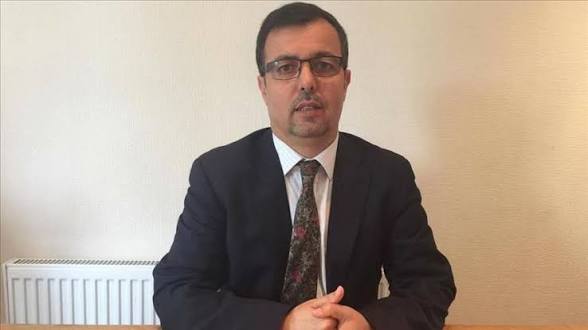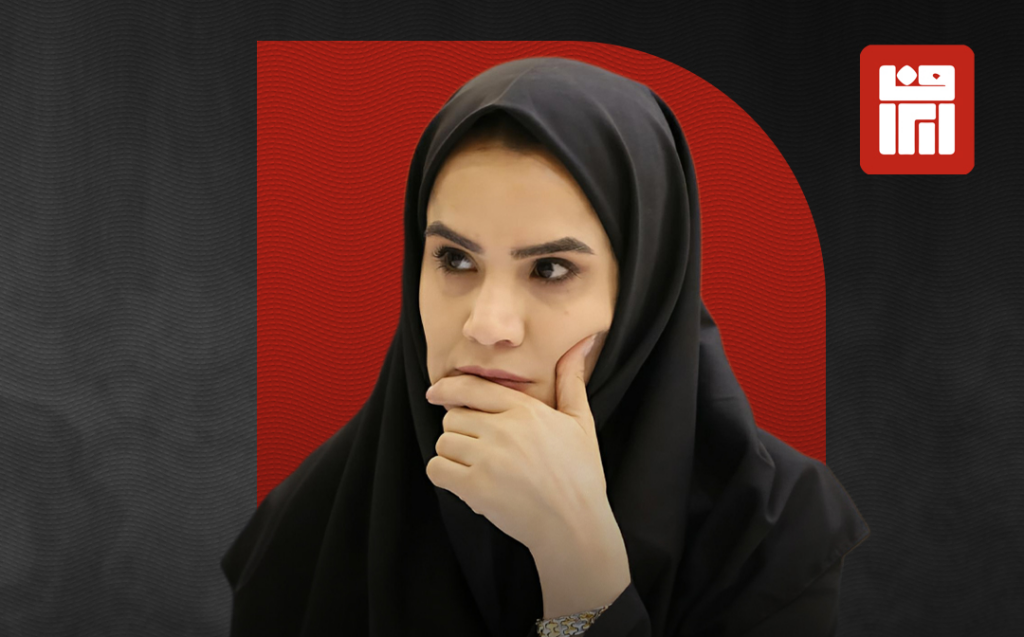
Dr. Somayeh Morovati, a university professor and senior regional affairs analyst, writes exclusively for IRAF on the Taliban’s oil and gas agreement with Saudi company Delta International, signed in the presence of Zalmay Khalilzad: What matters is the “continued presence” of Khalilzad, rather than merely his appearance in a photograph from the signing ceremony. However, despite the U.S. State Department’s official statement that his presence was not “official,” the experience of recent years shows that Khalilzad’s role may indicate the existence of a hidden game in this geographical arena rather than merely reflecting an overt one.
The $200 million agreement between the Taliban’s Ministry of Mines and Petroleum and Saudi company Delta International, signed on September 7, 2026, may initially appear to be an economic deal for the exploration and extraction of gas in the Kashk–Tirpul area of northern Herat. According to the Taliban’s official announcement, the agreement includes an initial $200 million investment to explore and extract gas from seven blocks covering an area of approximately 22,000 square kilometers. The exploration period is set at eight years, while the contract will run for 25 years.
The significance of the agreement, however, goes beyond its financial value, as it comes at the intersection of three major developments:
- The Taliban’s growing efforts to attract foreign investment
- The rising geopolitical importance of energy routes following the Iran war and disruptions to traffic through the Strait of Hormuz
- Tehran’s relatively reduced focus on its Afghan neighborhood amid wartime conditions
From this perspective, the main issue is not simply whether Saudi Arabia has found a gas field in Afghanistan. The more important question is whether regional actors are using the new circumstances to redefine their positions in Afghanistan and create new energy and transit options.
If so, the Kashk–Tirpul agreement should be viewed as part of a broader trend in which Afghanistan is gradually shifting from being a “security issue” to becoming a “geoeconomic asset.”
More importantly, this presence comes at a time when attention to Afghanistan and the Taliban has declined amid intertwined regional and international crises—from the war in Ukraine to the U.S.-Israeli war against Iran and Trump’s calculations for global and regional actors.
In other words, the Taliban could soon surprise Iran and the region through overt and covert interactions that have strengthened over the past year.
The Significance of the Timing of the Saudi Agreement
The timing of the agreement may be as important as the agreement itself.
The war between Iran, the United States and Israel, which began on February 28, 2026, has had significant consequences for the region’s energy architecture in the months since. Traffic through the Strait of Hormuz has been severely disrupted, while Brent crude prices have exceeded $100 a barrel in recent days as attacks have intensified.
This development is particularly significant for Saudi Arabia. The kingdom is one of the world’s largest energy exporters, but a major part of the Gulf’s energy-export architecture ultimately depends on the security of maritime routes.
The war in Iran has demonstrated that energy production security is not the same as energy export security. Even if oil is produced in Saudi Arabia, disruptions to maritime routes can reduce its practical value. As a result, new models for ensuring secure access to energy are emerging and being tested.
For this reason, Gulf countries have in recent months been more seriously pursuing alternative routes for transporting and exporting energy. Saudi Arabia is examining and developing routes to transport oil to the Red Sea coast, while the UAE is increasing the capacity of its pipeline to Fujairah. The aim is to reduce vulnerability to disruptions in the Strait of Hormuz.
Against this backdrop, Saudi investment in Afghanistan should not be mechanically attributed to the Iran war. There is no evidence that the Delta agreement was directly designed to bypass Hormuz. However, the war has increased the strategic value of geographic diversification and the creation of new energy options. This is precisely the environment in which energy projects outside the Gulf can acquire greater significance.
Another important point is the need to take a long-term view of this “presence” in Afghanistan.
If the war and the Iran issue are removed from the equation, the key question becomes: What does the presence of the United States and Saudi Arabia in Afghanistan—primarily visible through the energy sector—mean for Iran, China, Russia and the wider region? In what other areas will its other dimensions emerge?
Afghanistan: From an Energy Resource to a “Geopolitical Option”
Afghanistan’s oil and gas resources are not large enough, compared with the vast reserves of the Gulf, to alter the global energy equation. Therefore, if the significance of the agreement is measured solely by the size of its reserves, the issue may be overstated.
Afghanistan’s value lies elsewhere: its geography.
Afghanistan is situated between Central Asia and South Asia and could serve as a link between Central Asian energy resources and the markets of Pakistan and, if conditions permit, the larger markets of South Asia.
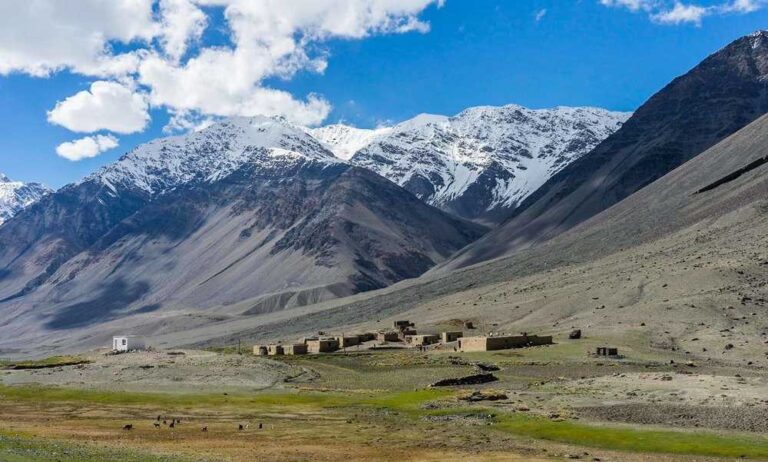
If exploration in Kashk–Tirpul proves successful and energy transmission projects move forward, western Afghanistan could evolve from a border region into part of a regional energy and infrastructure network.
The $200 million agreement should therefore be viewed as an initial entry point. At the first stage, the investor commits a relatively limited amount of capital, assesses the resources, obtains geological data, builds political and economic relationships, and then decides whether to make larger investments.
Within this framework, the real significance of the agreement is not the “$200 million,” but the possibility that it could open the way for subsequent investments and infrastructure projects.
Saudi Entry: Political Influence or Economic Diversification?
Two extremes should be avoided when analyzing Saudi Arabia’s role.
One extreme interpretation would be to directly attribute the agreement to the Saudi government and portray it as part of an official Riyadh project to dominate Afghanistan. There is not enough evidence to support such a claim.
Delta International is a Saudi company, and attributing its activities to official Saudi government policy would require further evidence regarding its ownership, financing and links to state institutions.
The other extreme is to argue that because the project is being carried out by a private company, it therefore has no political significance. This is also inaccurate.
In environments such as Afghanistan, investment in the energy sector can itself generate political influence. A foreign company requires security, land, permits, labor, transmission routes and sustained relations with those in power to implement a project.
As a result, an energy agreement can create a network of relationships that ultimately translates into economic influence and, subsequently, political influence.
It is therefore more accurate to use the term “geoeconomic influence” rather than “direct political influence.”
It is worth noting that Saudi Arabia previously established roots in Afghanistan and Pakistan during the jihad era through a similar structure: private capital, the formation of strong and guaranteed relationships with key figures, and ultimately securing access to decision-making and geography.
Afghanistan’s Appeal to Saudi Arabia
The attractiveness of Afghanistan to Saudi Arabia should also be viewed on three levels:
First, geographic diversification. The Iran war has demonstrated the costs of excessive reliance on a single energy route. The energy market is increasingly moving toward networks in which alternative routes, diversified reserves and geographic flexibility carry greater value.
Recent reports about major importers seeking to diversify their oil supplies also illustrate this trend. Disruptions along Middle Eastern routes have pushed countries such as Japan, South Korea and India toward American and African energy sources as well.
Second, the search for new markets and investment opportunities. Afghanistan remains a high-risk market, but precisely for that reason, investors capable of managing such risks can gain early access to sectors such as energy, mining and infrastructure.
Third, Afghanistan’s position within the Central Asia–South Asia architecture. If Afghanistan becomes a route for energy and goods, economic presence in the country could ultimately prove far more valuable than the gas field itself.
Therefore, Saudi Arabia’s objective should probably not be understood solely as gaining access to Afghan gas. Rather, it should be seen as a combination of investment, positioning, diversification and the creation of new windows of geoeconomic opportunity.
Zalmay Khalilzad: The Biggest Question in the Case
Among all the elements of this development, the presence of Zalmay Khalilzad may be more significant than the agreement itself.
The Taliban’s Ministry of Mines has explicitly stated that the signing ceremony was held in Khalilzad’s presence. However, this was not his first appearance in connection with the project.
In October 2025, Khalilzad was also present at a meeting between Delta’s chief executive and Abdul Ghani Baradar, where investment in the oil and gas sector and pipeline development were discussed.
Therefore, what matters is the “continued presence” of Khalilzad, rather than merely his appearance in a photograph from the signing ceremony.
However, despite the U.S. State Department’s official statement that his presence was not “official,” the experience of recent years shows that Khalilzad’s role may be less a display of an overt game than an indication of a hidden one in this geographical arena.
For this reason, the significance of his presence and of this agreement for the Islamic Republic of Iran becomes even greater at this particular juncture.
Another important factor is Khalilzad’s unique network capital.
He knows the Taliban, has a history of negotiating with them, understands the U.S. political structure, and has previous experience with Afghanistan’s economic and energy affairs.
He can therefore serve as a facilitator for a foreign project by providing access, conveying messages, reducing political friction and building trust among the parties—even without formally representing any government.
In the language of diplomacy, this role is far more accurately described as that of a facilitator than as that of a “U.S. representative.”