Aryan Bank, which operated in Afghanistan with shares held by Iran’s Bank Melli and Bank Saderat, was once one of the key banking links between Iran and Afghanistan, facilitating trade and financial transactions between the two countries. Its operations, however, were halted during Afghanistan’s previous government amid pressure from the United States. Mohammad Mehdi Javanmard Qassab, Iran’s former commercial attaché in Afghanistan, says efforts have been made to revive the bank, while the Afghan side has also put forward proposals for its resumption. The final decision, however, remains with Iranian banking authorities.
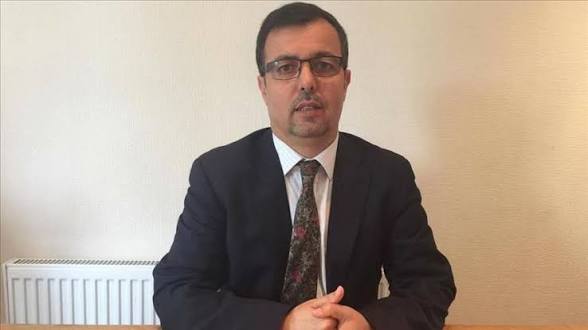
Speaking to IRAF, Javanmard Qassab said efforts to reactivate Aryan Bank have continued, noting that its operations were suspended during Afghanistan’s previous government under the impact of U.S. pressure and sanctions. Despite the passage of several years, the conditions for resuming the bank’s activities have yet to be established.
He said reviving Aryan Bank could facilitate banking cooperation, the issuance of bank guarantees, and the expansion of trade as well as technical and engineering services between Iran and Afghanistan.
Sanctions Pressure and the Suspension of Aryan Bank
Javanmard Qassab said Aryan Bank’s operations were suspended before the Taliban returned to power and during Afghanistan’s previous government. According to him, the government at the time issued a decision preventing the bank from continuing its activities, but the underlying cause was largely rooted in external pressure, particularly U.S. sanctions.
He said Aryan Bank has also been unable to resume operations under the Taliban, adding that Iran has made efforts in recent years to reopen this channel, but those efforts have yet to produce a final outcome.
The former Iranian commercial attaché said the disputes surrounding Aryan Bank’s operations in Afghanistan should not be viewed solely as a technical or banking issue, arguing that international pressure played a role in the process.
Asked whether there were figures available on the volume of transactions conducted through Aryan Bank, he said he did not have specific figures, but stressed that the presence of a bank connecting the two countries could have a significant impact on expanding trade.
Aryan Bank and the Challenge of Technical and Engineering Services
Javanmard Qassab sees facilitating trade, particularly the expansion of technical and engineering services between Iran and Afghanistan, as one of the most important potential functions of a reactivated Aryan Bank.
He said one of the key requirements in technical and engineering contracts is the provision of bank guarantees, and that a direct banking connection could make the process easier.
He explained that restoring such a channel would give banks and traders in both countries greater opportunities to conduct banking operations, open letters of credit and use financial instruments, potentially reducing some of the obstacles facing formal trade.
The former commercial attaché also referred to meetings held among Iranian banking officials, saying the Central Bank of Iran and Bank Melli and Bank Saderat, as Aryan Bank’s shareholders, have held several meetings to examine the possibility of reactivating the bank. He added, however, that the process has not yet reached a final outcome.
In Javanmard Qassab’s view, the issue is not simply about reviving a bank, but about establishing financial infrastructure for expanding economic relations between Iran and Afghanistan — infrastructure that could play an important role, particularly in bank guarantees and commercial contracts.
Trade Through Money Changers and Indirect Channels
During the years when Aryan Bank’s effective operations were suspended, some of the banking needs of traders were met through alternative channels.
Javanmard Qassab said that in some cases, bank guarantees were exchanged between Iranian and Afghan banks on a limited and case-by-case basis. In many instances, however, traders relied on intermediaries and business partners to handle such transactions.
He said these mechanisms have allowed trade to continue, but cannot replace a direct and sustainable banking relationship between the two countries.
The former Iranian commercial attaché, referring to restrictions resulting from sanctions, said banks around the world have been affected by such conditions to some extent. Afghanistan, however, has not been directly subject to the same sanctions-related restrictions in trade as some other countries.
At the same time, he stressed that economic relations between Iran and Afghanistan have remained relatively resilient through different political periods, as Afghanistan needs access to the Iranian market and Iranian goods, while Iran views Afghanistan as an important and complementary market for its trade activities.
Trade Beyond Political Calculations
Asked whether the Taliban’s recent efforts to expand engagement with the United States and sign economic agreements with other countries could affect Iran-Afghanistan trade relations, Javanmard Qassab said he did not believe these developments would have a decisive impact on the two countries’ economic ties.
He said Afghanistan, as an independent country, can pursue its own foreign and economic policies. However, he argued that a degree of economic interdependence has developed between Iran and Afghanistan, rooted in historical, cultural and social ties as well as the mutual needs of the two sides.
According to him, Afghanistan needs regional trade routes to secure part of its essential goods and industrial raw materials, while Iran considers the Afghan market an important and complementary destination. Therefore, Kabul’s expanding relations with the United States or other countries do not necessarily mean a decline in its economic ties with Tehran.
Javanmard Qassab stressed that even amid complex political conditions in the region, the commercial dimension of Iran-Afghanistan relations has continued, with both sides maintaining shared interests in preserving and expanding economic ties.
Will Aryan Bank Resume Operations?
Javanmard Qassab ultimately places primary responsibility for pursuing Aryan Bank’s revival on the Central Bank of Iran and the bank’s shareholders, Bank Melli and Bank Saderat. He said the Afghan side has also shown cooperation and put forward proposals for the bank to resume operations.
According to him, several negotiations and meetings have been held on the issue. One of the objectives, he said, is not only to establish new banking cooperation but also to determine the status of resources and funds related to Iran held by Aryan Bank and return them to Iran’s banking system.
Referring to the Taliban’s cooperation in trade, Javanmard Qassab said that despite existing limitations, no fundamental problem has emerged in commercial relations between the two countries, and that the Afghan side is also prepared to continue economic cooperation with Iran.
Javanmard Qassab expressed hope that existing obstacles could eventually be removed, allowing Aryan Bank to resume operations and once again play a role in facilitating financial and commercial relations between Iran and Afghanistan.
Aryan Bank is one of the banks associated with Iran-Afghanistan financial relations, with Bank Melli and Bank Saderat as its Iranian shareholders. The suspension of its operations during Afghanistan’s previous government effectively restricted one of the formal channels of banking cooperation between the two countries. Since then, traders have relied in part on money changers, intermediaries and indirect mechanisms to meet their financial needs.
The significance of reviving Aryan Bank extends beyond money transfers. It could also provide bank guarantees, facilitate commercial contracts, support technical and engineering projects, and create more formal mechanisms for economic transactions.
Iran and Afghanistan’s economic relationship also benefits from their geographic proximity, historical and cultural ties, Afghanistan’s demand for Iranian goods, and Iran’s role in regional transit and supply routes. Strengthening formal banking channels could therefore help reduce the costs and risks associated with bilateral trade.
However, reactivating Aryan Bank would require decisions and coordination among banking institutions in both countries, as well as consideration of issues related to international sanctions. The bank’s future therefore remains part of the broader question of Iran-Afghanistan economic relations and the two countries’ efforts to sustain bilateral trade amid changing regional conditions.