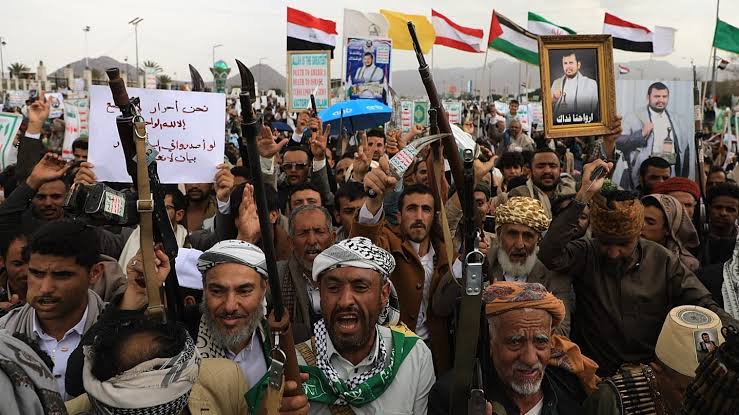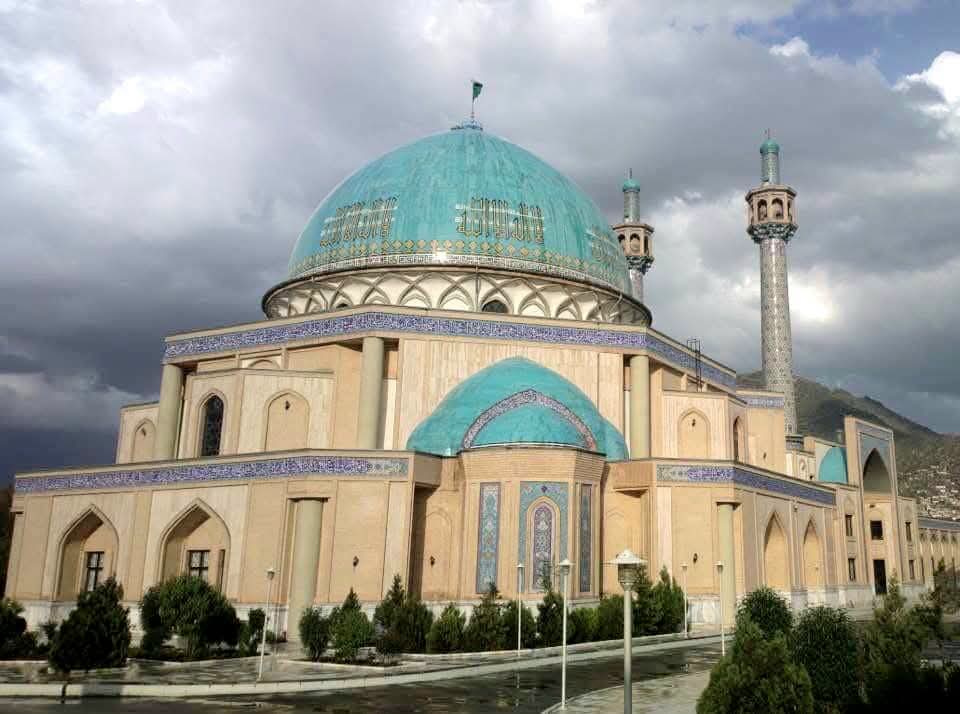
The Taliban’s siege of Khatam al-Nabieen Seminary in Kabul and the reported detention of teachers and students have sparked widespread reactions among Afghan social media users, who have criticized the use of military force to evacuate a religious and educational institution. Many have framed the incident as a broader issue involving religious freedom, the security of academic institutions and the position of Afghanistan’s Shia community.
As reported by IRAF, forces affiliated with the Taliban’s Ministry of Justice surrounded Khatam al-Nabieen Seminary in Kabul on Saturday, September 5, and ordered its officials and students to vacate the premises. Reports said Taliban forces equipped with military gear deployed around the seminary and attempted to enter the facility, encountering resistance from teachers and students. The standoff eventually led to the detention of at least 12 seminary teachers during the night.
Mohammad Javad Mohseni, director of Khatam al-Nabieen Seminary, said 12 teachers had been detained by Taliban forces. Other reports put the number of detainees, including teachers, students and people associated with the seminary, at 28.
Questions Over the Legal Basis of the Taliban’s Action
Seyed Mohammad Hashemi, a political activist, criticized the Taliban Ministry of Justice’s decision concerning the institutions, saying the ministry did not have the authority to shut down cultural and academic bodies.
He said the ministry’s notice regarding the suspension of Tamaddon TV, Khatam al-Nabieen School and Khatam al-Nabieen University, citing alleged political affiliations and the construction of the institutions on state-owned land, had “no legal or judicial justification.”
Hashemi added that the three institutions had completed their registration and licensing procedures under the existing laws and had operated for years. If any violations had occurred, he said, the relevant state institutions should investigate the matter through legal procedures.
If the issue concerned alleged encroachment on state property, Hashemi said, the Ministry of Justice could pursue the matter and refer it to judicial authorities, but it did not have the authority to suspend the institutions’ activities.
‘An Attack on Khatam al-Nabieen Is an Attack on Shia Identity’
Mohammad Taqi Misbah, another activist, described Khatam al-Nabieen Seminary as part of the religious identity of Afghanistan’s Shia community.
“Khatam al-Nabieen Seminary is intertwined with the religious identity of Afghanistan’s Shia,” he wrote on Facebook. “Any attack on this seminary is an attack on the religious identity of all Shia.”
Meanwhile, Mohammad Ibrahim Basharati called on Muslim scholars and free thinkers around the world to respond to the situation at the seminary.
“Defending Khatam al-Nabieen is a human and Islamic duty,” he said, urging people not to allow religious and political divisions to lead to the targeting of the institution.
Warnings Against Division Among Shia and Hazara Communities
Other reactions focused on the importance of unity and social cohesion among Afghanistan’s Shia and Hazara communities. Many users called for unity and an end to internal divisions at what they described as a sensitive time.
Asadullah Mohseni described claims that the seminary’s problems had nothing to do with the Shia and Hazara communities as “unwitting complicity in repression.”
He said statements suggesting that the attack on Khatam al-Nabieen was unrelated to the wider community were concerning. Those who said the issue did not concern “us,” he argued, should recognize that such a divisive outlook could ultimately leave everyone facing their shared fate alone.
Mohseni warned that if the current trend continued, other institutions and properties, including Haji Nabi Township, Tamaddon TV, the Khatam al-Nabieen complex, Bamiyan and Jebrail Township in Herat, could also come under threat.
“Let us not become complicit in our own destruction or sharpen the sword of oppression,” he said.
Mohammad Rajaei expressed a similar view, writing that while the Taliban was seeking to restrict the Shia community by every possible means, reviving past disputes would harm the entire Shia and Hazara community.
“In these circumstances, we must all stand in one united front against injustice,” he wrote.
Reza Ehsan also criticized users who described Khatam al-Nabieen as belonging to a particular group or political faction, saying such positions would increase hostility and embolden opponents rather than support the people.
He said those who believed the closure or seizure of the Khatam al-Nabieen complex did not concern them should consider that if the action succeeded without social resistance, other institutions and complexes could face similar treatment in the future.
Ehsan stressed that even if different groups had disagreements or grievances, those differences should not, under such circumstances, turn into support for repressive actions or satisfaction at another group’s suffering.
Calls for Muslim Scholars to Respond
Khodadad Faqihi, a Facebook user, described Khatam al-Nabieen as “the identity of a large section of the Afghan people” and one of the country’s important Islamic institutions.
He said the Taliban’s siege of the seminary was a sign of discrimination and warned that if the Taliban leadership did not intervene against the actions of the Ministry of Justice, the incident could “open the door” to further pressure on Shia Muslims.
Faqihi called on the international community and Islamic countries to take a position against what he described as the closure of an important religious and academic institution and to prevent the continuation of such a trend.
Emphasis on the Sanctity of Religious Institutions
Seyed Sajjad Sadat Hosseini said an attack on religious institutions was an attack on the dignity, faith and peace of society.
“Those who choose violence instead of dialogue and reasoning neither defend justice nor serve humanity,” he said.
Hosseini added that schools, universities, mosques, Hussainiyas and shrines should be places of security and worship for all people, regardless of religious differences, rather than arenas for force and violence.
Seyed Ayat Javad also expressed regret over the Taliban’s treatment of the seminary and called for dialogue.
He said he hoped officials would choose negotiation over confrontation, with patience and respect, adding that respecting religious institutions and the rights of all citizens could help preserve peace and unity in Afghanistan.
‘Why, and on What Charges?’
Some users reacted more sharply to the detention of teachers and students.
Mehrān Sadat, posing the question “Why, and on what charges?”, wrote that if teaching religious sciences was a crime, the Taliban’s claims about the importance of religious education would be at odds with its actions.
He also criticized the international community’s silence over the incident and asked whether any institution or organization existed to prevent such treatment.
Ali Qanuni called for a broader response from Shia seminaries across Afghanistan.
He said there had not been sufficient protest over restrictions on girls’ education or Afghanistan’s religious and linguistic situation, and that the closure of academic and religious institutions should not now go unanswered.
Tamaddon TV Resumes Online Activities
Following the incident, Tamaddon TV announced that it would resume broadcasting through online platforms after months of suspension.
The broadcaster said it had previously refrained from continuing its activities at the recommendation of religious scholars and community elders, with the aim of resolving the dispute peacefully.
Tamaddon TV said it would publish documents, correspondence, negotiations and commitments between the broadcaster and the Taliban Ministry of Justice so that the public could assess the course of the dispute.
The broadcaster had previously been shut down in July on the ministry’s orders. The ministry cited alleged political affiliations and the use of state-owned land as the reasons for the action, allegations Tamaddon TV rejected.
A Dispute Beyond Property
Khatam al-Nabieen Seminary is a well-known Shia religious education institution in Kabul. It was established in 2007 at the initiative of Mohammad Asif Mohseni and has also conducted academic, research and cultural activities alongside religious education.
In recent months, the Taliban Ministry of Justice has suspended the activities of several institutions associated with the complex, raising issues concerning land ownership and alleged political affiliations.
In July, the seminary’s board of trustees said the mosque, Hussainiya, library and boys’ and girls’ schools within the complex had been closed and sealed.
The latest siege, the detention of teachers and students and the resumption of Tamaddon TV’s activities have brought the dispute between the Taliban and the Khatam al-Nabieen complex into a new phase.
The widespread reactions among Afghan social media users suggest that the issue is no longer limited to a dispute over ownership of a property. It has become a broader debate over religious freedom, the security of academic institutions and the position of Shia Muslims in Afghanistan’s current political structure.