Recent remarks by two Taliban officials about the status of languages in Afghanistan have once again turned the debate over “national language” and “official language” into a contentious issue. While one Taliban official described Pashto as “the only national language of Afghanistan,” another questioned the very concept of national institutions in the country. Mohammad Hashim Esmatollahi, a university professor and former adviser to Afghanistan’s former president, says colonial powers, including the United States, have contributed to linguistic divisions. He believes that emphasizing differences between Persian and Pashto could be part of a political process aimed at creating identity-based divisions in Afghanistan.
Language should not become a tool of political rivalry
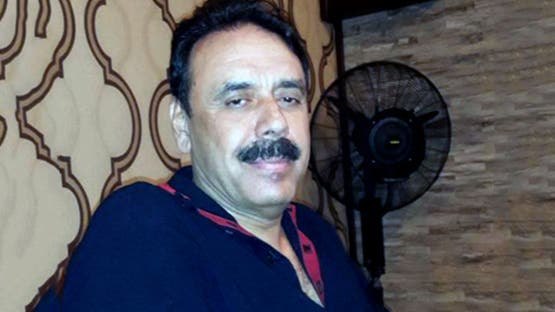
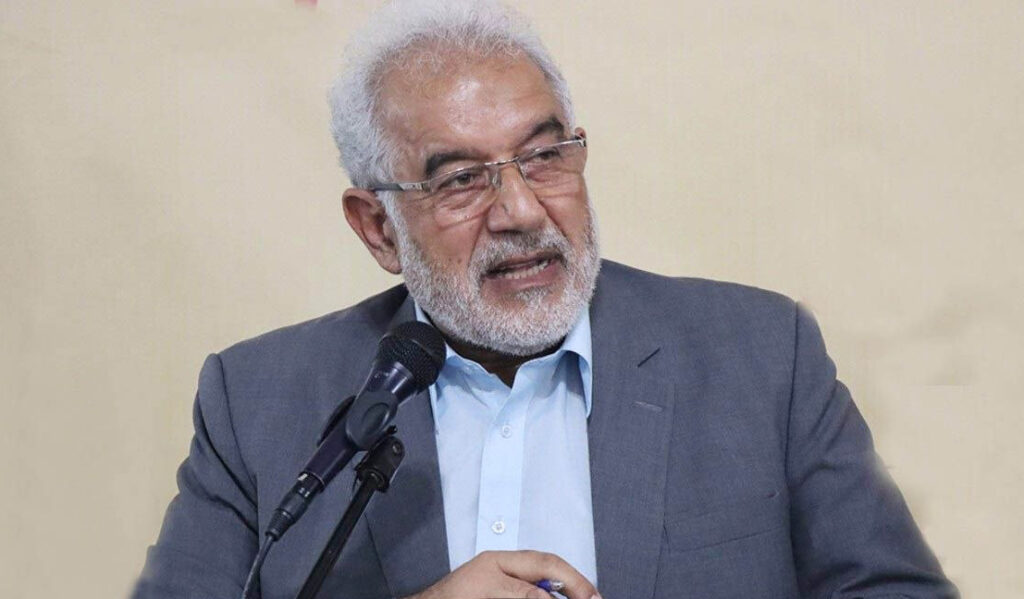
Mohammad Hashim Esmatollahi, a university professor and former adviser to Afghanistan’s former president, told IRAF that the two differing views expressed by Taliban officials about the status of languages in Afghanistan were noteworthy.
“The issue of language in Afghanistan should not be turned into a tool for ethnic and political rivalries,” he said.
Esmatollahi said Persian had been the language of government, the royal court, culture and literature in Afghanistan for centuries. Attempts to create confrontation between Persian and Pashto, he argued, could challenge the country’s social and historical identity.
Linguistic divisions became more prominent in recent decades
Esmatollahi said the growing prominence of tensions between Persian and Pashto could not be explained solely by Afghanistan’s internal developments. In his view, the issue had become more pronounced over the past two decades, particularly under the influence of foreign powers.
Referring to the presidency of Hamid Karzai, he said some American officials had also sought to raise and intensify linguistic rivalries and discrimination between Persian and Pashto during that period.
Esmatollahi said the recent remarks by Taliban officials also showed that differing views existed within the group over the definition of “national” and the status of languages. According to him, one Taliban official referred to Persian and Pashto as official languages, while another rejected the concept of “national” institutions in Afghanistan altogether, arguing that even the Ministry of Defense, the army and the police were not national.
He attributed these differences to varying interpretations and, in some cases, uninformed remarks.
Persian’s historical role in Afghanistan
To explain the status of Persian, Esmatollahi pointed to Afghanistan’s political history. He said that after Afghanistan gained independence under Amanullah Khan and adopted its first constitution, Persian retained its position as an official and governmental language.
He added that this role was not limited to the Amanullah Khan period. Persian had also been the language of the royal court, government and official correspondence in earlier periods, from the reign of Timur Shah through the eras of Abdur Rahman Khan and Habibullah Khan.
Esmatollahi identified the next major turning point as the 1964 constitutional reforms, during the premiership of Mohammad Yusuf, when Persian and Pashto were recognized as Afghanistan’s two official languages.
However, he said, the constitution did not refer to the concept of a “national language,” and a distinction should be made between an official language and a national language.
Persian extends beyond national borders
Esmatollahi said Persian could not be defined solely within Afghanistan’s political borders. In his view, the language had historically belonged to a broad civilizational and cultural sphere.
He pointed to Persian’s history in the Indian subcontinent, where it held official status for centuries and reached its peak during the Mughal era. The presence of poets such as Mirza Abdul-Qader Bedil and Muhammad Iqbal Lahori in the Persian literary tradition, he said, also demonstrated the language’s reach beyond political borders.
He also cited the history of Persian-language journalism to illustrate the language’s geographic scope, referring to the publication of Akhbar in India, Persian-language periodicals in Tbilisi, Kaghaz-e Akhbar published by Mirza Saleh Shirazi in Iran, and Shams al-Nahar in Afghanistan.
Persian, he concluded, had historically been used not only in one country or by one ethnic group, but across a broad area stretching from East Asia and the Indian subcontinent to Central Asia, Iran, the Caucasus and parts of West Asia.
Politicizing language can lead to an identity crisis
Esmatollahi linked the issue of language directly to identity, emphasizing that language was not merely a means of communication but one of the main foundations of a society’s social, political and historical identity.
He said language enables social interaction: people communicate through it, social relationships develop, cities and communities are built, and collective identity ultimately takes shape.
According to Esmatollahi, colonial powers were also aware of this capacity and had sought at different times to exploit linguistic differences to create divisions within societies. He cited British colonial policy in India as an example, saying that in 1836, Persian was removed from the administrative system and replaced by English.
In his view, language should serve as a means of understanding, dialogue, empathy and coexistence. Turning it into a tool of prejudice, confrontation and exclusion could have far-reaching social and political consequences for Afghanistan.
Persian and Pashto: Sister languages
Esmatollahi stressed that the issue should not be reduced to a confrontation between Persian and Pashto. He said Pashto also belongs to the Aryan language family and that Persian and Pashto could be regarded as sister languages that had coexisted throughout Afghanistan’s history.
He argued that Afghanistan had not faced a “language crisis” for most of its history and that what is now presented as a linguistic dispute was largely the result of politicizing language.
At the same time, Esmatollahi pointed to an important difference among Afghanistan’s linguistic communities: most Pashtuns know Persian, while many Persian-speaking Afghans do not have a strong command of Pashto. He described this as a communication weakness for Persian speakers and said learning Pashto could have improved social relations among different groups.
He cited former President Hamid Karzai as an example of linguistic coexistence, describing him as a Pashto speaker from Kandahar who also spoke Persian well, which, according to Esmatollahi, helped him communicate with Persian speakers.
Pashtun rulers and the historical connection to Persian
To emphasize the history of coexistence, Esmatollahi also referred to historical figures in Afghanistan.
He said Ahmad Shah Durrani, who is regarded as the founder of Afghanistan, wrote poetry in Persian. Timur Shah and Shah Zaman also produced works in Persian.
He further referred to Daoud Khan and Zahir Shah, saying that despite their Pashtun background, they knew Persian well and used it.
In Esmatollahi’s view, this historical evidence shows that ethnic affiliation in Afghanistan did not necessarily mean rejecting another language. Persian and Pashto could coexist within the country’s social and political structures.
The Taliban and Afghanistan’s multilingual reality
Esmatollahi said some factions within the Taliban held a more hardline view of Persian, while parts of the group’s leadership were also aware that intensifying linguistic prejudice could push Afghanistan into a new phase of social tension.
He pointed to Afghanistan’s linguistic diversity, saying the country had around 15 languages and dialects and that Persian and Pashto were not its only languages.
Tajiks are predominantly Persian-speaking, he said, while many Uzbeks also understand Persian and have ties to Persian culture and literature. Persian is also used among Afghanistan’s Baloch and Nuristani communities.
Esmatollahi even referred to Pashtun-majority areas in eastern Afghanistan, saying Persian is used in some of those areas for trade and communication.
Therefore, he argued, Afghanistan’s social reality is incompatible with attempts to create an absolute divide between Persian and Pashto.
Afghanistan’s written heritage is largely in Persian
In conclusion, Esmatollahi said understanding the status of Persian in Afghanistan also required attention to the country’s written heritage.
He said a significant portion of Afghanistan’s historical, literary and cultural works had been written in Persian, and that the country’s libraries also contained extensive collections of Persian works.
Persian, he argued, had not merely been the language of poetry and literature in Afghanistan. It had also served as the language of the royal court, government and culture at different times.
As a result, he said, removing Persian or pushing it to the margins could not be regarded simply as a linguistic change; it could also have consequences for Afghanistan’s historical and cultural identity.
For Esmatollahi, Afghanistan’s path to managing linguistic diversity lies not in confrontation or exclusion, but in accepting coexistence among its languages.
He emphasized that Persian and Pashto could together form part of Afghanistan’s multilayered identity, and that turning linguistic differences into political conflict would deepen social divisions rather than help resolve the country’s problems.
Background: The debate over the status of Persian and Pashto in Afghanistan has a long history. Under the 1964 constitution, Persian and Pashto were recognized as the country’s official languages. In recent years, however, differing remarks by officials during both the republican era and the Taliban’s rule about “national language” and “official language” have once again brought the relationship between language, ethnicity and national identity into focus. In a country with considerable linguistic diversity, the issue is not merely cultural and can also have social and political dimensions. Critics have warned that politicizing language and turning it into a tool for intensifying ethnic divisions could deepen existing social rifts.