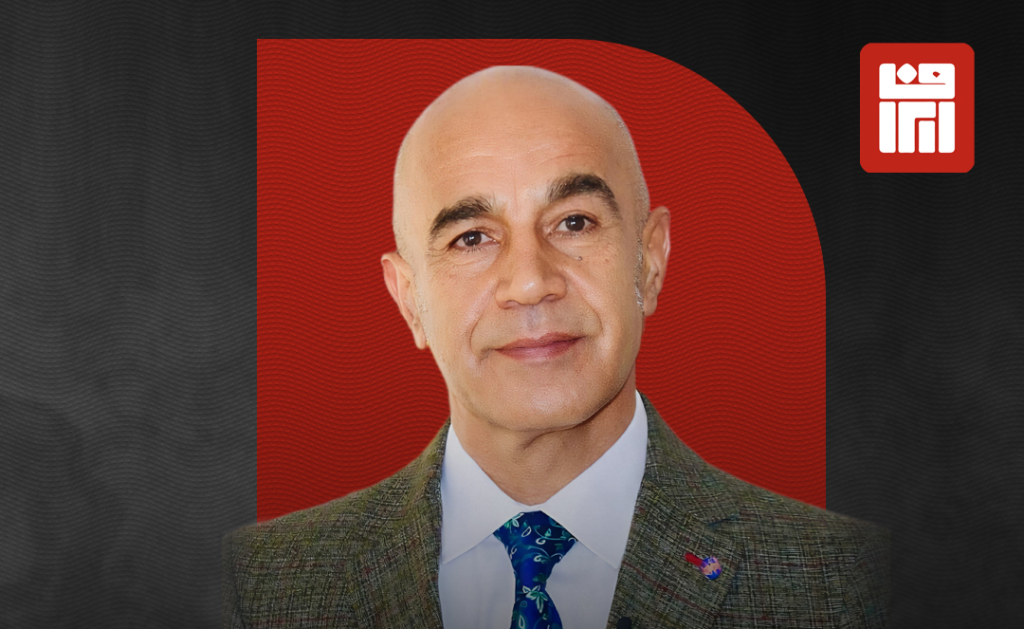
Kazem Homayoun, an environmental and pollution-economics expert, argues in an analysis for IRAF of Donald Trump’s promise to pay $5,000 to every adult American if Republicans retain control of Congress: “Governing a country is different from writing checks. A responsible politician is not the one who promises the largest figure; it is the one who explains how, from where, under which law, and at what cost that figure will be paid. Democracy is not an auction market either. The people’s vote should not become a commodity that any politician can put a higher price on by promising more money.”
In politics, not every promise can be judged simply by its immediate appeal. Some promises are more than economic policies; they reflect the kind of relationship a politician seeks to establish with citizens, public institutions and the very concept of elections. Donald Trump’s recent proposal to pay $5,000 to every adult American citizen if Republicans retain control of both chambers of Congress falls into this category.
Trump made the proposal on the evening of September 9, 2026, at a Republican rally in Dallas, calling it a “Trump Dividend.” Under his proposal, if Republicans retain both the House of Representatives and the Senate, every adult citizen would receive $5,000, which he said should be spent within the United States.
At the time the promise was announced, no complete and clear details were provided regarding the source of funding, timing of the payments, precise eligibility criteria, implementation mechanism or legal framework. Vice President JD Vance later suggested that wealthy Americans might be excluded from receiving the payment, meaning that even the precise scope of eligible recipients remains unclear.
The questions, therefore, are straightforward:
Where will the money come from?
Which institution will have to approve it?
Can tariff revenues actually finance a program of this scale?
Could such a massive payment, amid a large budget deficit and heavy public debt, increase inflationary pressures or the government’s borrowing costs?
And most importantly, when a payment is tied to the electoral victory of a political party, what impact does that have on the ethics of political competition and public trust?
This article does not seek merely to oppose Trump or defend his opponents. Its aim is to assess the proposal against three criteria: public economics and the federal budget; political ethics and democratic health; and the experience of large sums of money entering electoral politics.
1. $5,000 for Each Citizen: More Than $1 Trillion for the Government
For an American household, $5,000 is a significant amount of money. It could cover part of rent, debt, medical expenses, tuition or everyday costs. But public policy cannot be evaluated solely from the perspective of an individual’s wallet; the collective cost must also be considered.
According to the U.S. Census Bureau’s 2024 American Community Survey, under the “Citizen, Voting-Age Population” table, there were approximately 245.3 million U.S. citizens aged 18 and over. If each received $5,000, the nominal cost of the program would be approximately:
245.275 million × $5,000 = about $1.226 trillion.
Before accounting for administrative costs or possible changes in the number of eligible recipients, the figure makes clear that this would not be a small or marginal payment. It would be a public spending program on a scale exceeding $1 trillion. Reuters has similarly estimated the cost of the proposal at around $1.2 trillion.
The size of this figure becomes clearer when placed alongside the U.S. budget situation.
The Congressional Budget Office has reported that the federal budget deficit reached approximately $1.8 trillion during the first 10 months of fiscal year 2026. In its February 2026 outlook, the CBO had projected a full-year fiscal 2026 deficit of about $1.9 trillion.
A payment of roughly $1.2 trillion, therefore, is not a figure that can be treated as a minor electoral bonus.
The first question arises here: How can a program costing more than $1 trillion be implemented in an economy that is simultaneously facing a deficit approaching $2 trillion?
A clear budgetary plan answering this question has yet to be presented.
2. Tariffs Are Not a Magic Vault
One of the proposals for financing the payment involves using tariff revenues. Trump himself emphasized revenue generated by tariffs in his remarks, while Vance also cited tariff income as one possible source of funding.
But tariffs are not “free money from foreigners.”
A tariff is a tax imposed when goods enter a country, and its cost is distributed across importers, businesses, consumers and, to some extent, foreign exporters. According to CBO estimates, much of the cost of recent tariffs is ultimately passed on to the domestic economy through higher prices. The agency estimated that roughly 95 percent of the cost of the tariffs under review would ultimately be borne by domestic economic actors.
At the same time, tariff revenues cannot simply be equated with the cost of a program of this scale.
In its latest update in August 2026, the CBO sharply revised its estimates of net customs revenue for fiscal 2026 in light of multiple changes in trade policy and court decisions. It also warned that tariff revenues are highly dependent on tariff rates, import volumes, exemptions, and the responses of businesses and consumers.
Even if tariff revenues are high, the cost of a $1.2 trillion public payment is not automatically covered by annual tariff revenues.
Ultimately, the government must finance the difference from somewhere:
- cuts to other spending;
- higher taxes;
- borrowing;
- or a combination of these approaches.
Tariffs, therefore, do not repeal the basic rules of accounting.
Every dollar spent must have a source.
3. The Issue Is Not Only Debt; It Is Also the “Opportunity Cost”
It would be a mistake to reduce the debate to the question: “Can the United States afford to pay $5,000?”
The more important economic question is: If the government has resources on this scale, what is the best use for them?
That is the concept of opportunity cost.
One trillion dollars could instead be spent on deteriorating infrastructure, the electricity grid, transportation, healthcare, education, research, emerging technologies, debt reduction, environmental investment or reducing the government’s long-term costs.
From the perspective of pollution economics, another important question arises: If public resources are limited, should part of those resources not be directed toward reducing the social and environmental costs of economic activity?
The issue is not that every form of cash payment is bad. The question is how such a payment compares with alternative uses of public resources.
The government may give an individual $5,000 today, but if the payment comes with higher debt, higher interest costs or reduced public investment, part of its cost may eventually return to the same society in the years ahead.
Today’s money may come at the expense of tomorrow’s opportunities.
4. Money Without Budgetary and Productive Backing Does Not Create Miracles
An important point in this debate is that not every cash payment should mechanically be equated with “printing money.”
If the payment is financed through taxes, some of the resources already exist within the economy. If it is financed through borrowing, the government is providing purchasing power through debt. And if it is financed by cutting other expenditures, resources are simply being transferred from one program to another.
In all cases, however, one question remains: What will be the net effect on demand, debt and the economy?
If more than $1 trillion in new purchasing power enters the economy over a relatively short period while productive capacity does not increase by a comparable amount, some of its effects could emerge through higher prices.
Economists’ concerns in this regard are not merely theoretical. Reuters has reported that critics of the proposal have warned that a payment of this size could put pressure on inflation, interest rates and financial stability.
The CBO’s assessments of tariff policies have also shown that price increases and declining purchasing power can emerge through various economic channels.
Of course, the extent of any inflationary impact would depend on how the payment is financed, when it is implemented, the state of the labor market, spare capacity in the economy and the Federal Reserve’s response. It would therefore be incorrect to claim that a $5,000 payment would necessarily produce an equivalent increase in inflation. But claiming that a payment of this magnitude would have no inflationary or financial consequences would also be inconsistent with macroeconomic logic.
5. The Legal Question: The President Is Not America’s Personal Treasurer
A distinction must be made between the authority to announce a political promise and the legal authority to spend money from the federal treasury.
On September 9, Trump announced the proposed payment. But on September 10, in an interview with CBS Texas, he even said he did not think congressional approval would necessarily be required to implement the payments.
That statement has made the legal question more significant.
According to published legal analyses, the president does not have unilateral authority to withdraw more than $1 trillion from the federal treasury for a new public program. The U.S. Constitution gives Congress the power of appropriation, and implementing such a program would require legislation authorizing the necessary funds.
The issue, therefore, is not simply that Trump has made a major promise; it is how that promise could be turned into a lawful public program.
This is where the difference between an “electoral promise” and “public policy” becomes clear.
On the campaign trail, a politician can say: “I will give every citizen $5,000.” But in government, the questions are: Under which law? From which source? When? To whom? Under what conditions? And at what cost?
6. When Elections Become Tied to Cash Promises
From the author’s perspective, however, the most important issue surrounding the proposal is not necessarily economic; it is democratic.
Trump has directly tied the $5,000 payment to a political outcome: If Republicans retain the House and Senate, adult citizens will receive the money. He even conveyed the message explicitly by saying: “If Republicans win, you win with us and you get $5,000.”
Legally, caution is necessary.
This statement by itself does not establish that “vote buying” or electoral bribery has occurred as a criminal offense, because Trump did not say that a specific individual would receive money in exchange for a specific vote. The proposal is general and its implementation would be contingent on the overall outcome of the congressional elections.
But what may not constitute a legal offense can still be problematic from the perspective of political ethics.
When a political leader says before an election that citizens will receive money if his party wins, politics is translated into the language of a “reward.”
This raises a troubling question: Should elections be contests over economic, social and political programs, or contests over the size of cash promises?
Today, $5,000.
Tomorrow, $10,000.
The day after, $20,000.
If this logic becomes normalized, elections could turn into an auction in which politicians compete to offer increasingly larger sums in order to create greater incentives.
Democracy may retain the formal equality of the vote under such circumstances, but the meaning of that vote could change.
7. What Does Fiscal Populism Sell?
Fiscal populism often follows a simple formula: It turns a complex problem into a simple promise.
Inflation? We will give people money.
Declining purchasing power? We will send a check.
Budget deficit? Tariff revenues will pay for it.
Public dissatisfaction? We will identify an enemy to blame.
This kind of politics is highly effective as a campaign strategy because people respond to immediate and tangible benefits. But governing a country is different from running an election campaign.
The national economy is not an ATM.
If the government repeatedly borrows to finance political promises, the bill does not disappear; it is merely transferred to the future.
In its February 2026 projections, the CBO estimated that federal debt held by the public would rise from around 101 percent of GDP in 2026 to 120 percent in 2036, with large deficits continuing over the period.
Under such circumstances, any new spending commitment must explain how it can be reconciled with the problems of debt and interest costs.
8. The “Trump Dividend”: Government or the President?
Even the naming of the proposal is politically significant.
When a public program is presented under the personal name of a president, the boundary between the government and the politician can become blurred.
But the money in the treasury does not belong to the president.
Tax revenue, government income and public resources are not the president’s personal property. In a democratic system, the president is the temporary manager of executive power and the enforcer of laws, not the owner of public resources.
The White House’s official statement also presents the proposal under the title “Trump Dividend: America Is Winning — and Americans Should Win With It,” directly linking the payment to Trump’s record. The statement compares it to a dividend that a company may distribute among its shareholders.
But citizens are not “Trump shareholders.”
Nor is the government the president’s private company.
This distinction is critically important to democratic political culture.
9. Is $5,000 Really Fair?
An equal payment to everyone may initially appear fair. But fairness is not the same as numerical equality.
For a low-income family, $5,000 could cover part of housing, food, medical expenses or debt. For a millionaire, the same $5,000 would have little impact on their standard of living.
For this reason, if the real goal of the program is to support economically vulnerable households, the question arises as to why public resources should not instead be targeted toward poverty reduction, healthcare, housing, education or food security.
This does not mean that every universal payment is necessarily bad policy. Universal payments can offer advantages such as administrative simplicity, rapid implementation and fewer errors in identifying eligible recipients.
The central issue is that the government must explain the purpose of the payment.
If the goal is to support the most vulnerable citizens, an equal payment to rich and poor may not necessarily be the best tool.
If the goal is to stimulate economic demand, its inflationary and fiscal consequences must be assessed.
And if the goal is to return part of tariff revenues to the public, the actual size and sustainability of those revenues must first be established.
10. Tariff Revenue Must Be Measured Against the Deficit, Not a Slogan
The CBO has acknowledged in its projections that tariffs can generate significant revenue. But that revenue must be considered alongside other government expenditures and the effects of trade policy on the broader economy.
In its February 2026 projections, the CBO forecast increased customs revenue while also emphasizing that higher tariffs raise the cost of imported goods and can reduce household purchasing power and real investment. The August update revised those estimates in response to changes in trade policy and court decisions.
It is therefore not enough to say: “Tariffs generate revenue, so tariff revenue can automatically finance a $1.2 trillion program.”
Revenue and expenditure are two separate columns in public accounting.
Even FactCheck.org, in its review of Trump’s proposal, calculated that existing tariff revenues fall far short of the estimated $1.2 trillion cost and that, under the trends being examined, reaching such a figure would require years.
11. Elon Musk: A Different but Instructive Example
To better understand the ethical sensitivity of the issue, consider Elon Musk’s experience during Wisconsin’s 2025 Supreme Court election.
The case is legally different from Trump’s proposal and the two should not be treated as identical. Politically, however, both raise an important question: How far can money enter electoral competition before the line between political participation and financial incentives becomes blurred?
Ahead of Wisconsin’s 2025 Supreme Court election, Musk announced on X that at a rally in Green Bay he would give two $1 million checks to people who had voted. Within less than a day, the wording of the offer changed, linking the payments to people who had signed and defended a petition against “activist judges.” Three Wisconsin residents ultimately received $1 million checks, while Musk and groups close to him spent more than $20 million supporting conservative candidate Brad Schimel.
In July 2026, the Wisconsin Elections Commission, a bipartisan body, voted 5-1 that there was a “reasonable possibility/probable basis” of an election bribery law violation and referred two complaints for criminal review.
But that was not the end of the matter.
Because of a conflict of interest, the case was transferred from the Brown County District Attorney’s Office to the La Crosse County District Attorney’s Office. Special Prosecutor Tim Gruenke announced on August 25, 2026, that he would not bring criminal charges against Musk. He argued that, given the rapid change in the wording of the offer, the alleged intent, and the fact that no one ultimately received money for voting, the likelihood of securing a criminal conviction was insufficient.
The episode should therefore be described precisely: The Wisconsin Elections Commission found a sufficient basis for referring the matter for potential violations of election law, but the special prosecutor later decided not to bring criminal charges. Musk was not convicted in the case.
Such precision is essential to a credible critical analysis.
12. The Important Difference Between Musk and Trump
A comparison between Trump and Musk is meaningful only if their differences are also made clear.
Musk is an extremely wealthy private citizen and political activist who used personal resources and political organizations associated with him in an electoral contest.
Trump is the president and a political leader who has proposed a public program involving federal treasury resources. The two phenomena are therefore not legally equivalent.
But there is a similarity at the level of political ethics: In both cases, money becomes an important instrument of political mobilization.
In Musk’s case, the issue is the power of private wealth. In Trump’s case, the issue is the promise to use public resources if a particular electoral outcome is achieved. The two should not be conflated, but both lead to a fundamental question: Can financial power increase a citizen’s political influence unequally, even if the formal value of each vote remains equal?
The vote of a worker, a teacher, a retiree and a billionaire is legally one vote each. But their ability to influence the political environment is not equal in financial terms.
13. Is This “Vote Buying”?
At this point, the political excitement must be set aside.
The mere fact that Trump said, “If Republicans win, you get $5,000,” is not sufficient to establish the crime of vote buying.
There is an important difference between these two statements:
“I will give you money if you vote for me.”
And:
“If our party wins the election, we will implement a public program and everyone who is eligible will receive money.”
The first statement directly makes an individual’s vote the subject of a transaction; the second is a general political promise.
Trump’s proposal should therefore not be described, without a legal basis, as “proven vote buying.”
But political ethics goes beyond the boundary between crime and punishment.
The fact that an action is not a crime does not necessarily mean that it is healthy for democratic political culture.
The ethical issue here is the linkage of a massive public payment to a partisan electoral outcome.
Citizens should choose their representatives based on who offers the better vision for the country’s future, not on which party promises the larger check.
14. A Promise That Has Yet to Become an Economic Program
Responsible policymaking should begin with calculations and then move toward promises. Here, however, the process appears to have been reversed:
First, the promise was announced.
Then, a source of funding must be found.
Then, a legal mechanism must be established.
And only afterward must the effects on the budget, inflation and debt be determined.
This is precisely where the distinction between campaign politics and actual policymaking must be made.
A responsible government should first say:
This is how much revenue we have;
this is how much we spend;
this is how much debt we carry;
this is how much of the tariff revenue is sustainable;
and with these resources, this is the program we can implement.
Then the promise can be made.
Not the other way around:
“I will give everyone $5,000.”
And then society asks: “Where will the money come from?”
15. A Fair Point: Cash Payments Are Not Inherently Bad Policy
For a fair critique, one point must be acknowledged: Direct cash payments are not inherently bad economic policy.
During severe recessions, economic crises or situations in which vulnerable households need immediate support, direct cash transfers can be an effective policy tool.
The problem, therefore, is not the act of “giving people money” itself. The issue is the combination of three factors:
- the enormous fiscal scale of the proposal;
- uncertainty over a sustainable source of funding;
- and the direct linkage between the promise and the outcome of congressional elections.
It is this combination that turns the proposal into a serious question of fiscal responsibility and political ethics.
16. The Risk of “Electoral Money Dumping” for America’s Future
Given its size, depth of financial markets and productive capacity, the U.S. economy has the ability to absorb major shocks. But no economy and no government is immune to resource constraints.
Every borrowed dollar, financial commitment and new spending program must be evaluated alongside interest rates, inflation, economic growth, public investment and future needs.
In its latest projections, the CBO continues to forecast very large deficits and a rising debt-to-GDP ratio.
Under such circumstances, if a politician promises massive payments to gain electoral popularity while shifting the actual cost into the future, the issue is not simply “generosity.” It could amount to political borrowing from future generations.
The current generation may receive $5,000, but the next generation may face higher debt, higher interest costs, higher taxes or lower public investment.
Conclusion
The “Trump Dividend” appears simple on the surface: If Republicans retain control of the House of Representatives and Senate, every adult American citizen will receive $5,000. But behind this simple figure lies a massive fiscal question.
Using the Census Bureau figure of 245.275 million adult citizens, the nominal cost of such a payment would be approximately $1.226 trillion. Reuters has similarly estimated the cost at around $1.2 trillion. That figure must be considered in an economy in which the CBO projected a fiscal 2026 deficit of approximately $1.9 trillion and reported a deficit of about $1.8 trillion during the first 10 months of the fiscal year.
The problem, therefore, is not why the government wants to give citizens money. Under certain circumstances, the government can—and should—provide direct support to the public. The problem is why a program of such enormous fiscal scale has been proposed while its funding source, legal mechanism and implementation details remain unclear, and why the payment has simultaneously been tied to Republicans retaining control of both chambers of Congress.
If the funds come from borrowing, debt will increase. If they come from taxes, the financial burden will be transferred to society in another form. If they come from tariffs, it must be acknowledged that tariffs themselves are taxes on trade and that much of their cost can be passed through higher prices into the domestic economy. The CBO has also estimated significant effects from recent tariffs on domestic prices and purchasing power.
And if the money comes from cuts to other government spending, it must be made clear which programs would be eliminated or reduced.
None of these realities disappears behind the attractive label of “Trump Dividend.”
The legal question also requires caution. The mere promise of a general $5,000 payment cannot be presented as “proven electoral bribery.” Nevertheless, tying a massive public payment to a partisan electoral victory raises serious questions about electoral ethics and the health of political competition.
The Elon Musk case should likewise be described with the same precision. In July 2026, the Wisconsin Elections Commission voted 5-1 that the possibility of an election-law violation was sufficient to refer the matter for further review. But on August 25, the special prosecutor announced that no criminal charges would be brought against Musk because he did not believe he could secure a conviction before a jury. The case therefore was neither a conviction of Musk nor a judicial finding of “vote buying”; rather, it was an example of a serious dispute over the boundary between money, politics and voters’ incentives.
Ultimately, the central issue can be summarized in one sentence:
Governing a country is different from writing checks.
A responsible politician is not the one who promises the largest figure; it is the one who explains how, from where, under which law, and at what cost that figure will be paid.
Democracy is not an auction market either.
The people’s vote should not become a commodity that any politician can put a higher price on by promising more money.
Perhaps a citizen may receive $5,000 today. But if that money comes with higher debt, higher interest costs, greater inflation or reduced public investment, the question must be asked: Has something really been given to the citizen, or has part of their own future purchasing power simply been paid to them in advance?
For this reason, the “Trump Dividend” should not be measured by a calculator alone. It should be assessed through the lenses of fiscal responsibility, intergenerational fairness, political ethics and democratic health.
And the final question remains: Is the American citizen voting to choose the future of the country, or is the politician trying to put a price on that vote through the promise of cash?
The answer to that question goes far beyond $5,000.
It concerns the future meaning of democracy in an age of fiscal populism.
Sources
- Reuters, “Trump offers $5,000 to every American if Republicans win midterm elections,” September 9, 2026.
- Reuters, “Is Trump’s $5,000 ‘dividend’ legal and how would it work?”, September 10, 2026.
- Reuters, “Trump’s $5,000 dividend plan draws some Republican skepticism,” September 10, 2026.
- Associated Press, report on Trump’s $5,000 proposal and its economic and legal obstacles, September 2026.
- U.S. Census Bureau, American Community Survey 2024, Table B29001, “Citizen, Voting-Age Population”; estimate of 245,275,126 voting-age citizens.
- Congressional Budget Office, Monthly Budget Review: July 2026; approximately $1.8 trillion deficit during the first 10 months of fiscal year 2026.
- Congressional Budget Office, The Budget and Economic Outlook: 2026 to 2036; approximately $1.9 trillion fiscal 2026 deficit and projected increases in debt held by the public.
- Congressional Budget Office, Updated Budgetary Projections of Tariffs as of July 31, 2026; on changes in tariff-revenue estimates and the effects of developments in trade policy.
- Wisconsin Public Radio / Associated Press, July 2026 report on the Wisconsin Elections Commission’s 5-1 vote and referral of complaints concerning Elon Musk.
- Associated Press / WPR, August 25, 2026 report on Special Prosecutor Tim Gruenke’s decision not to bring criminal charges against Elon Musk.
- FactCheck.org, review of the “Trump Dividend” proposal and calculations concerning tariff revenues, September 10, 2026.
- White House, “Trump Dividend: America Is Winning — and Americans Should Win With It,” September 10, 2026.