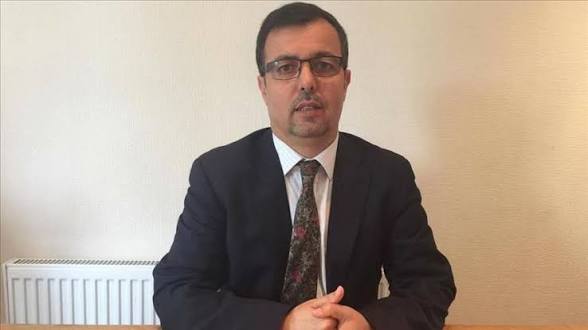
Former Afghan President Hamid Karzai’s recent remarks that his government refused to allow Afghan territory to be used against Iran during the US occupation have once again drawn attention to Afghanistan’s role in regional security and Washington’s efforts to influence Kabul’s relations with Tehran. Mohammad Hashem Esmatollahi, a university professor and former adviser to Karzai, confirmed the account, saying the United States had pressured Afghanistan to distance itself from Iran and Pakistan. He said Karzai’s policy of maintaining relations with neighboring countries ultimately prevented Afghanistan from becoming a base for action against Iran.
In an interview with IRAF, Esmatollahi confirmed Karzai’s recent statement that Afghanistan had not allowed its territory to be used against Iran during his presidency. He said: “The US, during its presence in Afghanistan, tried to sour political, economic, diplomatic and cultural relations between Kabul and Tehran, but Karzai refused to give in to these pressures, emphasizing the need to maintain relations with neighboring countries.” According to Esmatollahi, Washington sought to use Afghanistan’s geography as leverage against Iran, but the two countries’ historical, cultural, religious and linguistic ties, together with Kabul’s approach, prevented that objective from being achieved.
Washington’s pressure to distance Kabul from Tehran and Islamabad
Esmatollahi, recalling meetings he attended while working with Karzai in the Afghan presidency, said Karzai had openly spoken about American demands that Afghanistan adopt a hostile position toward Iran and Pakistan. According to Esmatollahi, Karzai believed the US presence in Afghanistan would not be permanent and that American forces would eventually leave, while Afghanistan would continue to live alongside its neighbors. In his view, Kabul’s long-term interests therefore required maintaining relations with neighboring countries rather than entering into confrontation with them.
Esmatollahi said the same approach extended to Pakistan, despite what he described as the involvement of Pakistani elements in the assassination of Karzai’s father. Karzai nevertheless believed Afghanistan should not allow relations with Pakistan to become openly hostile, “let alone with Iran,” given the two countries’ extensive historical and cultural ties. Esmatollahi said Karzai’s visits to Iran also frequently took place against Washington’s wishes, reflecting his efforts to maintain a balance in Afghanistan’s foreign policy.
Advice from the “Martyred Leader”
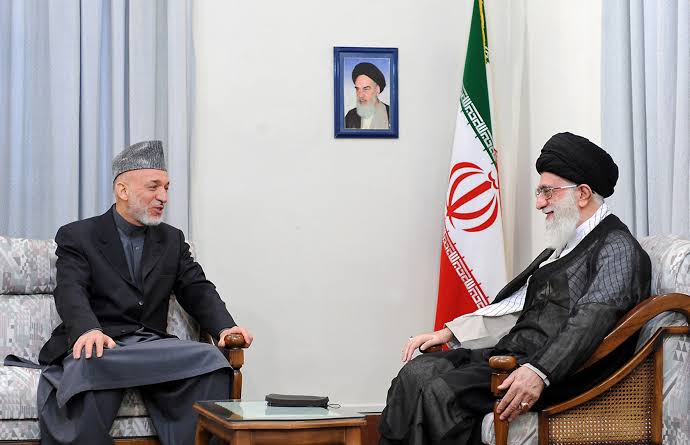
Esmatollahi also referred to one of Karzai’s meetings with the “Martyred Leader,” saying the former president had been advised to preserve Afghanistan’s independence and dignity despite the difficult circumstances created by the US presence in the country. According to Esmatollahi, Karzai later recounted this advice in private gatherings and took it seriously.
Esmatollahi believes this outlook led Karzai to seek a balance between American pressure and the need to maintain relations with Afghanistan’s neighbors. He said that although Karzai entered Afghanistan’s political structure with US support following the Bonn Conference, he gradually came to understand that Washington’s objectives in Afghanistan did not necessarily align with the establishment of lasting stability and security in the country and the region.
US was seeking to create crises in Afghanistan
Esmatollahi said the US pursued strategies during its presence in Afghanistan that, in his view, were based on creating crises, managing them and using them to advance Washington’s regional objectives. He said there were both covert and overt efforts during Karzai’s presidency to damage Iran-Afghanistan relations in the political, diplomatic, economic and cultural spheres. Nevertheless, he said, Karzai’s government was unwilling to sacrifice relations with Iran to meet American demands.
According to Esmatollahi, Karzai had concluded that Iran and Afghanistan, because of their historical, cultural, religious and linguistic ties, could not easily become hostile states. Maintaining peaceful relations with neighbors was therefore, in his view, part of Afghanistan’s national interest.
Esmatollahi believes the US plan to use Afghanistan against Iran existed from the early years of Washington’s presence in the country. He said that following the occupation of Afghanistan and the conferences on forming a new government, the US gradually assumed a central role in directing Afghan policy and gained considerable influence over the country’s political and security environment. In such circumstances, he said, one of Washington’s objectives was to weaken Kabul-Tehran relations, but Afghanistan’s social structure and the presence of different ethnic and religious groups prevented that policy from achieving its intended result.
In his view, Shia Muslims, Hazaras, Tajiks and even parts of Afghanistan’s Pashtun community lacked the conditions for broad acceptance of an anti-Iran policy because of their historical and cultural ties. This, he said, created serious obstacles to efforts to turn Afghanistan into leverage against Iran. He described this approach as “Iranophobia,” arguing that US-linked actors in Afghanistan sought to stir public opinion and the political environment against Iran, but failed to turn those efforts into a lasting anti-Iran policy.
Afghanistan and Iraq occupations; pressure from Iran’s east and west
Esmatollahi placed US policy in Afghanistan within a broader strategy toward Iran. He argued that the occupation of Afghanistan in 2001, followed by the occupation of Iraq, gave Washington an opportunity to pressure Iran from both its eastern and western flanks. According to him, Afghanistan shares roughly 900 kilometers of border with Iran, while the Iran-Iraq border stretches for more than 1,000 kilometers. The presence of US forces on both sides of Iran, he said, could have created an unprecedented geopolitical position from which to pressure Tehran.
Esmatollahi said US policy since the Islamic Revolution in Iran had consistently focused on weakening the Islamic Republic and ultimately changing Iran’s political system. He argued that the George W. Bush administration sought to increase pressure on Tehran through its military presence to Iran’s east and west. However, he said, the strategy did not ultimately produce the results Washington had sought, and the US was unable to use Afghanistan and Iraq for pressure on Iran in the way it had expected. In his view, Iran also adopted deterrent policies to prevent the US from using Afghan territory against it, contributing to Washington’s failure to achieve that objective.
Iran-Afghanistan ties hindered an anti-Iran front
In another part of the interview, the former Karzai adviser examined the possibility of Afghanistan becoming part of the dispute between Iran and the United States. He said Washington had at various times sought to use the media, public opinion and diplomatic tools to create pressure on Iran from within Afghanistan, but that Afghanistan’s social and historical characteristics presented serious obstacles.
According to Esmatollahi, Iran and Afghanistan have deep historical and geographical ties, reinforced by linguistic and religious commonalities. He emphasized that these ties are not limited to any single ethnic or religious group, but can also be seen among Shias, Hazaras, Tajiks, Uzbeks and even parts of Afghanistan’s Pashtun community. In his view, these connections have made it difficult to turn Afghanistan into a broad-based platform against Iran.
ISKP and al-Qaeda; efforts to create insecurity in bilateral ties
Esmatollahi also discussed the role of terrorist groups in Afghanistan’s regional dynamics, saying groups such as Islamic State Khorasan Province (ISKP) and al-Qaeda had at times been used as tools to provoke Afghan society against Iran. He said the objective was to create insecurity and stir public opinion against the Islamic Republic, but that relations between the two peoples did not ultimately move toward broad confrontation.
He added that Iran, at least in its stated approach, had consistently emphasized peace, stability and peaceful coexistence along its border with Afghanistan, which he said had also influenced relations between the two societies.
US policy failed to produce the desired outcome after the Taliban’s return
The former Karzai adviser said US efforts to influence Iran-Afghanistan relations were not limited to the period of the republic and continued during the Afghan peace process. Referring to peace talks in Qatar, he said Washington had pursued objectives beyond establishing peace in Afghanistan, including, in his view, creating pressure on Iran.
According to Esmatollahi, after the Taliban returned to power, efforts were also made to encourage the group to adopt a hostile policy toward Iran, but the process did not ultimately develop as Washington had expected. He said that although there were attempts at various points to provoke the Taliban against Iran, the group did not, overall, enter into a sustained confrontation with the Islamic Republic. He attributed this to a range of factors.
Chabahar and transit routes; Afghanistan’s economic ties with Iran
Alongside historical and cultural ties, Esmatollahi emphasized the importance of economic and transit links between the two countries. In his view, Afghanistan, as a landlocked country, needs neighboring countries’ transit routes to access regional and international markets, and Iran is one of its most important routes to the open seas and global markets.
He said the port of Chabahar and Iran’s transit routes could play an important role in connecting Afghanistan to regional markets. This economic and geographical dependence, he argued, is another factor limiting the possibility of turning Afghanistan into a lasting instrument of pressure against Iran.
Overall, Esmatollahi believes Afghanistan’s circumstances make balanced relations with its neighbors, particularly Iran, not merely a political choice but a geopolitical and economic necessity.
He said US efforts to create a rift between Afghanistan and Iran were not a temporary phenomenon and had been pursued at different times through political, media, diplomatic and even security tools. Nevertheless, he argued, Karzai’s government refused to sacrifice relations with its neighbors to meet Washington’s demands, while the two peoples’ historical, cultural, religious and linguistic ties also prevented the emergence of a broad anti-Iran front in Afghanistan. Esmatollahi added that despite US pressure after the Taliban’s return, Afghanistan’s geography and economy continue to make maintaining relations with Iran necessary.
Former Afghan President Hamid Karzai recently told the Financial Times that Afghanistan had not allowed its territory to be used against Iran during his presidency. His remarks came as the US, during two decades of military presence in Afghanistan, was also present in Iraq, placing American forces near Iran’s eastern and western borders. Iran-Afghanistan relations have long been significant because of their shared border, historical and cultural ties, linguistic and religious commonalities, and economic and transit links.