Opponents of the Taliban call for a coordinating mechanism and a shared political roadmap, while acknowledging differences over how political change should be achieved.
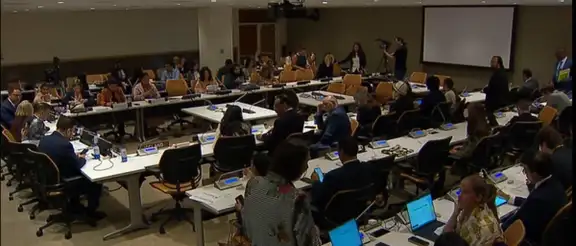
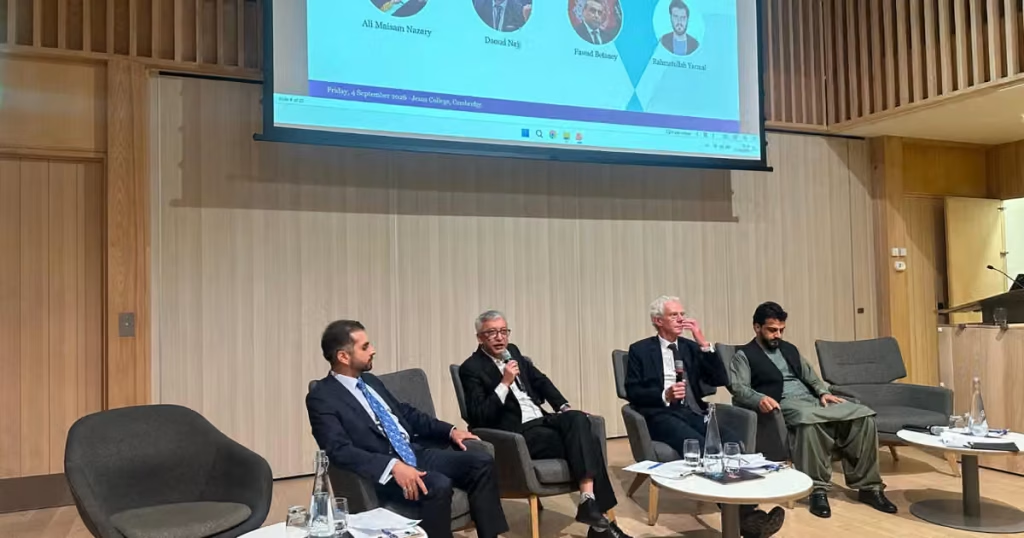
The fifth Cambridge Afghanistan Conference, bringing together political, civil society and resistance groups opposed to the Taliban, was held at the University of Cambridge on Sept. 4 and 5. Participants called for a coordinating mechanism to bring together the Taliban’s opponents and develop a shared roadmap for the country’s political future.
The conference, held at Jesus College, focused on ways to build cooperation among Afghanistan’s political, civil society and resistance movements and establish a common framework for the future, according to its organizers.
Ali Meisam Nazari, head of foreign relations at the National Resistance Front of Afghanistan, said there was broad agreement among the Taliban’s opponents on fundamental principles.
He said the groups shared a commitment to political change, a democratic system and equal rights for citizens.
Differences among the groups were natural and reflected Afghanistan’s ethnic, religious and political diversity, Nazari said. Political unity, he added, did not mean imposing uniformity of views, but should be based on “unity in diversity”.
Roadmaps show 90% overlap
An analysis of more than 20 political roadmaps by the Global Mosaic Foundation found that around 90% of the views expressed overlapped in areas including political participation, fundamental rights and equality before the law.
The remaining differences centred mainly on five issues:
-
How political change should be achieved
-
The role of the international community
-
Whether the future system should be centralised or decentralised
-
National identity and symbols
-
Addressing historical injustices
Zalmai Neshat of the Global Mosaic Foundation said the aim of the Cambridge conference was not to resolve differences immediately, but to create a forum for dialogue and identify areas of agreement and disagreement.
He described the proposed “Political Convergence Framework” as a mechanism to bring together political groups, civil society, women, resistance forces and human rights organisations.
Freedom Front ready for broader cooperation
Dawood Naji, head of the political office of the Freedom Front of Afghanistan, said the group was ready to cooperate with political parties, civil society organisations, women and democratic movements.
Differences over the structure of a future government were natural, he said, but the final decision should be left to the Afghan people.
Naji said the Cambridge conference could help lay the groundwork for a broader coalition of Taliban opponents and that the Freedom Front was ready to strengthen the “Civil Consensus Framework”.
Calls for change in governance
Hussain Ishraq, speaking at the opening of the conference, said a change in power without reforming the way Afghanistan is governed could not produce lasting peace.
He described the Cambridge Consensus Framework (CCR) as a living document linking political legitimacy, social cohesion and development.
Neshat, referring to the systematic repression and exclusion of women, said Afghanistan was not in a peaceful situation. Peace, he said, was not merely the absence of war, but the freedom to live without fear and enjoy basic rights.
Opposition to the Taliban alone did not constitute a political programme, Neshat said, warning that opponents also needed a clear plan for the post-Taliban period.
International community’s role
Sir Laurie Bristow, a former British diplomat, said the international community should honestly examine the mistakes of the past 20 years in Afghanistan.
No lasting agreement could be imposed on Afghanistan from outside, he said, adding that Afghans themselves should lead decisions about the country’s future.
Bristow also called for urgent action on the humanitarian situation, an end to the exclusion of girls from secondary education, and solutions for Afghans in Pakistan and Iran who face the risk of forced return.
Women’s voices at Cambridge
Banafsha Yaqubi said women’s experiences of repression in Afghanistan were not uniform and that particular attention should be paid to rural and urban women, women with disabilities and those from low-income families.
These groups, she said, had received less representation in political and human rights processes.
From a conceptual document to practical action
The conference’s stated goal is to turn the CCR from a conceptual document into a practical process for coordinating groups opposed to the Taliban.
Proposals include establishing an advisory council, holding specialised discussions and involving human rights organisations.
The organisers said a founding charter and working group for the Political Convergence Framework were expected to be established in October 2026, with its first public meeting planned for January 2027.