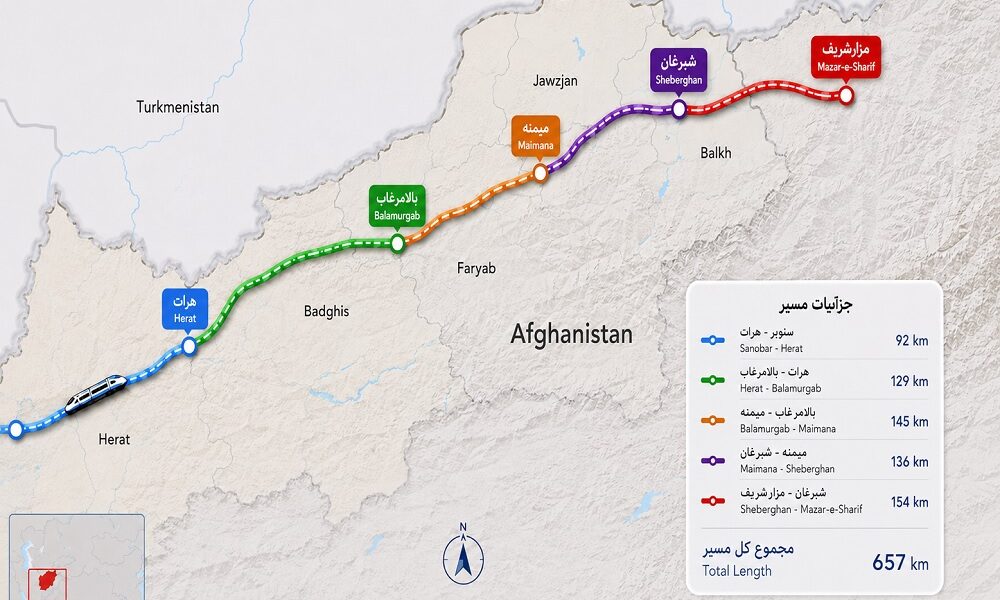
Iran and Afghanistan have discussed financing arrangements for the first phase of the planned Herat-Mazar-i-Sharif railway, a 657-km infrastructure project seen as a key link in Afghanistan’s regional rail network.
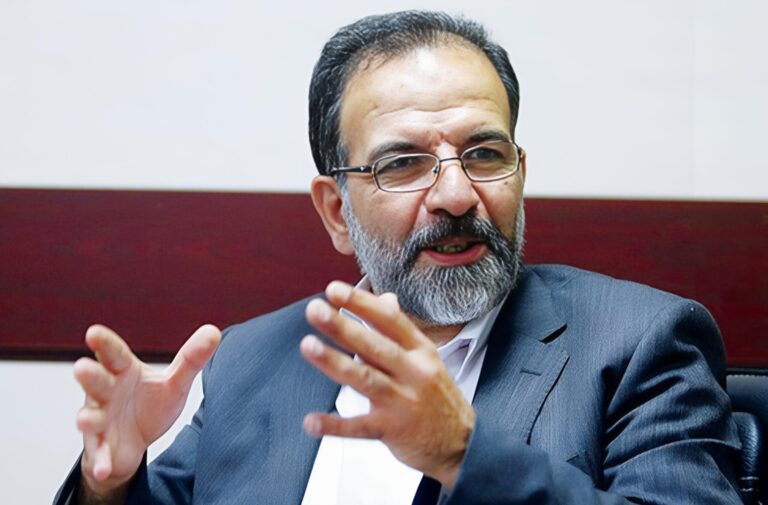
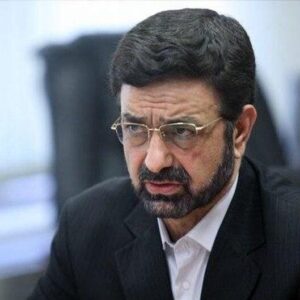
Iranian Ambassador to Afghanistan Alireza Bikdeli met with Norollah Beyranvand, head of Iran’s railway financing department, for talks focused on funding the first phase of the project, Iran’s embassy in Kabul said in a statement.
The two sides reviewed existing plans and discussed financing mechanisms and possible models for Iran’s participation in the project, according to the embassy.
The talks also covered financial capacity, the possibility of using joint resources and ways for Iran to become involved in the implementation phase of the railway project.
The discussions come amid growing railway cooperation between Iran and Afghanistan in recent months, with Tehran identifying the development of east-west transport corridors and links to Central Asia as strategic priorities.
Strategic importance of the Herat-Mazar-i-Sharif railway
The planned railway would stretch about 657 km, linking Herat with Balkh province through Badghis, Faryab and Jawzjan provinces. It is regarded as one of Afghanistan’s key infrastructure projects for connecting the country to regional railway networks.
The project had previously been surveyed and mapped by Uzbek specialists, with Uzbekistan also expected to undertake its design.
For Iran, the railway could provide an alternative route to markets in Uzbekistan, Tajikistan and other Central Asian countries, while reducing Tehran’s reliance on transit routes through Turkmenistan.
The route is also considered part of a strategic Iran-Afghanistan-China corridor and could strengthen Afghanistan’s role in regional transit.
Expanding railway cooperation
Iranian and Afghan officials have held several rounds of talks in recent months on expanding railway cooperation.
Separate meetings between Iran’s ambassador and the head of Afghanistan’s railway authority have focused on the construction of the Herat-Mazar-i-Sharif railway and the expansion of technical and operational cooperation.
Iran has also said that developing transit corridors and increasing rail freight capacity are among the government’s priorities, with the Herat-Mazar-i-Sharif project being considered within that framework.
At a recent meeting of Iran’s National Transit Corridors Committee, the route was identified as a central component of the east-west corridor.