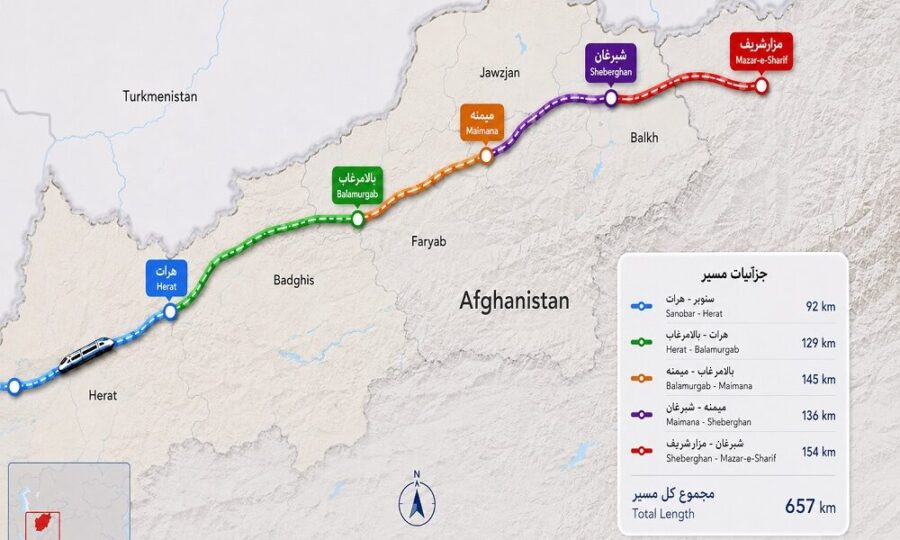
The development of rail cooperation between Iran and Afghanistan and efforts to finance the first phase of the Herat-Mezar-i-Sharif railway are taking place as competition over regional transit corridors intensifies, with various countries seeking to strengthen their position in emerging transportation and trade networks.
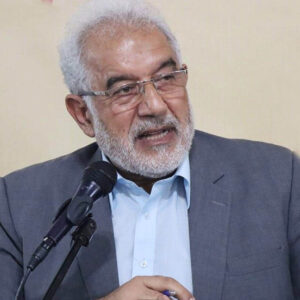
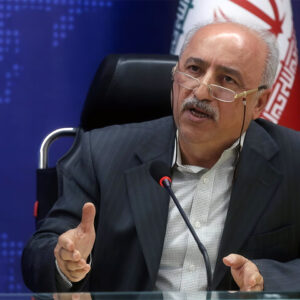
Economist Reza Majidzadeh, speaking to IRAF, stressed the importance of connecting Iran to regional transit networks and examined the project from the perspectives of the flow of goods and services, financing, private-sector participation, and Iran’s position in regional economic corridors.
Majidzadeh said the Herat-Mezar-i-Sharif railway is important for connecting Iran and Afghanistan to regional trade networks, arguing that the development of the route could create new flows of goods and services, reduce transit costs, connect Iran to markets in Afghanistan and Central Asia, and strengthen Iran’s position in regional economic corridors.
Connecting to Regional Networks: The Need to Preserve Trade Flows
Referring to developments in the international environment, Majidzadeh said: “The most important advantage that Iran has under the current circumstances is that the country must either be at the center of corridors and economic networks or, at the very least, be able to connect itself to these networks.”
He added: “Iran should connect to existing networks as much as the regional environment allows, so that it can benefit from the flow of goods and services and not fall behind the ‘space of flows.’”
The economist explained: “When the flow of goods and services takes shape, trade opportunities and mutual benefits are also created, and countries that are part of these networks can benefit from their economic advantages.”
Majidzadeh continued: “If Iran cannot connect itself to these flows, it will fall behind in terms of economic opportunities, and this could negatively affect economic growth, employment and public welfare.”
Referring to conditions affecting the country’s southern routes, he said: “The existing restrictions in the south have increased the importance of developing alternative routes. A combination of land and maritime networks can compensate for part of the decline in the flow of goods through the southern routes.”
Developing Northern Routes: Strengthening Trade and Economic Resilience
Referring to the situation at Shahid Rajaee Port, Majidzadeh said: “Under the current circumstances, Shahid Rajaee Port has largely lost its transit function, and due to economic restrictions and existing conditions, it is no longer possible to rely on the flow of goods through the southern routes with the same level of confidence as in the past. Therefore, developing corridors in areas less affected by the United States and its allies, particularly in the north and northeast of the country, could help Iran avoid being cut off from the flow of goods.”
The economist stressed: “This is not only in Iran’s interest; all countries located along a corridor benefit from the creation of flows of goods and services along that route.”
He said: “The development of these networks, in addition to their direct commercial effects, can also influence people’s expectations about the future. The greater a country’s access to economic flows, the greater the opportunities for economic activity.”
Majidzadeh continued: “Conversely, limited access to the flow of goods can reduce psychological resilience and, ultimately, national resilience. Therefore, maintaining the flow of trade is not merely an economic issue; it can also help strengthen national power and resilience.”
Financing: The Need to Utilize Private-Sector Capacity
Discussing financing for the Herat-Mezar-i-Sharif railway project amid resource constraints, Majidzadeh said: “Iran should move toward models in which the private sector, alongside the government, becomes involved in financing and implementing infrastructure projects.”
He added: “In Iran, due to the government’s heavy role and certain considerations, the full potential of public-private partnership, or PPP, models has not been utilized, while these models can be effective for major projects such as railways.”
Referring to BOT and BOO models, he said: “Different models can be defined for dividing responsibilities between the government and the private sector. For example, the government can provide the main infrastructure and structure of the project, while the management or operation of the project can subsequently be transferred to the private sector.”
He added: “Under these models, the government can utilize the capacity of the private sector, while the private sector can recover its investment and generate returns through the operation and revenues of the project.”
Majidzadeh stressed: “The private sector needs to become involved in financing railway projects, and various public-private partnership models should be utilized.”
He added: “Given the constraints facing the Iranian government due to sanctions, utilizing private-sector capacity can provide greater room for maneuver in financing and implementing infrastructure projects.”
Herat-Mezar-i-Sharif: A New Route Linking Iran to Central Asia
On the role of the Herat-Mezar-i-Sharif railway in reducing Iran and Afghanistan’s dependence on competing routes, particularly routes passing through Turkmenistan, the economist said: “The Turkmenistan route also faces challenges, and given international developments, restrictions could be imposed on certain routes; therefore, having an alternative route becomes highly important.”
He added: “The Iran–Afghanistan route can connect both countries to the flow of goods while also making it possible for other countries to connect to this route.”
Majidzadeh continued: “Creating more direct routes can reduce transportation and trade costs and provide the basis for greater use of this route by countries.”
From this perspective, he likened the Herat-Mezar-i-Sharif railway to the historic Silk Road, saying: “The more direct a route is, the more many of the costs created by the use of indirect routes can be reduced.”
Referring to Afghanistan’s geographic position and its links with China and India, the economist said: “This position can increase the importance of the Herat-Mezar-i-Sharif route and, if appropriate conditions are created, provide the basis for the emergence of an important regional route.”
Alternative Routes: Lower Costs and Greater Trade Flexibility
Referring to other regional routes, Majidzadeh said: “The Turkmenistan route is also affected by regional and international developments, and an escalation of the Russia–Ukraine war could affect the risks associated with using some northern routes.”
He added: “Southern routes could also face higher costs and restrictions if regional conflicts intensify. Therefore, having alternative routes for trade between Iran and Afghanistan is highly important.”
According to Majidzadeh, the Herat-Mezar-i-Sharif railway, if properly connected to regional networks, could provide a shorter and less costly route for transporting goods, with its benefits extending beyond Iran and Afghanistan.
He stressed: “The more diverse trade routes are, the less dependent countries become on a single route, and when economic, political or security crises emerge, the possibility of using alternative routes increases.”
He continued: “For this reason, the Herat-Mezar-i-Sharif railway should not be viewed merely as a bilateral project, but as part of a broader regional transportation and trade network.”
Afghanistan’s Future: A Key Variable in the Project’s Success
Majidzadeh also pointed to challenges facing the project, saying: “The most important issue that must be considered alongside economic considerations is the political risk and future developments in Afghanistan.”
Referring to U.S. activity in Afghanistan, he said: “The United States is seeking to return to Afghanistan, and issues such as a return to Bagram could affect the future dynamics of the country.”
The economist added: “Geopolitical developments in Afghanistan could also affect economic and transit routes. Therefore, infrastructure projects in this country cannot be examined entirely separately from regional and extra-regional competition.”
Referring to competition over corridors linked to China, he said: “The United States may be seeking to create a kind of ‘scissors’ or pressure around routes linked to China’s Silk Road; routes that pass through Afghanistan, Pakistan and Turkmenistan and can connect to broader networks in South Asia and West Asia.”
Majidzadeh continued: “These developments could affect the future of regional corridors, and for this reason, Iran must incorporate Afghanistan’s political developments into its economic calculations for such projects.”
The Peace Pipeline Experience: The Importance of Political Guarantees
The economist cited the Peace Pipeline project to illustrate the importance of political considerations, saying: “The Peace Pipeline project, which was intended to transport Iranian gas to Pakistan and India, is an example showing that political factors can have a decisive impact on the fate of an economic and infrastructure project.”
He added: “In such projects, financial, infrastructural and social risks are usually taken into consideration, but sometimes a political development can have a much greater impact on a project.”
Majidzadeh stressed: “Therefore, regarding the Herat-Mezar-i-Sharif railway, attention should not be limited to the amount of investment, return on investment, transit volume and construction costs; rather, Afghanistan’s political future and the role of foreign actors in the country must also be incorporated into the project’s calculations.”
He said: “Even if Afghanistan opens part of its space to a U.S. presence in the future, Iran must take this possibility into account in its assessments and anticipate the necessary mechanisms for it.”
Majidzadeh stated: “Before Iran becomes seriously involved in the project, the necessary guarantees should be obtained regarding Afghanistan’s future political developments and the continuity of the route, so that the investment made is not affected by political changes.”
Herat-Mezar-i-Sharif Railway: A Step Toward Strengthening Iran’s Role in Regional Trade
Overall, Majidzadeh described the Herat-Mezar-i-Sharif railway as an important opportunity to strengthen Iran’s connection to regional networks, saying: “This route can create a new flow of goods and services, reduce trade costs, and provide Iran and Afghanistan with access to broader markets.”
He added: “Utilizing private-sector capacity, public-private partnership models, and designing appropriate mechanisms for investment recovery can help finance the project.”
The economist stressed: “The main advantage of this project will become evident when the Herat-Mezar-i-Sharif railway is viewed as part of a larger network and can connect to routes in Iran, Central Asia, China and ultimately other regional markets.”
According to him, diversifying transit routes not only reduces trade costs but also increases countries’ economic flexibility in the face of crises and helps maintain the flow of goods.
Majidzadeh concluded: “Iran should, while utilizing the economic potential of this project, closely monitor Afghanistan’s political and geopolitical developments and, before becoming seriously involved, obtain the necessary guarantees for the continuity of the route and the security of investment.”
If these conditions are met, the Herat-Mezar-i-Sharif railway could evolve beyond a bilateral rail project and become an important link connecting Iran with Afghanistan, Central Asia and regional trade networks, ultimately strengthening Iran’s position in the region’s transit dynamics.