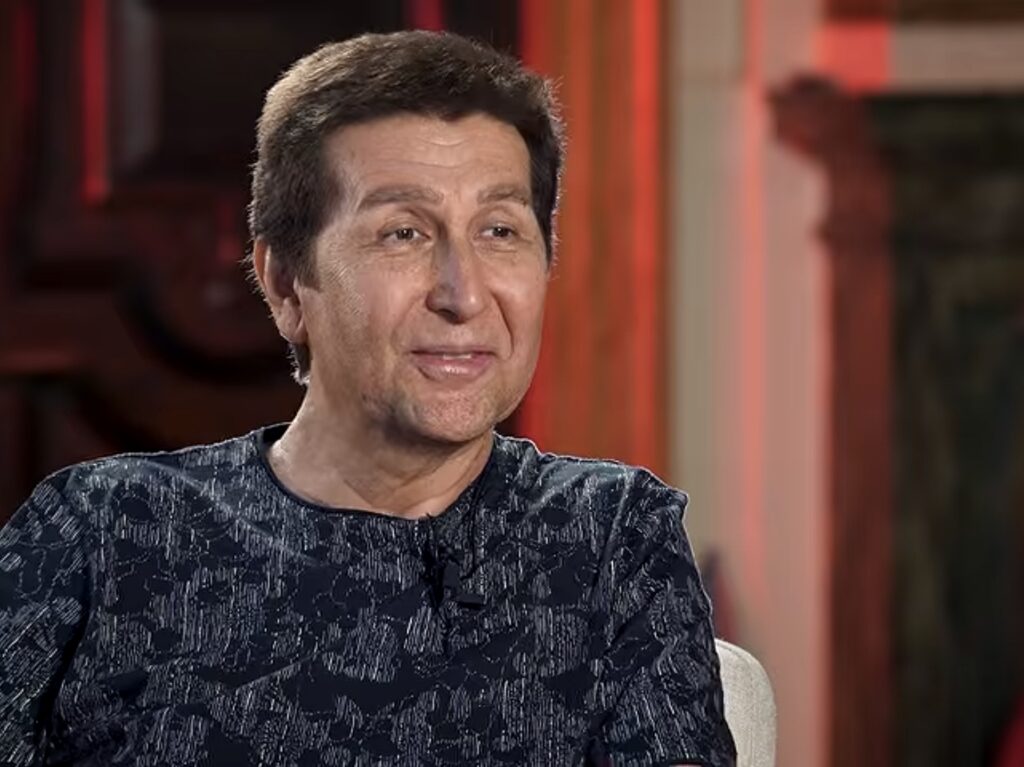
Afghan singer and composer Davoud Sarkhosh has revealed that he has been battling cancer for the past two years, undergoing surgery as well as radiation and chemotherapy, and said he is now on the path to recovery.
Sarkhosh, known to many Afghans for his songs about homeland, migration, war, hardship and life, made the disclosure in a recent interview after nearly two years of silence. His comments prompted an outpouring of reactions from Afghan artists, writers, cultural figures and social media users, many of whom described his return as the return of a familiar voice from Afghanistan’s collective cultural and musical memory.
As reported by IRAF, Sarkhosh said he first learned of his illness about two years ago after consulting a number of doctors and specialists. Following a specialist’s recommendation, he underwent surgery and subsequently began radiation and chemotherapy.
The singer said the treatment period had been difficult, but that he had now passed through the most challenging stages of the illness and surgery and was undergoing recovery and rehabilitation.
He described his general condition as good and stable and said he had managed to overcome the disease.
‘Illness Is Part of Life’
Reflecting on his experience, Sarkhosh said illness should not be viewed solely as a tragedy, but as part of life’s challenges and a biological reality.
He stressed the importance of trusting medical science, remaining calm and maintaining a strong spirit during treatment, saying illness can change the way a person looks at life.
Sarkhosh also spoke about the value of life’s moments, saying being among people and performing music had particular importance for him. Every moment spent with his supporters, he said, carried an irreplaceable value.
A Wave of Support for Sarkhosh’s Return
The publication of the interview after two years of silence and uncertainty over Sarkhosh’s health prompted widespread reactions among Afghan cultural figures and social media users.
Independent journalist Nosratullah Parsa welcomed news of Sarkhosh’s recovery, saying the artist had returned to the public after two years of silence with the message, “I am well.”
Parsa said Sarkhosh was not merely a singer, but part of Afghanistan’s collective memory — a voice that had accompanied the country’s people through years of suffering and hope.
University professor Ali Amiri described Sarkhosh’s illness as a “suffering” through which the artist had been reborn. He said Sarkhosh had learned to appreciate life during his illness and had confronted suffering through an artistic perspective.
Amiri added that Sarkhosh’s art had gained greater depth and grandeur through his experience of illness and suffering.
Satirical writer Sokhid Dad Hatef said Sarkhosh’s latest interview showed why he was such a creative and influential artist. He said the singer’s profound perspective on suffering and life experience had been among the factors shaping his artistic identity.
Writer Ahmad Modaqeq described Sarkhosh as part of the collective memory of Afghanistan’s generation of the 1960s, saying his albums and songs had served as the voice of a segment of Afghan society during difficult periods in the country’s history.
Many Persian-speaking Afghans know Sarkhosh through his album My Homeland (Sarzameen-e Man).
Madaqiq, however, said art should not be limited to reproducing grief and despair. Afghan society, he argued, now needs art that not only expresses suffering but also offers a horizon and a way out of crisis.
Sarkhosh: A Voice of a Generation in Exile
Other reactions focused on Sarkhosh’s broader cultural and social significance, with many users linking his music to migration, exile, war and Afghanistan’s collective memories.
Facebook user Mohammad Hedayat said he was moved by Sarkhosh’s changed appearance and by what the artist had gone through over the past two years.
Sarkhosh, he said, was not merely returning to the music stage, but to “the broken hearts” that had lived with his songs for years.
Another Facebook user, Ahmad Hasani, said he was deeply affected when Sarkhosh spoke about his illness in the interview.
For many people, Hasani said, Sarkhosh was more than a singer; he was part of their everyday feelings and memories, and his music had helped give meaning to the experiences and emotions of an entire generation.
Zia Saramad, also a Facebook user, welcomed news of Sarkhosh’s recovery and said he could not separate the artist from the suffering he had carried throughout his life.
He expressed hope that Sarkhosh would return to the stage with the same voice and strength as before.
Hopes for a Return to the Stage
Other artists and social media users also expressed their wishes for Sarkhosh’s full recovery and welcomed the prospect of his return to live performances.
In his recent interview, Sarkhosh said he was prepared to hold concerts once again. He said that after fully regaining his health, he planned to perform his new songs.
Singer Abbas Arman described Sarkhosh as an exceptional artist and an “unbeatable fighter,” saying he was very happy to hear about the improvement in his health. He wished Sarkhosh a long life and continued artistic activity.
Facebook user Ishaq Mowhed highlighted Sarkhosh’s resilience and his outlook on life, saying the artist had regarded illness as an opportunity to reassess his life.
Mowhed said Sarkhosh did not see music merely as a means of making a living, but that “music for him is life itself.”
Rasoul Omid described Sarkhosh as a “cultural memory” for a segment of Afghan society and said people in Afghanistan still needed his voice.
He also urged users to share links to Sarkhosh’s original works rather than reposting videos from unofficial channels, so that support and views would go directly to the artist’s official channel.
Ali Ebrahimi said Sarkhosh’s music had been intertwined for decades with the emotions, longing and experience of exile among Afghans.
Referring to the singer’s treatment, he expressed hope that Sarkhosh would make a full recovery as soon as possible and resume his artistic activities.
Noor Ali Amiri likened the return of Sarkhosh’s voice after two years of silence to “the sunrise after a harsh winter,” saying the singer was more than an artist to many Afghans: he was the voice of their hope, memories and life experiences.
A Distinctive Place in Afghan Music
Sarkhosh earned the title of “legend of Afghan music” during the previous Afghan government and has established a distinctive place among Afghan audiences through songs addressing homeland, migration, war, suffering and life.
His recent disclosure of his battle with cancer, followed by news of his recovery, has renewed attention to an artist whose music has remained closely associated with the memories and experiences of generations of Afghans.