According to Iraf, less than two years ago, the Taliban leader officially ratified the law known as the “Promotion of Virtue and Prevention of Vice” — a 35-article law introduced as a new framework for regulating social conduct in Afghanistan, granting sweeping powers to the Ministry for the Promotion of Virtue and the group’s “morality enforcers.” According to legal sources, this law effectively transformed many of the previous restrictions on women and society from customary practice into “binding law.”
The Beginning of Enforcement and the Deployment of Morality Enforcers
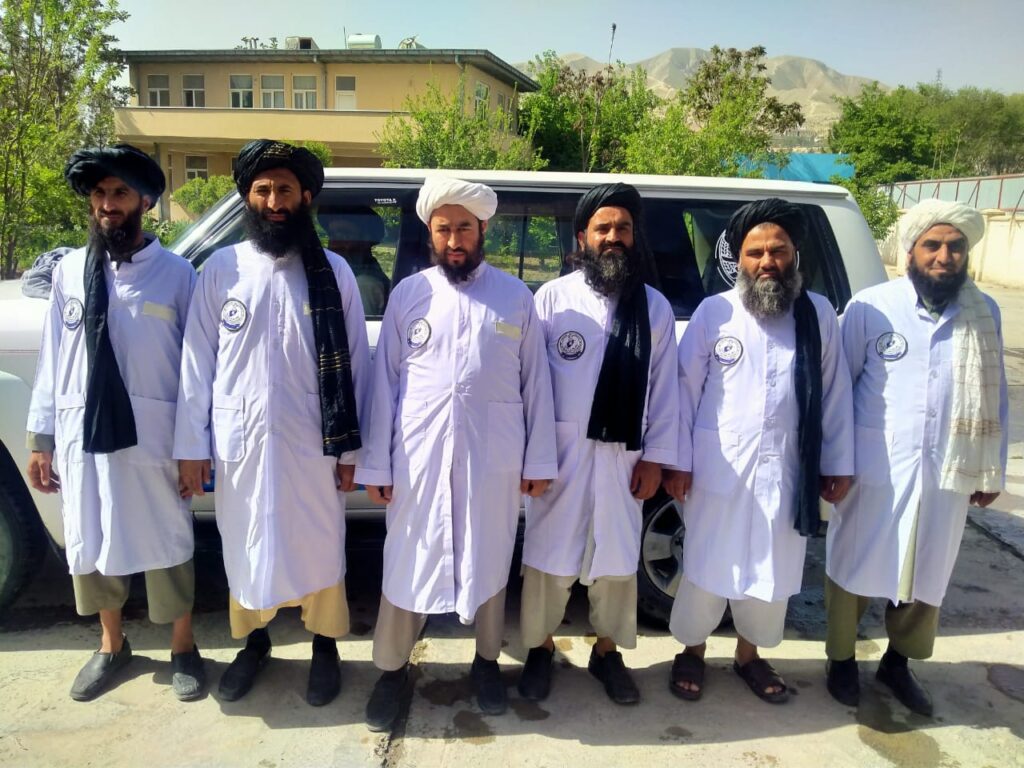
In the weeks following ratification, the Taliban began the gradual implementation of the law, and units known as “morality enforcers” became active in the provinces — forces tasked with monitoring dress, social conduct, music, women’s presence in public places, and even the nature of citizens’ everyday interactions.
According to international reports, this body effectively holds the authority to arrest, warn, fine, and interrogate in a wide range of cases, and its structure was rapidly established in Kabul, Herat, and several other provinces.
The Taliban initially claimed that the law’s implementation would be “gradual and soft,” but reports of increasing arrests and field confrontations emerged simultaneously.
Reactions: The United Nations and Human Rights Institutions
The United Nations and human rights institutions have described this law as one of the strictest social frameworks since the Taliban’s return to power.
UN officials have described the situation as “a worrying outlook for Afghanistan’s future.”
UNAMA regards the Vice and Virtue law as overt discrimination against women and believes the law deprives Afghan women and girls of their fundamental rights. The mission has called on the Taliban to respect human rights by repealing these laws, which it says contradict human rights obligations.
The U.S. State Department, for its part, has also condemned the law, characterizing its implementation as an effort to suppress Afghan society, and says such measures will severely affect the continuation of engagement with the Taliban.
Meanwhile, Josep Borrell, the European Union’s foreign policy chief, has also strongly opposed the law, saying it challenges the Taliban’s international legitimacy.
Widespread Domestic Reactions
At the same time, scattered protests have emerged inside Afghanistan alongside widespread reactions on social media — including women’s protest campaigns describing the restrictions as “the gradual erasure of women’s social presence.”
Shaharzad Akbar, former head of the Afghanistan Independent Human Rights Commission, reacting to the issue, said: the objectification of women and the stripping of their human dignity, the imposition of restrictions on clothing, recreation, and citizens’ modes of worship — meanwhile people are dying of hunger, lack of electricity, and absence of medicine, while these authorities are preoccupied with measuring hijab and beards.
Separately, Kaveh Jabran, poet and journalist, describing the law as a “manifesto of terror,” wrote that this manifesto is a blatant insult to human dignity and human conscience.
The Taliban’s Field Actions: From Warnings to Arrests
Over the past year and a half, numerous reports have been published documenting an increase in confrontations by morality enforcers.
The arrest of women for “failing to observe the Taliban’s required hijab,” the closure of certain women’s educational and cultural centers, restrictions on women’s presence without a male companion, and interference in daily activities including work and movement are among the enforcement actions of Taliban morality enforcers — actions that have in some cases been accompanied by severe confrontations.
In certain cases, arrests have led to multi-day interrogations and the requirement to sign pledges to comply with the regulations. Videos showing Vice and Virtue forces confronting young men over matters such as long hair or the absence of a beard have also provoked reactions.
The Herat Crisis: Public Protests, Taliban Response
In recent days, Herat province has become one of the focal points of tension. According to reports from the United Nations and international media, at least 30 women were arrested by Vice and Virtue forces on charges of failing to observe the hijab.
This action quickly led to protest gatherings in certain areas, particularly the Jibra’il district of Herat. Protesters chanted slogans in support of women’s right to education and work.
Reports indicate that Taliban forces dispersed these gatherings with violence; in some instances, shooting occurred, and at least two people were reported killed and dozens wounded.
Alongside this, reports emerged of restricted access to medical services for the wounded — a matter that has heightened concerns about the use of hospitals as a tool of pressure.
The Taliban’s Vice and Virtue law, in less than two years, has transformed from a legal document into an active instrument of enforcement at the societal level. The activation of morality enforcers, the rise in arrests, and the intensification of restrictions — particularly in Herat — show that this law is transitioning from a “moral framework” into a “comprehensive system of social control.”
By contrast, domestic and international reactions show that the gap between Taliban policies and social demands — particularly in matters concerning women — has not narrowed but is in fact deepening.
This is occurring even as, despite widespread domestic and international protests, the Taliban has not retreated from enforcing the Vice and Virtue law and insists on continuing this course.
Coinciding with the day commemorating the promotion of virtue — one of the Islamic concepts more often understood as a moral duty toward society than as a coercive instrument of governance — the question must be asked: has the Taliban’s Ministry for the Promotion of Virtue, in nearly two years, managed to take any step toward genuinely calling people to goodness? Or has it, through hostile actions and physical confrontations, instead promoted vice?