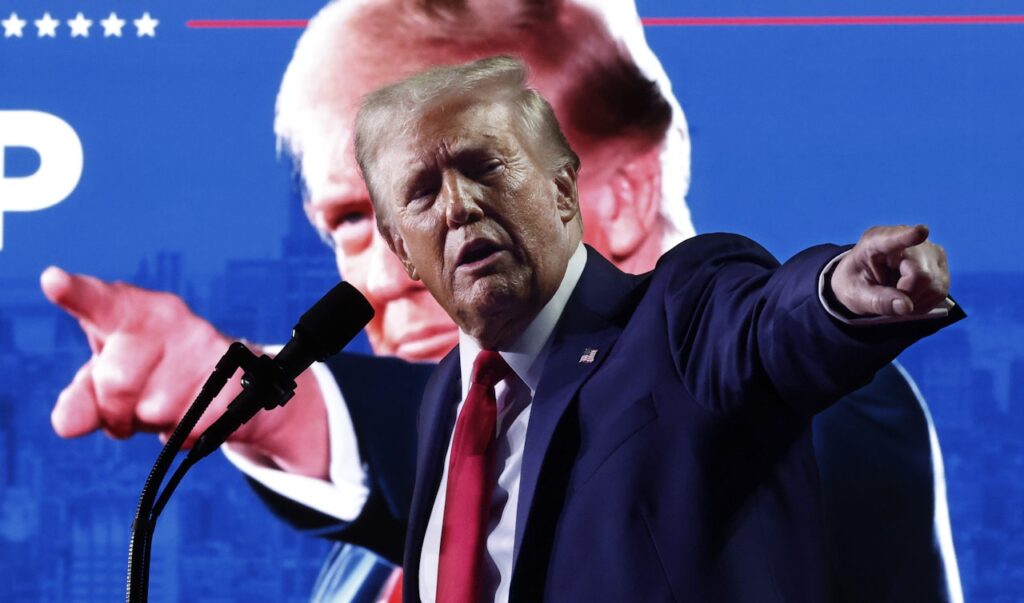
According to Iraf, the American news outlet Axios has reported that Donald Trump has been pressuring several Arab and Islamic countries to recognize the Zionist regime as part of efforts to bring the war with Iran to an end.
According to the report, he has raised this demand directly in phone calls with Muslim-majority country leaders, and in one such call — following silence from the other party — reportedly asked with a sardonic tone: “Are you still on the line?”
Extending this pressure campaign, Republican Senator Lindsey Graham has threatened Pakistan, Saudi Arabia, and Qatar that if they do not recognize Israel, they should expect “dangerous consequences.”
Trump has also implicitly claimed on social media that even Iran may establish relations with the Zionist regime in the future — an assertion that has been met with silence from Arab and Islamic countries.
Iran’s Foreign Ministry Spokesperson Responds
Ismail Baqaei, the Foreign Ministry spokesperson, reacting to these claims and to Trump’s remark that he might “go to Israel after his presidency and run for prime minister,” said: “If you want my personal opinion, perhaps the reverse is also possible — perhaps Israel’s prime minister will run for the U.S. presidency. But the reality is that the nature of the relationship between America and the Zionist regime is entirely clear. Washington’s sole preoccupation in the region is the Zionist regime, and it attaches no importance whatsoever to the security, peace, or prosperity of the region’s countries.”
He added: “America conditioning regional countries — requiring them to join the Abraham Accords as the price for peace with Iran — is a way of diverting public opinion from the core issue. The core issue is that the Zionist regime is the principal source of insecurity in the region, and an abnormal entity cannot be made to appear normal through projects like normalization.”
The Foreign Ministry spokesperson stressed: “The genocide in Gaza demonstrated that this regime does not even consider itself part of the region. Imposing such an entity on the region carries consequences that the entire world will witness.”
Tel Aviv’s Strong Opposition to Trump’s Plan
While Trump is attempting to present this plan as a major concession to Tel Aviv, Israeli officials are firmly opposed to it.
Channel 12 of the Zionist regime has reported that senior officials of the regime have described Trump’s plan as “a bad and conspiratorial deal,” arguing that the agreement disregards Iran’s nuclear file, its missile program, and Tehran’s support for resistance groups, and that a 60-day ceasefire would provide Iran with a rare opportunity for economic and military reconstruction.
Trump, however, responding to the criticism, has said that any deal he drafts will be “fair and great,” and that his critics are “losers.”
U.S. Secretary of State Marco Rubio has also stressed that a nuclear deal with Iran is not something that can be finalized within 72 hours.
To date, the countries mentioned have issued no official response to these claims.
Pakistan’s Efforts to Prevent War
In parallel with regional developments, Pakistani Prime Minister Shehbaz Sharif, currently on an official visit to Beijing, has announced that extensive efforts have been made to prevent a war between the United States and Iran, and that the situation is “on the right track.”
He emphasized that war is not a solution and poses a threat to regional security and economies.
Shehbaz Sharif also announced Pakistan’s full support for China’s four-point peace plan for the region and stated that Asim Munir has played a significant role in advancing recent contacts and consultations.
Pakistan’s Prime Minister’s Packed Schedule in Beijing
The Pakistani prime minister concluded a packed day in the Chinese capital, holding meetings with China’s president and prime minister on economic cooperation, investment, and bilateral relations.
He attended a formal reception ceremony at the Great Hall of the People, reviewed an honor guard, and paid tribute to China’s national heroes at Tiananmen Square.
Additional items on the visit’s agenda included consultations with executives of major Chinese companies to attract investment, the signing of several cooperation agreements, and participation in ceremonies marking the 75th anniversary of Pakistan-China diplomatic relations.