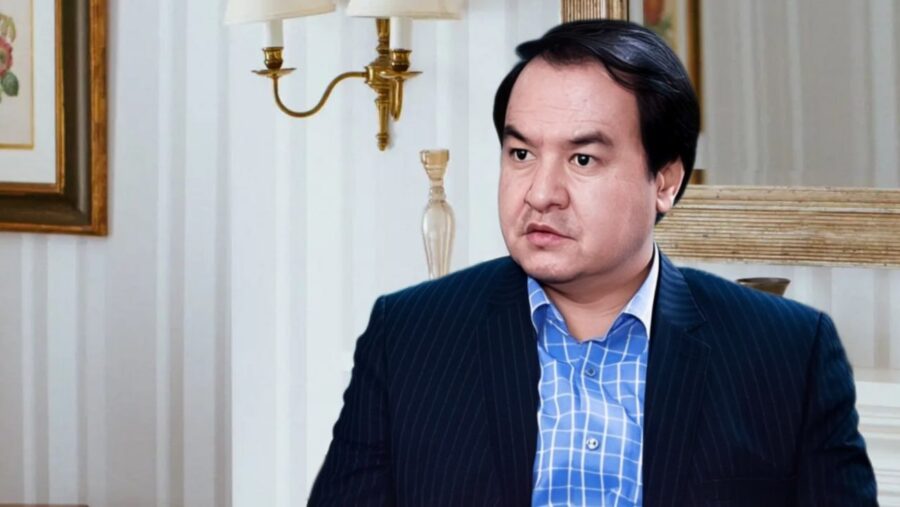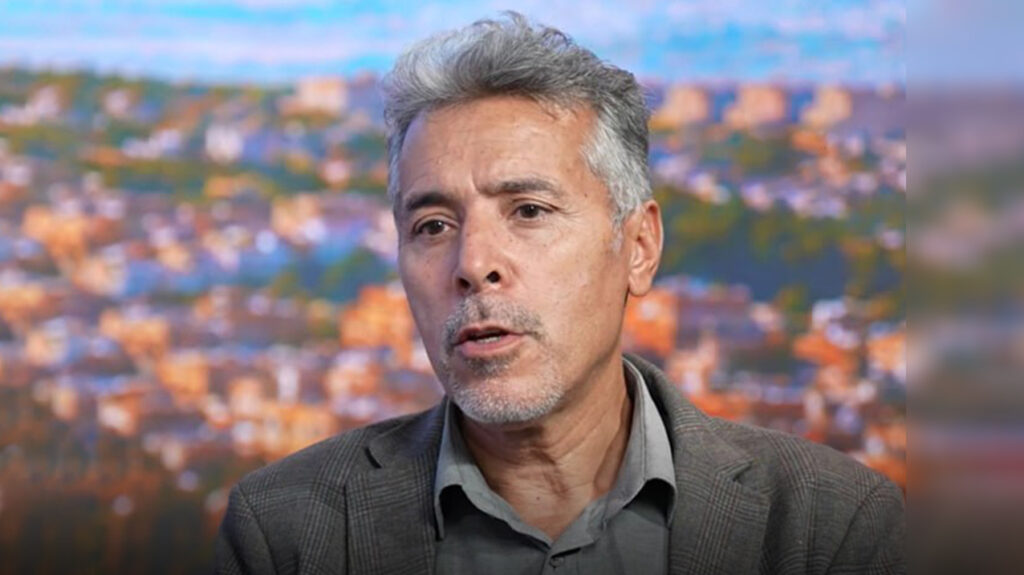
Five years after returning to power, the Taliban’s performance and the future of its rule in Afghanistan remain the subject of debate among analysts. While some observers argue that the Taliban has managed to achieve a degree of stability after years of war and instability, others believe the government still faces serious challenges to its survival, internal stability and international legitimacy. Against this backdrop, Dr. Jafar Haqpanah, vice president of the Iranian Association for Regional Studies, professor of regional studies at the University of Tehran and an analyst of Afghan affairs, has examined various aspects of Afghanistan’s developments over the past five years.
In an interview with IRAF, Dr. Jafar Haqpanah assessed five years of Taliban rule in Afghanistan and said that, contrary to some assessments, the group has not yet reached a stage of sustainable consolidation and that its main challenge remains survival and consolidating its hold on power. Haqpanah said the absence of an inclusive government, restrictions on rights and social freedoms, internal divisions, dissatisfaction in northern areas and the Taliban’s ideological approach are among the most important challenges facing the government.
The Taliban Still Faces the Challenge of Survival and Consolidating Power
In his overall assessment of five years of Taliban rule, Haqpanah said developments in Afghanistan can be examined at the domestic, regional and international levels and from social, political, cultural and security perspectives. However, he said the central question is what the Taliban’s main challenge in Afghanistan is after five years.
Referring to two different views of the Taliban’s current position, he said some believe the group has moved beyond the difficult phase of establishing itself and has entered a period of consolidation, while others continue to see the government as struggling with the question of survival. Haqpanah said he is closer to the latter view and believes the Taliban continues to face the challenge of survival and consolidation five years after returning to power.
He said the Taliban has made gains in some areas but continues to face many of the same issues it confronted in 2021 and even during the republican period. He identified the Taliban’s domestic position, its social base, power groupings within Afghanistan, and regional and international dynamics as factors shaping the group’s current situation.
Haqpanah stressed that this does not necessarily mean the Taliban is weakening, but neither can its position be described as significantly and sustainably consolidated. In his view, Afghan politics continues to operate largely along the same trajectory as before, with no clear sign of a major change in the near future.
The Taliban’s Guerrilla Approach and Uncertainty Over Its Governing Model
Asked why the Taliban continues to face the issue of survival, the professor said: “A group that has come to power through a guerrilla and partisan approach, if it wants to pursue the same guerrilla tools and methods at the national level, will face serious problems.”
He continued that the Taliban still sees itself as a guerrilla group in some respects, which has prevented it from taking major steps toward establishing an inclusive government. According to Haqpanah, the same situation can be seen in the area of rights and social freedoms, because the model that gave the Taliban power and cohesion in the tribal areas of southern Afghanistan does not necessarily have the capacity to govern a country with around 40 million citizens.
He also addressed the uncertainty surrounding the Taliban’s governing model, saying: “If the Taliban is asked what its political horizon and desired model of government are and what relationship it has with existing models of governance in the world, no clear answer is received.” According to him, within the Taliban’s discourse, aspects of negation are more prominent than presenting a clear model for the future.
Haqpanah attributed this situation to a form of “religious duty-oriented thinking” and said this approach differs from the concept of the “national cause.” He stressed that Afghanistan is not simply a collection of followers of a single religious narrative, but a country whose citizens are diverse in terms of language, ethnicity and religion. If a maximalist and ideological interpretation of religion becomes the basis of government, he said, the government itself will face difficulties in governance.
Taliban’s Internal Divisions and the Role of a Common Enemy
Discussing internal divisions within the Taliban, Haqpanah said there is not enough reliable data on the group’s internal structure and that some reports about divisions may be directed or manipulated. However, he said the Taliban’s social and political structure is such that it creates the conditions for internal tensions.
He described the Taliban as having several layers, ranging from field fighters and rank-and-file members, some of whom joined the group because of poverty and economic difficulties, to tribal leaders, mullahs and elders who serve as social reference groups, as well as cadres with long histories of membership in the Taliban who now hold government management positions.
The professor added that the leadership also includes figures from different regions and tribes, with varying foreign ties and priorities. It is therefore natural, he said, that they do not share a common understanding of Afghanistan’s future goals and ideas and may arrive at different solutions when confronted with day-to-day problems.
Referring to changes within the power structure, differing statements and certain individualistic tendencies, Dr. Haqpanah said internal divisions are plausible, but stressed that a “common enemy” can help maintain cohesion within the Taliban. In his view, the confrontation between Pakistan and Afghanistan, despite the heavy costs it imposes on the Taliban, can enable the group’s leadership to overshadow some internal disagreements and governance difficulties.
He also said the network of religious schools, mullahs and the Taliban’s communication mechanisms can transmit the leadership’s ideas to the group’s lower levels and maintain their social support. Therefore, he said, a major and immediate split within the Taliban should not be expected in the foreseeable future.
Women’s Rights: The Taliban’s International Cost and Domestic Social Capital
Haqpanah went on to say that every threat can simultaneously represent an opportunity, adding that the way a policy is formulated and how an event is addressed determines how that event comes to matter for a government.
He cited the ban on girls’ education and restrictions imposed on women as an example, saying: “The Taliban has paid a heavy price internationally for these policies, and this issue has affected Afghanistan’s international recognition and legitimacy, but the same policy may be viewed positively by part of the Taliban’s traditional social base.”
Discussing the Taliban’s performance in comparison with its initial promises, the professor said that as an analyst, one should allow the Taliban to be defended in some areas. He identified the fight against corruption as one area in which the Taliban’s performance can be defended.
According to him, the government of the Islamic Republic of Afghanistan struggled with widespread corruption over the past 20 years, while foreign intervention and foreign financial assistance also played a role in creating this situation. Haqpanah believes this corruption contributed to the decline in the republican government’s legitimacy and, in contrast, increased the Taliban’s legitimacy as its opponent.
On security, he also assessed the Taliban’s performance as somewhat positive, saying Afghanistan is now in a relatively favorable position in containing some extremist groups. However, he stressed that part of this security should be attributed to the Taliban with caution, because the group itself was also one of the drivers of insecurity during the republican period.
Economy, Self-Sufficiency and the Challenges of the Taliban’s Development Model
Asked about the Taliban’s economic development record, Dr. Jafar Haqpanah said it is still too early to make a final judgment, but the group is attempting to promote a form of indigenous capitalism and has placed ideas such as self-sufficiency on its agenda.
He described the focus on domestic forces and reducing dependence on foreign actors as positive in itself, but warned that if the concept of self-sufficiency is pursued through an ideological and maximalist lens, it could create major economic, social and political problems.
The professor nevertheless stressed that assessing the Taliban’s economic performance requires closer examination and the passage of time, and that it is not currently possible to judge the final outcome of the group’s economic policies.
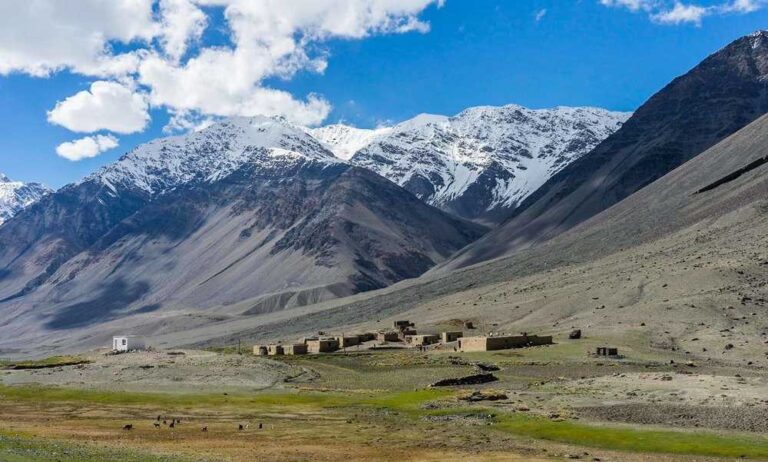
Badakhshan: Accumulating Grievances and the Potential Spread of Protests
Discussing recent protests and unrest in northern and northeastern Afghanistan, particularly Badakhshan, Haqpanah said the key issue is whether the Taliban fundamentally recognizes these protests and opposing voices, because the government’s response will determine the course of future developments.
He said opposing voices have emerged from some figures who previously held important positions within the Taliban and that, at least so far, the Taliban has not been able to eliminate all of them. In his view, if the Kandahar leadership continues to emphasize exclusivity and distance itself from inclusive government, particularly in northern areas where ethnic and social divisions are more pronounced, the likelihood of protests similar to those in Badakhshan will increase.
Haqpanah added that the issue depends on the Taliban’s ability to move closer to the idea of an inclusive government, as well as the extent to which regional and international developments support opposition groups. He predicted that opposing voices would be heard more widely across different parts of Afghanistan and even outside the country.
He identified one factor behind this situation as the Taliban’s “false confidence,” saying the group believes that by defeating major powers, it has become a superpower. According to Haqpanah, overlooking the role of the Doha Agreement and the compromises made behind the scenes, as well as the Taliban’s reliance on hard-power solutions, has meant that its response to social discontent remains largely security-oriented.
He stressed that dissatisfaction in northern Afghanistan is not limited to the issue of inclusive government and that factors such as demographic changes, the presence of non-local elements, the performance of parts of the economic and social structure, and a perception that wealth is being extracted from local areas have also contributed to the accumulation of grievances.
Why Has an Inclusive Government Not Emerged in Afghanistan?
Asked why the Taliban has failed to fulfill its promise of an inclusive government, the professor said the group’s leaders believe that no government anywhere in the world is completely inclusive and cite examples from other countries to support this argument.
However, he stressed that this argument cannot justify visible discrimination in Afghanistan. According to him, an inclusive government is not simply a matter of having a number of people from different ethnicities and groups represented in ministries and the administrative structure; the central issue concerns how power is distributed and the basis of its legitimacy.
He added that when there are no elections and appointments and dismissals are carried out by an individual whom a large part of the population has never even seen, it is not possible to speak of an inclusive government in the precise sense of the term. Haqpanah also identified restrictions on women’s participation, restrictions on the religious rights of Shiite Muslims, and what he described as the “institutionalization of anti-Persian sentiment” as other obstacles to establishing an inclusive government.
The professor stressed that even according to the religious criteria and definitions invoked by the Taliban itself, the group cannot easily claim to have established an inclusive government, adding that a number of Afghanistan’s senior religious figures have also criticized this claim.
Persian Language: From a Security Issue to a Cultural Matter
Haqpanah also addressed the issue of the Persian language in Afghanistan, saying the language question in the country has become a political and even security issue and has intersected with foreign interventions.
He believes a solution could lie in removing language and education from the security sphere and turning them into social and cultural issues. According to Haqpanah, many social and political issues in Afghanistan have become securitized, and a reverse process is needed so that each issue can be placed in its proper context.
He proposed that Iran become more active in teaching the Pashto language at its universities, saying such an initiative could demonstrate that Iran views Pashto as a cultural phenomenon rather than through a security lens.
Referring to his experience during his tenure at the Iranian Association for Regional Studies and the Iranian Political Science Association, Haqpanah said that, in cooperation with Ghafour Nilwan, the then Afghan ambassador to Tehran, a poet and cultural figure from Afghanistan, efforts were made to create an opportunity for Pashto language instruction at one of Iran’s universities.
He described the experience as an indication that Iran can adopt a cultural approach toward the Pashto language and said that if such an approach is strengthened, Afghanistan should not feel that it is facing a cultural invasion from Iran. Instead, he said, cultural engagement can serve as the basis for interaction rather than confrontation.
In concluding his assessment, Haqpanah stressed that Afghanistan’s future will largely depend on the extent to which the Taliban can move away from its exclusive and ideological model and toward national and inclusive governance. In his view, the continued securitization of social issues, extensive restrictions on women, disregard for the demands of different regions and continued reliance on hard-power approaches could contribute to the accumulation of grievances. By contrast, turning political and social issues into cultural and social matters, expanding engagement with different groups and presenting a clear vision of the future governing model could help reduce some of Afghanistan’s challenges.
The Taliban took control of Kabul and much of Afghanistan in August 2021 following the withdrawal of U.S. forces and the collapse of the Afghan republican government.
Over the past five years, the group has maintained its territorial control and has cited achievements in areas including security and combating corruption as part of its record. However, extensive restrictions on women and girls, the lack of inclusive political participation, economic difficulties, challenges to international legitimacy, internal divisions and growing discontent in northern areas remain among the most significant issues facing the Taliban government. At the same time, recent developments in Afghanistan-Pakistan relations, protests in Badakhshan and other northern areas, and the Taliban’s continued efforts to secure regional legitimacy indicate that the political consolidation of the government remains a central issue in Afghanistan’s ongoing developments.