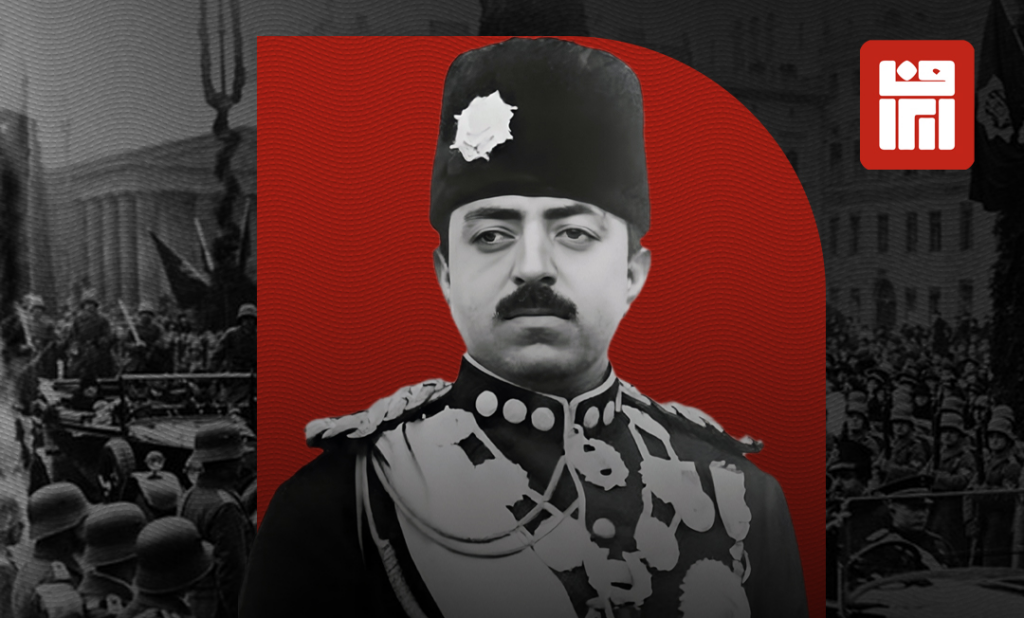
August 19 is observed in Afghanistan as Independence Day, officially known as the “Day of the Restoration of Independence.” In the official narrative, it is regarded as one of the greatest achievements in Afghanistan’s modern history. Yet beyond this historic transformation lies a fundamental question: To what extent did Afghanistan’s political independence pave the way for the creation of a stable, independent, united and developing nation-state?
In an exclusive commentary for IRAF, Afghan journalist Seyed Jamaluddin Sajadi writes that in 1919, Afghanistan succeeded in regaining control over its foreign policy from Britain. There is no doubt that this was, and remains, a major historic achievement for Afghanistan. But political independence alone is not enough to build an independent and stable nation-state.
The central problem was that, after regaining its independence, Afghanistan failed to establish a lasting link between “independence from foreign influence” and “building the state from within.” Although Amanullah Khan made significant efforts to build a nation-state and introduced fundamental reforms, it appears that these reforms were launched somewhat ahead of their time, when Afghan society was not yet prepared to embrace them.
Had Amanullah Khan’s reforms been introduced at a more appropriate time and with broader social support, Afghanistan might have successfully followed a path toward developing a modern nation-state. However, society’s rejection of the Amanullah reforms, the lack of the necessary conditions and, on the other hand, the absence of an effective political structure ultimately brought an end to both his reform agenda and his rule.
This is where one of the fundamental problems of Afghanistan’s modern history becomes apparent: state-building in Afghanistan has never evolved into a continuous, gradual and institutionalized process. This remains one of the country’s deepest structural challenges on its path toward becoming a nation-state.
Governments came and went; constitutions were drafted and abandoned; political systems replaced one another — monarchy, communist rule, the mujahideen, the Taliban, the Islamic Republic and, once again, the Taliban. Yet throughout many of these periods, the creation of inclusive political institutions accepted by a broad segment of society remained secondary to political upheavals.
Against this backdrop, it can be argued that Afghanistan gained independence in 1919, but never became a nation-state.
The two concepts are not the same. Independence means that a country can determine its own affairs and foreign relations. Nation-state building, by contrast, means creating a system of governance in which citizens, regardless of ethnicity, language, religion or region, see themselves as part of that system and believe they have a role in determining their own future.
What Afghanistan has failed to establish to this day is a state in which all its citizens see themselves as stakeholders with a meaningful role. No government has succeeded in fostering a sense of national solidarity and a shared sense of belonging among all of Afghanistan’s ethnic and religious communities. In this sense, the project of nation-state building in Afghanistan after the restoration of independence can be considered a failure.
Under most governments, the central state repeatedly sought to expand its authority across the country. Yet in many periods, this process was not based on the creation of a social contract between the state and society founded on justice. Instead, it was accompanied by coercion, political exclusion, war, and ethnic or regional competition. As a result, for parts of society, the state was not perceived as a legitimate government but as an imposed power.
Throughout the historical periods following 1919, relatively centralized and powerful governments were established, but none succeeded in genuinely creating and consolidating a nation-state in Afghanistan. Governments that followed Amanullah Khan, although they controlled political power, failed to build an inclusive, legitimate and institutionalized state.
In effect, Afghanistan followed a historical trajectory in which it achieved political independence but failed to pursue the projects of state-building and nation-building with the same determination and continuity.
After independence, Afghanistan was presented with a major historic opportunity to build a modern nation-state — and it failed to make full use of it.
One hundred and seven years after August 19, 1919, Afghanistan still faces the same fundamental question that remained unresolved after independence: How can a state be built that represents all of Afghanistan, and how can a political nation be created in which all citizens consider themselves stakeholders?
Perhaps this is the central tragedy of Afghanistan’s history: a country that won its independence, yet is still struggling to experience what it truly means to be a country.