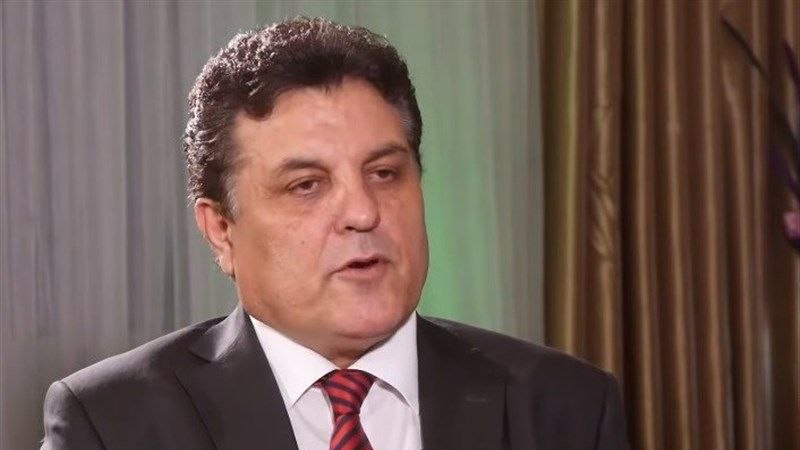
Five years into Taliban rule, security and the future of the Persian language remain among the key issues in assessing the group’s performance in Afghanistan. Abdul Latif Pedram, leader of the National Congress Party of Afghanistan, says residents of Badakhshan view the Taliban as occupiers, while warning that the Persian language is under serious threat in the country.
Speaking to IRAF, Pedram described security as a broader concept encompassing economic, employment, physical, linguistic and cultural security. Referring to unemployment, poverty, prison conditions and restrictions imposed on various groups, he questioned how security could be discussed under such circumstances.
Pedram said genuine security means that people can live without fear of the future, knowing they will have a job tomorrow, can live peacefully in their homes, speak and write in their own language, and defend their rights without fearing imprisonment. In his view, the absence of war alone does not constitute security in Afghanistan.
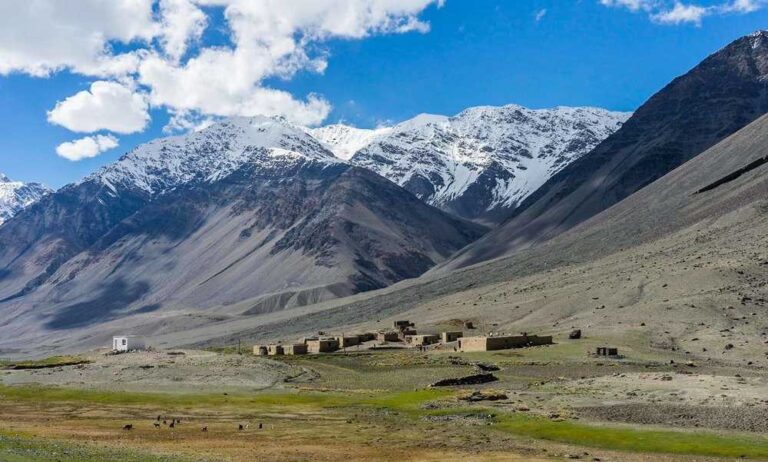
The Geopolitical Importance of Badakhshan
At the beginning of the interview, Pedram described Badakhshan as one of Afghanistan’s most important provinces.
“Badakhshan is among the very important provinces of our country, Afghanistan or Khorasan — we use both terms.”
He said Badakhshan borders Pakistan, China and Tajikistan and has a population of more than two million. The province is also rich in mineral resources and holds particular security importance because of its borders with several countries, especially China.
Referring to China’s “One Belt, One Road” initiative, Pedram said the historic Silk Road passed through the region and that Badakhshan could still play an important role in regional connectivity. He said the province is significant not only for China, Pakistan and Tajikistan, but also for Central Asian countries and the broader geopolitical sphere of Russia.
Pedram also referred to Badakhshan’s historical background, saying that until the late 19th century, the region had been a form of autonomous province with its own government, administrative system, managers and rulers who did not have direct links with Kabul.
The Roots of Tensions: Mineral Resources and Ethnic Differences
Asked why tensions and clashes continue in Badakhshan, Pedram said the province faces serious political and security challenges despite its considerable potential. Afghanistan, he argued, currently lacks a stable, legitimate and democratic government in the sense of one elected by the people.
He identified Badakhshan’s mineral resources, including gold, as an important economic asset and highlighted the province’s political significance. According to Pedram, a number of Afghanistan’s senior political leaders over recent decades have come from Badakhshan, including leaders from both right-wing and Islamist movements as well as leftist and social-democratic currents.
He also pointed to the presence of different ethnic groups in the province. Tajiks constitute the majority, he said, while Pashtuns, Baloch, Hazaras, Uzbeks and other groups also live there.
Pedram believes sensitivity among Badakhshan residents toward the presence of Taliban forces from southern Afghanistan is one of the main factors behind current tensions.
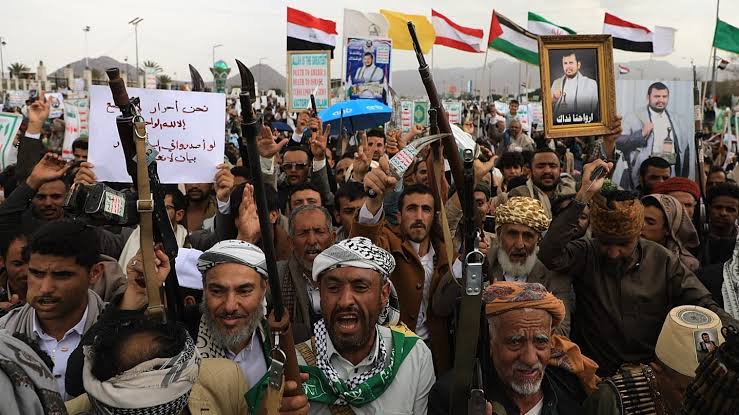
He said Badakhshan residents see the Taliban as occupiers because, in their view, the region’s resources are being plundered, land and pastures are being taken over, and in some cases people’s agricultural activities have also been affected.
Pedram added that people in some areas face economic difficulties because of the lack of alternative livelihoods. He argued that laws implemented by the Taliban in southern areas and Kandahar cannot necessarily be applied to Badakhshan in the same manner.
Political Groups Opposed to the Taliban in Badakhshan
Speaking about political groups active in Badakhshan, Pedram said Jamiat-e Islami, the party once led by the late Burhanuddin Rabbani, remains active in the province.
He also named the National Congress Party, Gulbuddin Hekmatyar’s Hezb-e Islami and movements associated with Abdul Rashid Dostum’s National Islamic Movement as political currents with a presence and influence in the region.
According to Pedram, these groups respond to developments in Badakhshan according to their level of influence and political sensitivities, and seek an end to Taliban rule and the presence of forces that have entered the province from southern Afghanistan.
He described recent developments in Badakhshan in many cases as “internal and spontaneous,” saying protests and resistance movements that have emerged in recent weeks, including clashes linked to property seizures and the activities of local forces, demonstrate the involvement of forces from within Badakhshan itself.
Pedram said that even some forces that have coordinated with political movements in Kabul in certain cases believe Badakhshan should be managed fairly and that the people of the province should have a role in managing its resources.
He said Badakhshan residents want a fair distribution of resources, economic stability, sustainable development and the reopening of schools. He also noted that guerrilla and armed clashes against the Taliban have occurred in the region at various points.
Killing of Taliban Information and Culture Chief Remains Unclaimed
Pedram also discussed the killing of the Taliban’s head of Information and Culture in Badakhshan, saying he had heard about the incident only a few hours before the interview.
Referring to the position of some Taliban opponents that civilians and people holding non-military administrative positions should not be targeted, he said such actions could undermine the legitimacy of the struggle.
Pedram stressed, however, that no individual or group has so far claimed responsibility for the killing and that it remains unclear whether the official was killed by Taliban opponents or whether the incident resulted from a personal dispute.
He again highlighted the vast size of Badakhshan, saying the province is larger than four or five major European countries and that various groups are active there. Therefore, he said, it is not currently possible to determine the perpetrator with certainty.
Badakhshan: A Sign of a National Challenge to the Taliban?
Asked whether developments in Badakhshan could be considered a sign of a national challenge to the Taliban, Pedram replied:
“Without a doubt.”
He said Badakhshan’s geopolitical position has given local discontent greater significance and argued that the Taliban have refused to accept the demands of the province’s residents.
Pedram also pointed to Badakhshan’s cultural background, saying the region has universities, schools and a rich cultural history, but that universities are now closed, girls’ education has been halted and the region’s resources are exposed to looting.
He said Badakhshan is culturally important and has produced prominent poets, scholars and political leaders. In his view, the current situation is therefore unacceptable to its people and Taliban policies are pushing the province backward.
At the same time, Pedram said Badakhshan’s importance extends beyond Afghanistan’s domestic affairs, with various countries paying attention to the province because of its security position.
Pedram Warns of Foreign Intervention
Referring to Badakhshan’s position along the borders of Central Asia, Pedram said the possibility of foreign intelligence and security operations in the region could not be ignored.
He alleged that the United States and Britain may be interested in gaining influence in Badakhshan and sending infiltrators to organize conflicts there.
Referring to groups such as ISIS, Pedram said Badakhshan’s location and its borders with Central Asia make the province a sensitive security area.
He added that forces close to the people of Badakhshan are seeking fundamental changes in Afghanistan’s political structure and believe the current situation must change.
Afghanistan’s Solution: A Federal Democratic Republic
Asked whether Afghanistan’s crisis has a political solution, Pedram said war cannot be the ultimate objective and must serve a political solution.
He described war as a tool for achieving a desired political outcome and said political actors must determine the structure of the future state.
Pedram described Afghanistan as a multiethnic and multinational society and identified the tribal structure and ethnic divisions as among the reasons for the collapse of previous governments, arguing that these factors have prevented the formation of a nation-state in Afghanistan.
He stressed that a solution to Afghanistan cannot be achieved either “by eliminating the Taliban” or “by eliminating ethnic groups.” The Taliban, he said, are also part of Afghanistan’s political reality, and the country’s different ethnicities and political currents cannot be ignored.
Pedram said the National Congress Party proposes the establishment of a “new democratic federal government” involving Afghans, the Taliban and all ethnic and social layers of Afghan society. According to him, such a structure should be based on a new social contract and a democratic federal republic.
Four-Ethnic Alliance for a Federal Republic
Pedram went on to say that Hazaras, Uzbeks, Baloch and Tajiks, which he described as Afghanistan’s four major ethnic groups, have reached a common conclusion among their elites, intellectuals and political activists regarding the country’s future political structure.
He claimed that a constitution for a Federal Republic of Afghanistan has also been drafted and is expected to be unveiled in the near future.
Pedram described the initiative as unprecedented in Afghanistan’s history, saying the four major ethnic groups had reached agreement on the structure of the future state before gaining political power so that they would not face disputes over the form of government after taking power.
He cited the experience of the mujahideen and the period following the People’s Democratic Party of Afghanistan as examples, arguing that seizing power without a plan for the structure of government in an ethnically diverse country can immediately lead to civil war.
Pedram stressed that, according to him, the groups concerned have already reached an agreement on the issue and put it in writing in the form of a constitution for a Federal Republic of Afghanistan.
Are Developments in Badakhshan the Beginning of a Major Change?
Asked about reports that an area of Badakhshan had temporarily fallen out of Taliban control before returning to the group, Pedram said attention should not be focused solely on the short duration of such developments.
He said the fundamental issue is that armed resistance against the Taliban has “begun” in Badakhshan and that opposition exists in various districts, townships and cities across the province.
According to Pedram, discontent with the Taliban exists throughout Afghanistan. More importantly, he said, issues that are being discussed openly today could not even have been raised publicly five years ago.
He argued that even if an area returns to Taliban control, the importance of the resistance that has emerged cannot be ignored because, according to him, local forces have had their weapons confiscated and some of those forces are young people from the province itself.
Pedram described the process as a long-term struggle, saying the issue is not simply victory or defeat at one particular point, but rather determining the structure of the state and the future political system of Afghanistan — an issue he said the National Congress Party has consistently emphasized.
“This Situation Is Unacceptable”
Pedram described the protests in Badakhshan as part of the determination of the people and political movements to change the current situation and said the existing conditions in Afghanistan are unacceptable.
Referring to the ban on girls’ education, restrictions on women’s employment and the closure of universities to women, he said Afghanistan has moved backward “horrifically” over the past five years.
Using a literary expression, Pedram said Afghanistan has not only failed to move forward but has moved backward and is even returning to past centuries.
He described the situation surrounding girls’ education as “disastrous” and questioned how the international community and others could remain indifferent to such conditions.
Security in Afghanistan Is More Than the Absence of War
Responding to assessments by some experts that the Taliban have succeeded in establishing security, combating corruption and improving economic conditions, Pedram said security cannot be defined solely as the absence of war.
He described security as including economic, employment, physical, linguistic and cultural security and argued that these dimensions of security do not exist in Afghanistan today.
Referring to prison conditions, Pedram claimed that prisons are filled with young people, particularly Persian speakers and Hazaras, and said those who belong to Persian language and culture are often treated as suspects.
He also criticized employment conditions and poverty, saying that when people have no jobs, it is impossible to speak of economic security.
Pedram stressed that genuine security means being able to live without fear of the future, speak and write in one’s own language, and defend one’s rights. Therefore, he said, Afghanistan’s current situation is far removed from the real definition of security.
Girls’ Education: A Divide Between the Taliban and Afghan Society
Asked about claims that there is widespread opposition to girls’ education in Afghanistan, Pedram attributed the issue largely to some Pashtun tribes and stressed that Afghanistan is not solely the land of Pashtuns.
He said that in Hazara-populated areas, girls in previous periods participated in sports and music competitions, attended universities and even served as university professors.
According to Pedram, he has never witnessed a Badakhshan mother or father say that their daughter or son should not study.
He believes:
“The Taliban generalize this view to the entire Afghan society, whereas, according to him, ‘No sane person in Afghanistan is opposed to girls’ education and schooling.’”
Pedram also referred to the experience of the Afghan Republic in previous periods, saying women had held positions in various fields, including ministries, the army, command of the armed forces and piloting, before the Taliban’s return.
He stressed that Afghanistan cannot be defined solely through the experience of the Taliban.
Who Supports Taliban Policies?
Asked why part of Afghan society supports Taliban policies, Pedram said a distinction must be made between Afghan society as a whole and some political and social forces aligned with the Taliban.
He questioned why, if the Taliban represent all ethnic groups, significant representation of Hazaras, Tajiks, Baloch and Hindus is absent from the group’s governing structure.
According to Pedram, some people who support the Taliban either have political and economic interests or have been ideologically and religiously influenced by the group.
At the same time, he said a significant portion of Pashtuns, including intellectuals, academics, professors, engineers and elites, support the continuation of Taliban rule. Their argument, he said, is that political power should remain in the hands of Pashtuns and that possible changes should be left to future generations.
Pedram stressed that this should not be interpreted as meaning that all Afghans support the Taliban, arguing that the primary concern of this section of society is maintaining political power.
Russia and Recognition of the Taliban
Asked about Russia’s decision to recognize the Taliban, Pedram said it cannot simply be claimed that the Russians were unaware of the consequences of the decision.
He described Russia as a major global power with powerful scientists and a strong political apparatus, saying Russians have known Afghanistan and Central Asia well since the time of the tsars.
Therefore, Pedram said, Russia’s decision was probably based on its own interests.
He said Russia may have concluded that recognizing the Taliban serves its interests because of geopolitical considerations and concerns about insecurity along its borders, particularly in light of the war in Ukraine and Russia’s broader confrontation with the West.
Pedram stressed that Russia made the decision based on its calculation of national interests and that it cannot simply be attributed to a mistake or lack of awareness.
The United States and Afghanistan’s Future
Discussing relations between the Taliban and the United States, Pedram said Washington’s next project in Afghanistan could involve the direct or indirect exercise of power.
He considered a renewed deployment of U.S. ground forces to Afghanistan unlikely, given the experience of the Afghan war and America’s conflicts in the region.
Pedram said Afghans are sensitive to occupiers and that any country seeking to deploy military forces directly into Afghanistan would face resistance, whether it is the United States, Russia or another country.
At the same time, he alleged that the United States may seek to strengthen extremist groups and organizations such as ISKP, particularly in northern Afghanistan and areas bordering Central Asian countries, Russia and China.
Pedram said examples of such a process can be observed in Afghanistan and alleged that the purpose of creating insecurity in these areas could be to control and manage developments for subsequent actions in the region, Central Asia and against Iran.
Badakhshan and China’s Belt and Road Project
Pedram also emphasized Badakhshan’s importance in this context, saying insecurity in the province could affect China’s regional projects.
Referring to China’s Belt and Road project, he said that if war and insecurity exist along the borders of Badakhshan and northern Afghanistan, long-distance connectivity routes extending toward Pakistan and other areas could face risks.
According to Pedram, damage to the project could be considered an achievement for the United States. For this reason, he argued that Badakhshan should be examined within a broader “security context,” taking into account the possibility of foreign intervention.
He again accused the United States, Britain and their allies of seeking to intervene and create instability in the area.
Persian Language in Afghanistan Is Under Threat
In the final part of the interview, Pedram discussed the state of the Persian language and literature in Afghanistan, saying the situation of the language has become “disastrous” under the Taliban and that Persian faces serious restrictions in universities, the media, press and government institutions.
He alleged that the Taliban are seeking to restrict and weaken Persian and replace it with Pashto or English.
Pedram pointed to changes in some terms used by government institutions, saying the word “police” has been replaced by “Shurta.”
He described the relationship between language and political power as highly important, saying a language can become dominant when it has the backing of political power.
Referring to the development of standard Persian in Iran, Pedram said political power in different periods had given greater status to the language and dialect used in centers of power, helping it become the standard language.
Language and Power: Concerns Over the Decline of Persian Speakers
Pedram stressed that if discriminatory language policies continue for a long period, the language supported by political power will become the dominant language.
He said the Taliban are seeking to strengthen Pashto as the first, nationwide and interethnic language, and argued that this could weaken Persian in Afghanistan.
Pedram described the relationship between language and power as a well-established subject in language studies. He said that when one language has the backing of political power while political authorities simultaneously seek to weaken another language, the process will affect the latter’s position.
He ultimately warned that Persian is facing a serious threat in Afghanistan and that the number of Persian speakers in Kabul and government offices is declining.
Referring to the importance of the number of speakers in a language’s survival, Pedram said, citing UNESCO, that the number of speakers is one of the important factors in determining a language’s survival and that when the number of speakers becomes limited, a language gradually moves toward weakness and decline.
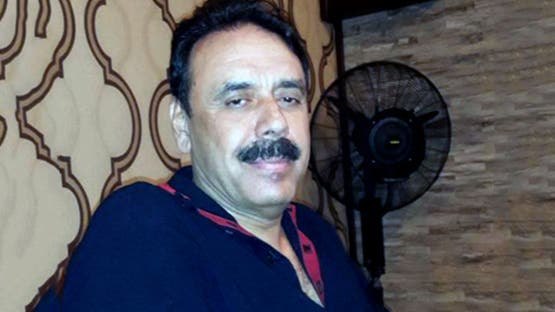
Abdul Latif Pedram is an Afghan political figure and leader of the National Congress Party of Afghanistan who has also served as a member of the Afghan parliament.
He is a critic of Afghanistan’s centralized political structure and a supporter of a federal system. In recent years, Pedram has repeatedly called for redefining Afghanistan’s political structure based on the participation of different ethnic and social groups.
His comments on Badakhshan, the Taliban, Afghanistan’s future political structure, women’s education, Russia and U.S. relations with the Taliban, and the status of the Persian language reflect some of his views on the country’s political future.