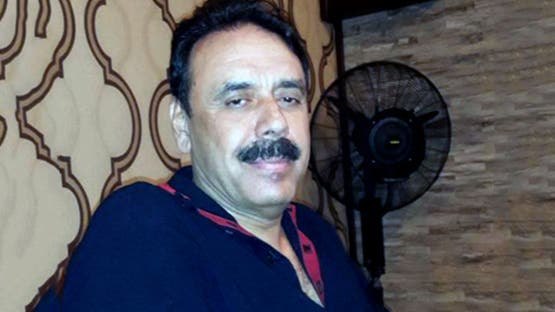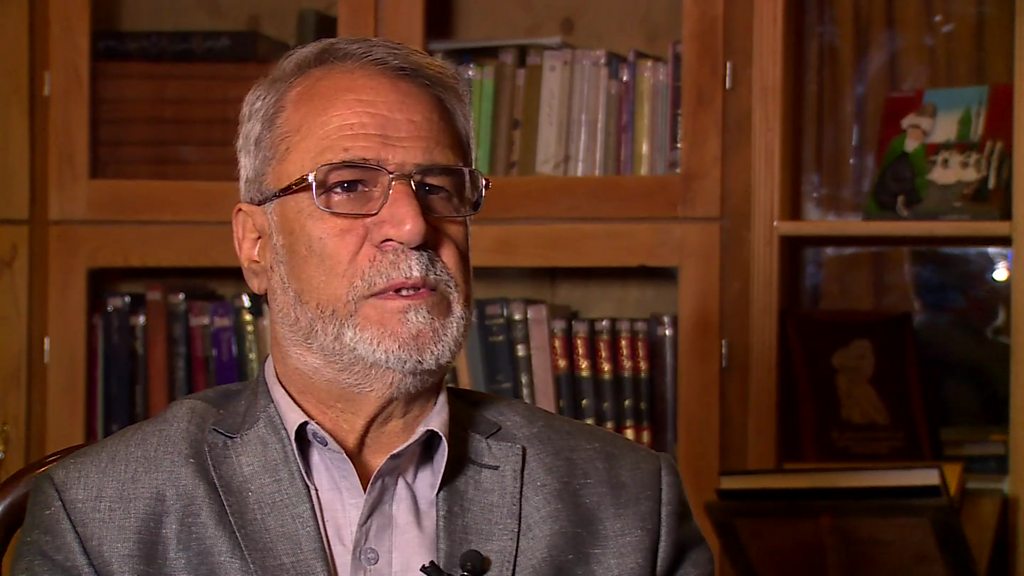
Former Afghan parliamentarian Mohiuddin Mahdi has questioned whether the Taliban are genuinely adherents of the Hanafi school of Islam, arguing that the group’s treatment of the Persian language conflicts with the religious and cultural heritage associated with the Hanafi tradition.
According to IRAF, Mahdi, in a commentary on the historical and cultural status of Persian in Afghanistan and the Islamic world, argued that Persian was the mother tongue of Imam Abu Hanifa, the founder of the Hanafi school, and said the religious scholar had even issued a ruling allowing prayers to be performed in Persian.
Mahdi said Persian was not only historically and religiously significant but also the mother tongue of a large part of Afghanistan’s population and a common language among different ethnic groups in the country. He also credited the language with playing an important role in the development and transmission of Islamic culture and civilization.
Persian and the intellectual heritage of the Muslim world
Mahdi said Persian had been used by numerous prominent hadith scholars, mystics, philosophers, scientists, commentators and Islamic jurists.
He cited figures including Bayazid Bastami, Abu al-Hassan Kharaqani, Khwaja Abdullah Ansari, Ali Hujwiri, Sanai Ghaznavi, Shams Tabrizi, Jalaluddin Muhammad Balkhi, also known as Rumi, and Abdul Rahman Jami, saying their intellectual and spiritual legacies were closely connected to the Persian language.
He also pointed to scholars such as Avicenna, Al-Biruni, Muhammad ibn Musa al-Khwarizmi and Muhammad Zakariya al-Razi, arguing that Persian had played a significant role in the development and transmission of a major part of the Islamic world’s scientific and intellectual heritage.
Mahdi criticizes Taliban language policies
Mahdi described Persian as part of Afghanistan’s historical and cultural heritage and criticized what he characterized as the Taliban’s language policies.
He alleged that in recent years the group had expanded the use of Pashto in government administration, official regulations and the naming of some historical sites.
Referring to changes to the names of neighborhoods and historical sites in Kabul and other parts of Afghanistan, Mahdi cited the renaming of Kocha-ye Kharabat, saying its sign now carries the Pashto title “De Kharabat Kocha.”
He also criticized the use of the term “Dari” for the Persian language in Afghanistan. Mahdi argued that, in his view, the policy was intended to distance Persian-speaking Afghans from their historical and cultural background and deprive them of the benefits of sharing a language with Persian speakers in other countries.
The origins of Persian vocabulary in Afghanistan
Mahdi also addressed what he described as efforts to discourage the use of certain Persian words, citing “Daneshgah” and “Daneshkadeh” — commonly used Persian terms for university and faculty — as examples.
He said the two words had historical precedents in older Persian texts and referred to his previous use of passages from Ain-i-Akbari, a historical work by Abul Fazl Allami, to demonstrate their use in earlier Persian literature.
Mahdi argued that such words were part of the internal resources of the Persian language and claimed that opposition to them was driven more by linguistic and ethnic prejudice than by scholarly considerations.
“Kargah” or “Workshop”?
Mahdi also referred to an initiative by the Taliban’s Ministry of Information and Culture to draft a proposal for the “standardization of the orthography of the Pashto and Dari languages.”
He said the title of a meeting held as part of the process used the English word “workshop.”
According to Mahdi, the Persian word “kargah” has a long history in the language. He argued that using the English term “workshop” for such a program was contradictory to a policy that claims to reform and standardize language while failing to use an existing Persian equivalent.
Citing historical texts and poems by the Persian poet Manuchehri, Mahdi said the word “kargah” had been used in Persian for centuries and was not simply a newly created equivalent for “workshop.”
“If prejudice is set aside”
Mahdi concluded that if prejudice were removed from language policymaking, the program should be titled, instead of a “five-day workshop,” a “five-day kargah on reforming and standardizing the orthography of the Persian and Pashto languages.”
He ultimately returned to the question of the Taliban’s relationship with the Hanafi school, arguing that the group’s treatment of the Persian language was one of the indicators that, in his view, should be considered when assessing the Taliban’s claims of adherence to the Hanafi tradition.