Five years into the Taliban’s rule in Afghanistan, the country’s economic situation remains one of the key issues in assessing the group’s performance. Alongside sanctions, international restrictions and the lack of formal recognition of the Taliban government by most countries, officials of the administration say state revenues have increased, the national currency has remained stable, domestic investment has grown and economic ties with neighboring countries have expanded.
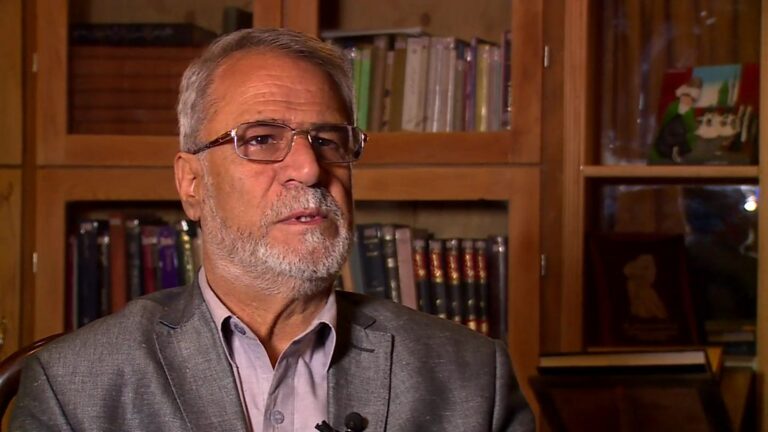
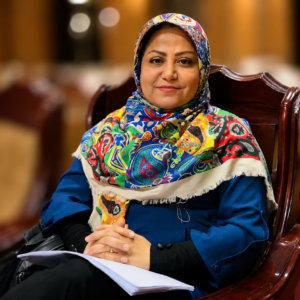
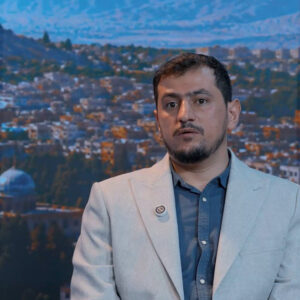
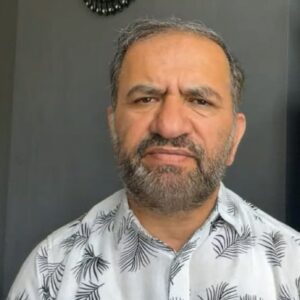
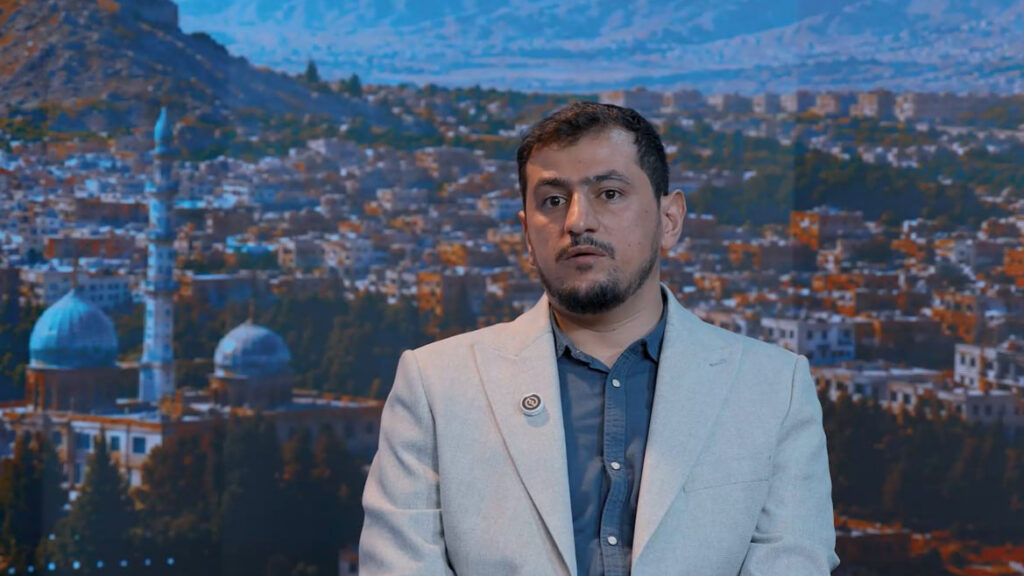
Omid Heidari, deputy head of Afghanistan’s Chamber of Agricultural and Livestock Production, spoke to IRAF about the country’s economic situation, the outlook for economic cooperation between Kabul and Tehran, Iranian investment in Afghanistan, extraterritorial farming, trade, transit, the drug issue, sanctions and the challenges surrounding international recognition of the Taliban government.
In his assessment of Afghanistan’s economy during the Taliban’s fifth year in power, Heidari said domestic investment had increased, customs revenues had grown, transit infrastructure had expanded and the currency had become more stable. He said Kabul was seeking to expand economic cooperation with Iran, particularly in transit, agriculture, extraterritorial farming and joint investment.
Heidari also announced Afghanistan’s plan to increase trade with Iran from around $3 billion to more than $5 billion this year.
Domestic investment and the drive for economic self-sufficiency
Heidari said Afghanistan’s economic plans had attracted more investment over the past five years.
“In the area of Afghanistan’s economic plans, we are very pleased. Over the past five years, the economic plan has attracted more capital, and in terms of investment, Afghan domestic traders who had invested abroad returned to Afghanistan.”
He added: “Currently, you can see that investment activities have increased in all sectors, whether in industry, the construction industry, livestock, poultry farming and all sectors, and this is a great hope for the people of Afghanistan.”
Heidari said domestic production had also changed significantly.
“You saw that previously we imported all our construction goods from abroad, but currently, in the industrial sector, we have achieved almost more than 50 percent self-sufficiency inside Afghanistan.”
He said the Taliban administration had plans to further increase that level of self-sufficiency.
“God willing, with the facilitation plans that the respected economic deputy and the respected Ministry of Industry and Commerce have in place, we will be able to complete another 50 percent of the deficiencies we have in the industrial sector over the next five years.”
Heidari also pointed to higher customs revenues as another economic development.
“Currently, customs revenues inside Afghanistan have increased, and this can strengthen Afghanistan’s economy.”
He described the expansion of transit routes as another economic opportunity, saying facilities had been created to allow different countries to use Afghanistan’s transit routes.
Referring to Afghanistan’s transportation links, he said: “The transit routes that you saw had not recently been built or reconstructed. Now, the interest of our Iranian traders in the railway sector inside Afghanistan has increased, and this can give Afghanistan’s transit route a stronger position.”
Heidari added: “You saw that recently we were able to develop almost 50 percent more of the Wakhan Road, which is a major economic highway. This can also include Iran, and we can connect this road to Iran and attract foreign investment.”
On the Wakhan route, he said: “Currently, the Wakhan highway that connects us to China has been built, and God willing, with more investment it can increase the movement of transport vehicles and we can establish a railway line so that we can make the route closer.”
The deputy head of the chamber also referred to irrigation projects.
“Regarding irrigation canals, the plan of the previous governments was that they should build the Qosh Tepa Canal. The previous government did not build it, but praise be to God, the current government has built this canal over a length of 300 kilometers, a width of 100 meters and a height of 8 meters.”
According to Heidari, the project has been carried out by an Afghan state-owned company and is “more than 95 percent complete.” He said it could provide water to agricultural land.
“This can bring water to billions of square meters of land, and we can use this in agriculture and develop barren lands, which will strengthen agriculture and strengthen the economic foundation of Afghanistan.”
Heidari said every industry established inside Afghanistan could reduce the country’s dependence on imports.
“Every industry that is built inside Afghanistan will have tariffs added to imports, and this is good news for Iranian investors to come and invest jointly with Afghans.”
He added: “We need joint investment in all sectors of industry.”
Heidari also described the stability of Afghanistan’s currency as another economic achievement under the Taliban.
“In terms of currency stability, during the republic or previous governments, we did not have currency stability, but currently, the currency stability we have had under the current government over the past five years was not seen to this extent under previous governments, and this has been able to attract foreign investment.”
He said the issue could be considered a positive point in the Taliban government’s economic record.
Iran’s position among Afghanistan’s neighbors
Asked about Iran’s position in Afghanistan’s economic policy, Heidari said: “Afghanistan’s foreign policy is economy-oriented, and there is no difference among neighbors. All neighbors are important to Afghanistan because they are neighbors.”
He added: “Beyond this, praise be to God, we are Muslims, and this can strengthen our friendship, our relations and our foreign policy.”
According to Heidari, shared interests between Iran and Afghanistan provide a basis for expanding economic ties.
“The commonalities that we have between us have brought us closer together, and there are no obstacles preventing us from bringing our economic transactions closer together.”
Heidari thanked the Iranian government and people, saying: “We thank the government and leadership of the Islamic Republic of Iran, its people and their cooperation in all sectors. During these few days that we were in Iran, everyone hosted us and showed us kindness.”
He expressed hope that Afghanistan would be able to provide the same hospitality and cooperation to Iranians.
Regarding Afghanistan’s most important economic plans with Iran, he said: “Above all, we have made very good progress in transit and joint investment with Iran.”
Heidari referred to the Khaf-Herat railway, saying: “You saw that the Khaf-Herat railway, as well as other railway lines that the Islamic Republic of Iran has invested in inside Afghanistan, exist, and in the future we also plan to connect the railway line to most provinces of Afghanistan, especially Herat and Mazar-i-Sharif, where investment will take place soon.”
He added: “These commonalities have increased our investment. Currently, our exports from Iran go through the Lotfabad border crossing to Mazar-i-Sharif, passing through several countries, for example Turkmenistan and Uzbekistan, and then reaching Mazar-i-Sharif.”
Heidari said developing a direct route between Iran and Afghanistan would reduce transportation costs and give Afghan traders greater access to the Iranian market.
“If we can expand this through Iran and Afghanistan themselves, transportation costs will decrease, and we can also increase the competitiveness of our traders, who currently import from China and Kazakhstan through the north, and give them greater access to Iran.”
He added: “We currently import raw materials from Uzbekistan, Kazakhstan and China. If we prioritize these transport and transit links and remove the existing obstacles, we can further strengthen this railway and transit route.”
Extraterritorial farming: Kabul’s proposal to Iranian investors
Heidari said the two sides had reached agreements and held talks in the agricultural sector.
“In the agricultural sector, we need Iranian investment, Iranian machinery, Iranian-produced seeds and other things. We also need Iran’s technical and specialized workforce.”
He proposed that Iran produce some of the goods it currently obtains from countries such as Brazil, Argentina and European countries through investment in Afghanistan.
“Come and invest inside Afghanistan. The law on extraterritorial farming has been passed in Afghanistan, and they can be a good incentive for Iranian traders and the Iranian government to come and engage in extraterritorial farming inside Afghanistan.”
Heidari added: “We need soybeans, we need oilseed crops, we need meat. Come inside Afghanistan; land will be provided to you, then investment will be made, and your ministry can import it into Iran.”
On land allocation, he said: “Land is made available free of charge to agriculture in the form of a lease, and they can also purchase it jointly, and it is given to an Afghan trader and farmer to carry out this work.”
According to Heidari, tax incentives have also been introduced for investors.
“Tax incentives for five years have been announced in most sectors.”
He said Afghanistan imports more than $15 billion worth of goods annually.
“We have more than $15 billion in imports. If we encourage foreigners to invest, it will be consumed inside Afghanistan, and we can also export outside Afghanistan.”
Heidari named oilseeds, meat, oil-producing crops, corn, wheat and rice among the products Afghanistan needs. He said producing these goods would meet domestic demand while also creating opportunities for profit and exports to Iran.
Sanctions and Kabul’s call for recognition of the Taliban
Asked about the impact of U.S. and European sanctions on Afghanistan’s economy, Heidari said: “Unfortunately, both the Islamic Republic of Iran and the Islamic Emirate government have faced these problems. Currently, we have close cooperation.”
He stressed: “There are currently no sanctions inside Afghanistan on imports from Iran, and no foreign policies or sanctions imposed on Iran can be implemented inside Afghanistan.”
He added: “We are neighboring countries, and in the future we should be able to continue all cooperation with the Islamic Republic of Iran to meet each other’s needs, for the welfare of the people and for each other’s welfare and comfort, and bring greater facilities.”
Heidari said sanctions imposed on Afghanistan had contributed to lower foreign investment.
“The sanctions imposed on Afghanistan have caused foreign investment to decrease, and we have been unable to use Afghanistan’s frozen funds in international banks.”
He put Afghanistan’s blocked assets at “more than $11 billion,” saying the funds remained outside Afghanistan and had reduced investment in the country’s welfare sector.
He said: “Talks are ongoing, and through diplomatic channels we are having these discussions with all countries.”
Asked why most countries have not recognized the Taliban, Heidari said: “First, we have not been able to introduce our diplomats to foreign countries as well as to the United Nations and international institutions.”
According to Heidari, some demands made by foreign countries of the Taliban government do not correspond with what the government considers the needs of the Afghan people.
He said: “The needs that they demand from our government are not appropriate to the needs of the people of Afghanistan and the necessities of the people of Afghanistan, because, praise be to God, Afghanistan’s full independence currently exists and we are not any kind of threat to our neighbors.”
He added that the process of appointing Taliban representatives to diplomatic institutions and international organizations had been slow and “so far we have not succeeded in this.”
He stressed: “If you and I cannot come closer to each other and circumvent the sanctions, this will weaken both systems.”
Women’s rights, economic activity and Heidari’s account of women’s status in Afghanistan
Asked about criticism of Afghanistan’s social situation, particularly women’s rights, Heidari said the Taliban government needed time to implement its laws.
Heidari claimed that mechanisms had now been established to enable women to participate in commercial activities.
“Currently, work is being done on how we can provide Afghan girls and Afghan women with an Islamic education system, as we have seen in Iran and other countries.”
He added: “Inside Afghanistan, commercial activities are also continuing normally, and women can all engage in business and travel to foreign countries to attend exhibitions.”
Heidari said: “Recently, this mechanism has been established in the Chamber of Economy so that women can participate in the labor market and economy.”
According to him, alongside chambers for men, a commercial and agricultural industries chamber has also been established for women.
“Women are all engaged in leading the chamber. They even asked for it themselves; that is, women are working separately and they have a separate and free space for themselves.”
He claimed: “More than 1,000 companies were established by women this year, and they are currently active in various sectors, including industry, trade, exports, imports and investment.”
Heidari also referred to the participation of Afghan women in foreign exhibitions.
“We had foreign exhibitions in Kazakhstan, Turkmenistan and Uzbekistan, where women traders also participated and displayed their products.”
He described this as “a major achievement for the Afghan government,” saying the remaining problems were mainly related to laws that, in his view, required revision.
Heidari added: “New laws for investment have been passed, and an example is the land law, under which Afghan women farmers can establish large, small and medium-sized companies and have access to land.”
He said women could use agricultural land distributed by Afghanistan’s Ministry of Agriculture and engage in agriculture, investment and industry.
Asked about reports that female doctors are required to have a male guardian when attending work, he said: “All the rumors and slogans that are made outside are all lies, and we have no kind of problem with women. Our doctors are currently working inside Afghanistan, and all male guardians are currently at work.”
Asked whether women could own property and invest in agriculture, Heidari said: “We have no kind of obstacle in investment in agriculture. All Afghan women… We had women who came to the previous exhibition from Iran, Uzbekistan, Kazakhstan and even Russia, and they want to invest inside Afghanistan.”
He stressed: “We have no kind of problem for women in investment, agriculture or the economy.”
Heidari said the only previous obstacle had been the approval of new investment laws, which he said had now been passed.
Drugs, security and Afghanistan’s economic outlook
Asked about poppy cultivation and Iran’s concerns over drugs entering the country from Afghanistan, Heidari said: “We have mostly stopped drug cultivation, poppy cultivation in Afghanistan. The government has banned poppy cultivation inside Afghanistan, and anyone who does it commits a crime and is a criminal.”
He added: “More than 95 to 97 percent has been eliminated, and no cultivation takes place inside Afghanistan, and two percent takes place for medical purposes.”
Heidari said the limited cultivation was needed for pharmaceutical production and added: “We need poppy cultivation for the production of medicine, as well as poppy cultivation and the pharmaceutical industry inside Afghanistan.”
At the same time, he said: “Although it is banned, it may be cultivated illegally, but Afghan pharmaceutical companies will need it, and God willing, soon this too will be stopped inside Afghanistan and, God willing, its alternatives will be used in the pharmaceutical sector.”
Heidari also described border cooperation between Iran and Afghanistan as positive.
“Praise be to God, our border cooperation with Iran has increased.”
He claimed drug trafficking from Afghanistan to Iran had declined in recent months, saying: “You do not see cases recently of trafficking inside Afghanistan, because border cooperation has increased.”
Regarding the illegal movement of Afghan nationals into Iran, he said: “We have greater border cooperation, helicopters are operating at the borders, and you can see that Afghans who stay at the borders and want to enter Iran illegally are prevented from doing so.”
Heidari said he believed illegal travel had also facilitated drug trafficking and that such cases had been reduced to a minimum.
He said: “God willing, we can assure you that next year we will have no problem in this area.”
On Afghanistan’s economic outlook, the deputy head of the chamber said: “On the contrary, Afghanistan has 100 percent sovereignty over Afghan territory, and currently we have no kind of threat inside Afghanistan.”
He stressed that Afghanistan’s economic plans were “short-term, medium-term and long-term.”
Heidari said: “The chambers that are currently active are all committed to strengthening the system and strengthening Afghanistan’s economy.”
He added: “We at the Afghanistan Chamber of Agriculture and Livestock have proposed good plans to the government, and God willing, the government has also been working on these plans for years.”
According to him, one of the main programs is ensuring Afghanistan’s food security.
“We have food security plans inside Afghanistan on how we can maintain Afghanistan’s food security.”
Heidari stressed that investment in industry, agriculture and other sectors was underway to achieve that goal.
He also linked poverty and migration to the economic situation.
“If we bring our people to prosperity and comfort, God willing, we will not become any kind of threat to our neighbors.”
He added: “If we have food security and can feed our people inside Afghanistan, there will be no need for people to flow into neighboring countries as migrants and cause security disruptions and economic problems for neighboring countries.”
Heidari again described foreign sanctions as the “only major problem” facing Afghanistan’s economy.
“Foreign sanctions have put pressure on Afghanistan’s economy, and we have been unable to obtain our money that is frozen abroad.”
He also called on neighboring countries to recognize the Taliban government.
Badakhshan protests, security and claims of foreign interference
Asked about protests in Badakhshan, Heidari said: “These were people who wanted to pursue personal interests.”
Referring to Afghanistan’s mining law, he said: “The mining law of Afghanistan has been passed, and all the people of Afghanistan must follow the national law of Afghanistan.”
He added: “There were people who wanted their personal interests over national interests. If we give priority to national interests, God willing, no problem will arise.”
Asked about the relationship between security and the economy, Heidari said: “Security and the economy are dependent on each other. If we have a better economy and do not have security, our economic growth cannot have any effect.”
He nevertheless described Afghanistan’s security situation as “nationwide,” saying that over the past four years there had been no widespread kidnapping or insecurity in the economic sphere.
Regarding the recent protests in Badakhshan, he claimed that some of the protests were the result of foreign interference.
“Afghanistan’s stability and these protests, these protests are foreign espionage, which wants to destroy Afghanistan’s stability and destroy Afghanistan’s economy.”
Heidari said industrial parks had been planned in all 34 provinces to create jobs and improve people’s welfare, and that the mining law had also been approved.
He added: “All our provinces have major mines, and all the people of Afghanistan can have national income from these mines.”
Heidari also said 60 to 70 percent of Afghanistan’s population works in agriculture.
Criticizing foreign countries, he claimed: “There are countries that are currently around us or earlier than our neighbors, and they consider Afghanistan’s stability and these protests to be foreign espionage protests that want Afghanistan’s stability to be destroyed.”
He also referred to the closure of some borders and the detention of Afghan trucks.
“They closed all the ports to us. More than 15,000 trucks belonging to the people of Afghanistan and carrying companies’ raw materials were blocked.”
Heidari attributed the situation to political and economic disputes with Afghanistan and said he believed some foreign powers wanted problems and war in Afghanistan to continue.
He stressed that Afghanistan sought cooperation with neighboring countries.
“We have 100 percent or more than 100 percent cooperation with our neighboring countries; in all sectors, in transportation, transit, investment and all sectors.”
He added: “When a foreign delegation comes to Iran, our entire government sector is at their service, and everyone wants to cooperate.”
Heidari said Afghanistan did not expect neighboring countries to implement “sinister plans” inside Afghanistan and argued that problems created by some countries for Afghanistan would ultimately return to those countries themselves.
He expressed hope that expanding cooperation with Iran would improve the welfare of the Afghan people and strengthen relations between the two countries.
Iran visit and the $5 billion trade target
Heidari said the purpose of his recent trip to Iran was to strengthen economic ties between the two countries.
“Our goal from this trip was to strengthen economic relations between Iran and Afghanistan.”
He added: “We had very beneficial meetings with the leadership of Iran’s private sector, and God willing, we will expand our common interests.”
Heidari said plans were underway to establish joint economic committees.
“We plan to establish committees that will strengthen the economies of both countries and an agreement can expand our economic commonalities.”
He said Afghanistan could invest in Iran, while Iranian traders could export to and invest in Afghanistan.
He also announced plans to sign a memorandum of understanding between the chambers of commerce of the two countries.
“God willing, there will be no dispute. We will soon have a major memorandum of understanding with the Chamber of Commerce, Industries, Mines and Agriculture of Iran.”
Heidari also said a directory or book was being prepared to introduce traders from both countries and facilitate direct contact between Iranian and Afghan businesspeople.
He said that during his visit to Iran, he attended an exhibition in Hamadan and an economic conference in Kerman, where he held talks with companies active in agriculture.
“In Hamadan, we had a major international agricultural exhibition. We were there for two days and visited all agricultural activities.”
He added: “God willing, soon we can cooperate with Iranian agricultural equipment from cultivation to harvesting in the agricultural sector.”
On the trade target between Afghanistan and Iran, Heidari said: “We are currently a consumer market. Our trade and relations are less than $3 billion. If we can expand our marketing commonalities and have bilateral visits, this can cause our trade to rise above $3 billion.”
He said Afghanistan’s target was to increase trade with Iran to more than $5 billion this year.
“Our goal is to have more than $5 billion, God willing, in common trade this year.”
According to Heidari, higher trade could boost imports and exports, investment and the identification of new business partners in Afghanistan.
He stressed: “Our goal is for them to find their business partners inside Afghanistan, gain confidence and have an agreement with them.”
Heidari said Afghanistan’s chamber of commerce would support Iranian traders.
“The chamber will cooperate with them and, God willing, guarantee that it will introduce good traders to Iran and that they will have no problems in the future.”
Heidari said Afghanistan was ready to cooperate with Iran.
“With each other’s support and with unity and solidarity, just as you are, God willing, going through your difficult circumstances, we are also your partner.”
He said any facilities required by Iran from Afghanistan’s private sector or government would be provided.
Heidari also referred to Iranian migrants’ use of Afghan air routes during the recent war, saying: “God willing, there will also be no obstacles in the future, and God willing, we will bring our cooperation with Iran to 100 percent and, God willing, we will be a good partner for Iran.”
He concluded: “God willing, these security problems, which are one of Iran’s evil enemies, will be resolved, and the people and government of Iran, just as they were victorious before, will, God willing, be victorious in the future as well.”
Afghanistan, in the fifth year of Taliban rule, continues to face a range of economic and political challenges, including foreign sanctions, frozen assets, restrictions on banking relations and the lack of formal recognition of the Taliban by most countries. Taliban officials, however, continue to emphasize increased domestic revenues, currency stability, the development of transit infrastructure, growth in domestic production and expanding economic relations with neighboring states.
Iran, given its shared border with Afghanistan, historical and cultural ties, transit potential and mutual economic needs, remains an important economic partner for Afghanistan. The Khaf-Herat railway, transit routes, cross-border trade, investment in agriculture and the concept of extraterritorial farming are among the areas that could play a greater role in economic relations between Tehran and Kabul in the coming years.