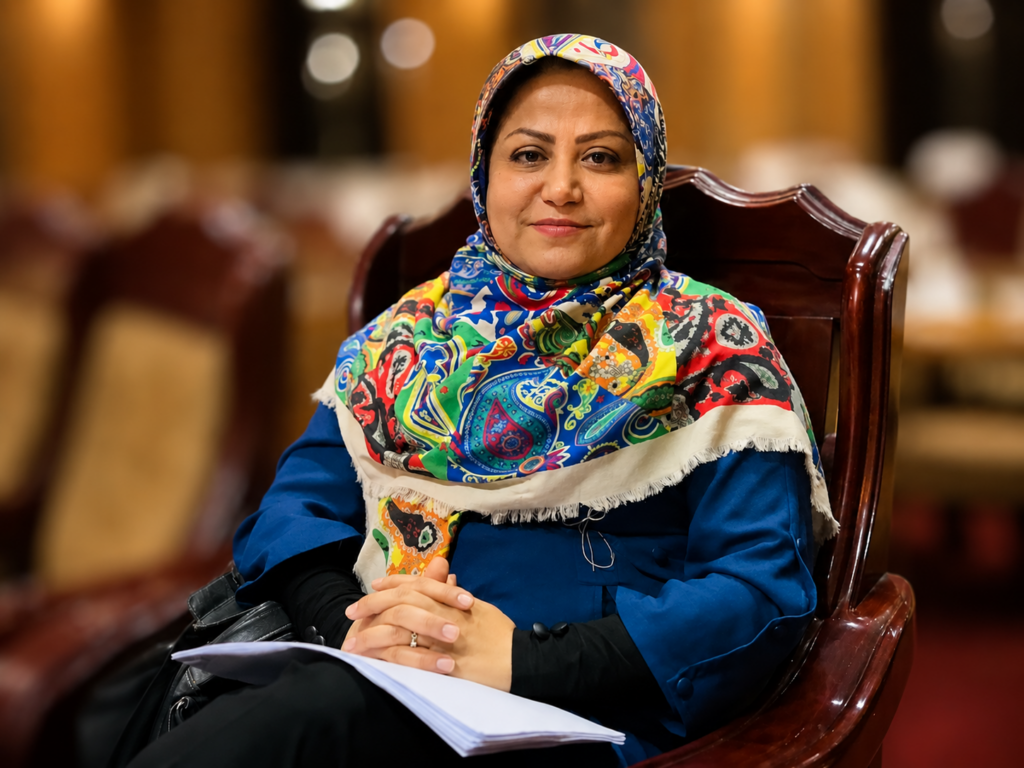
On the occasion of Ibn Sina Day and National Doctors’ Day, Dr. Sharifa Haqjo, an Afghan physician and specialist in ear, nose and throat surgery with a subspecialty fellowship in ear and skull-base surgery, has warned that restrictions imposed on women—particularly in education and employment—are placing serious pressure on Afghanistan’s healthcare system and making access to medical services more difficult for women and children.
In an exclusive interview with IRAF, Haqjo said: “Women in Afghanistan today face the most severe restrictions in the areas of education, work and individual freedoms, and girls are deprived of secondary and higher education. Restrictions on women entering medical schools and continuing their professional activities have led to a decline in the number of female doctors, midwives and nurses, and this trend could create a major gap in the provision of healthcare services to women in the future.”
Haqjo said the restrictions on women have consequences beyond the social and educational spheres and directly affect public health.
She identified shortages of female doctors and nurses, declining quality of healthcare services—particularly in obstetrics and gynecology—higher risks of maternal and infant mortality, stagnation in education and professional development, and the migration of specialists as among the most significant consequences of the current situation.
The specialist warned that continuing the ban on girls’ education in medical fields would leave Afghanistan facing a serious shortage of female doctors and midwives in the coming years.
She said: “If the education and training of specialized female personnel remains suspended, its consequences will not be limited to a single generation, but could weaken the capacity of the country’s healthcare system to provide services to women and children for many years.”
Haqjo also said existing restrictions have intensified inequality in access to healthcare.
She explained: “Some women, for cultural and social reasons, prefer to be treated by female doctors, but on the other hand, the number of female doctors is not sufficient to meet existing needs. This situation is particularly difficult for women living in far-off areas and families with limited access to healthcare facilities.”
Delays in Accessing Medical Care
Speaking about the situation of female patients, Haqjo said some patients are struggling with severe depression and psychological problems, while social restrictions and difficulties in accessing medical facilities have complicated their circumstances.
She added: “Delays in seeing a doctor, in some cases, lead to the worsening of illness and an increased risk of complications.”
Haqjo also pointed to restrictions on women’s mobility, saying some patients have needed to be accompanied by a mahram to reach hospitals in Kabul.
She said arranging such accompaniment has at times been difficult and time-consuming, adding that the restriction can delay access to medical care and, in cases of acute illness, have serious consequences for patients.
The specialist also spoke about her own experience in the workplace, saying she had been removed from her positions as a hospital deputy and university professor and had faced a lack of security and job stability in her professional environment.
She said: “In many hospitals, there are not enough medical equipment and medicines, and basic treatment facilities are extremely limited; for this reason, in some cases I have had to examine and perform surgery on patients using my own expenses and equipment.”
Haqjo said that during her academic career, commuting to work and communicating with university administrations had also been difficult and at times impossible.
She said: “The combination of these problems has reduced the motivation and ability to continue professional activities and has repeatedly made me consider migration; however, despite all the difficulties, in some cases I still continue practicing medicine to treat patients in need.”
Migration of Specialists Adds to Pressure
Haqjo identified the migration of specialists as another major challenge facing Afghanistan’s healthcare system, saying the departure of experienced doctors and medical personnel has further reduced the country’s professional capacity.
She said: “When a specialist doctor leaves the country, it is not only a job position that is lost, but also part of the experience, professional knowledge and capacity to train the next generation of doctors leaves the healthcare system.”
Haqjo also described the condition of medical facilities as concerning, saying shortages of equipment and medicines in many healthcare centers have made it difficult for doctors to provide services.
She added: “In such circumstances, greater responsibility and pressure remain on the doctors who are left, and they are sometimes forced to use their own resources and equipment to continue treating patients.”
She stressed that Afghanistan’s healthcare crisis cannot be addressed simply by increasing the number of medical facilities and said retaining and training specialized human resources, particularly female doctors and midwives, is also essential.
Haqjo said: “Access for women to medical education must be an integral part of the plan to rebuild the country’s healthcare system.”
She concluded: “The continuation of restrictions against women is not merely an issue related to their education or social rights, but directly affects the future of Afghanistan’s healthcare system. Without the widespread presence of women in medical education and the labor market, access for millions of women and children to healthcare services will become more difficult, and the consequences of this situation could remain with Afghan society’s health for years.”