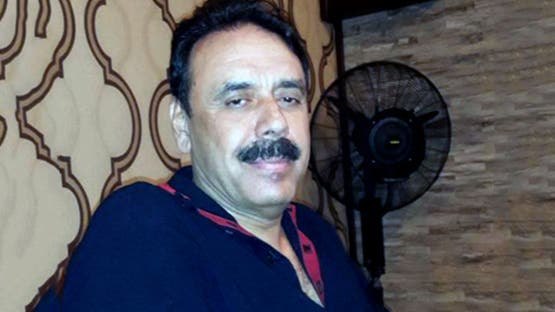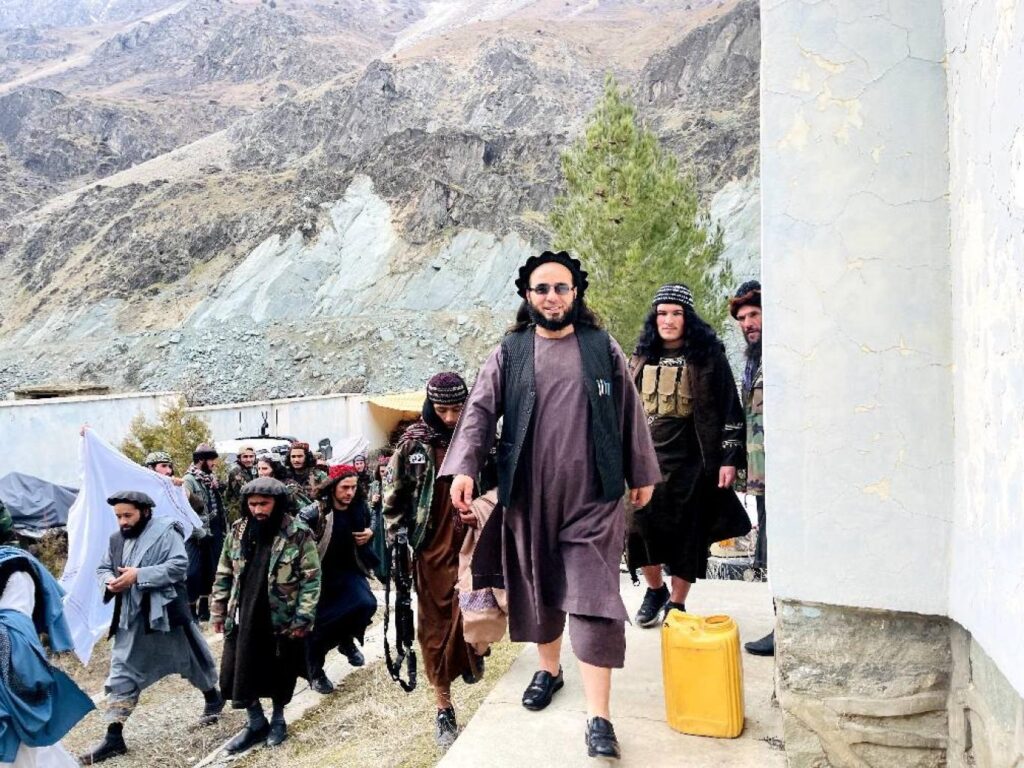
Afghan social media users and political and social figures have reacted to the surrender of Jumakhan Fateh, a dissident Taliban commander in Badakhshan, after about a week of fighting between Taliban forces and fighters under his command, with some describing the move as a bitter end while others said it would not mark the end of resistance in the province.
Fateh, who was previously deputy governor of Zabul province, surrendered after days of clashes with Taliban forces in Badakhshan and was transferred to Kabul. Some sources, however, have described the move as part of continuing negotiations.
Tensions between Fateh and non-local Taliban forces in Badakhshan had escalated into armed clashes after disputes over control of mines, power-sharing, and the disarmament and detention of people close to him, according to accounts cited in social media reactions.
The surrender has prompted sharply different responses, with some users calling it cowardly and others comparing Fateh’s fate with that of Mowlawi Mehdi, a Hazara Taliban commander who fought against the group in Balkhab before his death in 2022.
A bitter end
Abdulwaris Seighani questioned what might have happened had Fateh refused to surrender and the fighting continued or spread to other parts of northern Afghanistan.
He said that even if the conflict had expanded, pragmatic solutions would not fundamentally resolve Afghanistan’s problems. Afghanistan, he argued, needed a more fundamental political solution, adding that “religious manifestos” could not meet all the needs of modern societies.
Seighani said separating religious institutions from the state and allowing local communities to administer their own affairs could provide a more viable model for Afghanistan’s future.
Mazmal Watandoost, by contrast, described Fateh’s surrender as the end of a “rebellion,” saying he had risen against the Taliban system but eventually surrendered.
He said Fateh should not have fought his “brothers” at the direction of foreigners and called on all ethnic groups in Afghanistan to serve the country and work to thwart the plans of its enemies.
Rashad Ahmadi offered a more critical assessment, describing the surrender as a “bitter end” and claiming that Fateh had surrendered through intermediaries among his relatives and friends.
Ahmadi also alleged that Fateh was humiliated and beaten at the airport after being transferred to Kabul. The claim has not been independently verified. He said Fateh’s surrender had put at risk not only himself and his fighters but also the trust of thousands of people who had taken up arms in support of him.
Hamed Moradi, referring to images circulating after Fateh’s surrender, said continuing the fight to the death might have been more honorable for him than surrendering and facing humiliation.
He also said that placing a Kandahari-style turban on Fateh’s head, if intended as an act of humiliation, would represent disrespect for human dignity rather than a sign of victory. The circumstances surrounding the images and Taliban treatment of Fateh could not be independently verified.
Mowlawi Mehdi and Fateh: A comparison of dissident Taliban commanders
Ali Ayubi compared Fateh’s fate with that of Mowlawi Mehdi, a Hazara Taliban commander who resisted the group in Balkhab, saying the key issue was not the difference between the two geographical areas but the different choices made by the two commanders and their approaches to their communities.
Ayubi said Mehdi refused to surrender in the final stage and chose death, while Fateh’s surrender was viewed by his critics as an acceptance of defeat and humiliation.
He said the conduct of an influential figure could also shape how others viewed the communities from which that figure emerged.
Notably, Fateh’s surrender and Mehdi’s capture took place on Aug. 17, four years apart.
Gholam Ali Shahrestani also pointed to the timing, saying both commanders had risen from within the Taliban structure against the group’s central leadership but ultimately suffered defeat.
He said the past five years had shown that commanders and figures within the Taliban structure had the potential to break away from its central leadership, arguing that the authorities in Kabul lacked the capacity to respond to social demands and build broad public satisfaction.
Shahrestani asked who the next “rebel commander” within the Taliban structure would be.
Najib Salam, meanwhile, said Fateh’s defeat did not mean the end of resistance in Badakhshan.
“Badakhshan, from Yaftal to Darwaz, is still alive,” Salam said, arguing that individuals may come, fight, lose or surrender, but that the struggle of a population should not be tied to a single person.
He said Fateh had tried to resist but lacked sufficient support, adding that many Tajik leaders in the past had failed to learn enough from historical experience. Badakhshan and Darwaz, he said, remained capable of producing a new generation willing to continue the struggle.
Surrender does not mean the end of resistance
Abdul Manan Shivai Sharq also sharply criticized Fateh’s decision, saying Darwaz could not be defined by a single individual or commander and that his surrender should not be interpreted as the end of resistance in the area.
He said what remained of Fateh’s legacy for Badakhshan was the word “surrender,” which he argued would be painful and difficult for people in the province to forget. Darwaz, he added, remained “wounded but alive.”
Political analyst Ahmad Saeedi also confirmed reports of Fateh’s surrender, saying he had accepted all the Taliban’s conditions after a week of clashes and had been transferred to Kabul.
He said attention was now focused on Kabul to see how the Taliban would deal with the dissident commander.
A hope that was dashed
Hassan Fekrat said the most important consequence of Fateh’s surrender was not his military defeat but the damage to public trust.
Thousands of people, he said, had placed their hopes in the resistance in Badakhshan, while young men had also fought alongside Fateh. The key question, he argued, was what guarantees existed for the safety of those fighters and commanders who had fought alongside him if guarantees had been secured for Fateh himself.
“Resistance is not defined only by weapons; it is defined by loyalty to fellow fighters,” Fekrat said, arguing that Fateh’s surrender had damaged the confidence of some people in resistance leaders more than it had defeated Badakhshan itself.
Despite sharply differing views of Fateh, many of the reactions have converged on one question: will the end of the week-long fighting in Badakhshan also bring an end to internal dissent and armed challenges to the Taliban, or could the episode pave the way for the emergence of other dissident commanders within the group’s ranks?