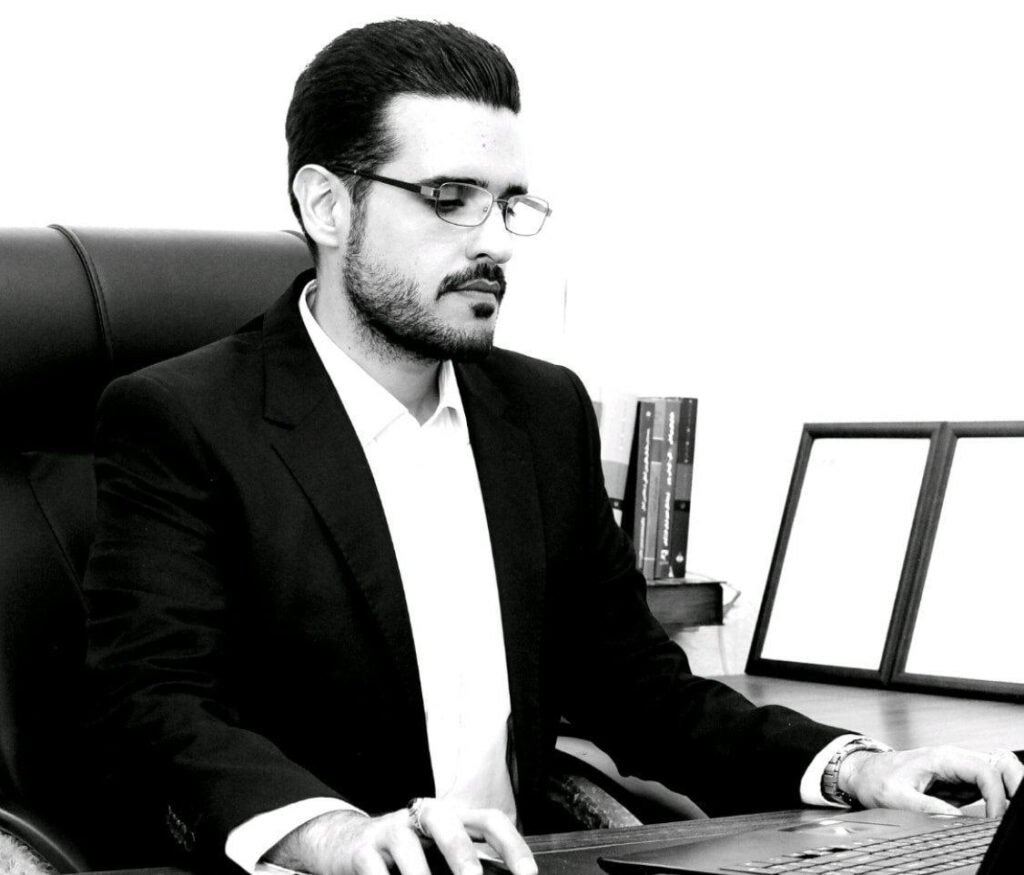
Dr. Hirad Mokhayeri, international relations expert and university professor, in conversation with Iraf, elaborates on the various dimensions of this role, Pakistan’s strategic objectives, the ISI’s instruments of influence, and the future of Islamabad’s security presence in Afghanistan.
The ISI’s Role in Shaping Political Disputes Among Afghanistan’s Leaders
Mokhayeri, responding to the question of how serious and documented the ISI’s role in shaping political disputes among Afghanistan’s leaders truly is, said: “The role of Pakistan’s Inter-Services Intelligence in Afghanistan’s political developments is by no means a mere analytical hypothesis; rather, it is a fully documented matter whose traces appear in credible international documents, and a considerable body of evidence and documentation exists on the subject.”
He added: “The 2008 Human Rights Watch report, documents released by WikiLeaks in 2010, and the reports of Afghanistan’s Independent Human Rights Commission all demonstrate ISI’s operational contacts with rival Afghan factions, and together present a relatively clear picture of how this security institution has intervened.”
The university professor continued: “Researchers such as Steve Coll in Ghost Wars and Ahmed Rashid in Descent into Chaos have also, drawing on primary sources, described in detail the ISI’s network of connections with the Peshawar-based jihadist parties. These works illustrate how Pakistan, from the 1980s onward, gradually constructed a complex web of political, security, and intelligence influence inside Afghanistan.”
He emphasized: “If we are to analyze this issue not merely at the level of political rivalry but from a geopolitical angle, we must recognize that Pakistan views Afghanistan as part of its national security environment. Islamabad has consistently been concerned that Afghanistan might become a sphere of influence for its regional rivals — particularly India — and has therefore worked to ensure that the power structure in Kabul never operates in a fully independent manner outside Pakistan’s security calculations.”
How International Documents and Researchers’ Accounts Confirm the ISI’s Role in Afghanistan’s Political Disputes
Dr. Mokhayeri, on the instruments the ISI has employed to deepen rifts in Afghanistan, stated: “The tools the ISI has deployed in Afghanistan have been highly diverse and multi-layered, and are not confined to any single domain. The organization has used financial and military instruments, as well as ideological, ethnic, intelligence, and even media tools.”
He added: “In the 1980s, during the Afghan war against the Soviet Union, the ISI was effectively the main channel for distributing American and Saudi financial and military assistance to the Mujahideen groups. This enabled Pakistan to determine which groups would gain greater power and which movements would remain on the margins.”
He continued: “This distribution of resources was not conducted purely on the basis of the groups’ military capacity; rather, Pakistan’s strategic priorities were the primary determinant. As a result, groups that aligned more closely with Islamabad’s policies received a larger share of financial and military resources.”
The international relations expert stressed: “The network of religious seminaries in Khyber Pakhtunkhwa and Balochistan also became a fertile ground for recruitment, ideological transfer, and the creation of transnational loyalties. Many of the forces that later emerged in the form of the Taliban were the product of this very educational and security structure.”
He said: “At the operational level, the ISI typically pursued a dual game — maintaining simultaneous contact with several rival factions so that no single party could attain absolute power. This policy ensured that Pakistan, under any circumstances, preserved its leverage and could shift the balance of power in its own favor.”
What Financial, Security, and Ideological Instruments Did the ISI Use to Manage Afghanistan’s Internal Divisions?
Mokhayeri, explaining the differences in Afghan leaders’ stances toward Pakistan, said: “The closeness or distance of Afghan leaders toward Pakistan generally depended on three primary factors: the need for a secure foreign sanctuary, dependence on financial and military resources, and the ethnic and geographic composition of that leader’s social base.”
He added: “Gulbuddin Hekmatyar, due to his political position and his persistent need for external resources, was one of the Afghan leaders closest to Pakistan’s security structure. He benefited from logistical support and was recognized by Islamabad as a reliable ally in regional equations.”
He continued: “At the opposite end stood Ahmad Shah Massoud, who had a strong social base in Panjshir and had established more balanced relations with Iran, Russia, and certain regional countries. This is precisely what made him one of the most prominent figures opposed to ISI influence in Afghanistan.”
Mokhayeri stated: “After 2001, this pattern largely continued. Some Afghan leaders who enjoyed Western backing or internal social support sought to maintain their distance from Pakistan, while many others were compelled, for the sake of their own political survival, to enter into some form of engagement or accommodation with Islamabad.”
He emphasized: “In analyzing the behavior of Afghan leaders, a distinction must be drawn between ideological cooperation and cooperation born of compulsion. Many of these collaborations were the product of survival conditions and the structural weakness of power in Afghanistan, rather than full intellectual alignment.”
The Roots of Disputes Among Afghanistan’s Leaders
Mokhayeri, on the disputes among the Mujahideen following the fall of Najibullah’s government, said: “The collapse of Najibullah’s government in 1992 is perhaps one of the most important junctures for examining the ISI’s role in Afghanistan, because at that moment an opportunity existed for forming a joint government among the Mujahideen groups.”
He stated: “The Peshawar Accord was meant to enable a relatively smooth transfer of power, but from the outset it was confronted with intense internal rivalries as well as foreign interference. Pakistan preferred that Hekmatyar play the primary role in power, and for this reason opposed the centrality of Ahmad Shah Massoud.”
He added: “According to available documents, the ISI, through financial and military support for certain factions, effectively disrupted the coalition-building process and deepened the atmosphere of mistrust among the Mujahideen groups.”
The university professor continued: “The Kabul civil wars between 1992 and 1996, which resulted in heavy civilian casualties, unfolded in an environment where each group hoped, by relying on external support, to secure a larger share of power.”
He said: “During those same years, the Taliban project gradually took shape. For Pakistan, the Taliban were not merely a religious group; they were an instrument for establishing the order Islamabad desired in Afghanistan and for securing strategic depth against India.”
Afghanistan’s Civil Wars or Pakistan’s Strategic Battleground?
The university professor, on the Hamid Karzai and Ashraf Ghani eras, said: “Hamid Karzai initially sought to maintain a balanced relationship with Pakistan and even believed that through security cooperation, the level of tensions could be reduced.”
He added: “However, as Taliban attacks intensified and evidence mounted regarding the presence of the group’s leadership on Pakistani soil, Karzai’s outlook gradually changed, and he became one of the most outspoken critics of Islamabad’s policies.”
Mokhayeri stressed: “Karzai’s statements in the final years of his presidency — asserting that the roots of terrorism lay across the border — were a reflection of precisely this shift in perspective.”
He continued: “Ashraf Ghani also adopted a different approach at the outset of his presidency, seeking through closer cooperation with Pakistan to bring the Taliban into the peace process. Proposals regarding joint intelligence cooperation were even raised.”
He said: “However, the continued Taliban attacks, the failure of negotiations, and the persistent mistrust between Kabul and Islamabad ultimately led Ashraf Ghani to arrive at the same conclusion as Karzai — namely, that the ISI’s strategic calculations operate beyond changes of government and diplomatic agreements.”
It is worth noting that relations between Afghanistan and Pakistan have been accompanied by mistrust and security tensions ever since Pakistan’s formation in 1947. Disputes over the Durand Line, regional geopolitical rivalries, the presence of armed groups in border areas, and Islamabad’s concerns over the expansion of Indian influence in Afghanistan have been among the most significant factors shaping these tensions. Over the past four decades — spanning the Soviet war, the rise of the Mujahideen, the emergence of the Taliban, and the U.S. presence in Afghanistan — the role of Pakistan’s Inter-Services Intelligence (ISI) in the country’s political and security equations has repeatedly drawn the attention of international institutions, Afghan governments, and scholars in the field of international relations.