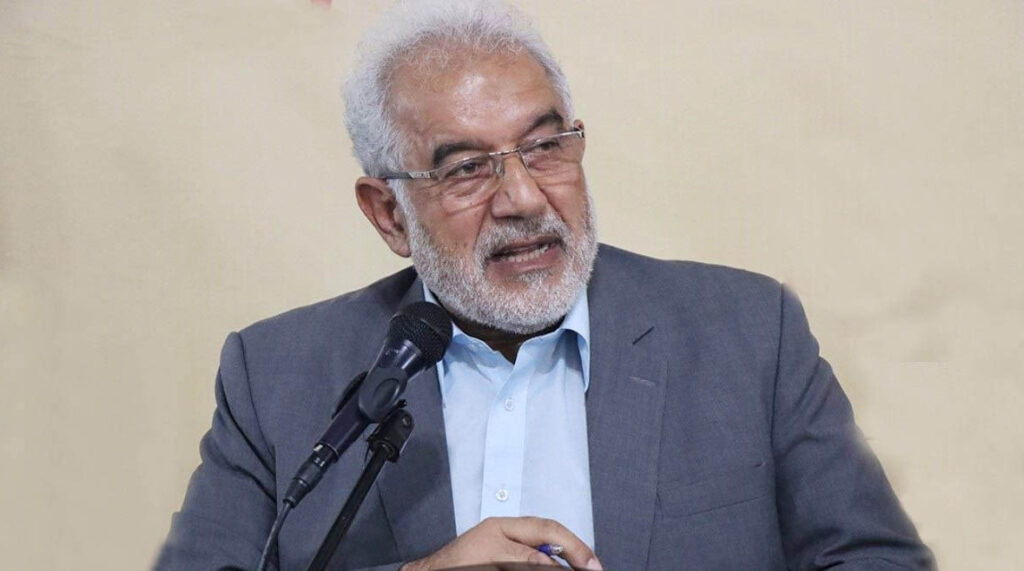
In this regard, Dr. Mohammad Hashem Esmatullahi, university professor and former advisor to Afghanistan’s ex-president, speaking to Iraf and referring to the escalating tensions in Badakhshan, stated: The dispute between indigenous and non-indigenous Taliban over control of mines and transit routes is only part of the crisis, and the root cause of the insecurity traces back to geopolitical rivalries and U.S. efforts to prevent the revival of China’s Silk Road corridor.
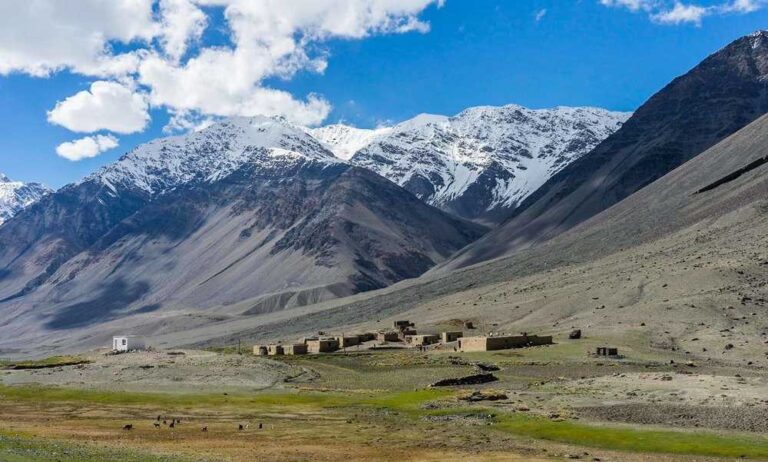
Mohammad Hashem Esmatullahi, elaborating on the roots of the recent tensions in Badakhshan province, said: “Badakhshan is located in northeastern Afghanistan, bordering China, and has always possessed unique and distinctive characteristics. On one hand, the province is rich in valuable minerals and ores such as lapis lazuli, gold, and other mineral resources, and on the other, it occupies a geopolitically significant position at the junction connecting Afghanistan with China, Tajikistan, and Central Asia.”
He added: “China pays particular attention to the security of this region due to the security sensitivity of Xinjiang province and concerns over the activity of extremist groups. The Wakhan corridor and Badakhshan have historically served as transit routes for movements such as ISIS and Al-Qaeda, which has further heightened the security sensitivity of the region.”
Dr. Esmatullahi continued: “The issue is not merely a simple security dispute. Badakhshan has today become the convergence point of the economic, security, and geopolitical interests of regional and global powers. Any development in this region can have a direct impact on Afghanistan’s relations with China, Central Asia, and even Iran.”
He emphasized: “Badakhshan province is not merely a border region for China — it is part of Beijing’s larger project of economic and transit connectivity to Central Asia and West Asia, which is why its developments are monitored with great sensitivity.”
Revival of the Silk Road and the Powers’ Competition Over the Wakhan Corridor
Referring to the importance of the Wakhan corridor and regional transit projects, he stressed: “One of the most critical issues in Badakhshan is the question of communication lines, transportation, and the revival of the Silk Road. China is highly interested in reactivating the historic Silk Road route through Afghanistan, and the Taliban has already constructed approximately 50 kilometers of transit road in the region toward this goal.”
He said: “If this route becomes operational, China, Afghanistan, Tajikistan, Kyrgyzstan, and even Iran can benefit enormously from its economic and transit advantages. Afghanistan is a landlocked country, and these overland routes can play a vital role for the region’s economy and future.”
Esmatullahi stated: “China seeks to secure a safe overland route through Wakhan to manage part of its regional trade via Afghanistan. This matter holds geopolitical and economic significance not only for Afghanistan but for the entire region.”
He added: “In recent years, China has made extensive investments in transit projects across Central Asia, and Afghanistan is considered part of this strategic puzzle. For this reason, any insecurity in Badakhshan can affect major regional projects.”
Indigenous vs. Non-Indigenous Taliban Dispute Over Mines and Economic Management
The university professor, referring to internal Taliban disputes, said: “In recent months, the conflict between Badakhshani Taliban and Taliban from southern Afghanistan over the management of mines and control of economic resources has intensified. Local Taliban believe that mine management should remain in the hands of native forces from the region, and that the center should not exercise full control over these resources.”
He continued: “The Taliban had previously managed to contain its internal disputes; however, this time the issue of mines, trade, and transit routes has made the crisis considerably more complex. Badakhshan’s mines generate very high revenues, and it is natural that various groups compete for their control.”
Dr. Esmatullahi stated: “The Badakhshani Taliban feel that forces dispatched from southern Afghanistan are in the process of seizing the region’s economic resources, and this has led to growing discontent.”
He added: “This dispute is not purely economic — it also carries ethnic and geographic dimensions. A significant portion of northern Afghanistan’s population is critical of the concentration of power in Pashtun hands, and this has manifested itself in Badakhshan as well.”
The United States and the Strategy of Destabilizing the Region’s Communication Routes
The former advisor to Afghanistan’s ex-president, noting that the Badakhshan crisis is not merely an internal dispute, said: “I see the root cause of the recent insecurities in the U.S. strategy of destabilizing the region’s communication routes. The United States does not want China’s connectivity route through Afghanistan and Pakistan to Iran and Central Asia to become consolidated.”
He added: “The Americans had previously pursued a strategy of destabilizing regional communication routes, and they remain concerned about the expansion of China’s economic influence in Afghanistan and the broader region.”
Esmatullahi continued: “China aims to connect its transit routes to Central Asia and even Iran through Wakhan and Badakhshan, and this forms part of China’s larger New Silk Road project.”
He stated: “The United States is concerned about the growing economic and security influence of China in the region and is working to ensure these routes remain perpetually fragile, so that the consolidation of China’s strategic projects is prevented.”
The Role of ISIS, Al-Qaeda, and Mafia Networks
The analyst on Afghan affairs, speaking about the role of terrorist and mafia groups in Badakhshan’s developments, said: “Alongside the Taliban’s internal disputes, the presence of ISIS and Al-Qaeda in this region is also a major concern. Elements of these groups move through border routes, and this has become a source of serious concern for China.”
He added: “China is deeply worried about the security of Xinjiang province and regards any insecurity in Wakhan and Badakhshan as a threat to its own internal security.”
Esmatullahi stated: “The mining mafia and drug trafficking networks are also part of the crisis. These networks represent a historical wound in Afghanistan and are not limited to Badakhshan alone.”
He continued: “In Panjshir, Badakhshan, and certain other parts of Afghanistan, there have always been groups that profited from the smuggling of minerals, precious stones, and narcotics, and it is natural that they react against any change that threatens their interests.”
Public Protests and Concerns Over Deepening Ethnic Divisions
The former advisor to Afghanistan’s ex-president, addressing the protests by Badakhshan’s population over the presence of Pashtun forces and the management of regional resources, said: “These protests are not a new phenomenon and have existed in northern Afghan provinces in the past as well; however, they have typically been suppressed or ignored.”
He added: “Unfortunately, the Taliban continues to pursue a vision rooted in Pashtun dominance and pays insufficient attention to the demands of other ethnic groups.”
Esmatullahi stated: “Although Badakhshani Taliban are also present within the group’s structure, local people feel they are being pressured on economic and geographic matters, and that their genuine share of the region’s resources is being disregarded.”
He said: “Badakhshan is now pregnant with major developments, and the dispatch of the commander of the Taliban’s central army headquarters to the region indicates that the Taliban’s internal disputes have grown serious and require immediate management.”
The Possibility of the Crisis Spreading to Northern Afghanistan and the Revival of Anti-Taliban Resistance
The university professor, on the possibility of reviving anti-Taliban currents in northern Afghanistan, stated: “At present, there are no definitive and documented reports indicating the launch of large-scale operations by Taliban opposition groups; however, certain political and security movements are being observed.”
He added: “Pakistan has in recent months attempted to extend support to certain anti-Taliban forces in Takhar, Taloqan, and Badakhshan, although no serious or overt action has been observed in this regard so far.”
Esmatullahi continued: “Supporters of Ahmad Massoud, the Freedom Front, and a portion of forces affiliated with Jamiat-e Islami continue to watch developments in northern Afghanistan with particular interest and are closely monitoring the region’s movements.”
He stressed: “If the Taliban fails to manage the Badakhshan crisis, these tensions could spill over into Panjshir, Takhar, and other northern regions, once again creating the conditions for broader resistance movements to take shape.”
Afghanistan Amid Major Regional Transformations
The former advisor to Afghanistan’s ex-president stated: “Afghanistan is now in an exceptional situation. The United States continues its political and security pressure against the Taliban, Pakistan is embroiled in border and security tensions, and China is pursuing its economic and transit projects.”
He added: “Developments in Pakistan’s Balochistan, the activities of Baloch armed groups, the India-Pakistan rivalry, and U.S. failures in West Asia have all impacted Afghanistan’s situation and have caused the regional equation to enter a new phase.”
Esmatullahi stressed: “Pakistan is also confronting widespread security crises, and part of the region’s instability traces back to the situation in Balochistan and its conflicts.”
He concluded by saying: “U.S. failures in West Asia and the growing role of the Islamic Republic of Iran in the region’s equations have directly impacted developments in Afghanistan and Pakistan and have altered the political and security balance of the region.”
It is worth noting that Badakhshan province, located in northeastern Afghanistan and adjacent to the Wakhan corridor and the border with China, is considered one of the country’s most strategically important regions. In addition to its rich reserves of gold, lapis lazuli, and precious stones, the region holds a special place in China’s major transit projects and the Belt and Road Initiative. In recent months, alongside growing internal Taliban disputes over the management of mines and economic resources, reports have emerged of escalating security tensions, public protests, and extremist group movements in the province — a development that has heightened the concerns of regional countries, particularly China and Pakistan.