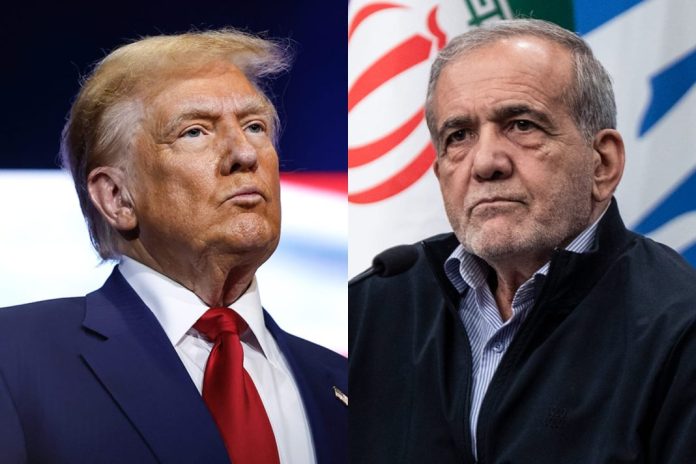
According to Iraf, Mohammad Mohaqiq, leader of the Islamic Unity Party of the People of Afghanistan, in a statement welcomed the agreement between Iran and the United States and described it as “hopeful and gratifying news.” He said the hundred-day war between the two countries had, beyond security threats, imposed heavy pressures on the global economy, and that this agreement could be effective in securing global peace and stability. Mohaqiq also expressed appreciation for the role of Pakistan, Turkey, and Qatar in facilitating the agreement, and voiced hope that this preliminary understanding would lead to lasting peace and relations based on mutual respect.
Dr. Mohammad Amin Ahmadi, university professor and former president of Ibn Sina University, referring to the implications of the agreement, said he hopes Iran will pair this political achievement with domestic reforms, the strengthening of national consensus, and the expansion of regional cooperation. He added that converting this success into a durable asset could eliminate the grounds for any future confrontation, and that a powerful, rational, and peace-seeking Iran would create new opportunities not only for the region but for Afghanistan as well.
Shah Hussain Murtazawi, advisor to Afghanistan’s former president, described the signing of the memorandum as the end of 48 years of tension and confrontation between the two countries, saying the decision was accompanied by “courage, foresight, and the acceptance of political costs.” He added that if this memorandum moves into the implementation phase, it could open a new chapter in Iran-U.S. relations and have a profound impact on the region’s political, security, and economic equations.
Separately, Abbas Farasoo, international relations researcher, considered the recent agreement to carry special significance from the standpoint of regional and global order, saying the most important message of this memorandum is that the United States has effectively recognized Iran as a regional power. He added that the recent confrontation was a notable example of a global power facing off against a regional power — a confrontation that ultimately showed that regional powers possess greater strategic advantages within their own surrounding environment.
Farasoo, referring to his own research on U.S.-Pakistan relations, said Iran’s experience likewise demonstrated that global powers face serious constraints when confronting regional actors. He added that Iran not only weathered the initial shocks of the war but, by reaching the current memorandum, secured a superior regional position.
He also considered the role of regional countries and international powers important in this process, saying Turkey, Pakistan, Russia, and China had opposed the war, and that the combination of these factors influenced the shaping of the new regional conditions. Farasoo added that the region has now entered a different phase, with Iran holding a stronger position in future equations.
Meanwhile, Karim Pakzad, researcher at the French Institute for Strategic Studies, also described the agreement as a historic event, adding that it could change the face of the Middle East and pave the way for Iran’s return to the status of a major regional power.
Pakzad, referring to the recent war, said that despite the military superiority of the United States and Israel, “political and strategic victory” went to Iran. He identified the development of missile capability, the strategic role of the Strait of Hormuz, and Iran’s ability to impose costs on the opposing side as among the main factors behind this success.
According to him, the United States failed to achieve its primary objectives — including changing Iran’s political system — and was ultimately compelled to choose the path of negotiation and understanding. Pakzad also believes this agreement dealt a significant political blow to Israel, the consequences of which will become more apparent in the region’s future.
Seyyed Agha Hussein Sancharaki, former deputy minister of information and culture, also said the war waged by the United States and Israel against the Islamic Republic not only failed to weaken Iran but led to the consolidation of its power and increased its credibility at the regional and global levels. He added that Iran’s military and diplomatic capability forced the opposing side to retreat and accept the agreement, and that conditions are now in place for Tehran to capitalize on these new gains.
Mohammad Tanin, political analyst, also considered the agreement to lay the groundwork for consolidating Iran’s regional standing, saying the country has now, more than at any other time, drawn the attention of the United States and Europe toward economic cooperation and the normalization of relations.
He added that America’s flexibility in the process of ending the war shows that the West is seeking to define new equations in the Middle East in which Iran will play a more prominent role.
Aref Yaqoubi, researcher on political affairs, also described the recent memorandum as “a retreat or even a strategic defeat for the United States,” saying that should the agreement be finalized, Iran’s economy would face new opportunities. He added that the strengthening of the national currency’s value, increased foreign investment, and the expansion of economic relations would be among the likely consequences of this agreement.
Seyyed Jamil Kazemi, also referring to the outcomes of the war, said the Islamic Republic of Iran not only did not retreat from its strategic principles but preserved its political structure and strategic capacities, and that it was ultimately the United States that chose the path of negotiation and peace. According to him, this process consolidates an important reality in the regional balance of power.
Separately, Hujjat al-Islam Qorbanali Fasihi Ghaznawi, seminary and university professor, comparing recent events to the culture of Ashura, described the war-ending agreement as a symbol of “the victory of blood over the sword,” saying the Islamic Republic’s steadfastness in the face of foreign pressures ultimately forced the opposing side to accept the understanding. He added: today the truth has been revealed, and the Yazid of this age, Donald Trump — humiliated and disgraced — signed the war-ending memorandum; truly, right has triumphed over wrong.
Khodadad Faqihi also described the end of the war and hostilities between Iran and the United States as positive news for the region and the world, saying that with the end of the conflict, Iran could become one of the region’s most important economic corridors. He added that the country’s geopolitical capacities and extensive resources lay the groundwork for Iran to become a competitive economic power.
Mirwais Qiasi also considered the recent agreement to be the result of Iran’s resistance and independence, saying Tehran’s steadfastness in the face of pressures and sanctions ultimately brought the United States to the negotiating table.