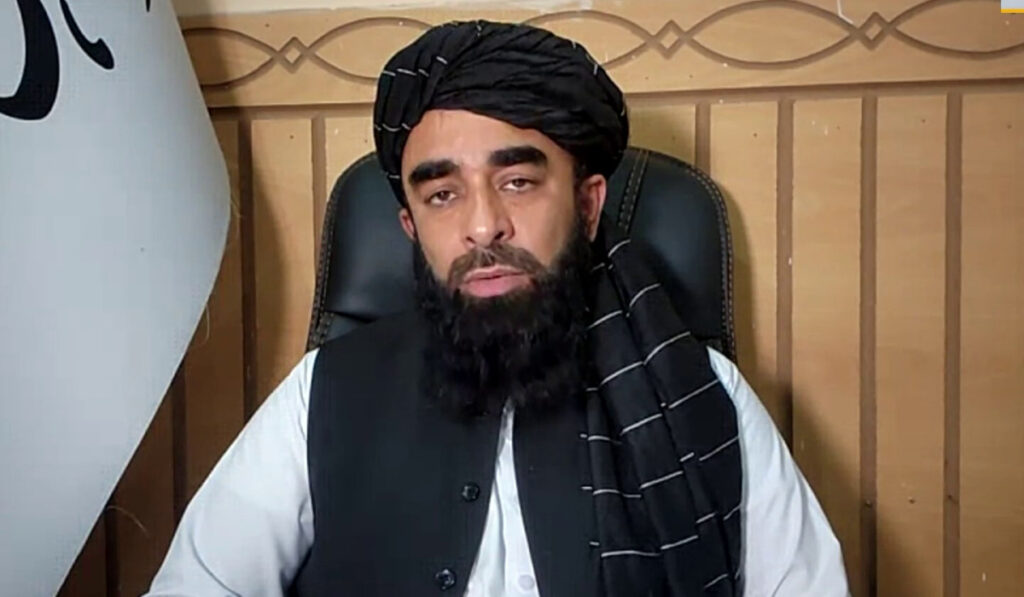
Five years after the Taliban returned to power, the group has sought to consolidate its political and security structures and expand relations with countries in the region and beyond. Despite diplomatic engagement with a number of countries, the question of formal recognition of the Taliban government, political participation by opponents, the state of rights and social freedoms, and Afghanistan’s economic future remain among the key issues surrounding the country. Zabihullah Mujahid, spokesman for the Taliban government, addressed questions on Afghanistan’s major political, security, economic and foreign-policy developments.
Zabihullah Mujahid, the official spokesman for the Taliban government, described the group’s five years in power as a period of “very great and historic achievements” for Afghanistan in an interview with IRAF TV marking the fifth anniversary of its return to power. He said Afghans had been able to “breathe a sigh of relief” after the end of the presence of foreign forces.
Defending the Taliban’s current governing structure, Mujahid spoke about recognition of the government, political opponents, protests in Badakhshan, relations with Pakistan and the United States, the presence of al-Qaeda, the possible return of former President Ashraf Ghani, the Iran-U.S. war and the Taliban’s plans for Afghanistan’s future.
Mujahid’s Account of the Taliban’s “Historic Achievements”
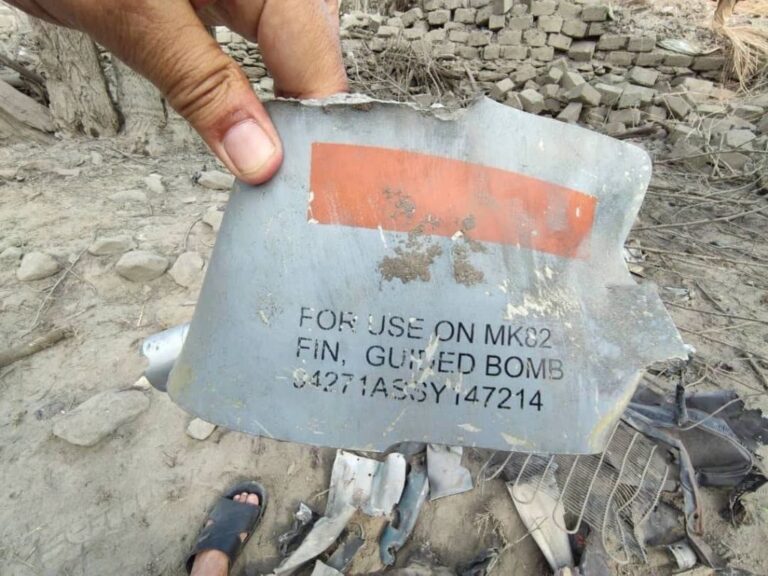
Assessing five years of Taliban rule, Mujahid said: “You know well that Afghanistan before five years was under the occupation of America. Afghanistan was also a battlefield and the people of Afghanistan were being killed every day in the country. Also, every day, our airspace and land, foreign forces were carrying out bombardments and attacks from above and from the ground.”
He added: “In these past five years, alhamdulillah, the people of Afghanistan were able to breathe a sigh of relief, drive out the external occupation and make their country free, establish the Islamic and Sharia government, which was the aspiration and goal of millions of martyrs, wounded and orphans.”
According to Mujahid, the Taliban has also begun rebuilding Afghanistan and sought to save the people from war and misery. He described the period as one of “very great and historic achievements” for the Afghan people.
Regarding the Taliban’s engagement with different countries, Mujahid said: “In our view, the interaction of the Islamic Emirate of Afghanistan with many countries is official. We have completely official interaction with countries that have embassies in Afghanistan and also Afghanistan has embassies in other countries. We conduct it officially with each other and official visits are carried out on behalf of the Islamic Emirate of Afghanistan and the government that is ruling in Afghanistan.”
On Russia’s decision to recognize the Taliban government, he said: “The fact that Russia has been the only country that has been able to announce its official relations with Afghanistan is a courageous and good step and action, and we praise this.”
Mujahid said the Taliban wants other countries to take a similar step, adding: “From our side, we do not see the problem, but the countries themselves should be asked why they have not been able to announce official interaction.”
Political Opponents: Taliban Rejects Power-Sharing
The Taliban spokesman also addressed opposition alliances and political movements, saying those who have left Afghanistan and previously operated within different groups and factions do not have “one roof” over them and that there is no unity among them.
Mujahid said: “Each of their paths is different and there are groups that have tested their record in Afghanistan.”
By contrast, he described the Taliban government as having unified leadership, saying: “It is the first time in Afghanistan that, in half a century, we have a government that has unified leadership, there are no political and internal disagreements in it, there are no political conflicts, there are no factional, religious and regional dealings, and also Afghanistan is not at risk of division and collapse.”
Asked about a political solution involving the Taliban’s opponents, Mujahid said that if the opposition had not previously demonstrated its record, dialogue and engagement with them would have been possible.
He added: “If the opponents had not been tested and had not been tried many times, we would have hoped that they are part of Afghanistan, are useful for Afghanistan and that the social issues of Afghanistan would really be connected with them and they are positive, we can hold talks and reach an understanding and have interaction.”
According to Mujahid, political participation by the opposition could once again expose Afghanistan to conditions it had experienced in the past. He said: “But the fact that they have been tested, if they return and enter the scene and have power, a part of the power, in their hands, then they will bring back to Afghanistan the same conditions that we have experienced.”
He continued, referring to the Islamic Republic of Iran: “For example, the Islamic Republic of Iran also has its opponents, but perhaps they are not willing to interact with them. There is a united republic, there is their government, there is a society that is a republic, a country that needs peace and tranquility and progress and needs a united government.”
Mujahid stressed: “We also have the right that our people should live under one roof, without ideological differences and without religious and regional differences, and should not be victims of political conflicts.”
On inviting opponents to take part in rebuilding Afghanistan, he said: “Without a doubt, those who are Afghans, have sympathy with Afghanistan, consider Afghanistan their country, should come and take part in rebuilding Afghanistan. Afghanistan is the home of all Afghans.”
Mujahid added: “We do not deprive anyone of being in Afghanistan, but political presence has another meaning, which for now is not in the interest of Afghanistan.”
Why Did the Taliban Leader Remain Silent on Pakistani Attacks?
The Taliban spokesman, addressing Pakistan’s accusations against the group and Islamabad’s attacks on Afghanistan, said: “If they held talks, the Islamic Emirate of Afghanistan held talks with them. If they made accusations, we gave a response to their accusations, and if they fought and invaded the territory of Afghanistan, violated the territory of Afghanistan, they also received their answer.”
Mujahid said: “We do not want war with any country. Pakistan is an Islamic and brotherly country.”
Regarding Pakistan’s internal situation, he said: “At present, because a small military group is ruling that has also taken all the interests of Pakistan hostage and wants there to be tension with Afghanistan as well, it is related to the other side facing us.”
According to Mujahid, Afghanistan does not want confrontation with Pakistan and will not allow its territory to be used against other countries.
He added: “Afghanistan does not allow its territory to be used against any country and Pakistan’s internal conflicts and disputes have nothing to do with Afghanistan.”
Asked why the Taliban leader had remained silent over Pakistan’s accusations and attacks, Mujahid said: “We have made statements. The fact that I make a statement means that our leadership, the Taliban leader… specifically, we speak on behalf of the government and represent the system and speak on behalf of the entire leadership.”
He stressed: “It is not necessary for the leader to take a position on every matter. It is on behalf of the Islamic Emirate of Afghanistan and it is sufficient.”
Asked why Pakistan had not recognized the Taliban government despite its deep relations with the group, Mujahid said countries have official interactions with Afghanistan and their embassies are active in Kabul.
He said: “I mentioned at the beginning that countries have official interactions with Afghanistan. Their embassies in Kabul and the Afghan embassy in the country are active. This means that we have official relations, which that country has not been able to announce as official relations.”
Badakhshan Protests Suppressed
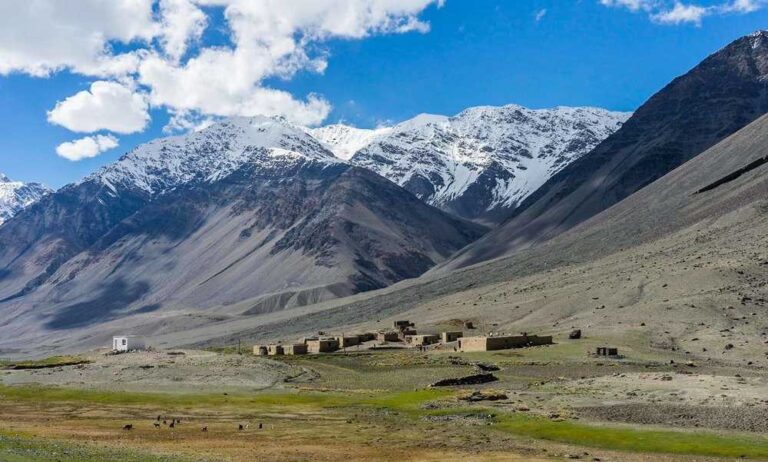
The Taliban spokesman said Badakhshan was now calm, saying: “Badakhshan, alhamdulillah, is at peace. We have no problem.”
Regarding Mullah Juma Khan Fateh, he said: “One of the very prominent commanders of the Islamic Emirate of Afghanistan, who resides in Badakhshan, is respected Mullah Fateh Sahib. For some time, propaganda by the enemy was carried out about him, but it was not true.”
Mujahid also reported what he described as a “movement” in one of Badakhshan’s districts, saying it had been brought under control within hours.
He added: “Those who wanted to create unrest were arrested.”
The Taliban spokesman described the incident as a small threat, saying: “A small threat that can exist in any country, but we do not have any major threat in any part of Afghanistan.”
Mujahid Claims Foreign Intelligence Involvement in Badakhshan Unrest
Asked about the roots of the unrest in Badakhshan, Mujahid said: “There were no protests there. Hands from outside were working. They were inciting some young people to cause unrest.”
Explaining what he meant by “outside hands,” he said: “Some circles that are outside have relations with foreign intelligence services. Those who fled, those who engage in unrest and differences in Afghanistan, they are currently in flight.”
According to Mujahid, these individuals had encouraged some young people to take action, but the Taliban had been able to suppress them.
He said: “They incite some young people to carry out certain actions, but all of them were crushed and received an answer.”
Mujahid again addressed the situation of Mullah Fateh, saying there was no disagreement between him and the Taliban and describing claims about him as “propaganda” that, he said, had no basis in reality.
Regarding foreign intelligence activities, he said: “Afghanistan is experiencing peace, experiencing reconstruction and progress. There are some circles that we had already suffered from before.”
Mujahid added: “Foreign intelligence services sometimes incite mercenary circles and then want to disrupt the security of Afghanistan.”
He did not name any specific country, saying: “Naturally, there is no need for us to name a country, but intelligence activities are seen in the region.”
Asked which countries he meant, Mujahid said: “Countries that were involved in Afghanistan, that sought their own interests in Afghanistan, that involved Afghanistan in disputes.”
Taliban Rejects Claims of al-Qaeda Presence in Afghanistan
Mujahid also addressed United Nations reports about the presence of al-Qaeda in Afghanistan, saying: “It was in Afghanistan in previous years, which was years ago, but after the American invasion, al-Qaeda fled to Arab countries, because they were Arab nationals.”
He stressed: “Their presence does not exist in Afghanistan and the Islamic Emirate of Afghanistan also does not allow outside groups to operate in Afghanistan.”
The Taliban spokesman rejected claims that al-Qaeda is present in Afghanistan, saying: “This claim was not correct. We were also surprised why the United Nations made such an incorrect claim.”
Asked whether the Taliban considers al-Qaeda a terrorist group, he said: “We do not need to call anyone terrorist, but al-Qaeda is an organization that has no connection to Afghanistan.”
Mujahid added: “It was an organization of Arab countries. In those countries, some young people who were dissatisfied in their countries created the organization; it has no connection to Afghanistan.”
Inclusive Government and Changes to the Taliban’s Structure
Asked about the Taliban’s initial promises to form an inclusive government and the fact that this had not happened after five years, Mujahid said: “In five years, we have had many changes.”
He added: “Some figures who were needed in the government came into different sections, representing one side and one ethnicity.”
According to the Taliban spokesman, positive changes have also been made to the structure of the Taliban government.
He said: “At first it was an acting government, then the acting period came to an end. It is a government that, God willing, will continuously serve the people and is engaged in work as a servant to its people.”
Taliban Position on the Iran-U.S. War
Asked about the war between Iran and the United States, Mujahid said: “We do not want war in the region and we condemn any country that commits aggression. Aggression is not the solution.”
Referring to Afghanistan’s experience with foreign forces, he said: “Afghanistan itself has been a victim of aggression, it was under occupation for 20 years, we have seen the bitter experiences of occupation and we do not want any country to face that situation.”
Regarding the consequences of an expansion of the war in the region, the Taliban spokesman said: “If the region becomes unstable, if the war continues, without a doubt it will affect not only Afghanistan but the entire region. It will disrupt the economic situation of the region, it will disrupt trade connectivity and…”
Ashraf Ghani: General Amnesty and Possibility of Return
Asked about Ashraf Ghani and his associates, Mujahid said: “If they want to come to Afghanistan, they do not need to make contact. Let them come, it is their country, it is their land, they can live.”
He added: “A general amnesty has also been issued for their relatives. God willing, we do not see any problem in this regard.”
Mujahid also stressed that Afghan citizens have the right to live in the country, including Ashraf Ghani.
He said: “Other citizens have the right to live in Afghanistan, have the right to use their properties in Afghanistan, and have the right to have peace in the country.”
He added: “There is no threat against them and the Islamic Emirate of Afghanistan does not call anyone its enemy.”
Asked whether Ashraf Ghani could face prosecution, the Taliban spokesman said: “In the area of rights of God and in the political area, no one will be prosecuted, because a general amnesty has been issued and it is sufficient.”
He added: “If someone has demanded his rights from any person, those persons can go to court and file a complaint.”
Relations with the United States and the Future of Bagram
Mujahid said the Taliban wants normal relations with Washington and other countries.
“Afghanistan wants to have good relations with all countries. We have experienced tense relations and war. It had no benefit for either side.”
He stressed: “We want relations with all countries to be normal and Afghanistan to pursue its own interests.”
Regarding the Taliban’s plans for Afghanistan’s future, Mujahid said: “The future is a generation that lives, God willing, it needs peace, it needs stability, it needs reconstruction.”
He added: “The Islamic Emirate of Afghanistan, for as long as it is in power, for as long as it has the ability and resources, wants to be at the service of its people and also to build Afghanistan.”
On Afghanistan’s economic outlook, he said: “The Afghanistan of the future, Afghanistan should be stable, peaceful, developed and also stand on its own feet and have a comfortable and peaceful life under Sharia laws.”
The Taliban spokesman claimed: “Without a doubt, the people of Afghanistan supported the Islamic Emirate of Afghanistan.”
He added: “We see that the people of Afghanistan want an Islamic government, they want peace and stability, they want tranquility and they wish for the reconstruction of their country.”
According to Mujahid, the Taliban will seek to fulfill these demands.
At the end of his interview with IRAF TV, the Taliban spokesman addressed the Afghan people, saying: “I assure the people of Afghanistan once again that the Islamic Emirate of Afghanistan is a servant system, a system that wants to serve its people within the principles and framework of Islamic Sharia.”
He added: “They should be sure not to fall under the propaganda and propaganda of the enemies of Afghanistan. Peace, economic progress and the existence of a real Islamic government were among the main goals of the people of Afghanistan, which, God willing, have been achieved.”
Five years have now passed since the Taliban returned to power in Afghanistan, following the withdrawal of U.S. and NATO forces and the collapse of the Islamic Republic government in August 2021. After taking Kabul, the Taliban established its government under the name “Islamic Emirate of Afghanistan.”
Over the past five years, although the large-scale war between the Taliban and forces of the former government and foreign forces has ended, the Taliban government continues to face a range of challenges, from the situation of women and girls and the political participation of different groups to economic conditions, foreign relations, international recognition and concerns over the presence of armed and terrorist groups.
At the regional level, the Taliban’s relations with Pakistan, Iran and other neighboring countries remain among the most important pillars of the group’s foreign policy. At the same time, the Taliban has sought to expand relations with various countries and continued to emphasize official engagement with the international community.
Against this backdrop, Zabihullah Mujahid told IRAF TV that the Taliban government would continue to defend its five-year record, pursue stability and reconstruction in Afghanistan, and maintain its rule within the framework of Sharia law based on the Taliban’s interpretation.