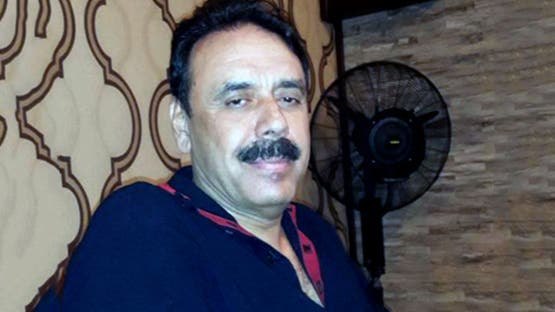
Five years have passed since the Taliban returned to power in Afghanistan. During this period, the Taliban has sought to consolidate its rule, but it continues to face challenges including the lack of formal recognition by the international community, the rights of women and girls, the ethnic and ideological structure of power, and the need to establish an inclusive system. Obaidullah Bahir, a university professor and researcher on Afghan affairs, believes the Taliban has effectively lost its opportunity to gain international legitimacy.
Obaidullah Bahir, a university professor and researcher on Afghan affairs, told IRAF that, as the fifth anniversary of the Taliban’s return to power approaches, the end of the U.S. military presence and preventing the collapse of Afghanistan’s economy were among the Taliban’s most important achievements over the past five years. At the same time, he said the government had lost the opportunity to gain international legitimacy.
He stressed that the Taliban’s future depends above all on the level of satisfaction among the Afghan people, attention to national interests, and how the government engages with countries in the region and around the world.
End of U.S. Presence Was Taliban’s Biggest Achievement
Assessing the Taliban’s five-year performance, Bahir said the period should not be viewed merely as the anniversary of the Taliban coming to power. In his view, it represents “five years of Afghanistan’s freedom” and the end of American and Western colonial presence in the country.
He said: “20 years, 25 years ago, no one even dreamed that one day America would be defeated here and leave Afghanistan.”
The university professor, referring to a memory recounted by a member of his family, said that in the past even some American soldiers did not believe the United States would be forced to leave Afghanistan. He stressed: “The fact that they were forced to leave, this freedom, is the biggest achievement.”
Bahir went on to identify preventing the collapse of Afghanistan’s economy as another achievement of the Taliban, saying that Afghanistan’s economy over the previous 20 years had been dependent on drugs, corruption and foreign aid, and that when the United States withdrew, there was a strong possibility that the economy would also collapse with the political system.
Referring to the Taliban’s lack of experience in governance and economics, he said: “The fact that it managed this” should itself be considered an achievement, adding that Afghanistan had also found opportunities for development during this period.
Missed Opportunity to Gain Global Legitimacy
The Afghanistan affairs researcher, however, said that one of the most important things the Taliban had lost during the past five years was the opportunity to gain global legitimacy.
He explained that some of the existing problems were structural issues inherited from the past, while others had been created by the Taliban itself, including the issue of schools and the situation of girls.
The university professor said the Taliban had failed to use existing opportunities to gain Western support and legitimacy, adding that Afghanistan’s domestic progress should be separated from the issue of international legitimacy.
According to Bahir, Western countries and even countries in the region engage with the Taliban when they need its cooperation on issues such as migrants, security or drugs, without putting formal recognition at the top of their agenda. But when they do not need to cooperate with the Taliban, they raise the issue of human rights.
Criticizing this approach, he said: “This is the misfortune of the West’s double standard.”
Bahir, however, stressed that responsibility for the Taliban’s lack of international legitimacy does not rest solely with the West and regional countries, and that some of the Taliban’s domestic policies have also contributed to the situation.
Muslim Countries Hesitant to Recognize Taliban
Obaidullah Bahir, referring to the fact that Muslim countries have also not yet recognized the Taliban, linked the issue to the policies of those countries.
He said it appears that different countries are waiting for another country to take the first step and recognize the Taliban.
The university professor, referring to the experience of the Taliban’s first government and its recognition by three Muslim countries, said Muslim countries may be afraid of repeating that experience.
He also cited U.S. pressure as another factor, saying that as long as the United States does not recognize Afghanistan and the Taliban government, some other countries will also hesitate to take such a step.
Women’s and Girls’ Rights: An Obstacle to Taliban Legitimacy
Asked about the Taliban’s most important challenge in gaining external legitimacy, Obaidullah Bahir said there are two views. One is that if issues related to schools, women’s rights and girls’ education are resolved inside Afghanistan, the Taliban government could gain external legitimacy.
He added that another view exists among some Taliban leaders that the West will never be satisfied and that even if the school issue is resolved, it will raise another issue, such as the formation of an inclusive government.
Bahir nevertheless said his personal assessment is that if the issue of women’s rights and girls’ education is resolved, Western countries will eventually need Afghanistan, and recognition of the Taliban government could become easier.
Referring to the use of the word “repression” to describe the situation of women in Afghanistan, he said: “Repression is a very heavy word. I do not think that repression of women is ongoing in Afghanistan.”
The university professor added that the Taliban is still defining itself after five years in power, and that Taliban leaders themselves hold different views on the extent to which the government should interfere in people’s personal lives.
Need for a Social Contract Between Taliban and People
The university professor, stressing the need to listen to the people’s demands, said that if the Taliban can combine its understanding of Islam with pragmatism and listening to the people’s demands, it could create a brighter future for the government.
He added that if a “social contract” is established between the Taliban and the Afghan people, many of the country’s problems will be resolved and greater synergy will emerge between the Taliban government and the Afghan people.
Obaidullah Bahir, referring to the Taliban’s experience during the war against the United States, said the group had understood the importance of communicating with local people even before coming to power and, during the final months of the war, held talks with local elders in villages.
He said the Taliban used these contacts during that period to reach understandings with military forces and the people, showing that the group had long understood the importance of direct communication with the population.
The Afghanistan affairs researcher stressed that, during its rule, the Taliban should also find representatives of each area, speak with them and learn about the needs and problems of the people through them.
He said: “As long as this absolute monopoly exists within your group, and your fellow group members are from specific areas, and you do not have direct communication with the people, naturally your government will be very different from the demands of the people.”
Promise of an Inclusive Government and the Challenge of Inclusivity
The university professor, discussing the Taliban’s promise to establish an inclusive government, said the group’s leaders had promised from the beginning that governance should be inclusive, but that this had not happened in practice.
Bahir, referring to promises made by Taliban leaders in Qatar, said the conditions of power changed after their arrival in Kabul and the Taliban was not capable of implementing some of its promises.
He stressed that this did not necessarily mean the Taliban had lied during the negotiations or regretted its previous promises, but rather that the current power structure had failed to conform to those promises.
Obaidullah Bahir also described the concept of “inclusivity” as complicated, saying the term had also been used incorrectly during the republic.
Referring to Afghanistan’s experience under the republic, he said many people sought to be involved in power, and behind many individuals were intelligence circles.
According to Bahir, Afghans have an image of inclusivity that is associated with the presence of warlords and notorious political and powerful figures, and the Taliban does not want to return to that process.
However, he stressed that if inclusivity means ensuring that all ethnic groups, ideas and regions are represented in the structure of the system, it could greatly contribute to the survival of the Taliban government.
Survival of Taliban or Afghanistan’s National Interests?
Asked whether the Taliban is thinking more about its own survival than national interests, the university professor said the main concern is that if the Taliban does not properly define its interests and does not pay attention to national interests, this could pose a danger to the future of the government.
He added that when the people of Afghanistan feel alienated from the system, it is natural that this will pose a danger to the government.
Bahir explained that any government following a war, coup or revolution seeks to consolidate its power during its first years because the risk of counter-revolution is greater during this period.
But, he said, after five years the Taliban should now move beyond this stage and shift its focus from the survival of the group toward a more national and long-term outlook.
He stressed: “When our thinking is national thinking, when our thinking is Afghan thinking, and when our thinking is thinking about the next 10 years, 20 years, 50 years, we can make many fundamental and pragmatic decisions.”
Taliban-Iran Relations: From Tensions to Cooperation
Bahir, discussing relations between the Taliban and Iran, said the relationship had faced challenges about a year ago, with Iran having concerns over water rights and various other issues, but according to him, these issues have been resolved in recent months.
He said that when Iran needed water, the Taliban had been able to address the need, and that during the U.S.-Iran war, the Taliban had also been able to provide guarantees regarding Iran’s security concerns and fulfill its commitments.
The university professor said he believes Iran’s leadership is now more satisfied with the Taliban and that Iran can serve as a good example of cooperation with Afghanistan.
Bahir stressed that if trust is established between the two sides, the ground will also be prepared for cooperation and joint progress.
Education, Economy and Security: Areas of Tehran-Kabul Cooperation
Bahir, referring to areas of potential cooperation between Iran and Afghanistan, said that if the war with the United States ends and Iran gains access to its financial resources and is freed from sanctions, the country could become an important center of trade.
He added that the better Afghanistan’s relations with Iran become, the more Iran’s progress will spread to neighboring countries.
Referring to Iran’s progress in education, Bahir said Tehran and Kabul could cooperate in the fields of education, economics and security.
He also identified the exchange of security information as another area of cooperation, stressing that Iran and Afghanistan are neighboring countries with a shared history of several thousand years and that if they define their common interests and work toward them on the basis of mutual trust, the region could also have an opportunity to progress.
“I Do Not Think the Taliban Will Disappear in the Next Five Years”
The Afghanistan affairs researcher, discussing Afghanistan’s political future, said he does not believe the Taliban is likely to disappear in the next five years.
He cited several reasons for this assessment. First, he said there is no healthy and acceptable alternative to the Taliban, while the Taliban’s opponents are themselves not coordinated with one another.
Second, he said any force seeking to confront the Taliban would require financial resources and support, and according to Bahir, no major Western country has so far shown readiness to provide such resources.
He added that until a major military movement against the Taliban emerges, the government will not disappear, and such a movement would not merely be a guerrilla operation or an isolated group, but would require Western military intervention.
Bahir stressed that there has so far been no sign that Western countries are prepared for such an intervention, because the issue is not only the fall of the Taliban system; afterward, a new system would have to be built, requiring money, forces and security provision.
Referring to the 20-year experience of the United States and the West in Afghanistan, the university professor said the West may not want to repeat such an experience.
Popular Satisfaction: Condition for Taliban’s Continued Rule
Obaidullah Bahir nevertheless said the Taliban’s future depends on the group’s own policies and that the Taliban government could turn the next five years into a much longer period.
He said the main condition for this is the satisfaction of the Afghan people, adding that people must experience prosperity, justice, progress, and educational and commercial opportunities under Taliban rule and must feel a sense of ownership in their own country.
According to Bahir, if such conditions are created, the Afghan people will have no desire to rise up against the Taliban.
Taliban-U.S. Relations
Discussing relations between the Taliban and the United States, Obaidullah Bahir said Washington is unlikely to have much interest in establishing relations with the current Afghan government.
He cited the United States’ bitter memory of Afghanistan and its defeat by the Taliban as one reason, saying Washington has no desire to enter a close and friendly relationship with a group that defeated it.
Bahir also referred to the United States’ focus on other issues around the world, saying Afghanistan is not currently among Washington’s top priorities.
The university professor also stressed that the Taliban would probably have little interest in moving closer to Washington if the United States sought a military presence in Afghanistan, because accepting a U.S. military presence would contradict the Taliban’s 20-year struggle against the country.
The university professor added that the Taliban knows any agreement with the United States could leave members of the group dissatisfied and disappointed, while the Taliban also does not want to increase its neighbors’ concerns about a U.S. presence close to Afghanistan.
He concluded: “There is no interest from either side. There is no interest.”
Iran and a Historic Opportunity Regarding Afghanistan
In the final part of his interview with IRAF, Obaidullah Bahir, referring to the way Western countries view the region, said he believes Western and non-Muslim countries seek to interfere in regional affairs because of the capacity and potential of the countries in the region.
He added that regional countries should understand these issues and, by defining commonalities and establishing brotherly and Islamic relations, should not allow their differences to distance them from one another.
In this context, Bahir highlighted Iran’s role, saying Iran currently has an important opportunity.
Referring to Pakistan’s military and intelligence activities against Afghanistan, he said confronting these activities and standing against groups that intend to take military action against the Taliban and Afghanistan could provide Iran with an opportunity to demonstrate its loyalty and friendship toward Afghanistan.
Obaidullah Bahir, a university professor and researcher on Afghan affairs, is an active figure in the analysis of Afghanistan’s political, social and security developments. In his interview with IRAF ahead of the fifth anniversary of the Taliban’s return to power, he examined the government’s five-year record, including the Taliban’s achievements, the challenge of international legitimacy, the situation of women and girls, the structure of power and the issue of inclusivity, Afghanistan’s political future, and the Taliban’s relations with Iran and the United States.