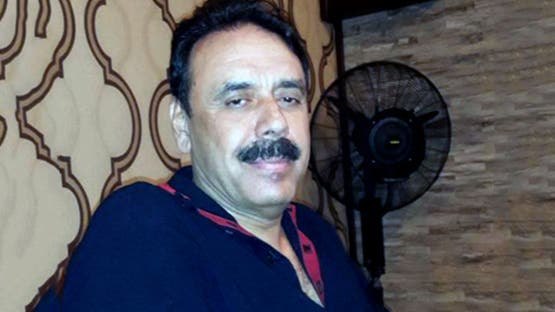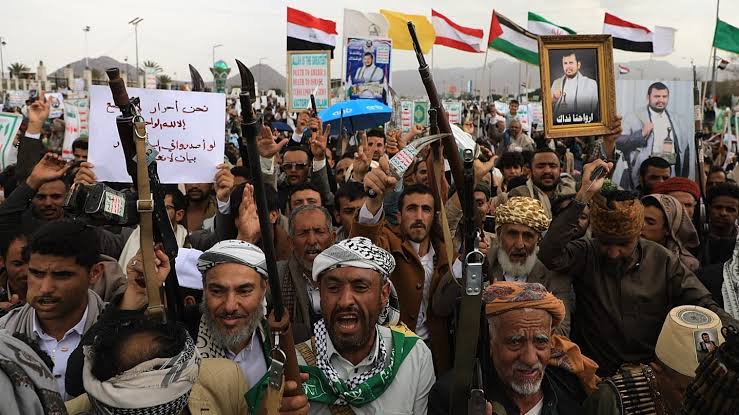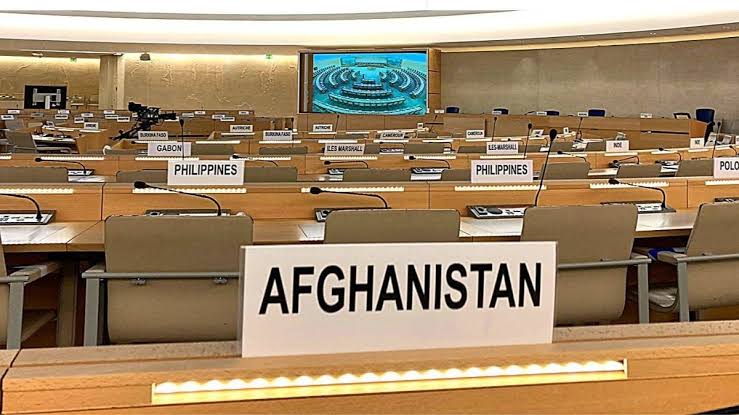
Five years after the Taliban returned to power, the group continues to face one of its most significant challenges on the international stage: the failure to gain formal recognition as Afghanistan’s representative at the United Nations. The unresolved status of Afghanistan’s UN seat has become a symbol of the gap between the “de facto power” ruling the country and its lack of international legitimacy. Jafar Haqpanah, a political science professor at the University of Tehran, says the issue cannot be examined solely through the lens of international law, as the political considerations of major powers play a decisive role in practice.
Speaking to IRAF, Jafar Haqpanah said that five years after the Taliban’s return to power, the continued uncertainty over Afghanistan’s UN representation is not simply the result of a legal obstacle. Rather, he described it as the product of a combination of the Taliban’s domestic legitimacy crisis, opposition from some major powers, concerns over human rights and the declining priority of Afghanistan in the foreign policies of key countries.
Sovereignty Does Not Mean Legitimacy
Haqpanah, referring to the distinction between de facto control and international legitimacy, said a government’s ability to exercise power over a defined territory and population does not necessarily mean it will be recognized by the international community.
He said international relations have repeatedly seen governments take control of a country while facing recognition problems for extended periods.
The professor said similar situations have occurred in countries that have been divided, governments that came to power with foreign backing, and states whose governments emerged through unconventional and violent means.
“This issue has a legal dimension, which is reflected on the surface in the absence of a representative seat at the United Nations, but its more important dimension is political; that is, the extent to which a government has been able to gain the necessary legitimacy at home and abroad,” Haqpanah said.
According to Haqpanah, the Taliban currently faces a combination of these problems. On the one hand, it exercises territorial control, while on the other, it has failed to gain broad legitimacy because of its style of governance, social restrictions and domestic and international opposition.
Afghanistan’s UN Seat Is More Than a Legal Decision
Haqpanah stressed that the question of handing Afghanistan’s UN seat to the Taliban is not merely a legal process but a political decision shaped by the balance of power in the international system.
He said international relations are often a reflection of the interactions among major powers, and the positions of those countries can have a significant impact on decisions by international institutions.
Referring to the positions of members of the UN Security Council, the political analyst said the same dynamics apply to the Taliban.
According to Haqpanah, Russia, a permanent Security Council member with veto power, has made greater progress in engaging with the Taliban in recent years, while China has also established close relations with Afghanistan’s interim government.
By contrast, the three other permanent members of the Security Council continue to oppose formally recognizing the Taliban, and this divide among major powers is one of the main factors behind the continuation of the current situation.
Haqpanah added that beyond the positions of major powers, the overwhelming majority of UN members also do not yet support handing Afghanistan’s seat to the Taliban.
He said only a limited number of countries have brought their relations with the Taliban government in Afghanistan to a level of formal or semi-formal engagement, while much of the international community remains cautious and negative toward the issue.
Why Has the Taliban Failed to Secure Afghanistan’s UN Representation?
Haqpanah said one of the main reasons is the Taliban’s domestic record and widespread concerns over the human rights situation in Afghanistan.
He said opponents of the Taliban argue that the group lacks the legitimacy to represent all of Afghanistan because it has excluded a large part of Afghan society, particularly women, from educational, economic, social and political spheres.
“One of the main arguments made by opponents of the Taliban is that this government has effectively excluded half of Afghan society from many areas of life,” the professor of political science said.
He stressed that restrictions on girls’ education, women’s employment, social freedoms and political participation remain among the issues preventing the international community from changing its approach toward the Taliban.
The Taliban’s Argument Over Afghanistan’s Outstanding Rights
Haqpanah said the Taliban has sought to use the unresolved status of Afghanistan’s representation at the United Nations as one of its arguments for why it should be recognized.
He said the Taliban argues that it has controlled the country for nearly five years and that, although Afghanistan’s previous government no longer exists, representation of Afghanistan remains in the hands of that government.
The professor added that the Taliban also argues that the continuation of the current situation has prevented some of Afghanistan’s rights from being pursued internationally, ranging from the issue of frozen Afghan assets to humanitarian assistance, development matters and the pursuit of the country’s economic demands.
According to Haqpanah, this is one of the arguments the Taliban uses to build legitimacy and to demonstrate that the continuation of the current situation is detrimental to Afghanistan’s interests.
He said, however, that opponents of the Taliban believe the central issue is not simply territorial control but the nature of governance and the degree of domestic and international legitimacy it enjoys.
Afghanistan’s UN Seat: Symbolic and Limited
Haqpanah said that although Afghanistan’s UN seat has not been handed to the Taliban and the representative appointed by the previous government remains in the position, the mission no longer has the same level of activity and influence in practice.
He explained that an active UN mission involves more than simply holding a seat. It requires funding, the continuous presence of diplomats, extensive engagement with different countries, participation in meetings, issuing official statements and providing expert analysis of international developments.
“The representative of a country must take positions based on a careful study of international conditions and that country’s national interests, hold various meetings and record the country’s official positions; because these positions later have legal and political consequences,” Haqpanah said.
He added that such extensive activity is not currently visible from Afghanistan’s mission and that the presence of the representative of the previous government has become largely symbolic.
Haqpanah also noted that Afghanistan has faced difficulties even in paying its UN membership dues, leaving the country’s representative structure in a state of uncertainty.
Afghan People Are the Main Victims of the Prolonged Crisis
Asked about the consequences for Afghans of the continued uncertainty over the country’s status at the United Nations, the University of Tehran political science professor said that while defining “national interests” in Afghanistan is complicated by ethnic, political and historical divisions, one point is clear: the Afghan people are the main victims of the current situation.
He said the absence of a clear international status, economic difficulties, declining foreign assistance and reduced global engagement have placed additional pressure on Afghan society.
The professor stressed, however, that Afghanistan’s problems are not limited to the issue of its UN seat but have deeper roots in the country’s political legitimacy crisis, governance structure and relationship between the government and society.
Declining International Presence in Afghanistan
Haqpanah said Afghanistan is no longer a top foreign-policy priority for many global powers as it was in previous years.
He said the emergence of new crises and wars around the world has shifted the focus of many countries away from Afghanistan, slowing efforts to engage and negotiate with the Taliban.
One indication of this declining attention, he said, is the reduced level of UN activity in Afghanistan.
Haqpanah said UN funding for Afghanistan has declined, humanitarian assistance has become more limited, and the activities of the UN Assistance Mission in Afghanistan (UNAMA) have also been significantly reduced.
He added that the number of UNAMA staff has also fallen, indicating that the international community’s technical and operational presence in Afghanistan is more limited than in the past.
Doha Process Stalled, Dialogue With Taliban Blocked
The University of Tehran political science professor also pointed to the halt in diplomatic processes related to Afghanistan, saying the so-called Doha process, which was intended to provide a framework for dialogue among the Taliban, the United Nations, regional countries and international powers, has effectively been stalled for about three years.
He said the process was supposed to include various meetings involving countries concerned with Afghanistan, but that track is now effectively dormant.
Haqpanah added that even in areas where there had previously been scope for cooperation with the Taliban, such as combating narcotics and organized crime, no significant progress has been made and many of these issues have also remained stalled.
Future of Afghanistan’s UN Seat: Status Quo More Likely
Haqpanah concluded that, given current conditions, a significant change in the short term in the recognition of the Taliban or the allocation of Afghanistan’s UN seat is unlikely.
He said that unless there is a significant shift in the positions of major powers, Afghanistan’s domestic situation and the Taliban’s approach to issues that concern the international community, the current uncertainty is likely to continue.
The professor added that Afghanistan is now in a situation in which the Taliban’s interim government has failed to secure full international legitimacy, while the previous political structure no longer has its former capacity to exert influence. As a result, Afghanistan’s UN seat remains in an intermediate state.
After the Taliban returned to power in August 2021 and the collapse of the Islamic Republic of Afghanistan, the question of the country’s representation at the United Nations became a major diplomatic challenge.
The UN General Assembly’s Credentials Committee has not yet made a final decision on handing Afghanistan’s seat to the Taliban, leaving the position with the representative appointed by the previous government.
The Taliban has sought in recent years to build international acceptance by expanding relations with some countries in the region and beyond. But sweeping social restrictions, particularly those imposed on women, the absence of an inclusive government, security concerns and disagreements among major powers remain key obstacles to the group’s formal recognition.
The continuation of the current situation has also had consequences for Afghanistan, ranging from reduced diplomatic engagement and limited international assistance to a weakening of the country’s formal position in global institutions.