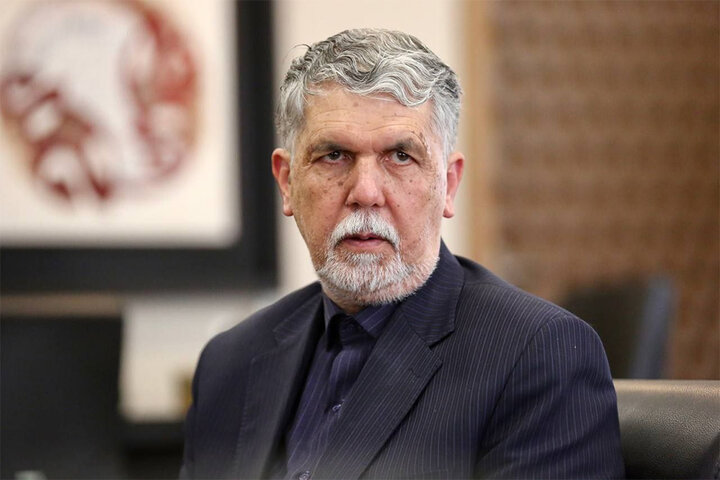
According to Iraf, Seyyed Abbas Salehi, Minister of Culture and Islamic Guidance, highlighted the esteemed status of the Persian language in his message, writing: “If today Iran, despite all its historical ups and downs, still maintains an independent voice and deeply rooted cultural presence in the world, undoubtedly one of the main pillars of this endurance is the Persian language.”
The minister emphasized the role of Persian as a monumental cultural and civilizational heritage, noting that over centuries, the language has been a key manifestation of Iran’s cultural resilience against assimilation and alienation. It has managed, alongside engagement with the wider world, to preserve its authenticity and roots.
Challenges and Opportunities in the Modern Era
Salehi also addressed the challenges facing the Persian language amid rapid media and technological transformations, stressing that today’s responsibility is not confrontation with the modern world, but finding wise ways to preserve, strengthen, and modernize Persian—a language that must remain rooted, vibrant, creative, and capable of communicating with new generations.
Addressing Iran’s youth, he added: “Engaging with the contemporary world and interacting with diverse cultures and languages will only be fruitful and lasting if your connection to Persian, as the language of identity, culture, and historical memory of this land, remains steadfast and alive.”
The minister concluded by commemorating the day, expressing hope that, through the efforts of scholars and cultural and artistic communities, the Persian language will continue to be powerful, inspiring, and proud—representing the identity, culture, and independence of this great nation.
Commemoration Context
It is noteworthy that May 15 is officially marked in Iran as the Day of Commemoration of Hakim Abolqasem Ferdowsi, the renowned epic poet, and Persian Language and Literature Day.