The Taliban’s decision to remove law, political science and international relations programs from Afghanistan’s private universities has sparked concerns about the future of the country’s higher education system and intellectual landscape.
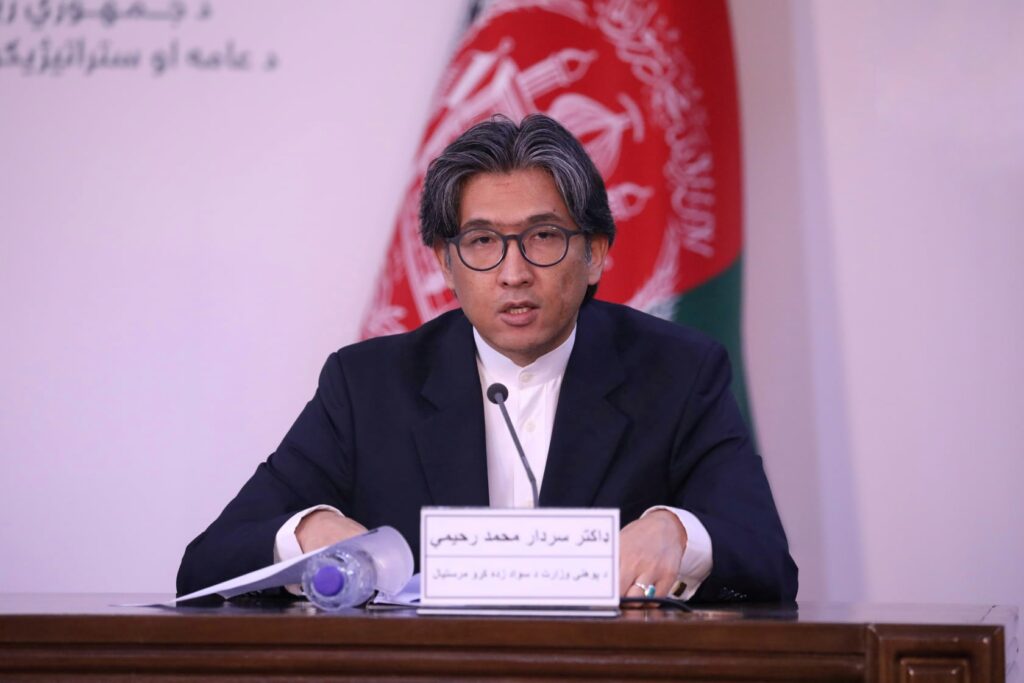
Sardarmohammad Rahimi, a former university professor and researcher, told IRAF that the decision cannot be explained simply by declining student numbers or concerns over the quality of education. Instead, he said, it should be viewed within the broader context of the Taliban’s ideological approach to universities, the humanities and the country’s political structure.
Rahimi said: “The removal of law, political science and international relations programs from Afghanistan’s private universities, more than being an educational decision, has its roots in the nature of the Taliban’s political system and this group’s view of science, society and government.”
He added: “Modern and contemporary sciences, including law, political science and international relations, are based on a set of epistemological foundations that, in many cases, have serious differences with the interpretation that the Taliban presents of the political system and Islamic government.”
Rahimi said: “In political science, theories of the formation of government, the functions and duties of the state, the relationship between the state and citizens, as well as relations between states based on the norms and values of national sovereignty are discussed; while the Taliban have problems with an important part of these foundations and do not consider them compatible with the political system they seek.”
The researcher added: “In the Taliban’s view, concepts such as citizenship, citizens’ rights and the mutual relationship between the state and citizens, with the definition that exists in modern political systems, do not have a specific place, and the concept of ‘subjects’ is used more; therefore, teaching sciences that familiarize students with specific citizenship rights, government responsibilities and the mechanisms of modern political systems can be considered a threat from this group’s perspective.”
He stressed: “For this reason, the removal of these programs should be considered part of the Taliban’s cultural and ideological policy to control the intellectual space of society. Students studying political science, law and international relations are inevitably exposed to theories and views that may conflict with the political and legal reality governing Afghanistan.”
A Modern University Is Incompatible With the Taliban’s Outlook
Rahimi said the Taliban’s approach to universities goes beyond individual academic programs, arguing that the modern university itself is difficult to reconcile with the group’s worldview.
He said: “The university, as a modern institution, does not have a desirable position in the Taliban’s view; because the university is based on new sciences, research, critical thinking, creativity and the possibility of presenting different views.”
He added: “A private university should have a more open environment for presenting scientific views and new theories, and this very characteristic can provide the basis for the formation of critical thinking and social transformation; but the Taliban regard such an environment more as an obstacle or threat to their intellectual system.”
The former university professor said the Taliban’s cultural policies over the past five years have pushed large numbers of students, particularly women, out of universities. At the same time, the removal of certain academic programs, dismissal of professors and various restrictions have reduced the motivation of male students to continue their studies.
He said restrictions on dress, university administrative structures, pressure on professors, the removal of certain subjects, and financial and economic difficulties have combined to reduce student numbers at some universities by half or even to one-tenth of previous levels.
Rahimi said: “Based on the information available to us, the number of active private universities in Afghanistan has also declined sharply, from around 120 universities to fewer than 20 to 30; although assessing this figure accurately requires official and verifiable data.”
He added: “The Taliban are even trying to bring the administrative and academic structures of universities that are still operating under their control, and there are reports of interference in the appointment of officials at some private universities.”
Declining Enrollment Is a Result of Taliban Policies, Not the Cause of Program Closures
Rejecting the argument that the removal of law, political science and international relations programs is simply a consequence of declining student numbers, Rahimi said the decline itself is the result of policies implemented by the Taliban in higher education over the past five years.
He said: “When professors are dismissed, girls are deprived of education, students’ preferred programs are removed, and the university environment becomes restrictive and harsh, it is natural that the motivation to enter university will decline.”
He added: “A student spends money on education when they feel that university can create opportunities for their future and provide them with knowledge and skills that help solve the problems of life and society. When this motivation disappears, the decline in student numbers will be the natural result of such a policy.”
Rahimi said: “Therefore, the removal of programs should not be attributed to the decline in students; rather, we should ask what factors have caused the decline in students. Part of the answer lies in the Taliban’s educational and cultural policies over the past five years.”
He stressed: “The removal of professors, educational restrictions, financial and administrative pressure on universities, and changes in the curriculum weaken an academic ecosystem and ultimately reduce both the quality and quantity of higher education.”
Eliminating the Humanities Could Deepen Political Instability
Turning to the broader consequences of removing humanities programs from Afghan universities, Rahimi argued that such disciplines are particularly important for a country that has faced years of political, security and social crises.
He said: “For a country like Afghanistan, which has faced political, security and social crises for years, fields such as law, political science, international relations and sociology are considered among the most important academic fields.”
He added: “Even in developed countries, the humanities play an important role in building the political, legal and social foundations of society. If a country’s political and legal structure is not sound and stable, other sectors will also be unable to fully demonstrate their capacities.”
Rahimi said: “A doctor, engineer or technology specialist can work effectively when they live and work within a stable political, legal and social structure; therefore, eliminating the humanities in a country like Afghanistan can contribute to the continuation of political and social instability.”
He continued: “Development, before being merely dependent on equipment and technical manpower, requires intellectual change and transformation, and the humanities are one of the most important foundations for this transformation.”
On the removal of international relations programs, he said: “The removal of this field means weakening Afghanistan’s capacity to understand the world and engage in scientific and diplomatic interaction with other countries. International relations and diplomacy are in fact the language of a country’s communication with the world, and weakening this field can isolate Afghanistan more than before.”
Weakening the Humanities Could Also Undermine Technical Sciences
Rahimi rejected the idea that the Taliban could compensate for the removal of humanities by expanding technical and engineering education.
He said: “The notion that technical and natural sciences can be developed without the humanities and critical thinking is not possible in the long term.”
He added: “Even progress in fields such as physics, chemistry, mathematics, engineering and technology requires research, questioning, critical thinking and creativity, and the university should be an environment in which these characteristics can grow.”
The researcher said: “If the university becomes an institution that merely teaches students a number of formulas and technical skills and takes away their ability to criticize, conduct research and experiment, technical sciences will also lose their effectiveness in the long term.”
Rahimi added: “Extensive interference in universities means the gradual weakening of the higher education system and modern sciences in Afghanistan, and the consequences of this policy may become more apparent in the medium and long term.”
Is the Taliban Replacing Universities With Religious Schools?
Rahimi also addressed the Taliban’s broader approach to education, saying religious schools occupy a far more prominent position than universities within the group’s intellectual framework.
He said: “In the Taliban’s intellectual system, the religious school has a much more prominent position than the university, and their definition of science and knowledge is more focused on religious sciences and Islamic culture.”
Rahimi said: “The Taliban may retain some vocational and technical education centers or programs in engineering and medicine alongside religious schools, but if the intellectual environment of the university is closed and professors and students do not have the opportunity to think and ask questions, genuine scientific development will not take place.”
He added: “In modern societies, the university is not merely a place for transferring information, but an institution for criticism, research, experimentation and knowledge production, and if these functions are taken away from the university, the institution itself will gradually lose its character.”
What Can Be Done?
Asked what cultural and student activists can do in response to the situation, Rahimi pointed to the economic pressures facing ordinary Afghans.
He said: “Inside Afghanistan, livelihood has become the main concern for a large part of the population, and it is natural that when people face problems providing food and meeting their basic needs, higher education and cultural issues are pushed down the list of priorities.”
He added: “For this reason, one cannot expect a society facing an economic and livelihood crisis to defend its higher education system on its own.”
The researcher said Afghan migrants and educational and cultural institutions outside Afghanistan could play an important role. One possible approach, he suggested, is to expand low-cost online education for students and schoolchildren inside Afghanistan.
Rahimi said: “Efforts should be made to provide families that still care about education and learning with access to education at a lower cost, and independent cultural, civil and educational institutions that operate spontaneously inside Afghanistan should also be supported.”
He stressed: “Maintaining avenues for education and knowledge production inside Afghanistan, even under the current circumstances, is very important; because with the complete closure of these avenues, the country’s human capital will also gradually disappear.”
“The Main Cause” Lies in the Taliban’s Political System
In his concluding remarks, Rahimi said educational and cultural measures, although necessary, cannot resolve the problem on their own. In his view, the deeper cause lies in Afghanistan’s ideological and political system.
He said: “Educational and cultural solutions, although necessary, cannot solve the problem on their own; because the main cause of the crisis, in his view, is the ideological and political system governing Afghanistan.”
He added: “As long as this political structure exists, no matter how much effort is made to create online courses, support educational centers and preserve cultural institutions, the Taliban can gradually restrict or close these avenues.”
The former university professor warned: “If Afghanistan moves toward becoming an educational system mainly based on religious schools and the gradual elimination of universities and modern sciences, its consequences will not affect Afghanistan alone and could have wide-ranging effects at the regional level.”
Rahimi said: “The experience of recent years has shown that the expansion of religious schools with extremist interpretations, without a university system and a free academic environment, can create the conditions for the production of intellectual and social crises; therefore, weakening universities and modern sciences in Afghanistan is an issue that goes beyond higher education and is one of the important issues for the future of this country and the region.”