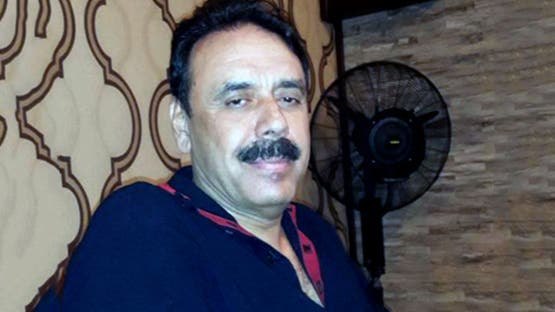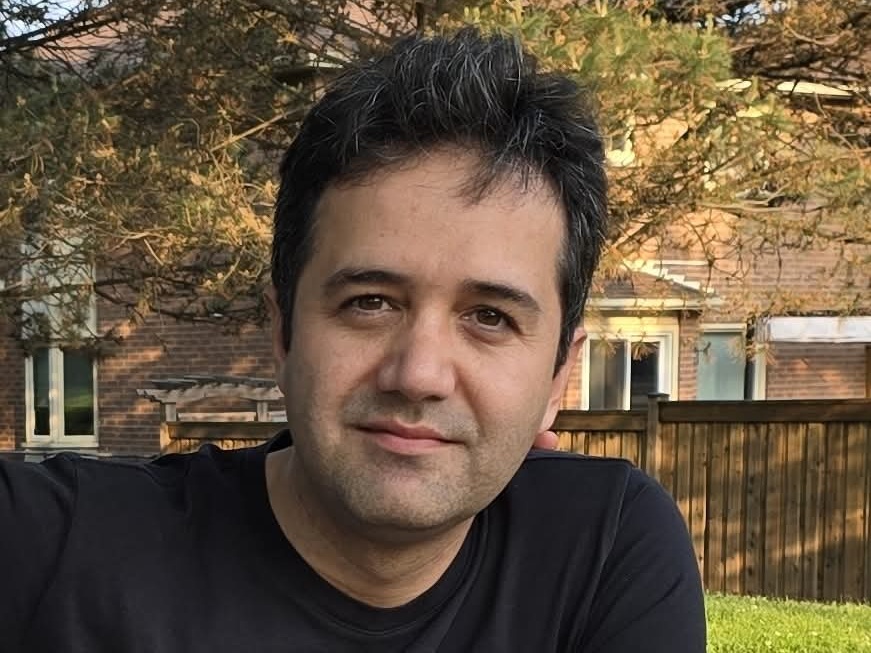
As Afghanistan marks Printing Industry Day on Sept. 9, Zabi Mehdi, an author, publisher and founder of the Gahwara Group, says the Taliban have inflicted serious damage on the country’s printing and publishing sector over the past five years by imposing strict rules and regulations on book publishing.
Many publishers have been forced to leave Afghanistan, while those who remain are no longer allowed to operate freely in the book-publishing sector.
Speaking exclusively to IRAF, Zabi Mehdi said official reports indicate that several dozen book titles have been censored or banned inside Afghanistan, with around 79 titles specifically placed on a list of banned books. However, he said information available to publishers operating inside the country suggests that the number of censored and confiscated books runs into the thousands.
“Although the Taliban have officially announced the names of some of these books so that they can be removed from the market, in practice, Taliban officials can take any book they want from the tables or shelves of bookstores and libraries and transfer it to an unknown location to be burned and destroyed,” Mehdi said.
He said the only books currently enjoying a viable market in Afghanistan and being freely printed, bought and sold are religious and Islamic works — and even those must be compatible with the Taliban’s beliefs and views.
He added that many works supporting Taliban policies and endorsing their conduct and actions over the past roughly 30 years are being published and distributed in large print runs without controversy.
“Free publishing, the work of independent researchers, the activities of publishers, independent bookstores and the holding of cultural gatherings have all been severely damaged over the past five years, and publishers have effectively been driven into the ground and brought to their knees,” Mehdi said.
Publishing During the Islamic Republic
Mehdi said Afghanistan’s publishing industry operated under significantly different conditions during the Islamic Republic, when government institutions, universities, research organizations and hundreds of non-governmental organizations were able to operate freely alongside broader civil liberties.
These institutions conducted research and made their findings available to readers through newspapers and research books.
Book launches, criticism sessions and discussions were also held, allowing readers and other interested people to participate freely. Extensive reports on such events were broadcast on radio and television and published in newspapers, with few restrictions, he said.
According to Mehdi, these activities had a direct impact on the publishing industry, but many of the programs disappeared after the Taliban returned to power.
“It is true that the government did not provide special support to publishers and other non-governmental institutions, but there were no particular restrictions on their activities either. If an individual or institution wanted to work in publishing, research or cultural activities, there was no general or official ban on it,” he said.
He added that even when individuals sought to impose restrictions or censorship on books at their own discretion, such measures were personal actions rather than government policy.
“The government’s policy was to preserve and respect freedom of expression and freedom of thought,” Mehdi said.
He said that if someone committed wrongdoing through government channels, the media and the public — including television and radio outlets — could question the matter, hold officials accountable and demand answers.
Language Restrictions
Mehdi also pointed to restrictions on the Persian language during the Islamic Republic, saying a form of systematic censorship existed against Persian even at that time.
“Specifically, a number of words were not allowed to appear in textbooks, academic articles and research works, including words such as ‘university’ and ‘student,’ as well as their derivatives such as ‘faculty,’” he said.
Despite those restrictions, Mehdi said Persian remained the dominant language in administration, management, research, universities and the country’s bureaucratic structure.
He said the number of prohibited words has now grown into the hundreds.
“These days, a very long list of banned vocabulary was published in one of the Taliban’s discussion groups. For example, the use of the word ‘porsesh’ [question] has been banned, and it has been said that ‘soal’ should be used instead. The word ‘hushdar’ [warning] should also not be used because, according to them, it is an Iranian word,” Mehdi said.
“This is an obvious injustice against the Persian language. Forcing the name of the Persian language, or ‘Dari Persian,’ to be called only ‘Dari’ is one of the greatest forms of violence against this language. The aim of this policy is to create distance between speakers of Persian in different Persian-speaking countries,” he said.
Digital Printing and Falling Book Circulations
Mehdi said digital printing has gained ground in Afghanistan in recent years, following its earlier development in European countries.
One advantage of digital printing, he said, is that books can be produced relatively easily and at lower cost according to demand, reducing the financial pressure on publishers and authors.
But digital printing also has disadvantages.
“The quality of printing is lower in many cases, and the final price of the book may also be higher. On the other hand, because there is no cost involved in printing a large number of copies, the content quality of the book may also be affected,” Mehdi said.
He explained that printing a small number of copies allows publishers to identify and correct problems in subsequent editions.
“For example, if I print 10 copies of a book and realize that there is a problem with it, I can correct that problem in the next printing and improve the quality of the book. This feature is useful in one respect, but on the other hand, it has led to a kind of carelessness and superficial approach to digital printing,” he said.
Mehdi said the decline in print runs is not limited to digital books and has also affected offset printing and conventional editions.
“Unfortunately, not only have the print runs of digital books declined sharply, but the print runs of offset books and original editions have also fallen dramatically. This situation is not seen only in Iran and Afghanistan; we are witnessing it in Tajikistan as well,” he said.
As an example, he referred to a novel published in Soviet Tajikistan in the 1960s that had a print run of 25,000 copies. Today, he said, it is difficult to find a book with a print run exceeding 500 copies.
“If a book has a large audience, the publisher is confident that the work will sell, and the government also supports it, its print run may reach 1,000 copies; but even this figure is very low compared with the past, and this situation is a catastrophe,” Mehdi said.
Why Are People Reading Fewer Books?
Mehdi said determining the reasons behind declining book print runs requires specialized research.
“One of the simple and observable issues is that the number of people reading books, as well as the amount they read, has declined,” he said.
He recalled that books published in the past by Iran’s Translation and Book Publishing Enterprise and the Iran Cultural Foundation commonly had print runs of 2,000 to 5,000 copies, with many reaching third and fourth editions within two or three years.
Today, even major Iranian publishers prefer digital printing because small print runs reduce printing, security, archiving and storage costs and prevent capital from remaining tied up in a book for long periods, Mehdi said.
However, he added, the result is naturally a higher price and lower printing quality.
“The same issue exists in book printing in Afghanistan. In Afghanistan, we also use photocopying machines and digital printing, and publishers print books in very low print runs and with low quality, while selling them at high prices. Unfortunately, this method has so far failed to meet the needs of the book market effectively and adequately,” he said.
Copyright and Authors’ Rights
Mehdi said authors’ rights in Afghanistan are governed by a specific practice.
“If 1,000 copies of a book are printed, 100 copies belong to the author or researcher. Usually, either those 100 copies are given to the author, or if the publisher cooperates properly, an amount equivalent to the cover price of one copy is calculated and paid to the author,” he said.
In digital printing, however, when only 10 copies of a book are produced, the author’s share is correspondingly limited.
“In this situation, the author must either receive a copy of the book or receive an amount equivalent to it,” Mehdi said.
He said copyright protections are generally poorly enforced in Afghanistan.
“Overall, the issue of copyright is not properly observed in any field in Afghanistan. The illegal use of other people’s intellectual property and scientific and research products has become a common and even accepted practice,” he said.
“In my view, one of the reasons for the backwardness of third-world countries is precisely this issue. Copyright, when it turns a person’s intellectual product into a source of income, can contribute to the advancement of society,” Mehdi said.
He referred to the history of inventions in Britain and Europe, saying inventors could register their rights and receive payments from individuals or institutions using their work or inventions.
“But unfortunately, in our countries, the illegal use of other people’s intellectual property and scientific and research products is a very common practice. Under such circumstances, no author in any field can earn an adequate income from their work, and in my view, this is one of the factors behind our backwardness,” Mehdi said.
Cultural Migration and the Book Market Crisis
Mehdi said the exodus of cultural figures following the fall of the previous government has had a major impact on Afghanistan’s publishing industry.
“The truth is that most of Afghanistan’s first-rate writers, translators and publishers left the country after the fall of the government. The same is true of many cultural activists, libraries, book lovers and people working in the field of books. Many of them left the country because of the existing pressures or directly because of them, and were unable to continue their activities,” he said.
He said the departure of these figures had created an “irreparable vacuum.”
“There are neither many prominent publishers left inside Afghanistan nor a significant number of readers and cultural activists who can sustain the market for the remaining publishers and support them in offering new books and fresh research,” Mehdi said.
Outside Afghanistan, new publishers have emerged in recent years, some of which have carried out successful activities. But their biggest challenge is the geographical dispersion of Afghan migrants, he said.
“There is no possibility for any of these publishers outside Afghanistan to establish a permanent book fair in a city, because even if an exhibition is held somewhere, the cultural and book-loving population in that area is not large enough to cover the costs of the exhibition,” Mehdi said.
As a result, publishers outside Afghanistan have increasingly turned to online book sales, although that approach has its own limitations.
“On the other hand, most of the books these publishers print are published digitally. The cost of shipping the book is also imposed on the buyer, and the combined price of the book and postage creates a high cost for the buyer. As a result, gradually, those interested in using these books become discouraged because of the rising price of books and shipping costs,” he said.
Taliban Policies and the Damage to Persian and Publishing
In the final part of the interview, Mehdi said the Taliban’s impact extends beyond the printing industry itself.
“The Taliban have not only harmed the growth of the printing industry in Afghanistan, but have also harmed the Persian language, the friendly relationship that existed between the Persian and Pashto languages, book printing, publishers, poetry, novels, history and almost everything that had been growing in the field of culture and publishing in previous years,” he said.
He described the damage as deep and warned that its consequences could remain for many years.
“However, my view is that the Persian language has the ability to overcome these problems,” Mehdi said.
“If there is no Persian language, something called the printing industry inside Afghanistan is like printing a blank book; that is, a book without text,” he said.
Mehdi concluded that Pashto currently does not have sufficient capacity to serve as a bridge among all ethnic groups in Afghanistan or meet the scientific and research needs of the country’s entire population.
“Therefore, the Persian language must be strengthened so that the printing industry inside Afghanistan can also have the opportunity to flourish. The printing industry without the Persian language inside Afghanistan, given the current circumstances, is practically meaningless,” he said.