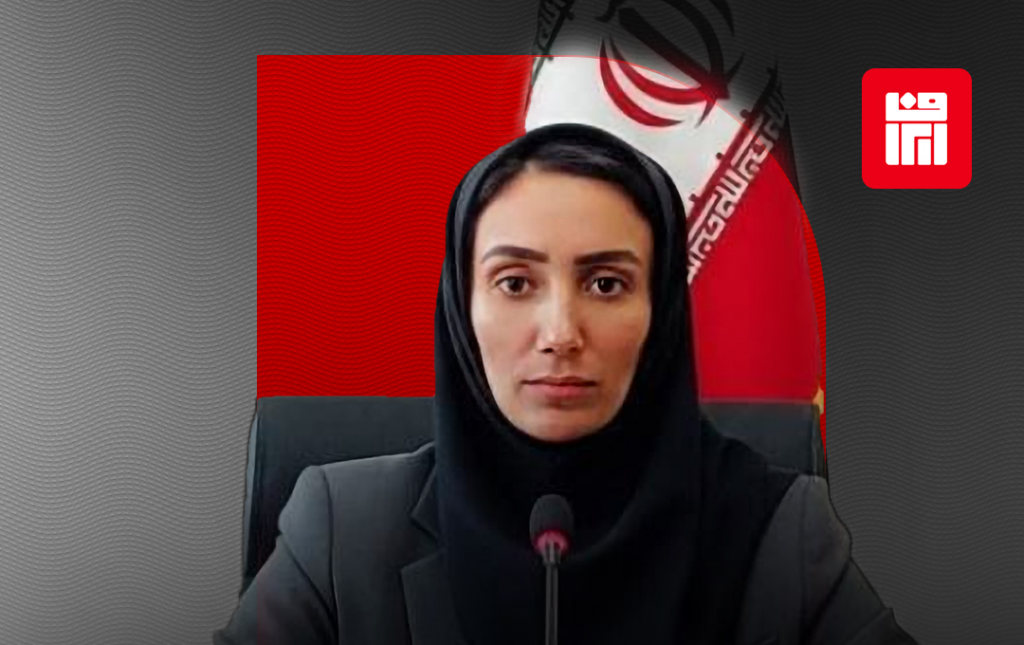
Dr. Maryam Khaleghi-Nejad wrote in an exclusive analysis for IRAF that the Bishkek summit showed Afghanistan remains at the center of the security concerns of the Shanghai Cooperation Organization (SCO). She argued that the repetition of existing positions without establishing practical mechanisms is weakening the organization’s ability to manage crises across Eurasia.
The decision not to invite the Taliban, coupled with calls for the formation of an inclusive government, reflects continuing political divisions and the lack of consensus among SCO members over granting formal legitimacy to the authorities in Kabul. The organization’s main test, therefore, will be whether it can move beyond issuing declarations and take concrete action on border security, counterterrorism and regional connectivity.
From August 31 to September 1, 2026, the leaders of SCO member states, observers and dialogue partners gathered in Bishkek, the capital of Kyrgyzstan, for the “Shanghai Plus” summit. Held under Kyrgyzstan’s chairmanship of the organization, the summit marked the 25th anniversary of the SCO and was held under the theme, “25 Years of the Shanghai Cooperation Organization: Together Toward Peace, Development and Sustainable Prosperity.”
Afghanistan was among the key issues discussed at the summit. According to the announced agenda, terrorism, drug trafficking, organized crime and security concerns along Afghanistan’s borders were among the main issues under discussion. The country’s strategic importance stems in part from its roughly 1,600-kilometer border with three SCO members—China, Tajikistan and Uzbekistan—in addition to its borders with Iran and Pakistan. Security developments in Afghanistan therefore have a direct impact on Central Asia, western China, Iran, Pakistan and Russia.
Afghanistan has held observer status in the SCO since 2012, but its participation in the organization’s meetings has been limited since the Taliban returned to power in August 2021. The Taliban were not invited to the Bishkek summit as Afghanistan’s de facto rulers, and no representative of the group attended the meeting.
Despite the Taliban’s expanding political and economic relations with China, Russia, Iran and several Central Asian republics, the SCO has yet to reach consensus on formally inviting the Taliban or restoring Afghanistan’s active role as an observer. This indicates that Afghanistan is not merely a political or diplomatic issue for the organization. It is directly linked to the formation of an inclusive government, border security, cross-border terrorism, drug trafficking, organized crime, extremism and the future of the regional order.
The Bishkek Declaration can therefore be viewed as a reflection of the shared concerns among SCO members over the political and security consequences of Afghanistan’s current situation.
Bishkek Summit Agenda: Linking Security, Counterterrorism and Regional Connectivity
The 2026 Bishkek summit placed a range of security, economic and infrastructure initiatives on its agenda. In the security sphere, members focused on establishing an international center to combat organized crime, deepening cooperation against cybercrime and digital threats, strengthening joint efforts to counter terrorism, separatism and extremism, and expanding information-sharing among member states.
Afghanistan has particular importance in this context, as terrorism, drug trafficking, organized crime and border insecurity originating from or linked to Afghan territory remain shared concerns for many SCO members.
The situation in Afghanistan, cooperation on border security and efforts to counter terrorist and trafficking networks formed an important part of the summit’s security agenda. Alongside these issues, the establishment of an independent financial structure for the SCO through a proposed development bank was also discussed, as part of efforts to strengthen the organization’s economic and financial capacity and reduce reliance on external mechanisms.
Regional connectivity was another major focus of the summit. The more than 500-kilometer China-Kyrgyzstan-Uzbekistan railway, with an estimated cost of $4.7 billion, was among the most significant infrastructure projects associated with the Bishkek summit. The railway is intended to connect China’s transport networks with those of Central Asia.
Kyrgyzstan also emphasized the creation of new logistics and freight routes and the use of the transit capacities of SCO member states. Coordination between Kyrgyzstan’s Transport Ministry and its Russian counterpart in April 2026 on launching a corridor through the Caspian Sea was another initiative highlighted in this context.
Shared Security Concerns Over Afghanistan
The SCO is operating in an increasingly complex Eurasian security environment shaped by the war in Ukraine, crises in the Middle East, competition between China and India, tensions between India and Pakistan, and broader geopolitical disputes among its members.
The Bishkek Declaration identified Afghanistan as a major regional security concern. It stressed the need for an inclusive government in Afghanistan with broad participation from representatives of all ethnic and political groups, describing such a government as a key path toward lasting peace in the country.
The declaration also expressed support for an independent, neutral and peaceful Afghanistan free of terrorism, war and drugs. The position demonstrates that SCO members view Afghanistan’s stability not only through the lens of its domestic situation, but also as part of collective regional security.
The declaration reiterated support for an independent, neutral and peaceful Afghanistan free of terrorism, war and drugs. This position places the security concerns of member states within a common framework and shows that, from the organization’s perspective, Afghanistan has political, security and social dimensions.
At the same time, there remains a significant gap between declared positions and practical measures. Afghanistan has long featured prominently in SCO annual statements and was a key issue for the organization even during the previous Afghan republic. The effectiveness of the Bishkek Declaration will depend on whether it leads to practical mechanisms, including stronger border cooperation, intelligence-sharing, efforts to disrupt terrorist financing and logistics networks, counter-narcotics measures, and a coordinated approach toward Afghanistan’s political future.
Otherwise, the Bishkek Declaration risks becoming primarily declaratory, much like many of the organization’s previous statements.
The Taliban’s exclusion from the summit, despite controlling Afghanistan politically and maintaining relations with several SCO members, also demonstrates that the organization has yet to reach agreement on granting the group political legitimacy or formal representation of Afghanistan. The Taliban’s calls for full membership or for Afghanistan’s active return to observer status have so far failed to produce a collective decision. As a result, the question of Afghanistan’s political representation remains unresolved.
Key Security Concerns Over Afghanistan
SCO members’ concerns over Afghanistan can be broadly grouped around several issues:
- The presence and activities of terrorist groups inside Afghanistan
- The potential spread of insecurity to neighboring countries
- Drug trafficking and its links to organized criminal networks
- Weak border controls and the possible infiltration of armed groups
- Extremism and radicalization
- The absence of an inclusive government representing ethnic and political groups
- Doubts over the Taliban’s commitment to and ability to effectively combat terrorism
- Uncertainty over Afghanistan’s political status within regional mechanisms
1. China: Concern Over Border Insecurity and Central Asian Stability
China views Afghanistan as part of the wider security equation in Central Asia because of its shared border with the country and the direct link between developments in Afghanistan and security in western China. Within the SCO framework, Beijing’s concerns largely center on the potential activities of terrorist groups, the spread of extremism, drug trafficking and border instability.
At the same time, China has expanded its political and economic engagement with the Taliban and plays a central role in regional connectivity projects, particularly the China-Kyrgyzstan-Uzbekistan railway. Beijing is seeking to strengthen stability in its neighborhood and improve Central Asian connectivity through infrastructure development and economic integration.
However, the continued presence of terrorist groups and weaknesses in Afghanistan’s security mechanisms could pose risks to China’s trade routes and infrastructure projects. From Beijing’s perspective, an inclusive government and an independent, neutral Afghanistan free of terrorism and drugs could create a more favorable environment for economic cooperation and regional connectivity.
China’s approach at the Bishkek summit therefore has both security and economic dimensions: containing threats emanating from Afghanistan while making use of the country’s potential to promote Eurasian stability and connectivity.
2. Russia: Recognition of the Taliban Alongside Continued Terrorism Concerns
Despite formally recognizing the Taliban in 2025, Russia continues to regard Afghanistan as a significant source of threats to regional security. Russian security officials have repeatedly warned about the presence of terrorist groups in Afghanistan and the potential transfer of those threats into Central Asia, while calling on the Taliban to fulfill their commitments to combating terrorism.
This suggests that Moscow’s political recognition of the Taliban does not amount to full confidence in the group’s ability or willingness to contain terrorism.
Within the SCO, Russia is seeking both to maintain political engagement with the Taliban and prevent a regional vacuum, while remaining concerned about terrorist activity, drug trafficking and instability along the southern borders of Russia and its Central Asian allies.
Russia’s Central Asian allies, including Tajikistan and Uzbekistan, have responded to the potential infiltration of terrorist groups and the spread of organized crime from Afghanistan by strengthening border forces, increasing security posts and establishing new facilities along their borders. These measures underscore the depth of security concerns shared by Russia and its partners over developments in Afghanistan.
3. Pakistan: The Tension Between Its Historic Role in Afghanistan and Cross-Border Terrorism
Pakistan is one of the most important actors in Afghanistan, but its current relationship with the Taliban has been marked by serious tensions. Despite Pakistan’s direct and pivotal role in supporting the Taliban and facilitating the group’s return to power, relations between the two sides have deteriorated over allegations that the Taliban provide support to Pakistani militant groups.
Direct military clashes, airstrikes, cross-border exchanges of fire and repeated warnings from Pakistani officials about the growth of terrorism and the spread of insecurity from Afghanistan reflect a major shift in relations between Islamabad and the Taliban.
Pakistan now regards threats from groups based in Afghanistan as a direct national security concern and has also warned about the potential spread of instability to other countries in the region.
4. Iran: Concerns Over Drug Trafficking, Insecurity and the Humanitarian Consequences of the Afghan Crisis
Iran is also a key actor in the Afghanistan-SCO equation. Its full membership in the organization since 2023 has increased the importance of its role in discussions on regional security, Eurasian connectivity and Afghanistan.
Within the Bishkek summit’s agenda, Iran’s concerns are linked to security issues surrounding Afghanistan, drug trafficking, organized crime, border insecurity and the broader consequences of instability in the country. While maintaining political and economic engagement with the Taliban, Iran continues to face the unresolved issue of the absence of an inclusive Afghan government and persistent security threats emanating from Afghanistan.
At the regional level, Afghanistan’s security is closely linked to the security of transit routes, energy projects and connectivity between Central Asia, Iran and South Asia. As a result, the progress of projects such as the International North-South Transport Corridor and proposed pipeline routes involving Iran, Pakistan, India and Turkmenistan, as well as Afghanistan, Pakistan and India, depends in part on Afghanistan’s political and security conditions.
Instability, terrorism and drug trafficking could complicate the implementation of these projects and undermine Iran’s role in regional connectivity networks.
Conclusion
The Bishkek summit demonstrated that Afghanistan remains one of the most significant security concerns for members, observers and partners of the Shanghai Cooperation Organization. Terrorism, drug trafficking, organized crime, weak border controls and the potential spread of insecurity into Central Asia, China, Iran, Pakistan and Russia have transformed Afghanistan into an issue that extends well beyond an internal crisis.
By emphasizing the formation of an inclusive government and the participation of ethnic and political groups, the Bishkek Declaration showed that a significant number of SCO members do not consider the consolidation of Afghanistan’s current political order, without an inclusive structure, sufficient to achieve lasting peace.
At the same time, the Taliban’s exclusion from the summit and the lack of consensus over granting the group formal representation demonstrate continuing political divisions within the organization over how to engage with Afghanistan’s current rulers.
The SCO has considerable potential to influence the Afghan crisis. Its members possess significant demographic and economic weight, share borders and direct security interests, and have institutional mechanisms for cooperation on counterterrorism, counter-narcotics and border security.
However, differences among China, India and Pakistan, divergent views on the Taliban, geopolitical competition and the lack of consensus over Afghanistan have prevented the organization from translating these capacities into a coherent policy.
The positions of the major actors indicate different priorities: China focuses on containing border threats and securing regional connectivity projects; Russia is primarily concerned with preventing terrorism from spreading into Central Asia; Pakistan prioritizes countering cross-border terrorism; and Iran focuses on controlling trafficking, securing its borders and protecting transit routes.
The SCO’s main test after the Bishkek summit, therefore, will not be the issuance of another declaration, but the implementation of its security and political commitments.
To play a more effective role in Afghanistan, the organization will need to move beyond repeatedly expressing concern and toward practical mechanisms for securing borders, combating terrorism and drug trafficking, preventing the spread of insecurity, and supporting the formation of an inclusive government.
Otherwise, Afghanistan will remain a recurring item on the SCO’s agenda, while the organization risks becoming less an effective, project-oriented institution for managing one of Eurasia’s most important security crises and more a forum for expressing political positions and shared concerns.
Sources
- Safir. (2026). Shanghai Cooperation Organization Leaders Discuss the Situation in Afghanistan. The Diplomatic Insight.
- Hamidzai, Khial. (2026). SCO Leaders Sign Bishkek Declaration as Taliban-Led Afghanistan Remains Without Representation. The Kabul Tribune.
- Diplomatic News. (2026). SCO Leaders Sign Bishkek Declaration, 27 Documents. The Diplomatic Insight.
- Shayan, Yasin. (2026). SCO Leaders Call for Inclusive Government in Afghanistan. Amu TV.