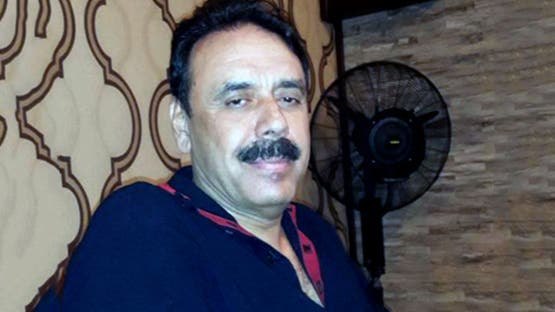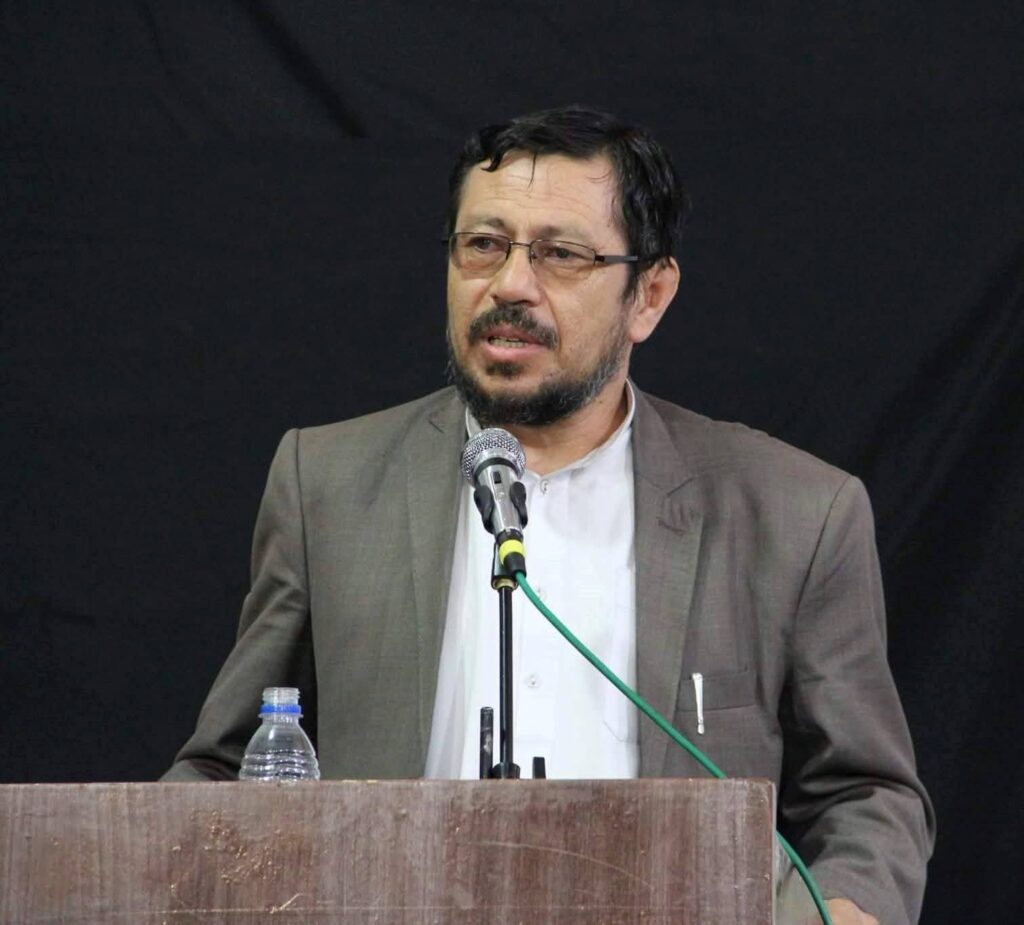
Mohammad Sarwar Jawadi, a former Afghan parliamentarian and political activist, has criticized the Taliban’s decision to remove law, political science and international relations from private universities, calling it unscientific and unjustified. He said the move would return Afghanistan to the “Stone Age.” He stressed that if the problem is declining student numbers or poor teaching quality, the solution is to reform and improve education, not eliminate entire academic disciplines.
Mohammad Sarwar Jawadi, a former member of the Afghan parliament, told IRAF in an exclusive interview: “The reasons for removing certain disciplines from the educational system of private universities, and potentially public universities, should be explained by the Taliban administration itself, because from our perspective, no clear and acceptable rationale has so far been presented to justify this decision.”
He added: “It is said that a decline in the number of students interested in these disciplines, as well as poor teaching quality, are among the reasons some Taliban officials have cited for removing law, political science and international relations, but these reasons can in no way justify the complete elimination of an academic discipline.”
Poor teaching cannot justify eliminating an academic discipline
Jawadi said the issue should also be examined from another perspective: “In governments that have legitimacy and a legal structure and operate within a defined legal framework, the government does not have an unrestricted right to interfere in the affairs of private institutions. Rather, its responsibility is to supervise their activities within the law.”
He continued: “When a private educational institution is granted an operating license, the scope of its activities, the required standards, the institution’s obligations and the government’s responsibilities are defined. Therefore, after issuing a license, the government cannot unilaterally decide the fate of academic disciplines without following legal and expert procedures.”
Referring to the system for supervising private educational institutions, he said: “Government oversight should have several stages: first, closely monitoring whether the institution fulfills its commitments; second, assessing the quality of the services it provides; and third, ensuring compliance with public rights and the law.”
Jawadi added: “If there is a weakness or violation at an educational institution, the first step should be to address it through warnings, advice and corrective measures. If the violation is deliberate and continues after warnings and corrective action, the offender should then be dealt with through the channels provided by law; not by eliminating an academic discipline altogether.”
He said: “We do not know to what extent supervisory standards were observed in the Taliban’s recent decision, or whether it was the result of an expert review process or whether the Kabul administration used its position of power and authority to impose such a decision.”
Referring to the role of the educational system in the credibility and operation of higher education institutions, Jawadi said: “The type and number of academic disciplines are part of the commitments a private educational institution makes when it receives an operating license. If a discipline is to be eliminated or modified, the matter should be examined in expert meetings between the supervisory body and the institution responsible for delivering it.”
He added: “Ultimately, such a decision should serve the public interest, the interests of the private institution, and the interests of students and users of educational services, because reducing or changing the educational system is not merely a change of title; it affects educational standards, the university’s structure, its human resources and many other academic criteria.”
Jawadi said the complete elimination of a discipline could only be justified if it had lost all relevance. “The fundamental question is: Have law, political science and international relations really lost their relevance? If the answer is yes, scientific and documented reasons must be provided.”
He continued: “Law may be one of the most needed fields of the humanities in Afghanistan. We face legal instability, numerous contradictions in laws, legal gaps in many areas, and legal weaknesses and shortcomings across different sectors. Under such circumstances, how can we say that the study of law is no longer needed by society?”
Afghanistan needs political science and law more than ever
Referring to political science and international relations, he said: “These two fields concern subjects that are fluid and continuously present in human society. Politics, government, relations between countries and international affairs never lose their relevance, and one cannot say that a country no longer needs political knowledge or an understanding of international relations.”
Jawadi added: “If scientific studies genuinely show that Afghan society has a surplus of human resources in a particular educational field, the solution could be to reduce enrollment capacity or introduce gradual changes. But completely eliminating an academic discipline, without presenting a clear and expert study, is indefensible.”
Referring to the experience of other countries, he said: “The expansion or restriction of university disciplines is common around the world, but such decisions are based on needs assessments and detailed studies. If statistics and field studies show that a country needs more doctors than lawyers, or more electrical engineers than geological engineers, policymakers should create conditions for the growth of the fields that are needed, rather than completely eliminating the others.”
Jawadi said: “To develop the fields that are needed, tools such as public awareness, incentives, greater investment, expanding university capacity and creating employment opportunities can be used. The labor market itself is also one of the most important factors in the natural expansion or contraction of a field.”
Asking whether Afghanistan has a more favorable labor market for other disciplines than for law, political science and international relations, he added: “If such a labor market does not exist, then the argument of declining demand or a lack of employment opportunities for these fields cannot provide an acceptable basis for eliminating them.”
Referring to Afghanistan’s current circumstances, Jawadi said: “It appears that none of these stages was followed in the recent decision, because Afghanistan’s current conditions do not essentially provide the basis for a comprehensive and accurate needs assessment. On the other hand, half of the country’s population is effectively deprived of education and work, and under such circumstances, decisions about the future of the educational system cannot be made without taking this reality into account.”
He added: “In my view, decisions that concern the fate of the entire country, its people, ideas and the upbringing of future generations should be made scientifically, compassionately and out of genuine concern and understanding. Unfortunately, however, many decisions are influenced more by personal preferences, individual interpretations, and the exercise of influence and power.”
“There is no codified and established cultural policy”
Responding to a question about the Taliban’s cultural policy toward private universities, Jawadi said: “I do not believe that the current rulers have a codified and established cultural policy. Most of their decisions stem from the personal preferences and interpretations of individuals, while some are also rooted in their views of the people, the country, politics, power, religion and culture.”
He added: “It is not unlikely that some individuals may hold the view that when the Quran and Hadith exist, what need is there for the science of law? As a result, they may believe that the study of law should be shut down. Or some may believe that people are subjects and that subjects have no need to know about politics or understand international relations; therefore, these sciences are not only unnecessary, but may even be considered harmful.”
Referring to the possibility of a security-oriented view of private universities, Jawadi said: “It is even possible that some individuals believe private universities provide greater opportunities for the growth of their opponents, or that most graduates of these institutions come from ethnic groups and communities that are on the margins of current power. Such views can ultimately lead to unprofessional and unscientific decisions.”
He stressed: “If people’s views of religion, politics, power, the country and the nation become the basis for decision-making about the educational system, it is natural that the result will not be scientific or expert policymaking.”
Taliban’s rationale for eliminating the disciplines is “ridiculous”
Regarding the Taliban’s reliance on declining student numbers and poor teaching quality, Jawadi said: “These two reasons cited by current officials are, in my view, very ridiculous. If declining student interest is a reason to eliminate a discipline, why should the government intervene in this matter?”
He added: “These are private institutions, and alongside their educational activities, they also engage in economic activity. When a discipline faces declining demand economically, the institution itself can reduce the number of classes and increase the capacity of disciplines that have more applicants. This is a natural mechanism in the operation of private institutions.”
He said poor teaching quality also cannot justify closing a discipline: “If the quality of education is low, the solution is to improve quality, not to shut down the discipline. The government supervises precisely to ensure that educational standards are observed.”
Jawadi continued: “If declining student numbers and poor quality are indeed the two criteria for eliminating disciplines, the question is whether these two problems exist only in law, political science and international relations. If they also exist in other disciplines, should those too be shut down?”
Referring to the sensitivity of certain university disciplines, he said: “Some fields even deal with people’s lives and property, such as medicine and engineering. If a medical or engineering student graduates without sufficient knowledge and skills, the consequences could directly affect people’s lives and property. Therefore, if the problem is educational quality, the solution should be to reform the educational system and improve quality, not to selectively eliminate disciplines.”
“Returning Afghanistan to the Stone Age”: A warning about the consequences of educational restrictions
In another part of his remarks, Jawadi warned about the consequences of the Taliban’s educational restrictions, including the ban on women studying at universities and the elimination of certain academic disciplines. He said: “The consequence of this trend can be summed up in one sentence: ‘A catastrophe and a return of Afghanistan to the Stone Age.’”
He added: “This situation is similar to a threat made by Donald Trump, the President of the United States, about returning the Iranian people to the ‘Stone Age.’ However, in my view, that statement was madness, because a nation that is civilized and produces knowledge and science cannot be forced back into an age of ignorance.”
Jawadi said Afghanistan’s situation was different: “But people who are entirely in need of knowledge and learning, and who are standing on a shaky bridge crossing from ignorance to knowledge, may remain at that stage if the doors of knowledge and education are closed to them.”
He said: “Afghanistan today needs knowledge, expertise, universities and a trained workforce more than ever, and restricting people’s access to higher education will ultimately impose a very heavy cost on the country’s future.”
The Taliban’s ideal university: A university based on personal preferences?
Asked what the Taliban’s ideal university might look like, Jawadi said: “I cannot comment with certainty on exactly what the Taliban’s ideal university looks like, because this movement still lacks a clear and definable nature, as well as a specific and unified policy.”
He added: “I still think it would be wrong to accuse everyone in the current government of having a dark outlook, and perhaps it is not right to make a general judgment about all of them. Unfortunately, however, there are people in this administration who impose their own particular interpretations and preferences as the policy of the administration, and sometimes even as religious rulings.”
Emphasizing the need for academic and intellectual independence, Jawadi said: “The government can supervise universities, but supervision is different from comprehensive interference and the imposition of political preferences. A university should be a place of science, research, criticism, questioning and knowledge production, and if the research and academic environment is influenced by political considerations, society itself will be the first victim.”
“Scientific and cultural resistance” must not stop
Asked what student activists, professors and cultural figures should do in response to such measures, Jawadi said: “Scientific and cultural resistance has always existed and will continue to exist, and one should not surrender in the face of such decisions.”
He added: “There are various ways to reduce the effects of such decisions, and the solidarity of scholars, professors, students and people who value knowledge can play an important role in this regard.”
Referring to the potential of new technologies, he said: “The use of modern tools can also help compensate for some of the restrictions. Afghanistan’s scientific community should not think that when one door is closed, all avenues of access to knowledge are closed. Technology, online education, academic networks and existing capacities can be used to maintain the younger generation’s connection with knowledge and different sciences.”
Jawadi stressed in conclusion: “What matters today in Afghanistan is keeping the light of knowledge alive and preventing the spread of ignorance, because a discipline may be shut down at one university, but if the scientific and cultural community does not surrender, knowledge cannot easily be removed from among the people.”
The Taliban recently decided to remove law, political science and international relations from private universities, citing a shortage of students and poor teaching quality. The move has drawn widespread reactions from users and political and cultural activists.