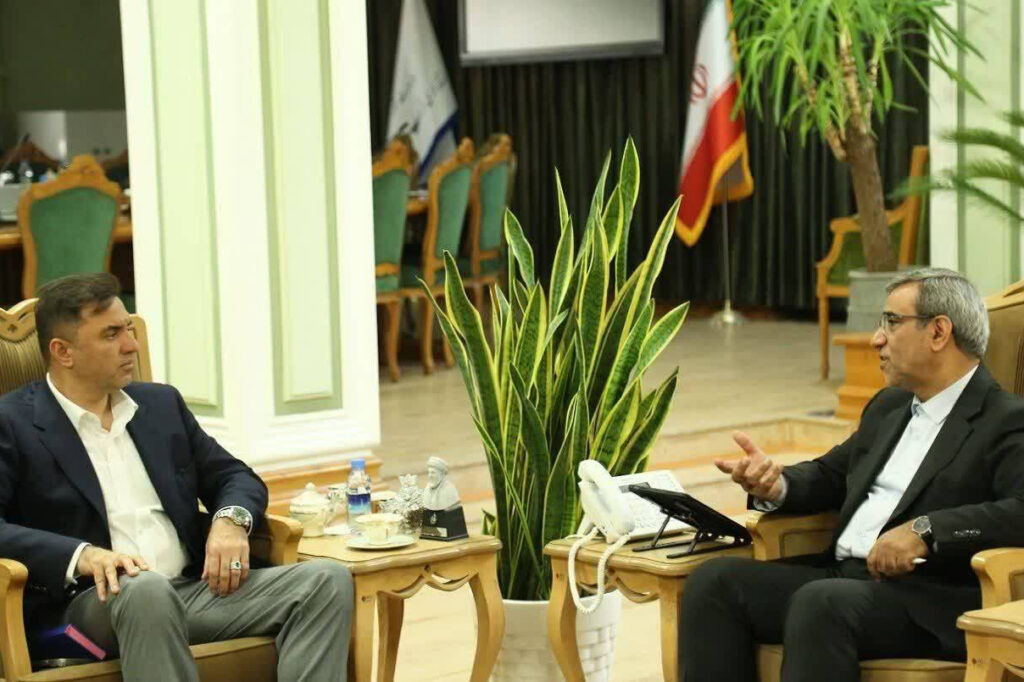
According to Iraf, Mansour Majid made the remarks on Wednesday during a meeting with the governor of Razavi Khorasan Province.
He stated that there are currently no obstacles to rice imports into Razavi Khorasan and that Afghanistan is fully prepared to facilitate such trade. He noted that in the past, “real traders” were unable to register import orders or bring in high-quality goods, but that the situation has now improved.
Majid added that with border crossings through India and Pakistan currently closed to Afghanistan, the circumstances require the creation of new capacities and opportunities. He suggested that a medical complex could also be established within the proposed free zone to serve the interests of both countries.
The Afghan trade official further proposed that land allocations in the fuel zone of the Dogharoon Free Zone should only be granted to individuals approved by the Afghan Embassy and the Chamber of Commerce.
Iran Pushes for Joint Economic Zone
During the meeting, the governor of Razavi Khorasan described the creation of a joint free trade zone between Iran and Afghanistan in Dogharoon as an effective solution for boosting trade and employment in both countries.
Gholamhossein Mozaffari stated that land in the fuel zone of the Dogharoon Free Zone should only be assigned to individuals endorsed by the Afghan Embassy and the Chamber of Commerce, adding that the Dogharoon border crossing should become “one of the smoothest borders in the region.”
He noted that Razavi Khorasan supplies around 30 percent of Iran’s iron ore production but lacks a complete steel production chain. He proposed that Afghanistan allocate an equivalent amount of land on its side of the border so that a truly joint free economic zone could be established.
Mozaffari also announced plans for the construction of a 60-megawatt solar power plant in Dogharoon in the near future, stating that there would be no problems regarding water supply for the area. He emphasized that Iran’s strategy is based on securing mutual benefits for both sides.
Concerns Over Low-Quality Imports
The governor also addressed challenges related to imports, explaining that in the past, government-allocated foreign currency and the resulting rent-seeking environment prevented many businesses from entering the essential goods import sector.
Although those restrictions have now been removed, he said some inexperienced traders with limited financial resources have entered the market, leading to fragmented and sometimes low-quality imports that complicate the trade environment.
Mozaffari stressed that Razavi Khorasan prefers to work with capable importers who possess strong distribution networks, emphasizing that product quality and efficient distribution are of high importance to the province.
He added that non-border provinces such as Isfahan, Semnan, and even northwestern provinces are requesting imports of essential goods through Razavi Khorasan. According to him, the province has the capacity to connect with distribution networks across the country, and he called on the Iran-Afghanistan Joint Chamber of Commerce to take responsibility for coordinating imports of livestock feed, meat, and rice.
The Dogharoon border terminal, located 220 kilometers east of Mashhad, is considered one of Iran’s three most important land border crossings with Afghanistan.